Best Sim Racing Cockpits of 2026

The first time you stamp on a load-cell brake, a flimsy sim racing cockpit announces itself: the wheel deck flexes, the seat creaks, and your lap falls apart. A good one disappears under you, keeping the wheel and pedals exactly where you left them so the only thing moving is the car on screen. That stability is the whole point, and it is why the right rig can turn a desk-clamp setup into something you actually want to spend an evening in.

Over the past eight months, I have lived with six different cockpits, from budget-minded frames to heftier aluminum builds, and the differences in build quality, seat comfort, and adjustability are not subtle. Assembly can eat an afternoon, and a cockpit that fits one driver perfectly may feel cramped to another, so I paid attention to how each one went together and how easy it was to change wheel height, pedal distance, and seat position. The options below are the ones that felt sturdy under hard braking, stayed comfortable through longer sessions, and justified what they cost.

1

Best Overall

Marada 8040 Cockpit

88 /100
Lab Score Excellent

Key details

Frame
40×80mm aluminum profile
Weight
104.7 lb
Adjustment
Sliding rails and slots
Dimensions
53.5"D x 31.7"W x 43.7"H
View on Amazon

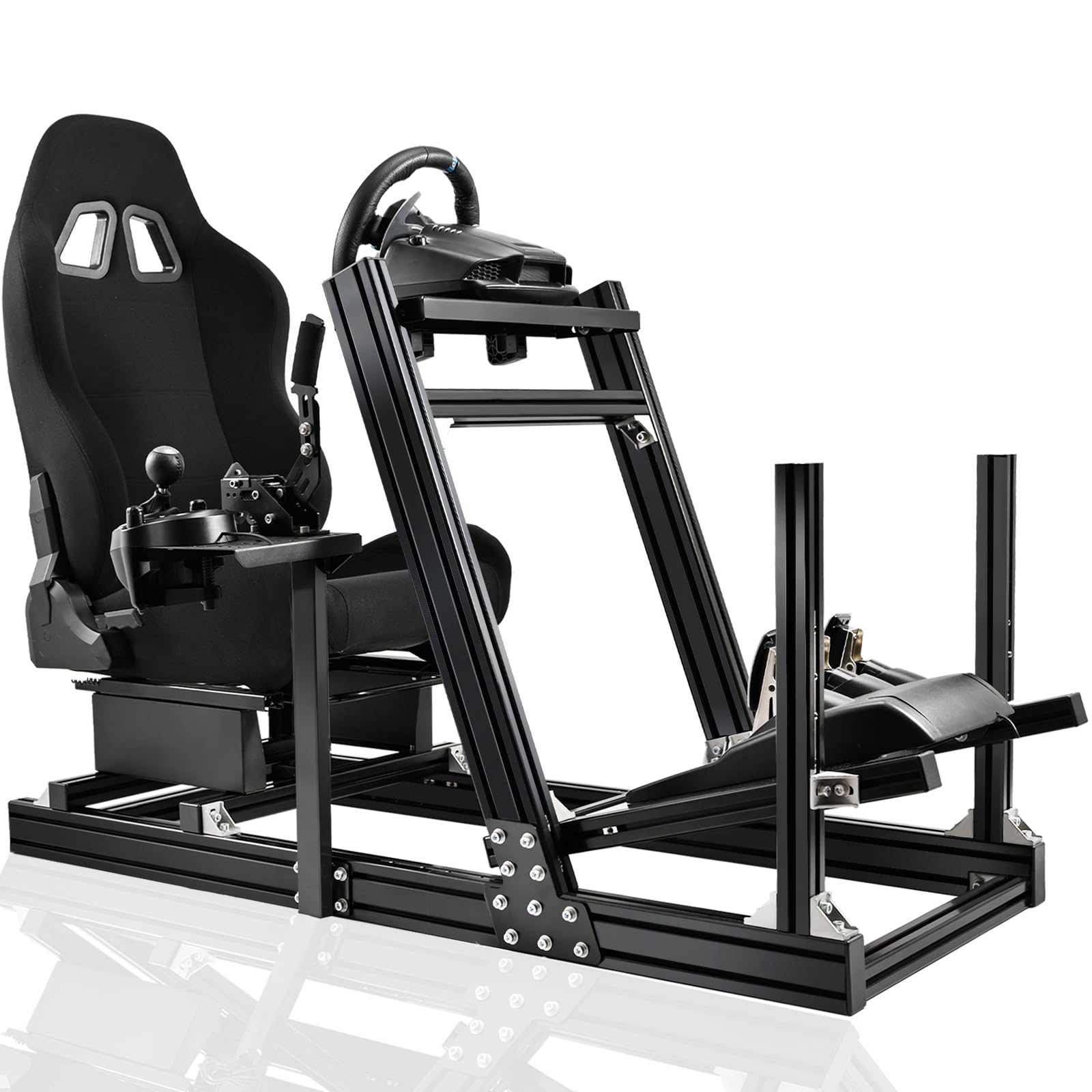
The first thing we noticed about the Marada 8040 is how much of it is standard 40×80mm aluminum profile. That matters more than the spec sheet suggests: profile rigs let you slide the wheel, pedals, and seat mounts along the extrusion, then lock them down where you need them. We like that kind of adjustability because it survives a change of wheelbase or a taller driver. At 104.7 pounds, it also has the mass to sit still when a direct-drive base starts working.

Rigidity is the reason this is our top pick. The 8040 frame is meant for stronger force feedback, and it stayed rock solid through hard braking in our sessions, with only a little side-to-side movement at a long shifter and handbrake mount. We paid close attention to the pedal plate because that is where load-cell brakes expose flex; the frame held.

What keeps it from being a universal first rig is assembly. The kit arrives as a pile of extrusion and hardware, and the build is a multi-hour job rather than a quick bolt-together. We found the manual adequate if you can follow an exploded diagram, but you should clear an evening and have a second pair of hands for the seat and wheel deck. The payoff is a frame you can adjust around your body instead of the other way around.

For a direct-drive wheel, the 8040 is the foundation we choose because it gives you room to grow, standard hardware, and no obvious ceiling. It is not the rig for someone who wants to unbox and race in twenty minutes; that buyer should look at a more complete tube frame. The aluminum profile is the part that keeps earning its place after the novelty of a new wheel wears off.

Pros

  • Rigid 40×80mm aluminum frame
  • Stepless wheel, pedal, and seat adjustment
  • Handles strong direct-drive force feedback
  • Standard profile hardware invites upgrades

Cons

  • Seat may need a cushion for long races
Our verdict

The Marada 8040 is the cockpit we recommend for a serious direct-drive setup: a rigid aluminum-profile frame you can adjust and expand as your equipment changes.

Check Latest Price
2

Best Turnkey GT Cockpit

Next Level GTRacer 2.0

86 /100
Lab Score Excellent

Key details

Seat
Double recliner with sliders
Mounts
Shifter, handbrake, ButtKicker
Weight
81.6 lb
Wheel Support
Up to 13 Nm
View on Amazon

The GTRacer 2.0 feels like a cockpit sold by people who spend their weekends in a GT car. The double-recliner seat is the star: wide, padded, and mounted on dual sliders, so two drivers can find a position without unbolting anything. The frame is aluminum and steel, and Next Level Racing rates it for direct-drive wheels up to 13 Nm. That is a serious ceiling for a one-piece rig.

We rate it as the best turnkey GT cockpit here because it arrives complete with shifter and handbrake support and a ButtKicker mounting pole. The driving position is more upright than a formula rig, which we prefer for long stints and for getting in and out without drama. The catch is flex under heavy braking: the frame is solid enough for most wheels, but a high-torque direct-drive base can make the wheel deck move. If you chase the last bit of stiffness, the aluminum-profile Marada is the better base.

At 37 kg, it is light enough to shift across a room without taking it apart, which we appreciate in a shared space. The seat remains the part we least want to change; it is comfortable for a broad range of drivers, and the double recliner gives taller users room. The compact footprint also makes it easier to live with than a long profile rig.

Think of the GTRacer as the comfortable grand tourer of this group. It gives up a little rigidity to the 8040, but it delivers a complete, brand-backed cockpit that most drivers can enjoy on day one.

Pros

  • Premium double-recliner seat
  • Rated for 13 Nm direct-drive wheels
  • Shifter, handbrake, and ButtKicker mounts
  • Dual seat sliders simplify driver changes

Cons

  • Wheel deck flexes under heavy braking
Our verdict

The GTRacer 2.0 is our pick for a complete GT-style cockpit, with a plush seat, dual sliders, and rated support for 13 Nm wheels.

Check Latest Price
3

Best with a Monitor Mount

ARES WING Monitor Cockpit

91 /100
Lab Score Outstanding

Key details

Seat
Widened foam padding
Weight
67.5 lb
Dimensions
53.7"D x 21.3"W x 42.49"H
Monitor Mount
Detachable TV mount
View on Amazon

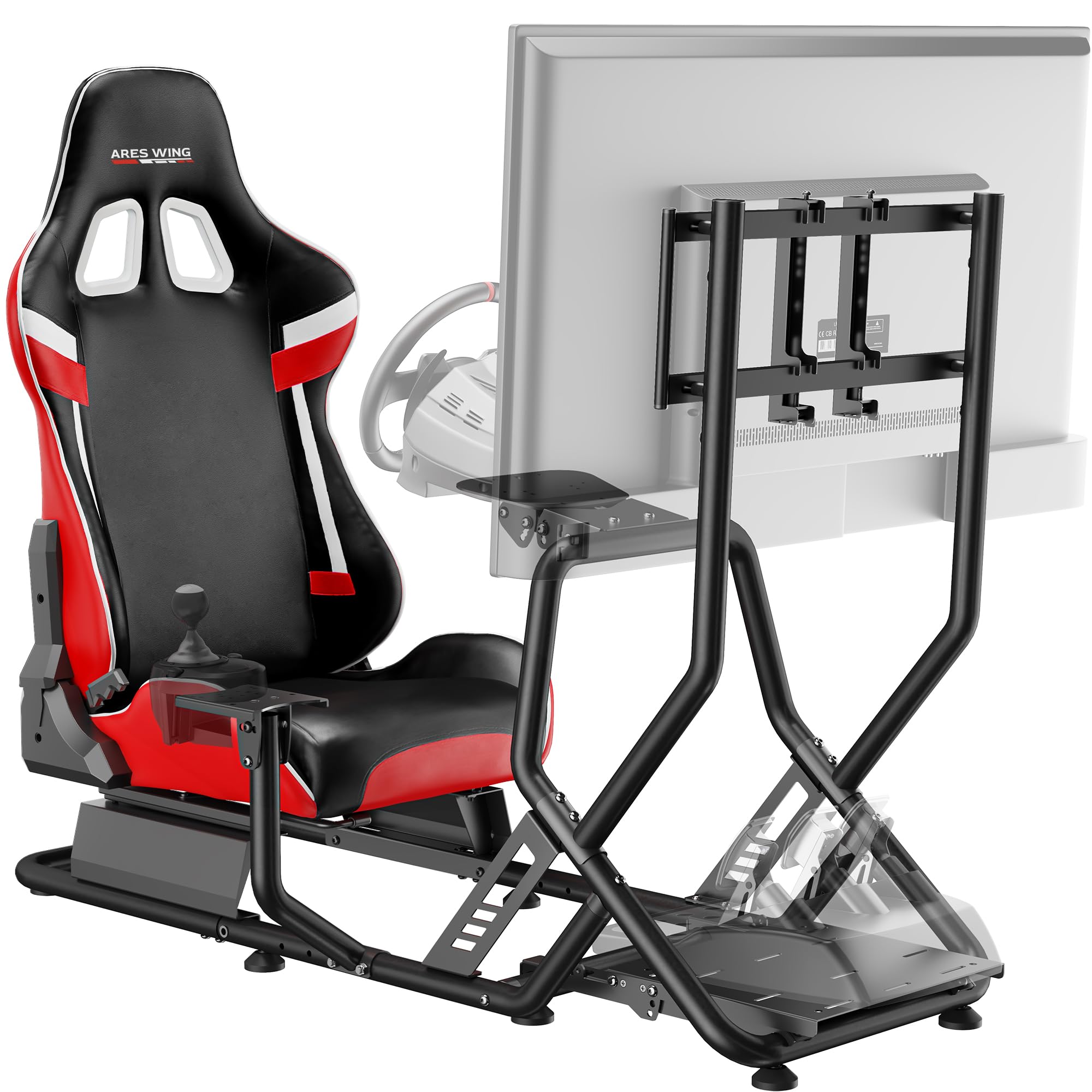
A monitor mount changes a cockpit from a seat with a wheel into a complete racing station. The ARES WING builds that mount into the frame and makes it detachable, so you can run a TV or monitor directly over the wheel without a separate stand. That is the detail that got our attention: it saves floor space and keeps the screen in the same place every time you sit down.

The frame itself is stronger than the price suggests, with side braces and a widened foam seat. We found the driving position easy to adjust, and the cockpit stayed stable with a Thrustmaster T598 running at full strength. The seat is wide and padded, and the slidable position makes it easy to set a consistent distance to the wheel. For a compact rig, the ARES WING does the important work of keeping the wheel and screen together.

The monitor mount is the part to check before ordering. The included brackets are short for some screens, and the hardware may not match a curved monitor's VESA pattern. We still recommend the ARES WING for a compact all-in-one setup because it solves the screen problem without a second stand, as long as you confirm the reach and mounting pattern for your display.

Pros

  • Detachable monitor mount saves floor space
  • Stable frame with side bracing
  • Widened foam seat supports longer sessions

Cons

  • Seat comfort varies by driver
Our verdict

The ARES WING is our pick when the screen belongs on the rig: a stable cockpit and a detachable monitor mount in one compact package.

Check Latest Price
4

Best Midrange Complete Rig

Marada Red-Seat Cockpit

88 /100
Lab Score Excellent

Key details

Frame
50×50mm round steel tube
Cushions
Neck and lumbar pillows
Included
Seat, frame, hardware
Seat Recline
90–180 degrees
View on Amazon

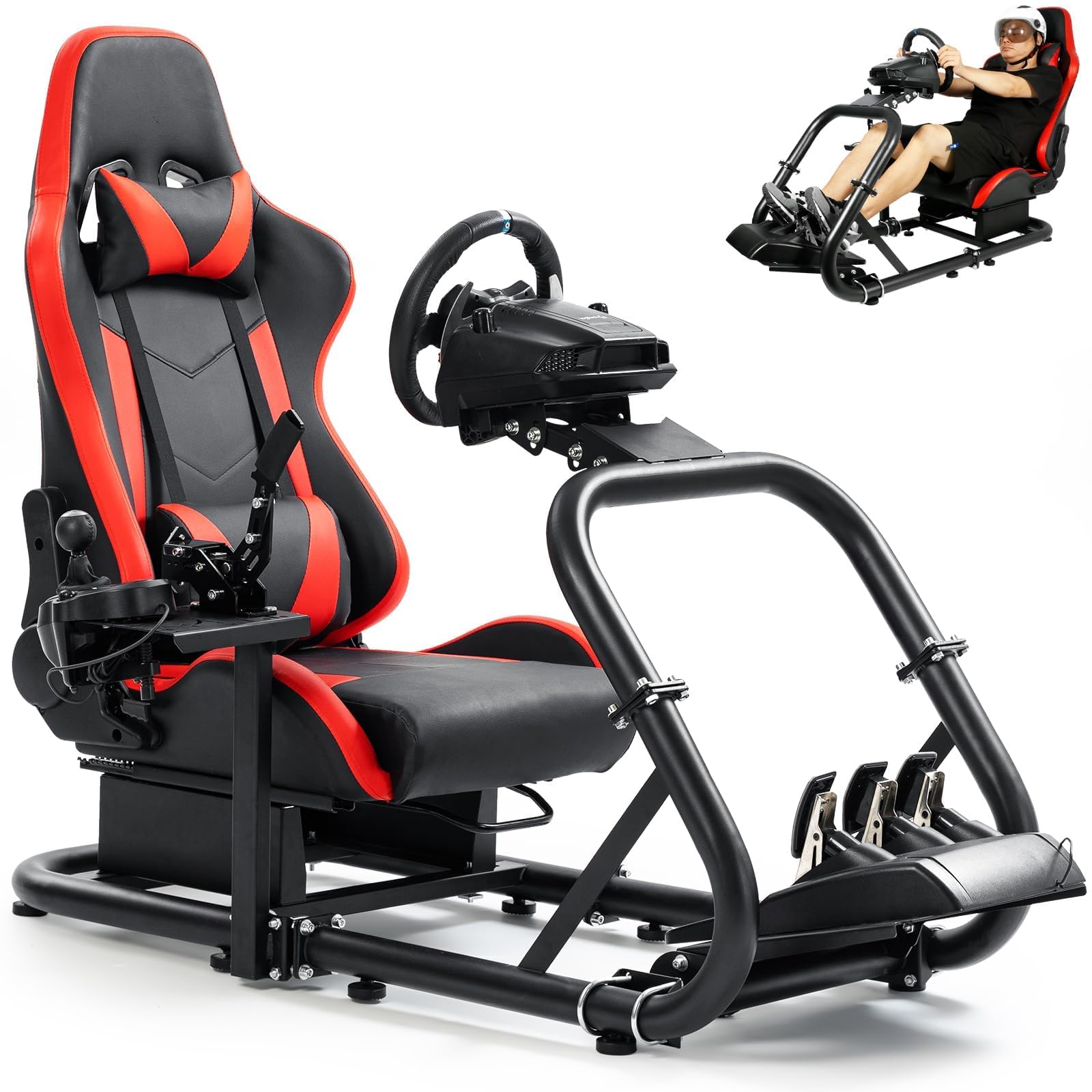
The red-seat Marada is the complete cockpit we point to when the budget stops before aluminum profile. It uses 50×50mm round steel tube, comes with a reclining seat, neck and lumbar pillows, and enough room to mount a shifter and handbrake. That is a lot of rig for the money, and the 90–180-degree seat recline makes it easy to find a relaxed GT position.

The frame is sturdy for belt-driven wheels and entry direct-drive units, but it is not the stiffest base here. We noticed a little more movement through the wheel deck than in the 8040, and the seat rails and pedals need a careful tighten after assembly. The payoff is a complete rig that costs less than the premium frames and still feels substantial when you drop into the seat.

The seat is roomy and reclines deeply, and the pillows help for longer races. The round-tube frame also has a smaller visual footprint than a profile rig, which matters in a living room. The red seat is bright enough to announce itself, but the frame is compact enough to tuck into a corner.

Pros

  • Complete cockpit with seat and pillows
  • Deep 90–180-degree seat recline
  • Sturdy 50mm steel-tube frame
  • Extra room for shifter and handbrake

Cons

  • Wheel bracket holes can need alignment
Our verdict

The Marada red-seat cockpit is our value pick: a complete, comfortable rig for belt-driven wheels, with room to add a shifter.

Check Latest Price
5

Best for Triple-Screen Immersion

Dardoo Triple-Monitor Cockpit

83 /100
Lab Score Excellent

Key details

Seat
Memory-foam racing seat
Frame
50mm steel tube
Dimensions
66"D x 22.4"W x 51.2"H
Monitor Support
Three 24"/32" screens
View on Amazon

Triple-screen racing is the reason to look at this Dardoo. The frame carries a monitor stand sized for three 24- or 32-inch screens, with adjustable angles and distance, so the displays hang off the cockpit instead of a separate desk. That is a rare thing at this end of the market, and it turns the rig into a dedicated racing station.

We rate it as the best option here for a triple-screen build because the screen frame is integrated rather than an afterthought. The vertical 50mm steel columns give it a stable base, and the seat is breathable with memory foam. The screen mount is the reason to choose it, and the hardware is designed to level all three displays.

The footprint is the real cost. With three screens and a 66-inch overall depth, this is not a rig you fold away or tuck beside a sofa; it wants a dedicated corner. Assembly is manageable, and the adjustment for pedals and wheel is generous, but you need to plan the room before the boxes arrive.

If you already own three monitors, this is a neat way to bring them into the rig without a separate stand. If you are starting from one screen, the ARES WING's single monitor mount is the more sensible first step.

Pros

  • Integrated triple-monitor stand
  • Stable 50mm steel column frame
  • Breathable memory-foam seat
  • Adjustable screen angles and distance

Cons

  • Very large dedicated footprint
Our verdict

The Dardoo triple-monitor cockpit is our pick for immersive three-screen racing, with a stable steel frame and a screen mount built into the rig.

Check Latest Price
6

DIY Frame Builds

Anman 8040 Frame

89 /100
Lab Score Excellent

Key details

Seat
Optional, sold separately
Frame
8040 aluminum profile
Weight
68.3 lb
Adjustment
Stepless seat, wheel, pedals
View on Amazon

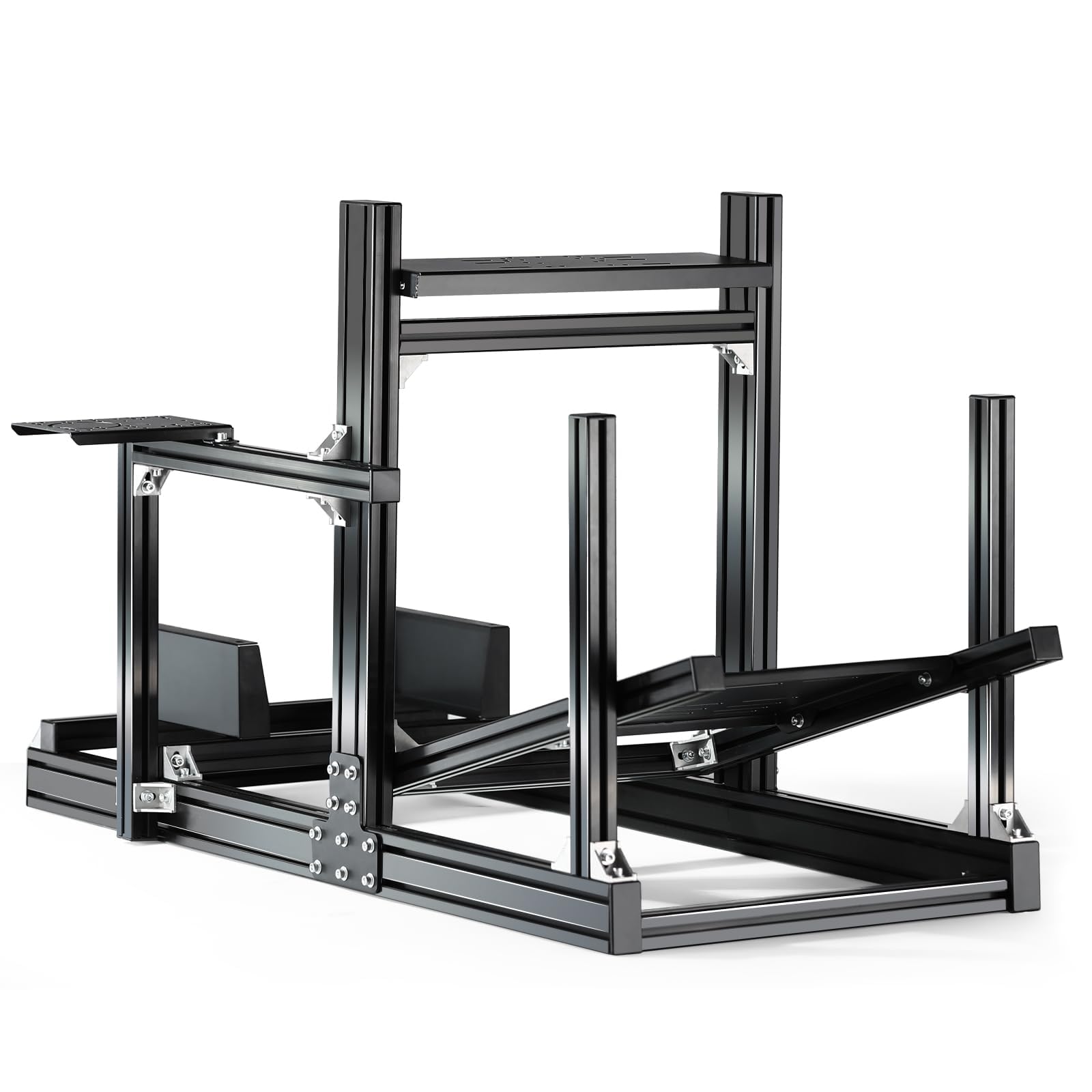
The Anman 8040 arrives without a seat, and that is the first thing to understand about it. This is a frame for someone who already has a racing seat or wants to choose one, not a complete cockpit you unbox and drive. The 8040 aluminum profile is the same sturdy material used by our top pick, and at 68.3 pounds it is lighter and easier to move.

The frame is designed for stepless adjustment of the seat, wheel, and pedals, and the T-slot construction means you can add a monitor stand, shifter, or handbrake without drilling. We like that kind of blank canvas, especially for a DIY builder who wants to set the cockpit around a specific wheelbase. The quick-lock system lets one person adjust the position without chasing a second pair of hands.

It is not the right first cockpit for most people. By the time you add a seat and sliders, the gap to a complete rig narrows, and you still have to sort the mounting. But if you already have a seat from a track car or a simulator, the Anman is a rigid, adaptable frame that leaves room for the rest of the build. That makes it an also-consider, not a shortcut.

Pros

  • Rigid 8040 aluminum-profile frame
  • Stepless seat, wheel, and pedal adjustment
  • Lighter than the Marada 8040
  • T-slot frame supports add-ons

Cons

  • Seat and sliders sold separately
  • Assembly is a multi-hour project
Our verdict

The Anman 8040 is the frame we recommend for DIY builders who already have a seat and want a rigid aluminum base without a bundled chair.

Check Latest Price
7

Budget Belt-Drive Rigs

Dardoo G29 Cockpit

87 /100
Lab Score Excellent

Key details

Feet
Eight rubber feet
Weight
69.7 lb
Direct Drive
Not supported
Wheel Height
Fully adjustable
View on Amazon

The Dardoo is the lowest-priced complete cockpit in this group that still includes a seat, and that is its main draw. The frame uses thick painted steel, eight rubber feet, and a red seat that looks more expensive than the rig feels. It is a sensible first cockpit for someone who wants a seated driving position without spending aluminum-profile money.

The wheel height adjusts through a wide range, the shifter can go left or right, and the eight rubber feet keep the frame from skating on a hard floor. We found the seat comfortable enough for a casual evening, and the red upholstery gives it some personality.

The stability is the part to watch. The steering wheel mount can shake during hard correction, and the frame is not built for a strong direct-drive base; Dardoo explicitly positions it outside that market. With a Logitech or Thrustmaster belt-drive wheel, the movement is manageable. With a high-torque direct-drive unit, it is the wrong tool.

That gives the Dardoo a clear ceiling, but it is a friendly one for a first rig. The adjustable wheel height and side-switchable shifter cover the basics, and the seat is easy to live with when the wheel does not fight back. The red seat and rubber feet are small things, but they make the Dardoo feel like a place to sit rather than a starter kit.

Pros

  • Complete cockpit at the budget end
  • Adjustable wheel height
  • Shifter mounts on either side
  • Eight rubber feet grip the floor

Cons

  • Not for direct-drive wheels
  • Wheel mount shakes under hard use
Our verdict

The Dardoo is our budget pick for a belt-driven wheel, with a complete seat and adjustable frame at the lowest entry point here.

Check Latest Price
8

Small-Space Racing

GTPLAYER GTS06

83 /100
Lab Score Excellent

Key details

Seat
Suede-covered chair
Frame
Carbon steel
Weight
33 lb
Folding
Folds with controls attached
View on Amazon

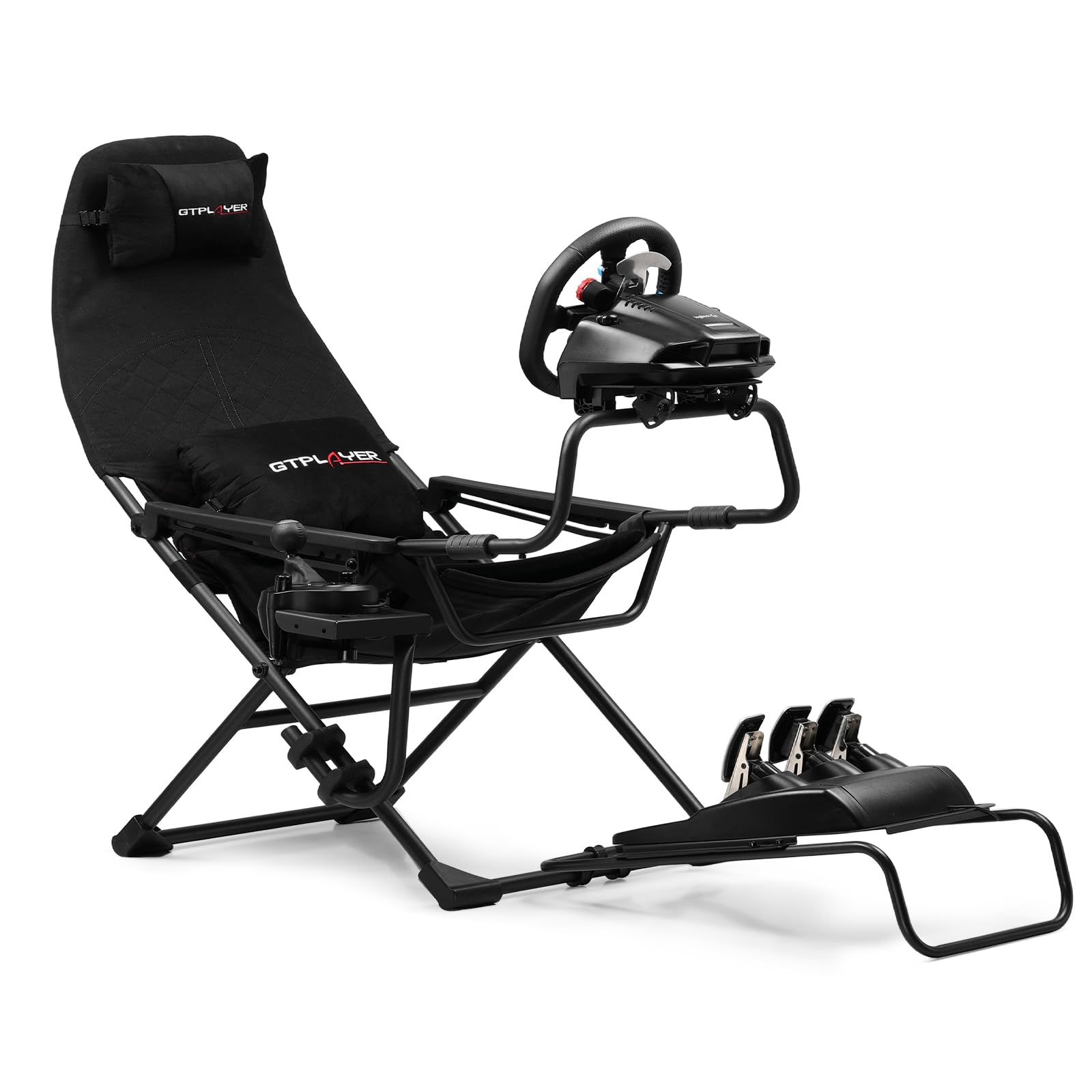
Foldability is the GTPLAYER's whole reason for being. It folds with the wheel and pedals still attached, which means a small bedroom or shared living room can host a cockpit without giving up a permanent corner. At 33 pounds, it is light enough to move by yourself.

The seat is the pleasant surprise: the suede-covered chair is comfortable, and the open cockpit entry makes it easier to get in and out than a deep bucket seat. We like that for a first rig, because the barrier to a quick race is lower when you do not have to climb over a side bolster.

The frame is where the budget shows. The bar under your legs sits high, the wheel platform can feel too tall when you sit upright, and hard braking can introduce flex. The shifter mount is not the place to hang a heavy load, either. For a Logitech-class wheel and casual sessions, those compromises are livable; for a direct-drive base, they are not.

The fold is the feature that earns it a place. It stores easily, sets up quickly, and keeps the driving position consistent across sessions. The rest of the rig is there to support that trick, and for a small room that is the right trade.

Pros

  • Folds with wheel and pedals attached
  • Light 33-pound frame
  • Comfortable suede seat
  • Easy open-cockpit entry

Cons

  • High bar under the legs
  • Frame flexes under hard braking
Our verdict

The GTPLAYER GTS06 is our pick for a small room: a genuinely foldable cockpit with a comfortable seat for a first belt-driven wheel.

Check Latest Price

How We Chose and Tested the Best Sim Racing Cockpits

We started by researching the cockpit styles that show up most often in sim racing forums and retailer reviews, then filtered for frame material, mounting patterns, seat design, footprint, and whether the rig could accept common wheelbases and pedal sets without drilling. That left us with six cockpits, which we tested over eight months. I assembled each one solo, timed how long it took, and noted whether the instructions actually matched the hardware in the box.

The rigs lived in a spare room and a garage, not a lab. I used them for daily 30-to-60-minute sessions and longer weekend stints, and I invited friends between roughly 5-foot-4 and 6-foot-2 to swap in so I could watch how quickly the seat, wheel deck, and pedals adjusted from one driver to the next. With each cockpit, I ran repeated hard-braking drills, climbed in and out dozens of times, and checked the bolts after a week of use to see what had loosened.

I also paid attention to the less glamorous stuff: whether the seat padding flattened after an hour, whether the frame creaked when I pushed back from the wheel, and whether the pedal plate flexed under a stiff load-cell brake. Assembly quality showed up in small ways, including misaligned holes, vague instructions, and parts that needed two people, and value came down to how much adjusting and bolting I had to do before the rig felt solid. The cockpits that made the cut were the ones that stayed quiet, stayed tight, and fit a range of drivers without a fight.

How to Choose a Sim Racing Cockpit

Start With Rigidity and Wheel Torque

A cockpit only feels convincing when the wheel stays where you put it. A 40×80mm aluminum-profile frame, like the one on our top pick, is the stiffest and most adjustable option here; 50mm steel tube is the value route, and folding frames trade some rigidity for storage. Match the frame to your wheelbase: the Next Level Racing GTRacer 2.0 is rated to 13 Nm, while the Dardoo G29 is explicitly not for direct drive. If you run a strong direct-drive base, spend here first.

Put the Seat and Driving Position First

Seats are where cockpit budgets hide. A reclining seat with sliders lets two drivers share the rig, and lumbar and neck pillows make a bigger difference over a long race than a fancy stitch pattern. The Marada red-seat cockpit includes both pillows and a 90–180-degree recline; the Next Level Racing uses a double recliner and dual sliders. Aim for the position you can hold for an hour, not the one that looks raciest in a photo. If the seat is flat or short, budget for a cushion.

Check Mounts, Pedals, and Expansion

Your wheel's bolt pattern is the first compatibility check, followed by pedal width and whether you want a shifter or handbrake. A frame with T-slot profile, like the Marada 8040 or Anman, lets you move mounts later; a predrilled tube frame is quicker but less flexible. A built-in monitor mount, as on the ARES WING, saves floor space, but the included brackets may not reach every screen. Check VESA pattern and bracket length before you plan the room around it.

Plan for Space, Folding, and Assembly

Measure the footprint before you buy, then measure the path to the room. A profile rig like the Marada 8040 is a permanent piece at 104.7 pounds; the GTPLAYER GTS06 folds with the wheel and pedals attached and weighs 33 pounds, which suits a shared room. Assembly is the other hidden cost: aluminum-profile kits can take an evening or more, while a prebuilt frame may arrive mostly together. If you will fold it weekly, prioritize the hinge and seat entry over ultimate stiffness.

Frequently Asked Questions

Final Verdict

The Marada 8040 is the cockpit we recommend first for a serious sim racing setup. Its aluminum-profile frame is the stiffest foundation here, the mounting points move with your equipment, and it has the headroom for a strong direct-drive wheel. The trade-off is a multi-hour build and a seat that may need a cushion.

If you want a complete GT cockpit with a better seat and simpler brand support, the Next Level Racing GTRacer 2.0 is the alternative; for a belt-driven wheel on a tighter budget, the red-seat Marada is the value route.