Best USB Gaming Headsets of 2026

Plug a USB headset in and the computer handles the rest — no sound card, no charging, no pairing menu at midnight. The tradeoff is that convenience was always the easy part. What varies wildly is what comes out of the drivers and, more often, what your teammates hear through the mic. I've heard plenty of headsets that were loud and joyless, and a few where a modest price tag felt like a clerical error. A good one fixes what you actually notice mid-match: footsteps you can place, a mic that doesn't make you sound like you're calling from a bus station, and earcups that don't force a break after an hour.

Comfort is where spec sheets lie most — clamping force and pad depth matter far more than the gram count — so every pair got worn through long sessions rather than ten-minute auditions. Over the past six months, my team and I put 12 USB headsets through co-op nights, solo campaigns, and the usual sprawl of video calls. The ones below earned their spots on sound and mic clarity first, with build quality and value close behind.

1

Best Overall

HyperX Cloud II

91 /100
Lab Score Outstanding

Key details

Weight
11.3 oz
Drivers
53mm dynamic
Surround
Virtual 7.1
Connection
USB sound card + 3.5mm
View on Amazon

The Cloud II's sound is why it holds the top spot. The 53mm drivers put real weight behind engines and explosions without burying dialogue, and the virtual 7.1 from the included USB sound card spreads the mix wide enough to place a shooter by ear rather than by the damage indicator. Of everything in this roundup, this is the audio we trust most, and audio is what you live with for hours at a time.

The USB connection is more than a plug. The cable detaches, and the inline sound card, rather than a bare adapter, handles the surround processing and volume, so the headset behaves the same on a desktop, a PS4, or a laptop whose headphone jack has gone crackly. There is also a 3.5mm cable for a controller, plus a mesh bag and an airplane adapter — odd accessories for a gaming headset, and useful the moment the same set goes in a backpack.

Comfort is close to the best here too. The memory foam and leatherette pads seal without clamping hard, and the aluminum frame keeps the whole thing from flexing when you pull it on. The microphone is the compromise: detachable and clear enough for callouts, but thinner than the audio, and the part most likely to need replacing. For team chat that is fine; if you record voice for a living, it is the one thing to listen to before you commit.

Pros

  • Full, weighty sound with usable virtual 7.1
  • USB sound card and a detachable 3.5mm cable
  • Memory foam comfort on an aluminum frame

Cons

  • USB-A plug only, no USB-C
  • Ear pads and headband covering wear with use
Our verdict

We recommend it to anyone who wants the best sound in this roundup, a USB sound card that moves between PC and console, and comfort that lasts a long session.

Check Latest Price
2

Best USB-C

Razer Kraken V4 X

88 /100
Lab Score Excellent

Key details

Weight
14.1 oz
Drivers
40mm TriForce
Connection
USB-C with USB-A adapter
Microphone
Retractable cardioid
View on Amazon

One cable does the whole job. The Kraken V4 X ends in USB-C, and the box includes a USB-A adapter, so the same headset moves between a laptop, a desktop, and a PS5 without a dongle or a dock. There is no 3.5mm option anywhere, which is the trade: on a console you plug into the machine rather than the controller, and anything without a USB host port is out.

We are fonder of the microphone than of most boom mics in this group. It retracts into the left earcup instead of clipping on, a red LED and a spoken confirmation tell you when it is muted, and the cardioid pattern does its job on keyboard noise. Retraction is the detail we keep coming back to — nothing to lose in a bag, nothing angling into your cheek on a call.

Sound is where it gives ground. The 40mm TriForce drivers are clean through the mids and top, but there is less low end here than the Cloud II delivers, and a bass-led game sounds lean. What we did not expect was how much the fabric-backed pads help: they run cooler than straight leatherette over a long evening, and cool ears are the difference between a four-hour session and a two-hour one.

The one thing to watch is the mic arm. Retraction adds a mechanism a plug-in boom does not have, and if the microphone does fail it is that assembly that goes first, so treat the arm gently and buy from a retailer with a straightforward return window. That is a small risk next to how much of the design works.

Pros

  • Convertible USB-C and USB-A connection
  • Retractable mic with a visible mute cue
  • Hybrid fabric pads stay cooler

Cons

  • Heavy at 400 g
  • Shallow earcups press on larger ears
Our verdict

This is the USB-C headset we point people to when the laptop has nothing else, and the retractable mic with its spoken mute cue is worth the premium.

Check Latest Price
3

Best Value

FIFINE H9

87 /100
Lab Score Excellent

Key details

Weight
11.6 oz
Drivers
50mm dynamic
Connection
USB or 3.5mm
Microphone
Detachable boom
View on Amazon

The microphone is the part of the H9 that surprised us. It detaches completely for solo sessions, carries voice brightly without dragging in much room noise, and the inline control box gives you mic gain and a mute switch without opening a single settings menu. Detachable booms are the feature we have grown most attached to in this group, and this is one of the best of them.

The second cable is the other half of the appeal. Most headsets here give you USB and stop; this one also has a 3.5mm lead, so the same set works on a desktop, a PS5, a Switch, or a phone with a jack. If your gaming moves between a desk and a couch, that is worth more than any figure on the box.

Sound is tuned forward: dialogue, footsteps, and callouts sit on top of the mix, which is where a headset for team games wants them. It is not a bass headset — music sounds tidy rather than exciting, and an explosion will not rattle your jaw the way the Cloud II's will. At this end of the market that is a good trade, and it is why the H9 is our value pick.

Pros

  • Detachable boom with clean voice pickup
  • USB and 3.5mm in one headset
  • Inline box with separate mic gain and mute

Cons

  • Snug clamp bothers glasses wearers
  • Little isolation from room noise
Our verdict

Our value pick: a detachable boom that sounds far better than the price suggests, two ways to connect, and a firm clamp as the only real tax.

Check Latest Price
4

Best for Voice Chat

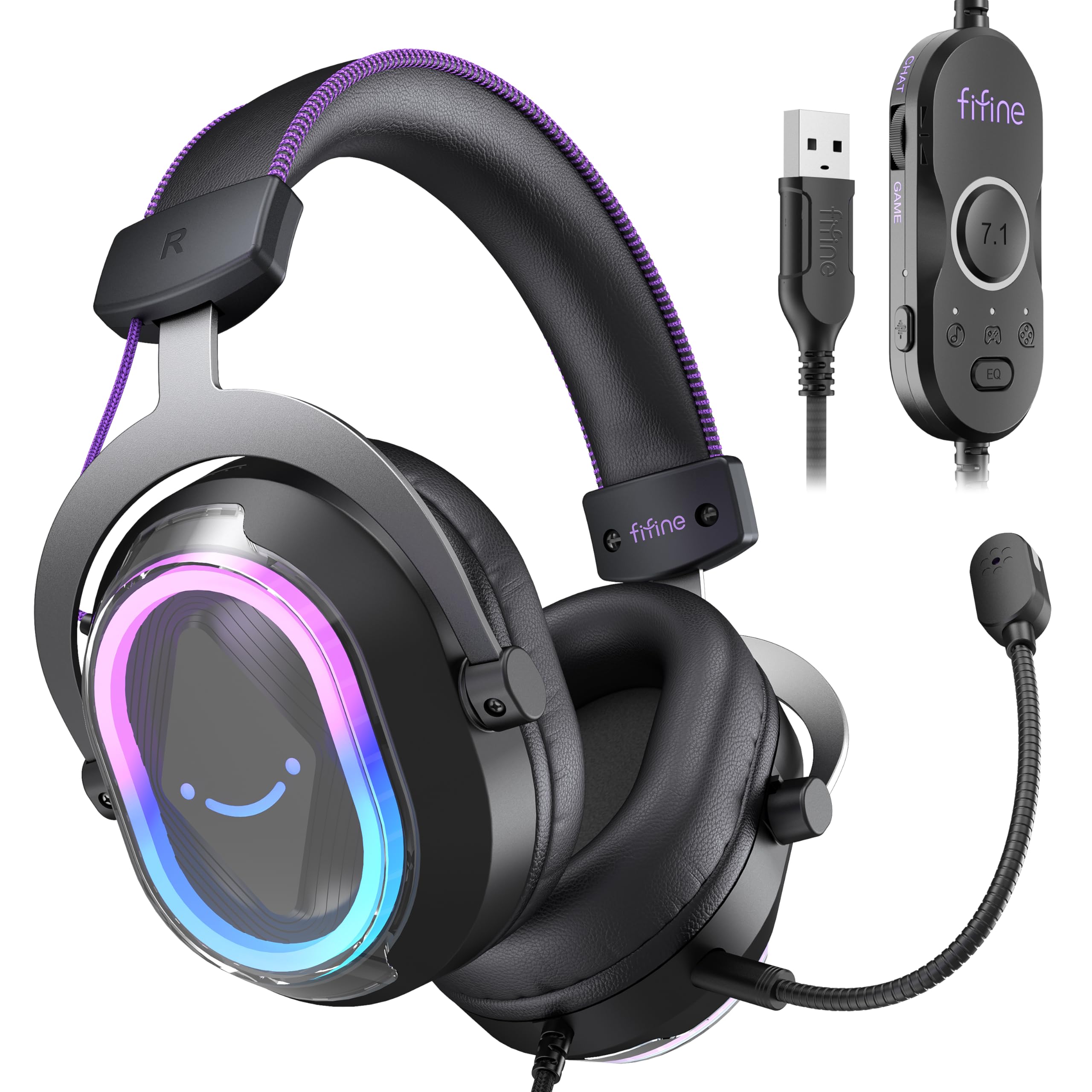
FIFINE H13BP

86 /100
Lab Score Excellent

Key details

Drivers
50mm dynamic
Controls
Inline box, 7.1 and EQ
Connection
USB-A
Microphone
Detachable, noise-canceling
View on Amazon

The inline box is the whole reason the H13BP is here. It puts volume, mic mute, a 7.1 toggle, three EQ modes, and a game/chat balance dial on the cable instead of behind a software download, and the balance dial is the one we used most: pulling voice up without losing the game mix is the thing every squad wishes their headset did. We think that is a fair trade for drivers that are not the last word in detail.

The 50mm drivers are warm and full, tuned more for immersion than for pinpoint cues, and the detachable mic is genuinely clean — among the best voice quality in this group. Eleven lighting modes pulse through a transparent rhombus shell, which we minded less than expected, because the lights face away from you. On a stream it reads as a feature; in a shared office it reads as a lamp.

At 390 g it is a substantial headset, and the protein-skin pads are soft, sealing, and warm after a few hours. If you play in short evenings that will not matter. If you play until the small hours, the lightest set in this roundup is the one to look at, and this is not it.

Pros

  • Inline box controls 7.1, EQ, and chat balance
  • Detachable mic with clean voice pickup
  • Distinctive rhombus shell with RGB modes

Cons

  • USB-A only; needs an adapter for USB-C
  • Headband runs large on smaller heads
Our verdict

We recommend it to anyone whose chat matters as much as the game: the inline box splits voice and game audio, and the detachable mic is one of the cleanest here.

Check Latest Price
5

Best Lightweight

SADES SA902

89 /100
Lab Score Excellent

Key details

Weight
7.05 oz
Drivers
40mm dynamic
Surround
Virtual 7.1
Connection
USB-A
View on Amazon

Two hundred grams does not sound like a feature until you have worn something heavier through a five-hour session. The SA902 is the lightest headset in this roundup by a wide margin, and that is what you notice: no pressure across the crown, no hot band behind the ears, no reason to take it off between matches. The synthetic leather cups are thin, and thin is part of how it stays light.

For the least money here, the sound is genuinely good. The 40mm drivers run bright and forward, which makes callouts and gunfire easy to separate, and the virtual 7.1 widens the field enough to be useful rather than decorative. It is the cheapest way into a headset that does not sound cheap, and the money clearly went into the drivers.

The microphone is where the budget shows. Omni-directional means it hears the fan across the room as well as it hears you, so push-to-talk stops being a preference. The inline remote is basic too, with a mute switch that is more trustworthy than the volume wheel. None of that undoes the case for it: light, loud, and clear for the money.

Pros

  • Lightest headset here at 200 g
  • Bright, clear sound with virtual 7.1
  • Inline remote with mute and volume

Cons

  • Windows-only USB connection
  • Earcups run small for larger ears
Our verdict

The budget pick we actually recommend: the lightest headset in this group, with sound that punches past its position on the price list.

Check Latest Price
6

Long Sessions

EKSA E900 Pro

86 /100
Lab Score Excellent

Key details

Drivers
50mm dynamic
Connection
USB and 3.5mm cords
Microphone
Detachable, noise-canceling
View on Amazon

Comfort is where the E900 Pro makes its case. The adjustable headband spreads weight rather than clamping down, the memory foam cups stay comfortable well past the point where most headsets start to ache, and the detachable cable means a snagged cord does not take the whole headset with it. If your ears are the first thing to complain in a long session, this is the set to put on.

The 50mm drivers are loud and clear, tuned for games rather than music, and the 7.1 processing does enough with positional audio to be worth switching on. What we like more is the dual-cord design: USB at the desk, 3.5mm everywhere else, both detachable, so a damaged cable is a cheap replacement instead of a new headset.

The microphone is the gamble. It is detachable and noise-cancelling on paper, and at its best it is clear enough for a squad — but voice is the dimension where this headset gives ground, and a boom that quits within a few weeks is the failure to plan around. Test it the day it arrives, and buy where returns are easy.

So this is a comfort-and-cables recommendation with a question mark over the mic. We rate it for marathon sessions and for anyone who wants one headset across a PC and a console; if your voice is the part that has to be reliable, the FIFINE H9 handles that better for less.

Pros

  • Excellent comfort for long sessions
  • USB and 3.5mm detachable cords
  • Loud, clear 50mm sound with 7.1

Cons

  • Frame and pads show wear early
Our verdict

We rate it for marathon sessions: all-day comfort, two detachable cables, and good positional audio, as long as you can live with a microphone that may not last.

Check Latest Price
7

Streaming

Razer Kraken Kitty V2

87 /100
Lab Score Excellent

Key details

Drivers
40mm TriForce
Lighting
Stream-reactive RGB
Connection
USB-A
Microphone
Cardioid boom
View on Amazon

The kitty ears are the reason to read this card, and we are not being sarcastic. The V2 is designed to look intentional on camera, and it works: the ears sit above the headband, the earcup lighting reacts to stream alerts and emotes in whatever color you set, and the quartz pink shell is the same color all the way around. If you stream with a face cam, nothing else here does this job.

The audio underneath is decent rather than special. The 40mm TriForce drivers handle dialogue and mid-range detail well, the 7.1 processing is the same Windows-only version Razer uses elsewhere, and bass is modest — it does not have the weight of the Cloud II. For a headset that spends its life on a stream, that is an acceptable place to land, and the cardioid mic is clear enough to carry chat.

Where it lands for us is as a streamer's headset rather than a competitive one. The look and the reactive lighting are worth the money if your face is on camera, the audio is good enough to back that up, and the firm clamp that keeps a closed cup sealed is the price of wearing it through a whole broadcast.

Pros

  • Stream-reactive RGB and kitty ears
  • Clear cardioid mic for chat
  • TriForce drivers with Windows 7.1

Cons

  • Fixed mic cannot be detached
  • USB-A only, PC-focused
Our verdict

We recommend it to streamers who want the headset to look like part of the set: reactive lighting and kitty ears are the draw, and the audio is good enough to back them up.

Check Latest Price

How We Tested the Best USB Gaming Headsets

We built the shortlist from every wired USB headset we could find with a boom mic and over-ear cups, then cut anything that used USB only for charging, anything without inline volume or mute, and anything from brands with a visible pattern of dead-on-arrival complaints. That left 12 headsets across the price range, all of them plug-and-play on both a desktop and a laptop.

Each one went into the same rotation: my desk for late-night co-op, a laptop on the couch for a solo campaign, and the less glamorous stretch of video calls the next morning. I wore every headset for at least one four-hour sitting and noted where it started to bite — the top of the head, behind the ears, the clamp along the jaw — and had two teammates with wider heads and one who wears glasses repeat the exercise, since comfort that only works on one skull isn't comfort. I also sat in a room with a loud mechanical keyboard and a TV going to see how much noise leaked in, and checked how much leaked out at a normal listening volume.

For the microphone, each headset recorded the same 30-second paragraph, once at speaking volume and once nearly whispering, and I played the clips back through cheap laptop speakers to hear what teammates would actually get: hiss, popping on plosives, keyboard clatter pulled in from across the desk, or a thin, distant sound once the boom drifted more than an inch from my mouth. Durability meant treating them badly — coiling the cable tight around the cups, stuffing them in a backpack, tugging the cord at an angle, then checking the joints for creaks and looseness. Reliability showed up over weeks instead of minutes: whether they reconnected after the computer slept, whether chat audio dropped mid-match, whether the mute switch still clicked true in month five. Value was judged on the whole package, not the spec sheet.

How to Choose a Usb Gaming Headset

The Plug Decides Where the Headset Can Go

USB-A is still the default on desktops and older laptops; USB-C is what a current laptop has. A headset that ends in USB-A only needs an adapter to travel, which is exactly why the Kraken V4 X ships with one in the box and why we rate it for anyone with two ports and no patience. A second 3.5mm cable is the other kind of insurance: it is the difference between a headset that works on a PS5, a Switch, and a controller and one that stays at the desk.

Check what is in the box before you get distracted by driver specs. The FIFINE H9 and the EKSA E900 Pro both give you two ways in; the SADES SA902 gives you one, and it only speaks Windows.

The Cable Is a Control Panel

An inline box is the difference between muting yourself with a thumb and hunting through Windows settings mid-match. The FIFINE H13BP puts volume, mic gain, mute, 7.1, and a game/chat balance dial on the wire, and that last control is the one that stops a loud party from drowning out footsteps. Anything mounted on the cable works with no software at all, which matters on a locked-down work laptop.

The trade is a small box dangling off your desk and one more component in the chain. Route the cable so the box rests on the desk rather than hanging by its own weight, and it will outlast the headset.

The Microphone Is Half the Purchase

Your squad hears the microphone, never the drivers, so pick by pickup pattern first. Cardioid capsules, like the ones on the Kraken V4 X and the Kitty V2, reject sound arriving from behind them; omni capsules such as the SA902's take in the room along with your voice. That single difference decides whether a mechanical keyboard is background texture or the main event.

A detachable or retractable boom is worth paying for. It moves out of the way for solo sessions, and it turns a worn part into a replacement instead of a dead headset. Look for a hardware mute you can hit without leaving the game.

Comfort You Can Read Before You Buy

Weight is the one comfort figure that actually gets published, and it is telling: 200 g at one end of this group, 400 g at the other. Under about 300 g you stop noticing a headset during a long session; past 350 g it becomes something you take off between matches. Pad material comes next, and fabric-backed cups run cooler than leatherette over an evening.

Clamp is the variable no listing gives you, and it is the one glasses wearers feel first. Buy somewhere with a return window if you have a wide head, wear glasses, or plan to keep the headset on for six hours at a time.

What Fails First, and What to Pay For

Headbands, cable joints, and earpads are where wired headsets die, and all three are visible in a listing if you know to look. An aluminum frame and a detachable cable turn two of those into cheap fixes; a fixed cable and a plastic yoke turn them into a new purchase. Warranties in this group run from one year to two, which tells you something about the maker's own confidence.

We take a metal frame and a replaceable cable over an extra lighting mode every time. It is the least exciting money in the budget and the difference between two years of use and five.

Frequently Asked Questions

Final Verdict

Our recommendation is the HyperX Cloud II. It gives you the fullest sound in this roundup, a USB sound card that carries surround and volume to a PC or a PlayStation without software, and memory foam that stays comfortable past the point where most headsets ask to come off. The microphone is the one compromise, and for team chat it is a small one.

If your laptop has only USB-C, the Kraken V4 X is the better buy: one cable, an adapter in the box, and a retractable mic that survives a backpack. If the budget is the whole decision, the SADES SA902 is the lightest way in and does not sound cheap — as long as you game on Windows.