Best Audiophile Gaming Headsets of 2026

For years, gaming headsets and audiophile headphones pulled in opposite directions: one gave you a boom mic and thumping bass, the other gave you a detailed soundstage and no way to talk to your team. A good audiophile gaming headset closes that gap — drivers that hold a bassline together, a mic your friends don't complain about, and a frame that doesn't clamp your skull by hour three. What it fixes is simple: you stop keeping two pairs on the desk.

I've been chasing that single pair for a while. Over the past eight months, my team and I have lived with 11 headsets — wired and wireless, open-back and closed-back — through ranked matches, long music sessions, and too many Discord calls. Here's what I'd tell a first-timer: check impedance and sensitivity before you fall for a spec sheet, because a power-hungry set plugged straight into a controller sounds thin and quiet, and no tuning fixes that. The picks below are the ones that held up.

1

Best Overall

Drop PC38X

81 /100
Lab Score Excellent

Key details

Design
Open-back over-ear
Weight
8.96 oz
Connection
3.5mm wired
Microphone
Bidirectional electret, flip-to-mute
View on Amazon

The detail we ended up using most on the PC38X is the boom mic that mutes when you flip it up. During a long session, that small movement is faster than hunting for a software toggle, and it makes the headset feel built for actual chat rather than an afterthought. The open-back cups do the rest: game audio spreads out instead of sitting in a tight blob, and the mic has a clear, forward voice that cuts through Discord and in-game chat.

At 8.96 ounces, it is one of the lightest wired headsets here, and the velour pads stayed comfortable through a full evening of play. We liked that the cable detaches at the cup, which makes it easier to pack and replaces a wear item without trashing the headset. The 3.5mm plug is about as universal as wired gets: it works with a PC, a PS5 or Xbox controller, a Switch, and a phone with the right adapter.

The open-back design is the real caveat: it won't isolate you from a loud room, and anyone nearby will hear what you're playing. That's the price of the spacious sound, and it's why this one belongs in a quiet setup. For a buyer who wants the most natural game sound and a dependable mic, the PC38X is the simplest way in.

Pros

  • Flip-to-mute mic is quick in chat
  • Light 8.96-ounce build for long sessions
  • Open-back soundstage with clear positional audio
  • Detachable cable and velour pads

Cons

  • 3.5mm wired connection only
Our verdict

For most gamers who want open, detailed sound and a mic that simply works, the Drop PC38X is the wired headset we recommend first.
Check Latest Price
2

Best Lightweight Open-Back

Sony INZONE H6 Air

76 /100
Lab Score Very Good

Key details

Design
Open-back over-ear
Driver
40mm dynamic
Weight
7.02 oz
Connection
USB-C audio box
View on Amazon

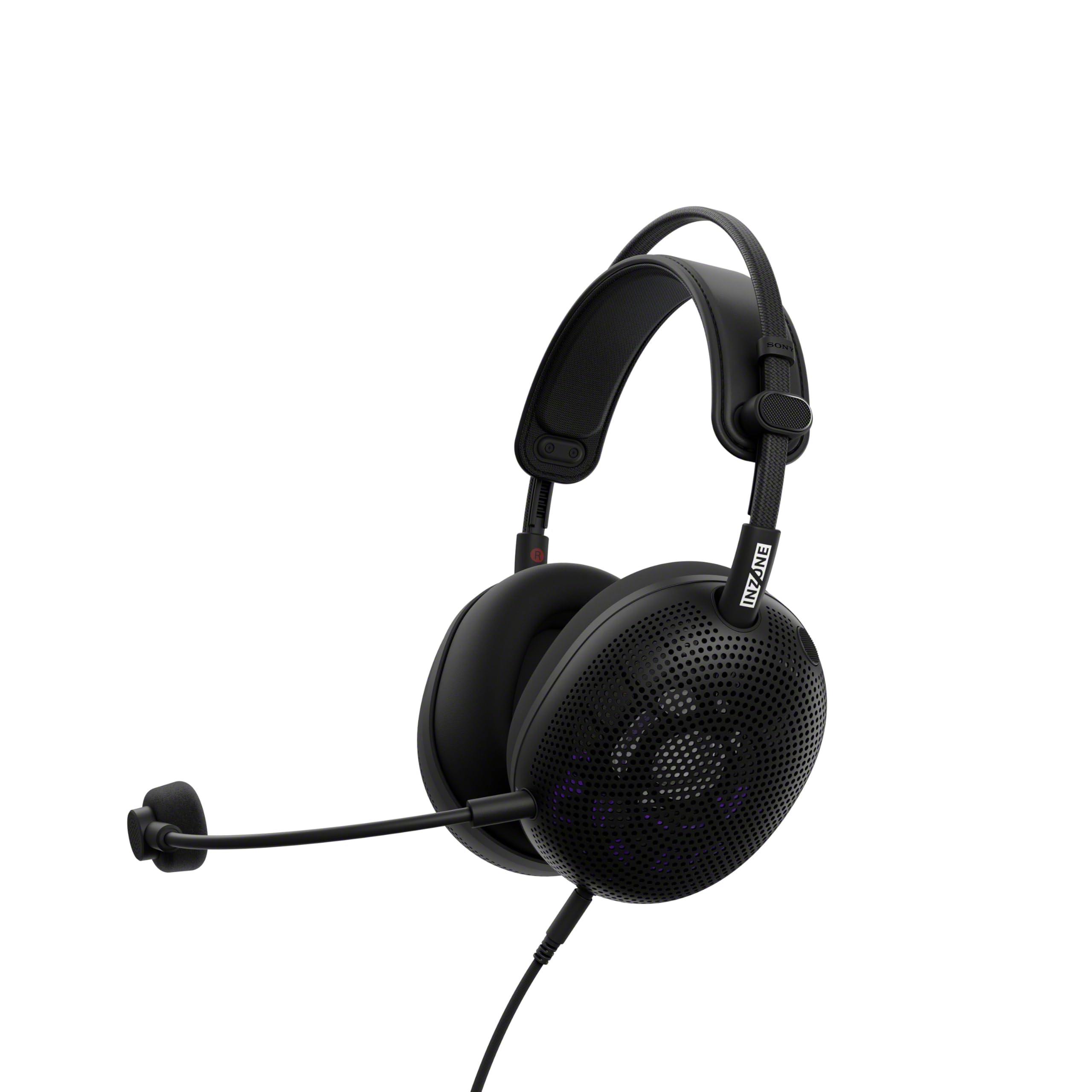
At 199 grams, the H6 Air is the headset we notice least after a few hours. The open-back cups and aluminum frame keep it airy without feeling delicate, and the detachable cardioid boom mic is clear enough for Discord, game chat, and the occasional work call. The USB-C audio box is what makes it a PC and PS5 tool rather than a plain pair of headphones: it gives you a clean digital connection instead of relying on a controller jack.

What sold us is the balance. The H6 Air sounds open and precise without leaning on a bright treble lift. The 40mm drivers are adapted from Sony's studio-monitor line, and the tuning keeps footsteps and dialogue separated without making music sound thin. We also like that the mic detaches completely when you are playing solo, which turns it into a simpler open-back headphone.

The low weight is what makes the H6 Air so easy to live with: at 199 grams, it disappears in a way the heavier wireless models here do not. The mic detaches cleanly, the cable is the only thing you need to manage, and the open-back sound stays clear at low volume. If you want the lightest open-back experience in this group, this is the one.

Pros

  • 199-gram build disappears on long sessions
  • Open-back sound with precise positional cues
  • Detachable cardioid boom mic
  • Metal frame feels sturdy for its weight

Cons

  • USB-C audio box required; no wireless option
Our verdict

The Sony INZONE H6 Air is the open-back headset we choose when weight matters most; it stays comfortable for hours and keeps chat clear.

Check Latest Price
3

Best Planar Magnetic

ASUS ROG Kithara

81 /100
Lab Score Excellent

Key details

Driver
Planar magnetic, open-back
Weight
11.2 oz
Wired Inputs
3.5mm, 6.3mm, 4.4mm balanced, USB-C
Included Accessories
Two ear-pad sets, two cables, USB-C adapter
View on Amazon

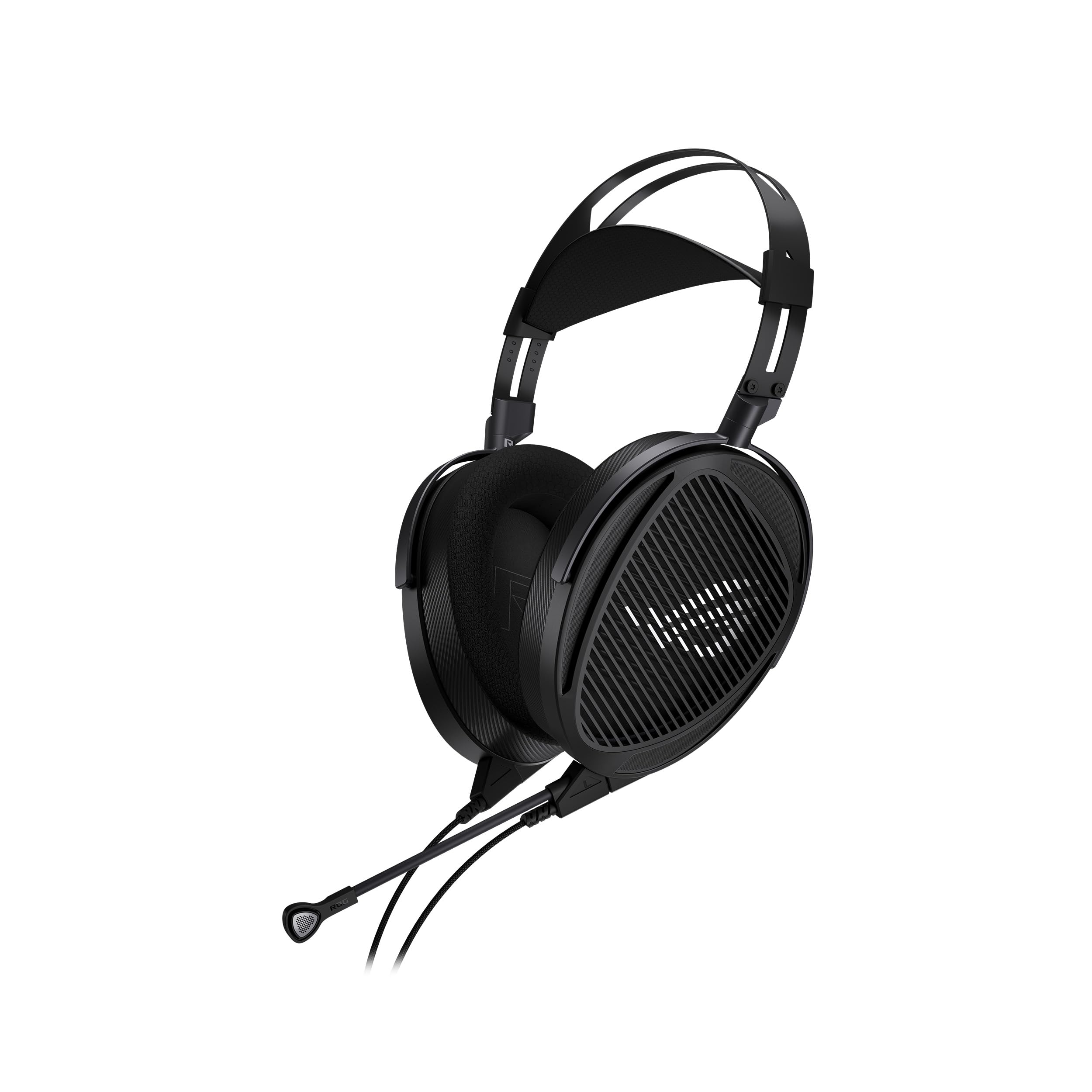
The Kithara's cable is the first clue that this is not a typical gaming headset: the 3.5mm lead ends in swappable tips for 3.5mm, 6.3mm, and 4.4mm balanced connections. The open-back planar magnetic drivers are the bigger story. They give the Kithara the widest, most separated soundstage in this group, and the low distortion keeps busy combat scenes from collapsing into a wall of noise.

The two pad sets are genuinely useful: the hybrid fabric pair is the one we kept on for long sessions, while the leatherette pair seals a little more. The on-cable MEMS boom mic is clear and full-band, and the detachable cable system is the most flexible here. We also appreciate the metal frame and hinges; this is a headset that feels like it can take a few knocks.

The 11.2-ounce weight is the main trade-off. The headband spreads it reasonably well, but the Kithara is not the forget-it's-there headset the Sony is. What you get for that weight is a more overtly audiophile build: metal frame, robust hinges, and a balanced cable option that lets a good DAC show off. If you already own a desktop amp and want the most spacious wired sound here, the Kithara earns its place.

Pros

  • Widest soundstage in this group
  • Balanced 4.4mm cable option
  • Two swappable ear-pad sets
  • Metal frame and hinges feel robust

Cons

  • Mic is sensitive to room noise
  • Fit can take trial and error
Our verdict

The ASUS ROG Kithara is the pick for desktop listeners who want a planar magnetic open-back and can trade some weight for the widest soundstage here.

Check Latest Price
4

Best Premium Wireless

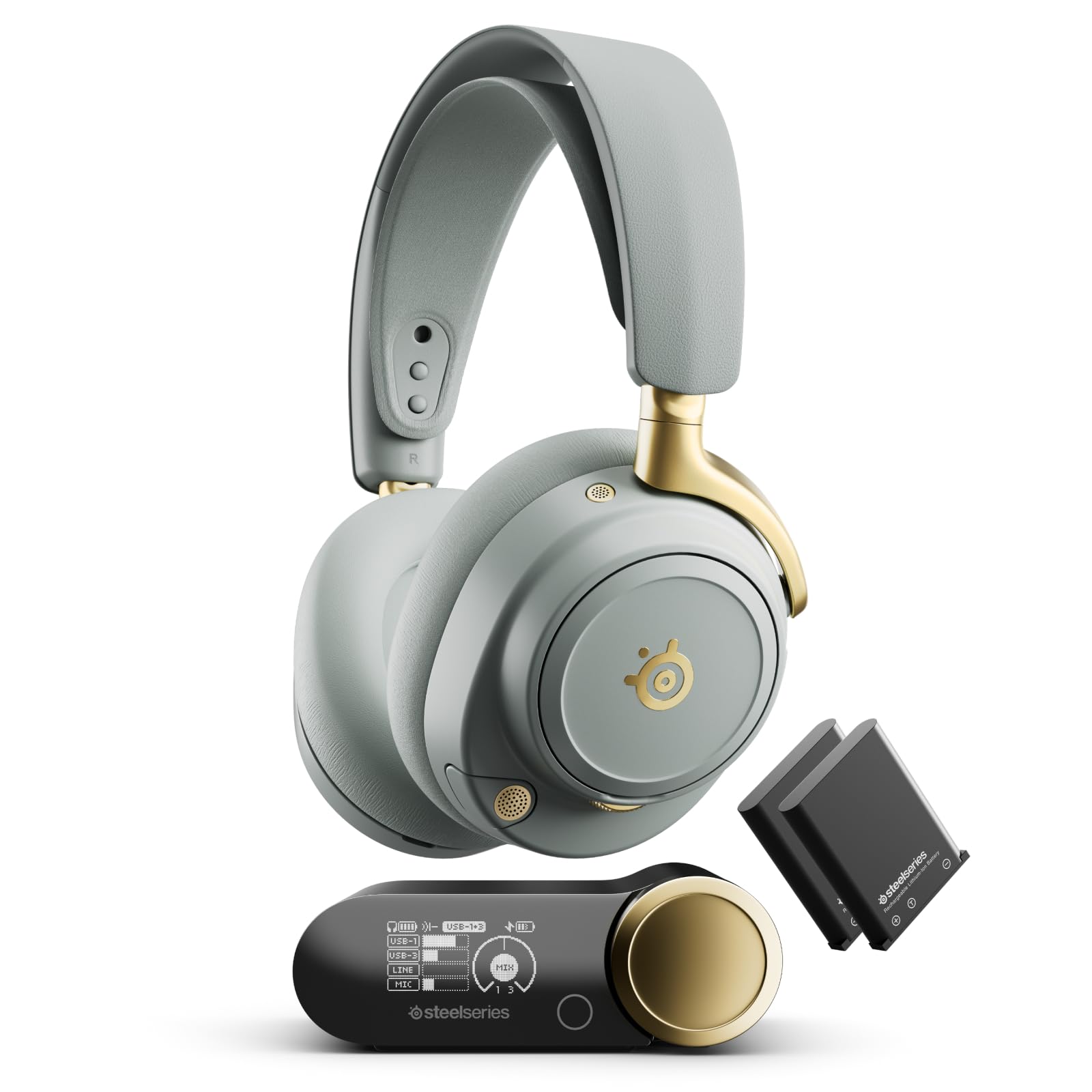
SteelSeries Nova Elite

83 /100
Lab Score Excellent

Key details

Audio
96kHz/24-bit wireless
Weight
11.9 oz
Drivers
Carbon fiber dynamic
Connectivity
2.4GHz, Bluetooth, triple inputs
View on Amazon

The Nova Elite is the most feature-dense headset in this group, and the feature we kept coming back to was the multi-source mixing. You can keep game audio, a Discord call, and a second device on separate inputs and balance them without unplugging anything. The 96kHz/24-bit wireless link and carbon fiber drivers give it a clean, detailed sound that holds up with music as well as games, and the active noise cancellation is a real bonus in a noisy room.

The wireless part is handled well: 2.4GHz for gaming, Bluetooth for a phone, and a triple-input setup that covers PC, PlayStation, Xbox, and Switch. The AI noise rejection on the mic is the other feature that matters in practice; it keeps keyboard clatter and fan noise out of voice chat without making you sound processed. We also like that the battery is designed to swap, which turns a charging pause into a few seconds of downtime.

This is a headset for the player who wants one wireless system for a desk full of devices and is willing to pay for the convenience. The multi-source mixing is not a gimmick; it changes how you manage chat and game audio. If you want the most complete wireless feature set here, the Nova Elite is it.

Pros

  • Four-source mixing without cable swaps
  • 96kHz/24-bit wireless audio
  • AI mic noise rejection
  • Active noise cancellation for noisy rooms

Cons

  • Very expensive for a gaming headset
  • Fit can feel tight
Our verdict

The SteelSeries Arctis Nova Elite is the premium wireless pick for players who want Hi-Res audio, ANC, and multi-source mixing in one system.

Check Latest Price
5

Best Wireless All-Rounder

SteelSeries Nova Pro Wireless

85 /100
Lab Score Excellent

Key details

Battery
Hot-swap dual battery
Drivers
40mm dynamic
Connectivity
Dual USB base station, Bluetooth
Noise Control
Active noise cancellation
View on Amazon

The Nova Pro Wireless is less a headset than a small switching station: its OLED base station holds a spare battery and lets you jump between two USB sources. That is the part we appreciate most. You can leave a PC and a console connected, press a button to switch, and keep playing while the other battery charges. The hot-swap system is the feature that makes wireless practical for long sessions, and it is why this one stays in the conversation despite newer rivals.

Sound is good but not the last word in audiophile detail. The 40mm drivers and 360 spatial audio give games a wide, readable stage, and the ANC does a decent job with a fan or air conditioner. The retractable mic is clear for chat, and the dual wireless connection handles PC, PlayStation, Xbox, Switch, and mobile. We liked the flexibility more than the absolute resolution; the wired open-backs here are the ones we reach for when a game's score matters as much as its footsteps.

If you want one wireless headset for a desk with multiple systems, the hot-swap battery and base station make the Nova Pro Wireless the practical choice. It is not the most resolving headset here, but it is the one that removes the most friction from a multi-device setup.

Pros

  • Hot-swap battery keeps sessions going
  • Dual USB base station switches systems
  • Active noise cancellation for room noise
  • Clear retractable mic

Cons

  • Comfort can wear thin over hours
  • Software and connection setup take patience
Our verdict

The SteelSeries Arctis Nova Pro Wireless is the practical wireless pick for players who juggle multiple systems and want a hot-swap battery.

Check Latest Price

How We Tested 11 Audiophile Gaming Headsets

We started with spec sheets — driver type and size, impedance, sensitivity, whether the mic detaches, whether the wireless runs on a 2.4GHz dongle, Bluetooth, or both — and cut anything that couldn't be driven decently by a motherboard jack or a controller. Then we narrowed by price band and build materials until 11 sets remained, spanning open-back and closed-back, wired and wireless.

Those 11 lived on our desks for eight months. We wore each one through three- and four-hour weeknight sessions in shooters and co-op games, listening for whether footsteps stayed locatable under an explosion and whether a bassline smeared a vocal. Weekends went to music — full albums, not clips — and to voice calls, where we recorded the same paragraph into each mic with a box fan running and a mechanical keyboard clacking, then played the clips back on laptop speakers to hear what a teammate would actually hear.

Comfort got measured, not guessed: each headset on a kitchen scale, then four-hour stretches with notes on hot spots at the crown and pressure behind the jaw, including with glasses on. We ran wireless sets from full charge to shutdown at a fixed volume, taped each cable from cup to plug and paced it from desk to tower, and paired every set to a PC, a console, and a phone, walking two rooms away to see where the signal dropped. Noise isolation we judged next to a running dishwasher and a window air conditioner. Value came last: what the same money buys in plain headphones, and whether the mic and features earn the difference.

How to Choose an Audiophile Gaming Headset

Open-Back Sound Versus Noise Cancellation

Open-back cups let air move behind the driver, which is why the Drop PC38X, Sony H6 Air, and ASUS Kithara sound wider and less boxed-in than a sealed headset. The trade is isolation: open-back models leak sound both ways, so a nearby fan, a talkative roommate, or a loud keyboard will intrude. If you game in a quiet room and want the most natural positional audio, open-back is the better tool. If you need to block out a household or keep your game private, a noise-cancelling wireless model such as the Nova Elite or Nova Pro Wireless is the more livable choice.

Wired, USB, or Wireless

Wired still gives you the most sound for the money: the PC38X uses a plain 3.5mm plug, the H6 Air uses an included USB-C audio box, and the Kithara adds 4.4mm balanced. That last option only matters if you already own a DAC or amp with a balanced output; otherwise the 3.5mm cable is the simpler route. Wireless makes sense when you roam between PC, console, and phone. The Nova Elite mixes up to four sources, while the Nova Pro Wireless adds an OLED base station and hot-swap batteries. You pay for that convenience and add charging to your routine.

Microphone and Voice Chat

A gaming headset lives or dies on the mic, and a boom arm near your mouth still beats an inline mic. The PC38X's flip-to-mute boom and the H6 Air's detachable cardioid mic are the easiest to live with because you can place them close and get them out of the way. Sensitivity cuts both ways: the Kithara's MEMS boom picks up plenty of detail, so keep it off-axis from your keyboard. If your room is noisy, the Nova Elite's AI noise rejection is the more forgiving tool.

Comfort, Weight, and Fit

Weight is the first thing we check because it compounds with clamp force over a long session. The H6 Air is the featherweight at 199 grams; the PC38X is just under 9 ounces; the Kithara is 11.2 ounces; the Nova Elite is 338 grams. Those numbers do not tell the whole story, because a wide headband can make a heavier headset feel stable. If you wear glasses or have a larger head, prioritize return coverage and a headband that adjusts in small steps. Velour or fabric pads run cooler than leatherette, which matters if you play for hours.

Platform Connections and Extra Gear

Match the headset to the jacks you actually use. A 3.5mm headset like the PC38X plugs into a PS5 or Xbox controller, a PC, or a Switch without a box; the H6 Air expects USB-C through its audio box; the Kithara gives you 3.5mm, 6.3mm, and 4.4mm plus a USB-C adapter. For a desk with two consoles, the Nova Pro Wireless base station is the least fussy switch. Buy for the source you own today, not the one you might add later.

Frequently Asked Questions

Final Verdict

The Drop PC38X is the audiophile gaming headset we recommend first because it gets the fundamentals right: an open, detailed soundstage, a mic that flips up to mute, and a light fit that disappears over a long session. If you need wireless, the SteelSeries Arctis Nova Pro Wireless is the practical alternative, with hot-swap batteries and a base station that switches between systems. Choose the Sony H6 Air instead if weight is your top priority; at 199 grams, it is the easiest of these to forget you are wearing.