Best Gaming Earbuds of 2026

Gaming headsets do one thing beautifully and one thing badly: they put you inside the sound, then they clamp onto your head for six hours. Earbuds fix the second half of that. They keep your ears cool, they don't flatten your hair before a video call, and they leave room for glasses — but cheap pairs hiss, slide out mid-match, and make your voice sound like it's coming through a drive-thru speaker. What you're actually shopping for is a set that gets positional audio right without charging you in comfort.

Over the past five months my team and I have played through 16 pairs of gaming earbuds — ranked nights, weekend co-op sessions, a lot of Discord calls — and the spread was wider than I expected. Fit decided more winners than drivers did: anything that shifted when I tilted my head was out, however good the tuning. Cable length, mic clarity, how they looked sitting on a desk, and whether the sound justified the price all got written down. A handful earned a permanent spot in my bag.

1

Best Overall

AOC ACT3512

88 /100
Lab Score Excellent

Key details

Latency
20 milliseconds
Connection
2.4GHz dongle + Bluetooth 5.3
Microphone
Noise-cancelling built-in
Battery Life
8 hours, 32 with case
View on Amazon

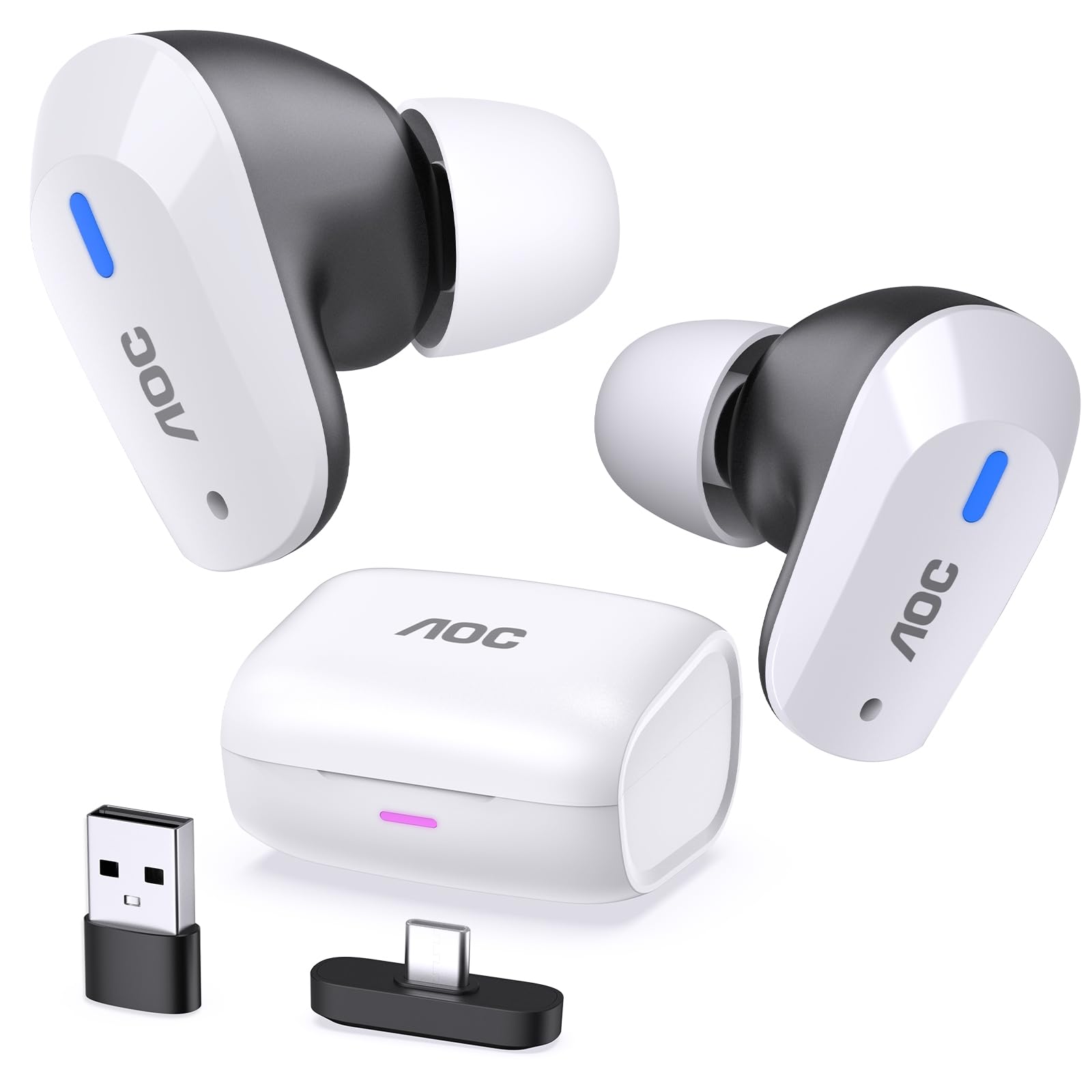
A 20 ms latency mode is the reason the AOC ACT3512 sits at the top of this list. The figure only applies through the USB-C 2.4GHz dongle, but that is exactly the connection we want for shooters and racing games: it bypasses Bluetooth's extra delay and keeps gunfire and footsteps close to the picture. We also like that the dongle comes with a USB-C-to-USB-A adapter, so the same receiver can move from a handheld to a desktop without a second purchase.

Bluetooth 5.3 is the second half of the appeal. We used the dongle for gaming and Bluetooth for phone calls and media, and the switch is what makes these a travel pair rather than a desk-only accessory. The charging case stretches total playback to 32 hours, with up to 8 hours in the buds, and the noise-cancelling mic handles chat without a boom arm. For a wireless pair, that combination is unusually complete.

Comfort is the one place to slow down. The bud shape does not suit every ear, and smaller ears may need a tip swap before a long session. We recommend testing the seal before a ranked match; a loose fit costs more positional detail than any codec or driver spec.

The low-latency mode lives on the dongle, not on Bluetooth, so the receiver is the one accessory you have to keep track of. The included adapter helps, but it is small enough to lose in a bag. Keep the dongle in the case and the AOC is the easiest wireless recommendation here.

Pros

  • 20 ms low-latency 2.4GHz mode
  • Dual-mode dongle and Bluetooth 5.3
  • Up to 32 hours with charging case
  • Noise-cancelling built-in mic

Cons

  • No wired fallback when the battery dies
Our verdict

The AOC ACT3512 is the wireless gaming earbud we recommend first: its 2.4GHz dongle, low-latency mode, and Bluetooth backup cover console, handheld, and phone use.

Check Latest Price
2

Best Wired All-Rounder

HyperX Cloud Earbuds II

83 /100
Lab Score Excellent

Key details

Plug
90-degree 3.5 mm
Microphone
Built-in
Driver Size
14 mm dynamic
Eartip Sizes
Four sizes included
View on Amazon

A wired gaming earbud still makes sense when the device in front of you has a headphone jack. The HyperX Cloud Earbuds II is built for that handoff: a 3.5 mm plug, a low-profile 90-degree connector, and a hard shell case that keeps the cable from becoming a nest in your bag. We like the angled plug in particular because it stays out of the way when the controller is in your lap.

The 14 mm drivers are bigger than the 6 mm and 10 mm drivers in the wired IEMs here, and the sound has enough weight for games without sounding bloated. Four tip sizes, including an extra-small, make it easier to find a seal. This is the pair we hand to someone who wants one wired set for a Switch, a laptop, and a console controller. The built-in mic is there for chat, and the hard case means you can toss it in a bag without babying it.

Fit is the variable. The rounded shell does not nestle into every ear, and the four tips fix the seal more often than they fix the shell shape. Sound is good enough for footsteps and chat, but it is not the most detailed pick in this group. If you mostly play at a desk, a detachable-cable IEM is the better long-term bet; for a bag, the HyperX's case does more for survival than any spec sheet number.

Pros

  • Hard shell case protects the cable
  • Four tip sizes, including extra-small
  • Low-profile 90-degree plug
  • Built-in mic for chat

Cons

  • Mic clarity is inconsistent
Our verdict

For a wired pair that travels between a Switch, a controller, and a laptop, the HyperX Cloud Earbuds II is our pick: four tip sizes, a hard case, and a built-in mic make it an easy kit.

Check Latest Price
3

Best for Spatial Audio

Final VR3000

81 /100
Lab Score Excellent

Key details

Ear Hooks
Locking design
Microphone
In-line
Driver Size
6 mm dynamic
Eartip Sizes
Five pairs silicone
View on Amazon

Spatial audio is the whole brief of the Final VR3000, and the ear hooks are how it stays usable. The hooks lock over the ear to cut cable noise and keep the shells pointed into the canal, which matters when you are turning your head in a VR game or tracking a fight across a large map. We choose this pair when the sense of place matters more than the last word in bass.

The 6 mm dynamic drivers are built for an open, spacious presentation rather than a thick low end. Five pairs of silicone tips use two hardnesses to help you get a seal, and the inline mic and three-button remote keep chat and volume within reach. It is a more specialized sound than the KZ ZS10 Pro, which is the detail-first alternative here.

The fit is not one-size-fits-all: the shells are on the larger side, and the five tip pairs are there for a reason. The ear-hook system is what keeps it on the list, because it makes the spatial effect feel stable instead of fragile. If you want a plain, neutral IEM for music first, this is not the most natural buy; for VR and big maps, the specialization is the point.

Pros

  • Spacious spatial presentation
  • Locking ear hooks reduce cable noise
  • Five pairs of silicone tips
  • Inline mic and remote

Cons

  • Premium price for a wired pair
Our verdict

The Final VR3000 is the wired pick for players who want a spacious, VR-style presentation; its locking ear hooks and inline mic make it more usable than a plain music IEM.

Check Latest Price
4

Best Wired for Detail

KZ ZS10 Pro

89 /100
Lab Score Excellent

Key details

Cable
Detachable 3.5 mm
Drivers
4BA+1DD
Faceplate
304 stainless steel
Frequency Range
7-40000 HZ
View on Amazon

Five drivers in a stainless-steel faceplate is a lot of hardware for a gaming earbud, and the KZ ZS10 Pro wears it well. The 4BA+1DD array and the metal faceplate make it look and feel more expensive than the rest of the wired group, while the detachable cable means the connection is serviceable. On paper, this is the detail-first pick here.

That detail is the reason to buy it. The KZ ZS10 Pro is near the top of this set for crisp separation, and it makes footsteps, reloads, and directional cues easy to pick apart without a muddy low end. We like it for tactical shooters and for music between matches; it is a desk-first pair that rewards close listening.

The cable is the part we trust least; the detachable design is the save, because a replacement cable costs less than a new pair. The KZ ZS10 Pro is a specialist, not the default. It rewards a player who wants to hear the mix, not just the score.

Pros

  • Detailed five-driver sound
  • Stainless faceplate and detachable cable
  • Strong value for wired detail
  • Good for tactical cues

Cons

  • No mic on this variant
  • Large shells may not suit small ears
Our verdict

The KZ ZS10 Pro is the wired pick for players who want crisp, detailed sound and already have a mic; its five-driver setup and detachable cable are a lot of IEM for the money.

Check Latest Price
5

Best Budget Wired

KZ ZST

91 /100
Lab Score Outstanding

Key details

Cable
Detachable 3.5 mm
Drivers
1BA+1DD
Impedance
18 ohm
Sensitivity
106 dB
View on Amazon

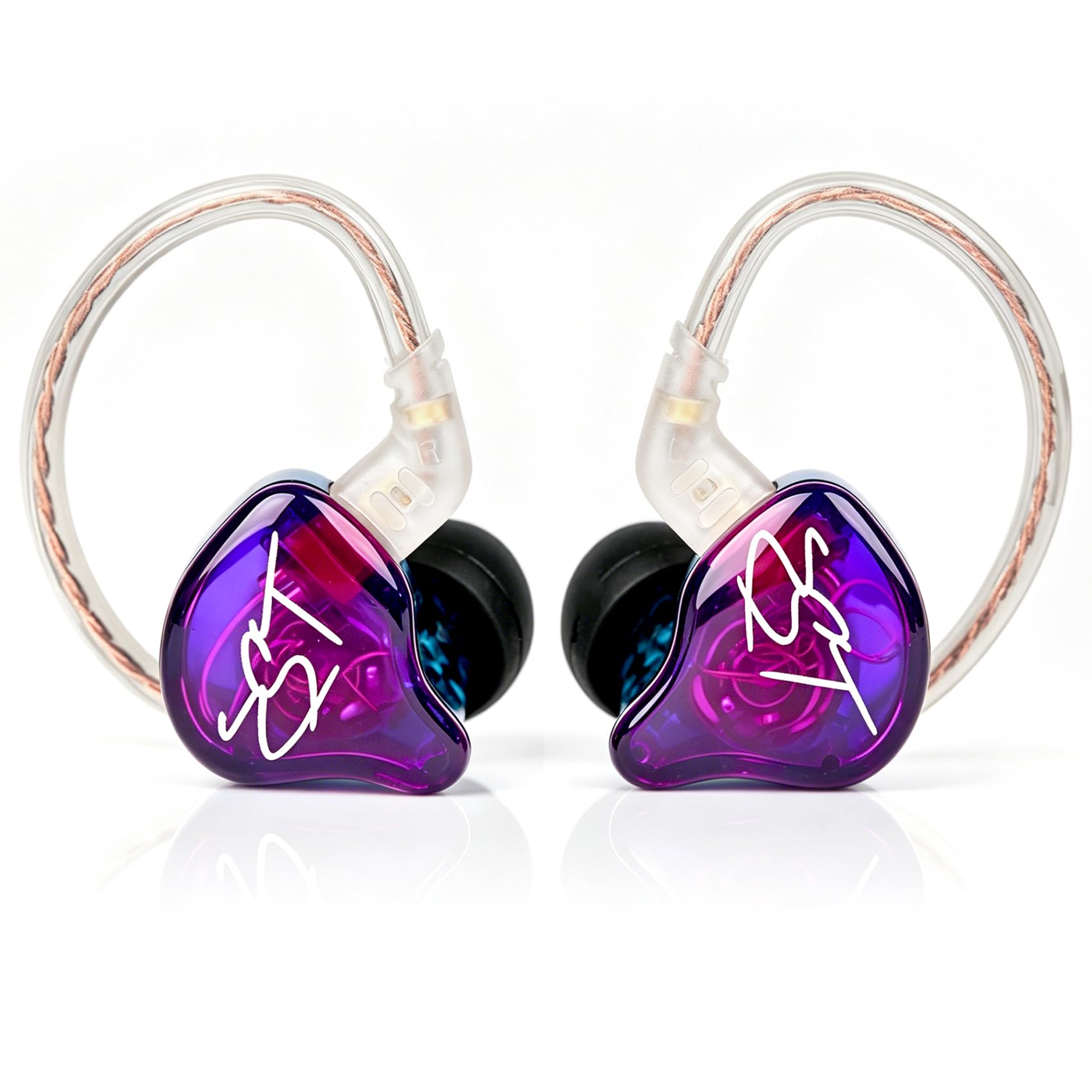
The KZ ZST is the fun-looking one in a group of black IEMs. The translucent color shell, detachable cable, and memory wire over the ear give it a bit of personality without turning it into a toy. At the budget end, that matters: a cheap pair you actually want to wear is more useful than a plain one you leave in a drawer.

The 1BA+1DD hybrid delivers a bright, clear sound with decent bass, and the passive isolation is strong once the tips seal. We find it comfortable for long sessions, especially with the cable routed over the ear. Fit is the variable: the shells are on the large side, so smaller ears may need the smallest tips and a little patience.

This is the budget wired pick we reach for when chat is already handled elsewhere. The memory wire is the detail that keeps the cable from tugging when you turn your head, and the detachable connection gives it a longer runway than most budget earbuds. The translucent shell also makes it easy to spot in a bag, which is a small thing until you are packing up after a LAN.

Pros

  • Bright, clear hybrid sound
  • Strong passive isolation
  • Colorful detachable-cable design
  • Comfortable for long sessions

Cons

  • No microphone on this variant
  • Durability is uneven
Our verdict

The KZ ZST is the budget wired pick we recommend when sound and isolation matter more than voice chat: it is colorful, comfortable for long sessions, and easy to re-cable.

Check Latest Price
6

Sound-First Budget

CCA CRA

87 /100
Lab Score Excellent

Key details

Cable
Detachable, tangle-free
Weight
0.78 oz
Diaphragm
3.8μ
Impedance
25 ohm
View on Amazon

A 3.8-micron diaphragm is the kind of spec that sounds like marketing until you hear the snap it gives footsteps and gunfire. The CCA CRA pairs that ultra-thin dynamic driver with a metal-and-resin shell that feels more solid than the price suggests. It is the sleeper of this group for pure sound.

The tuning is clear and quick rather than warm and thick. We like it for competitive games where you want to pick out a reload behind a wall, and the passive isolation is strong enough to take the edge off a room. The detachable tangle-free cable is a practical bonus.

The fit is the part to sort out. The rounded shell sits comfortably for long sessions, but it can loosen in smaller ears, and the right tip changes both the seal and the bass. We treat tip selection as part of the purchase, not an afterthought.

This is the budget alternative we point to when sound is the priority. It is not the most feature-complete pair here, but the 3.8μ diaphragm and metal-resin build give it a clean, articulate character that is easy to live with. For a first step up from pack-in earbuds, it is the least fussy way to hear the difference.

Pros

  • Clear, quick detail
  • Strong passive isolation
  • Metal-resin shell
  • Detachable tangle-free cable

Cons

  • Short cable limits desktop reach
Our verdict

The CCA CRA is a sound-first budget IEM: clear, quick detail and strong passive isolation in a metal-resin shell.

Check Latest Price

How We Tested 16 Pairs of Gaming Earbuds

We started with a list of roughly 40 pairs that come up repeatedly in gaming forums and Reddit threads, then cut anything that shipped without a microphone, offered fewer than three tip sizes, or fell outside the price range most people actually shop in. That left 16, spanning wired and wireless, budget and not.

Testing ran for five months, mostly in the evening when the house is loud and sessions run long. I wore each pair for a full three-hour stretch, stood up mid-match to see if they stayed seated, tilted and shook my head, and noted how many times I had to push them back in. Wired pairs got their cables measured from plug to splitter against a controller cord, then coiled into a bag and uncoiled repeatedly to check the strain relief for fraying and the connection for dropouts on the third or fourth plug-in.

For sound, I replayed the same match footage on each pair and listened for whether footsteps read as left, right, or vaguely somewhere. Microphone checks meant recording a voice memo with a fan running and playing it back to hear whether the fan came through. I wore the noise-canceling models on a bus and in a coffee shop to see whether they muffled the room or just added pressure, and I weighed every pair's sound and build against what it costs before calling it a good buy.

How to Choose Gaming Earbuds

Connection and Latency Come First

A wired 3.5 mm pair gives you zero wireless latency and no charging, which is why we still recommend it for console controllers and handhelds. A 2.4GHz dongle is the wireless equivalent for competitive play; Bluetooth is fine for casual games and calls but adds delay. The AOC ACT3512 is the only pick here with both a 2.4GHz dongle and Bluetooth, so it can move between a PS5, a Steam Deck, and a phone. If you mostly play at a desk, a wired IEM like the KZ ZS10 Pro is simpler and less expensive.

Fit and Isolation Decide Comfort

An earbud that does not seal sounds thin and leaks noise. We put a secure seal ahead of driver count: the HyperX Cloud Earbuds II includes four tip sizes, while the Final VR3000 uses locking ear hooks to keep its shells in place. Noise cancellation on a wired listing usually means passive isolation from the seal, not active circuitry. If you wear glasses or play for hours, prioritize a smaller shell and a cable that routes over the ear.

Match the Mic to Your Chat Setup

An inline mic is the convenient choice for a controller or a laptop, and the AOC, HyperX, and Final all include one. Quality varies: a cable mic picks up more room noise than a boom mic, so it is best for casual chat. The KZ ZS10 Pro and KZ ZST are sold without a mic in the variants here; we treat them as sound-first IEMs for players who already have a separate mic or a controller headset. Decide that before you shop, because a great-sounding pair without chat support is the wrong buy for squad play.

Durability Is in the Cable and Case

The cable is the first thing to fail on wired earbuds, so a detachable design is worth paying for. The KZ ZS10 Pro, KZ ZST, and CCA CRA let you replace the cable; the HyperX's hard case and 90-degree plug protect the parts that usually break. For wireless, the charging case and dongle are the pieces to keep track of. We look for strain relief at the plug and a case that closes securely rather than a long list of features.

What Spatial Audio Actually Changes

Positional audio is about making footsteps, reloads, and voices land in the right place, not about more bass. We treat spatial audio as a fit question as much as a tuning one: a spacious, open presentation can help in large maps and VR, which is why the Final VR3000 is the spatial specialist here. A more detail-forward IEM like the KZ ZS10 Pro can make individual sounds easier to pick out. Neither replaces a good seal, so choose the presentation that matches your games and then practice with it.

Frequently Asked Questions

Final Verdict

The AOC ACT3512 is the gaming earbud we recommend first because it solves the most problems at once: a 20 ms 2.4GHz mode for low-latency play, Bluetooth for everything else, a mic for chat, and a charging case that makes it portable. If you want to skip batteries, the HyperX Cloud Earbuds II is the wired all-rounder we point to for consoles and handhelds; if spatial immersion is the priority, the Final VR3000 is the upgrade.