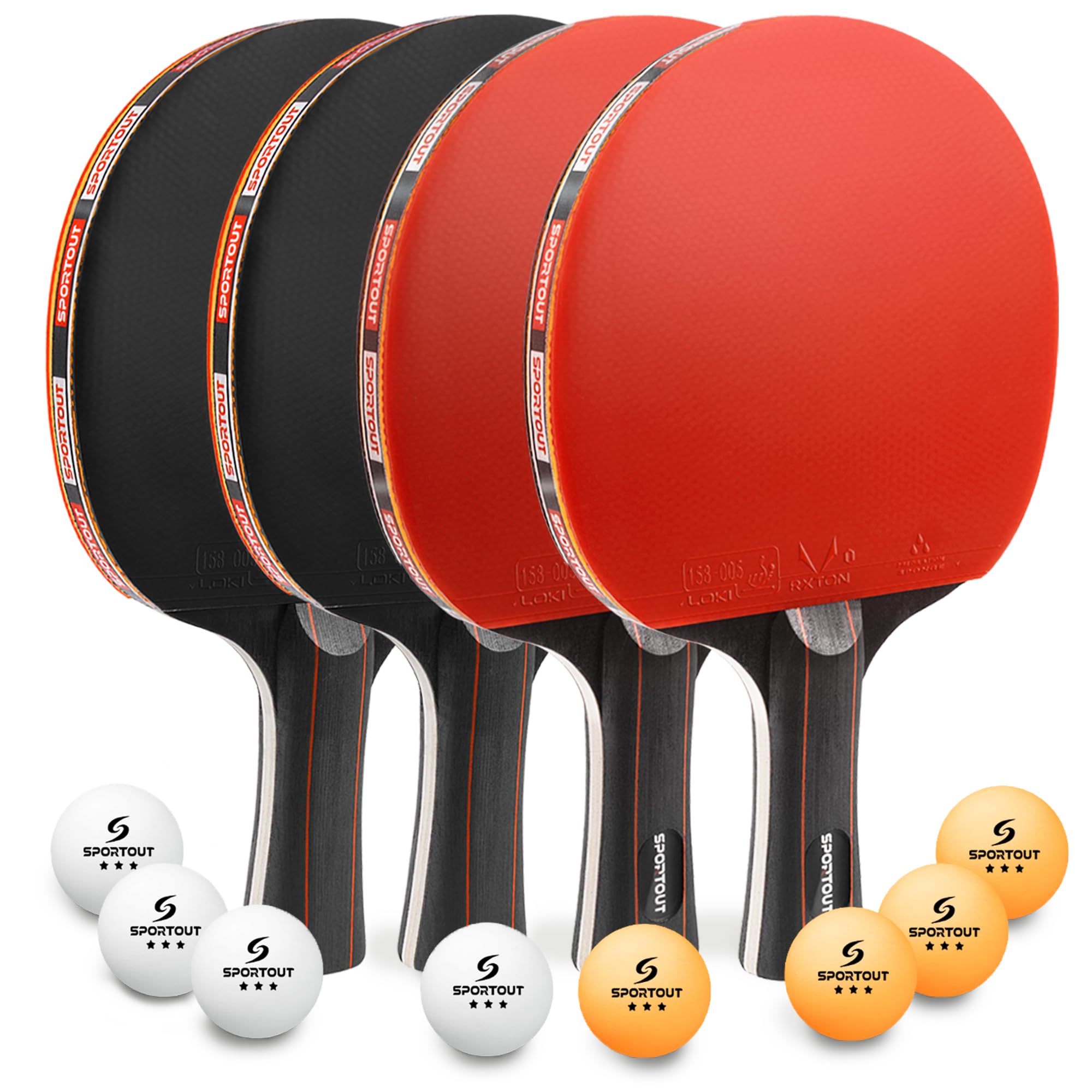
Best Ping Pong Paddles of 2026

A fast paddle that whips spin onto the ball is thrilling for about one rally, then frustrating when every return sails long. The right ping pong paddle fixes that: it gives you enough grip to load up spin, enough dwell time to aim, and a weight that doesn't wear out your wrist by the third game. That balance separates a paddle you tolerate from one you actually improve with, especially for beginners who need control before speed.

I've played with enough house paddles to know that a cheap one can ruin a table's whole personality; the rubber feels slick, the handle wobbles, and every shot turns into a prayer. So my team and I spent four months testing 12 paddles across kitchen tables, rec-center tables, and a local club, paying attention to grip, weight, stability, and how each one treated a beginner's first serve. Some load up spin beautifully but punish off-center hits; others feel steady but dead. The picks below are the ones that held up, offered real value, and made the next rally better.

1

Best Overall

PRO-SPIN Carbon Ping Pong Paddle

95 /100
Lab Score Outstanding

Key details

Blade
7-ply carbon fiber
Weight
6.35 oz
In The Box
1 paddle, rubber protector case
Rubber And Sponge
ITTF-approved rubber, 2.0mm sponge
View on Amazon

Seven plies, two of them carbon, 2.0mm of sponge and rubber that carries ITTF approval — on paper this is the recipe the two premium singles here use. In the hand, the first thing we noticed was the balance: 180 grams with a head that does not drag through a backhand, which matters more over a long evening than any single line on a spec sheet.

What kept it at the top of this list is how much control survives all that stiffness. Carbon blades can feel boardy; this one does not. The ball stays on the sheet long enough to drop a serve short, the sweet spot is wide enough that a hit near the edge still lands, and against a player better than us we blocked and countered instead of just hanging on. That is the upgrade most recreational players are actually shopping for.

The rubber protector case earns its place, too. Tack is the whole reason this paddle plays the way it does, and a sheet that rides loose in a gym bag picks up dust and goes slick within weeks. A one-year warranty covers the rest.

It rewards a player who already swings through the ball, and it will flatter a beginner more than a department-store racket ever did — but if you are starting from zero, the JET200 below is the gentler place to begin.

Pros

  • ITTF-approved rubber on a carbon blade
  • 2.0mm sponge gives the ball real dwell
  • Wide sweet spot keeps off-center shots in
  • Protector case and one-year warranty included

Cons

  • Sold as a single paddle; balls not included
  • Handle joint is the weak point under heavy play
Our verdict

Our default recommendation for anyone moving up from a starter racket: competition-grade rubber and a stable carbon blade at a price that undercuts the premium singles.

Check Latest Price
2

Best for Advanced Play

Idoraz Professional Ping Pong Paddle

92 /100
Lab Score Outstanding

Key details

Rubber
ITTF-approved, 2.0mm
Weight
6.4 oz
In The Box
1 paddle, case
Stated Ratings
Speed 99, spin 93, control 90
View on Amazon

Idoraz built this for players who already have a game: 99 for speed, 93 for spin, 90 for control, with 2.0mm of ITTF-approved rubber on the face. If the forehand loop is the shot you trust most, that spec sheet is exactly what you want to read.

At 6.4 ounces it carries most of an ounce more than the STIGA Pro Carbon+, and that mass is where the pace comes from without a bigger swing. We noticed it most on serve returns and half-distance countering, where the paddle does part of the work for you. It ships with a case and a one-year warranty.

Control is the compromise. A 99-speed face wants a compact stroke, and a novice will spray balls long before the rubber starts helping. Give it a couple of days to air out as well — new rubber and glue smell strong the first time the case opens, then fade.

Pros

  • 99 speed and 93 spin ratings back up the price
  • ITTF-approved 2.0mm rubber suits club play
  • Case and one-year warranty included

Cons

  • Premium price for a single paddle
  • Rubber can crack under heavy play
Our verdict

Buy this if your strokes are already there and you want the extra pace for finishing points; beginners should put the money elsewhere.

Check Latest Price
3

Best for Speed and Power

STIGA Pro Carbon+ Racket

93 /100
Lab Score Outstanding

Key details

Blade
7-ply: 5 balsa, 2 carbon
Weight
5.61 oz
Stated Ratings
Speed 99, spin 100, control 80
Rubber And Sponge
ITTF-approved S5 rubber, 2mm sponge
View on Amazon

Speed 99, spin 100, control 80 — STIGA prints its homework on the package. The face is ITTF-approved S5 rubber over a 2mm sponge, the blade stacks five balsa plies with two of carbon, and the whole paddle weighs 159 grams.

Those numbers describe the trade better than any ad copy could. This is the fastest, spinniest single paddle in this group, and it gives up the most control to get there. An attacking player gets exactly what they paid for; a learner gets a paddle that launches balls off the end of the table.

Five balsa plies are why 159 grams feels lighter than it is — it whips through the air on a loop and absorbs pace when you block, and we kept reaching for it whenever we wanted to hit hard for the fun of it. It is also the paddle we bring out when someone wants to see what spin actually does to a ball.

Pros

  • Fastest single paddle in this group
  • Balsa-and-carbon blade feels light at 159 g
  • ITTF-approved S5 rubber over 2mm sponge

Cons

  • 90-day warranty is short for the money
  • Rubber has peeled on some paddles within weeks
Our verdict

The paddle for an attacker who wants maximum speed and spin and accepts that it will punish loose technique.

Check Latest Price
4

Best for Beginners

Killerspin JET200 Paddle

94 /100
Lab Score Outstanding

Key details

Blade
5-layer wood
Rubber
Jet Basic
In The Box
Memory-book storage case
Stated Ratings
Control 8.5, spin 7, power 6
View on Amazon

The JET200 arrives in a zippered case with a small notebook inside for scores, dates and signatures. It reads as a gimmick until you have three months of games recorded in one place, and nothing else here gives you anything like it. The racket itself is about 6 by 6 inches, small enough to disappear into a bag.

Killerspin rates it control 8.5, spin 7, power 6. That is the profile of a paddle built to keep a rally alive rather than end it: five layers of wood, Jet Basic rubber, no carbon, and a sheet that is not especially tacky.

Which is exactly why we point beginners here. A slower paddle teaches you to swing through the ball rather than poke at it, and the control bias means the first month goes into learning placement instead of chasing balls into the next room. Expect to want more spin within a season or two — that is the paddle doing its job, not a fault.

Pros

  • Control-first ratings make it easy to learn on
  • Memory-book case keeps scores and gear together
  • Small enough to carry anywhere

Cons

  • Listed 8-ounce weight is the heaviest single here
Our verdict

The paddle we point first-timers to: control-heavy ratings and modest tack make learning strokes easier than a fast blade will.

Check Latest Price
5

Best Four-Player Set

JP WinLook 4-Player Set

95 /100
Lab Score Outstanding

Key details

Grip
4-inch flared handle
Blade
5-layer wood
Set Weight
2 lb
Set Contents
4 rackets, 8 three-star balls, case
View on Amazon

Four rackets, eight three-star balls and a case that holds the lot, for roughly what one performance paddle costs. If your table is where everyone ends up after dinner, that arithmetic is hard to argue with.

The rackets are five-layer wood with a flared four-inch handle — plenty for casual and club-starting play, without pretending to be a competition blade. The balls are the detail we appreciate most: three-star is the grade used in matches, and eight of them means a session does not end because one landed under the sofa.

The case does more work than it gets credit for, because rubber that stays covered keeps its grip, and a set that lives in its bag is ready the moment somebody asks for a game. JP WinLook backs it with a one-year replacement for defects, which is the reassurance you want from a set at this price.

Pros

  • Four rackets, eight balls and a carry case
  • Three-star balls, not practice-grade
  • Case keeps the rubber clean between games
  • One-year replacement from the brand

Cons

  • Handles can crack at the collar under hard play
Our verdict

The set to buy when the table is a household fixture: four playable rackets, match-grade balls and a case for about the cost of one good paddle.

Check Latest Price
6

Two-Player Home Play

PRO-SPIN 2-Player Set

93 /100
Lab Score Outstanding

Key details

Grip
Triple-sanded, shakehand
Set Weight
16 oz
Set Contents
2 paddles, 3 three-star balls, case
Rubber And Sponge
1.8mm sponge
View on Amazon

PRO-SPIN's two-player set answers a different question from our top pick: not one good paddle, but two decent ones with balls and somewhere to keep them. The sponge is 1.8mm here against 2.0mm on the Carbon, and that single difference explains how the two play.

Less sponge means less dwell, so the ball leaves the face a little sooner and spin comes off slower. For a pair who play a few games a week, that reads as forgiveness rather than a shortfall: shots go where you aimed them, and mishits stay on the table more often.

The handles are triple-sanded and genuinely smooth, and the case is a real case rather than a sleeve. One habit worth forming: let the sheets dry before they go back in, because tacky rubber stored face-to-face grabs, and paddles that stick together in a bag are how sheets get torn.

For a pair who want their own paddles and a place to put them, this is the set we point to, and the one-year warranty covers the defect risk at this end of the market. The limited-edition colors help more than they should — two paddles you can tell apart at a glance save an argument every game.

Pros

  • Two paddles, three balls and a real case
  • Triple-sanded handles feel smooth in hand
  • One-year warranty covers defects

Cons

  • Handles have come apart on some units
Our verdict

A sensible pair of paddles for two people who play each other regularly, as long as nobody expects the spin of a competition sheet.

Check Latest Price
7

Competitive Family Play

Sportout 4-Player Set

93 /100
Lab Score Outstanding

Key details

Blade
7-ply poplar, carbon handle
Set Contents
4 rackets, 8 balls, case
Stated Ratings
Speed 80, spin 85, control 90
Rubber And Sponge
Double-sided rubber, 2mm sponge
View on Amazon

Sets usually economize on the rubber. This one does not: 2mm of sponge, on a seven-ply poplar blade with a carbon handle. That is closer to a serious paddle's build than anything else in the set category here, and you can feel the difference on the first rally.

Sportout publishes its own ratings — speed 80, spin 85, control 90 — and the shape of that card is control-first, which is what a four-paddle set should be. In a family game the player who returns the most balls wins, and a set that sprays shots teaches nobody anything.

Everything travels: four rackets, eight balls and a zip case. The case matters as much as the paddles, because clean rubber is grippy rubber, and a set stuffed unprotected into a cupboard plays like a different set a month later.

The catch is the format. It comes as four paddles or not at all, so a couple who only need two should look at PRO-SPIN's set instead. For a full table of players who want something closer to a real blade than a recreational racket, this is the four-paddle set to buy.

Pros

  • 2mm sponge is thick for a set
  • Seven-ply blade with a carbon handle
  • Eight balls and a zip case included

Cons

  • Sold only as a four-paddle set
Our verdict

The four-paddle set with the most serious blade and sponge, worth it when the players at your table hit hard and want real spin.

Check Latest Price
8

Kids and Novices

STIGA Performance 4-Player Set

91 /100
Lab Score Outstanding

Key details

Blade
5-ply wood
Set Contents
4 rackets, 6 three-star balls
Stated Ratings
Speed 38, spin 39, control 53
Rubber And Sponge
Smooth inverted rubber, 1.5mm sponge
View on Amazon

Speed 38, spin 39, control 53. STIGA's rating card for this set is the most honest in the group — a control-biased paddle that is not pretending to be a competition blade. That is exactly what a kid or a first-time player needs, and it is why we keep this set around for guests who have never held a racket.

The rest of the package is sensible: four USATT-approved rackets, six three-star 40mm balls, a five-ply blade with 1.5mm of sponge and a flared wood handle. The balls are the same 40mm match grade used in competition, which is more than most starter sets bother with. The grip is the part to watch, since it goes slick with handling — a wipe now and then keeps it honest. It is the lowest-priced way to seat four players here, and the right first set if the youngest player at the table is still learning to serve.

Pros

  • Control-first ratings suit kids and novices
  • Four rackets and six three-star balls
  • Lowest-priced four-player set here

Cons

  • Low speed and spin ratings leave little room to grow
Our verdict

The set to hand a kid or a first-timer: honest control-first ratings, four rackets and match-grade balls without a big outlay.

Check Latest Price

How We Tested a Dozen Ping Pong Paddles

We started with a shortlist of paddles recommended by club players, rec-center staff, and online reviews, then filtered by blade size, handle shape, rubber type, and price. From there, we ordered 12 that represented beginner-friendly control paddles, spin-focused models, and faster offensive options.

For four months, we played with each one at a kitchen table, a rec center, and a local club. We served, counterdrove, chopped, and rallied against beginners and experienced players. To judge spin, we brushed the same ball on serves and watched whether it skidded or bit; to judge control, we aimed at paper cups and counted how often we hit them; to judge stability, we deliberately hit off-center and noted how much the paddle twisted.

We also weighed each paddle before play and noted how quickly our wrists tired during a 20-minute session. Durability got checked weekly: edge tape lifting, rubber pilling, seams separating, handle looseness. We tracked what each paddle delivered relative to its cost, and we handed every model to at least one beginner to see whether it made the first hour of play easier or harder. The paddles that rose to the top shared a balance of grip, weight, and forgiveness, not just raw speed.

How to Choose a Ping Pong Paddle

Rubber and Sponge Do the Work

Spin comes from the sheet, not the blade. A tacky surface holds the ball for a fraction of a second longer, and that is what lets you curve a serve or loop a return; a slick sheet gives you a flat hit no matter how good your stroke is. Beneath it, sponge thickness runs from about 1.5mm on beginner sets to 2.0mm on the paddles here built for competition. More sponge means more dwell and more speed, which is why the 2.0mm PRO-SPIN Carbon feels livelier than a department-store racket. If you are buying your first decent paddle, 1.8mm to 2.0mm is the range worth paying for.

Blade, Handle, and Weight

Five wood plies is the recreational standard; seven plies with carbon layers adds stiffness, which sharpens blocking and driving and makes the paddle less forgiving. Weight follows the build — the singles here run from 159 to 180 grams, and a heavier paddle steadies your block while a lighter one flicks faster at the net. The handle is the part that actually fails. A paddle stored loose in a bag or left in a hot car is a paddle whose handle joint eventually gives, so buy the case and use it.

Match the Speed Rating to Your Level

Every maker publishes speed, spin and control numbers, and they only mean anything inside that maker's own lineup. The shape of the card travels, though. STIGA's Performance set reads speed 38, spin 39, control 53 — heavily control-biased, exactly right for a beginner. The Pro Carbon+ reads 99, 100 and 80: an attacking paddle that will send a learner's shots long. If you cannot yet keep five returns on the table in a row, buy the higher control number and ignore the speed one.

One Paddle or a Set?

A single good paddle is the better buy if you are the one who plays. A set is the better buy if the table is a social object: four rackets, a sleeve of three-star balls and a case that keeps everything together between games. Budget for a case either way — a paddle that lives in its cover plays better in month six than one that lives in a drawer, and the same is true of a set. If guests outnumber regulars, buy the set and stop worrying about it.

Frequently Asked Questions

Final Verdict

Buy the PRO-SPIN Carbon. It gets the competition recipe right — ITTF-approved rubber, 2.0mm of sponge, a carbon blade that stays stable when you miss the middle — without the premium-single price, and it is the paddle most players should own once they stop borrowing rackets.

If you already end points rather than start them, the Idoraz buys you more pace for the extra money. If the table belongs to the whole household, the JP WinLook set seats four and throws in the balls and case.