Best PS5 Gaming Headsets of 2026

Late-night sessions are where a headset earns its keep: the house is quiet, the party chat is not, and the last thing you want is the console's tinny speaker leaking a soundtrack into the next room. A good one fixes three things at once — it puts the audio inside your ears so footsteps and dialogue land where they should, it gives your voice a clean path to your squad, and it keeps the rest of the household out of your game. I've had a rotating stack of them on my desk since winter, and after six months and 12 different sets, the pattern is clear.

Here's what I'd tell any first-time buyer: your console's 3D audio is only ever as good as what's sitting on your head, and a headset that feels fine for 20 minutes can clamp down hard by hour three. Comfort and battery life split this field far more than raw sound quality did. Every set below also had to hold a steady connection, keep my voice clear in party chat, and survive being shoved in a backpack — and a few managed all of that for far less than the flagship price tags suggest.

1

Best Overall

Razer BlackShark V3 X HyperSpeed

84 /100
Lab Score Excellent

Key details

Weight
9.52 oz
Battery
70 hours
Connection
2.4 GHz USB-C dongle + Bluetooth 5.3
Microphone
Detachable cardioid, 9.9 mm
View on Amazon

At 270 g, the BlackShark V3 X is the lightest wireless headset here, and that figure explains most of why it takes the top spot. Weight is what decides whether a fourth hour ends in a headache, and this one sits with the plush earcups barely pressing on your ears. Razer quotes 70 hours per charge on the 2.4 GHz connection, which at a couple of hours a night means charging roughly monthly rather than nightly.

The PS5 side is where it earns the recommendation rather than merely avoiding complaints. The USB-C HyperSpeed dongle goes into the console and you're in a game seconds later, with the set tuned for PlayStation's Tempest 3D Audio and no software layer between you and the console. On a PC the same headset opens up 7.1.4 surround. The TriForce Gen-2 drivers keep footsteps and reloads separated from the score instead of smearing them together, and the detachable 9.9 mm cardioid mic keeps your voice forward and the room behind it.

Two things to know going in. That mic is a close-talk design, so set your input level in a party chat before your first match rather than during it. And the frame is plastic: light plastic is the part of a headset that ages, so treat this as a desk-and-sofa set rather than something to bury at the bottom of a bag.

Pros

  • 270 g keeps four-hour sessions comfortable
  • 70 hours between charges
  • PS5 Tempest 3D Audio through a USB-C dongle
  • Detachable cardioid mic with strong pickup

Cons

  • No 3.5 mm backup when the battery runs flat
  • Dongle and Bluetooth switch rather than mix
Our verdict

We recommend this to anyone who plays on PS5 more than anything else: light enough to forget you're wearing it, weeks between charges, and PlayStation's 3D audio without a PC in the chain.

Check Latest Price
2

Best for Voice Chat

SteelSeries Arctis Nova 5

84 /100
Lab Score Excellent

Key details

Weight
9.88 oz
Battery
60 hours
Connection
2.4 GHz USB-C dongle + Bluetooth 5.3
Microphone
Retractable ClearCast 2.X, 32 kHz/16-bit
View on Amazon

The microphone is the reason to look at this one. SteelSeries puts the ClearCast 2.X on a fully retractable boom and runs it at 32 kHz/16-bit, a figure usually quoted for standalone microphones rather than a headset, and you can hear the difference in party chat: voices arrive with body and detail instead of the compressed fizz most gaming mics produce. It's the best voice pickup of anything on this page.

Everything around that mic is built for a long evening. There's 60 hours of battery, and a 15-minute USB-C top-up returns 6 hours, so a forgotten charge costs you minutes rather than a session. QuickSwitch moves from the 2.4 GHz dongle to Bluetooth 5.3 on one button press, which is the feature we ended up using most — take the call, come back, never take the headset off. The companion app's 100-plus game presets are a better starting point than they sound; we pick one for the game and then nudge the EQ.

The fit is where it gives ground. The earcups run small and the clamp is firm, so a wide head or a pair of glasses becomes the first thing you notice after an hour. Try this one on before you commit if you can, and if you can't, go in knowing the Arctis shape suits smaller heads far better than large ones.

Pros

  • Retractable 32 kHz/16-bit mic, the best here
  • 60 hours plus 6 hours from a 15-minute charge
  • One-button switch between dongle and Bluetooth
  • 100+ game presets in the companion app

Cons

  • Connection can need a second attempt after booting
  • No wired mode if the battery runs out
Our verdict

If your squad hears you more than you hear them — or you want a headset that handles a phone call without coming off — this is the one we point to, as long as the clamp suits you.

Check Latest Price
3

Best Wired Value

HyperX Cloud III

88 /100
Lab Score Excellent

Key details

Frame
Aluminum
Weight
10.9 oz
Drivers
Angled 53 mm
Connection
3.5 mm with USB-C adapter
View on Amazon

Lift the Cloud III and the aluminum frame is the first thing you notice. It's the only wired headset here that feels like it would survive being sat on, and the yokes have enough give that it doesn't fight back when you put it on. That matters more than it sounds: a headset with a metal frame is one you stop handling carefully.

The 53 mm angled drivers are tuned for games rather than music — neutral and unfatiguing, with dialogue and footsteps staying separable in a busy mix even after an hour of explosions. There's no battery to think about and no dongle to lose: the 3.5 mm lead goes into the DualSense and the setup is finished, with the PS5 supplying 3D audio from the console side. The detachable 10 mm mic with its mesh filter is the other pleasant surprise, a clear step above the microphones on the budget wired sets here.

The clamp is the catch. The headband squeezes firmly, which keeps it locked in during a firefight but is the one thing to warn a big head or a glasses wearer about. Everything else is built for the long haul, down to the two-year warranty that runs longer than most of this set.

Pros

  • Aluminum frame that shrugs off daily handling
  • Angled 53 mm drivers keep a busy mix readable
  • Detachable 10 mm mic with a mesh filter
  • No battery, no dongle, no charging routine

Cons

  • Wired only, with no dongle or Bluetooth option
Our verdict

The wired headset we reach for when we want one that lasts: tough, comfortable through a long evening, and clear on chat, provided the clamp isn't too much for your head.

Check Latest Price
4

Best for Glasses

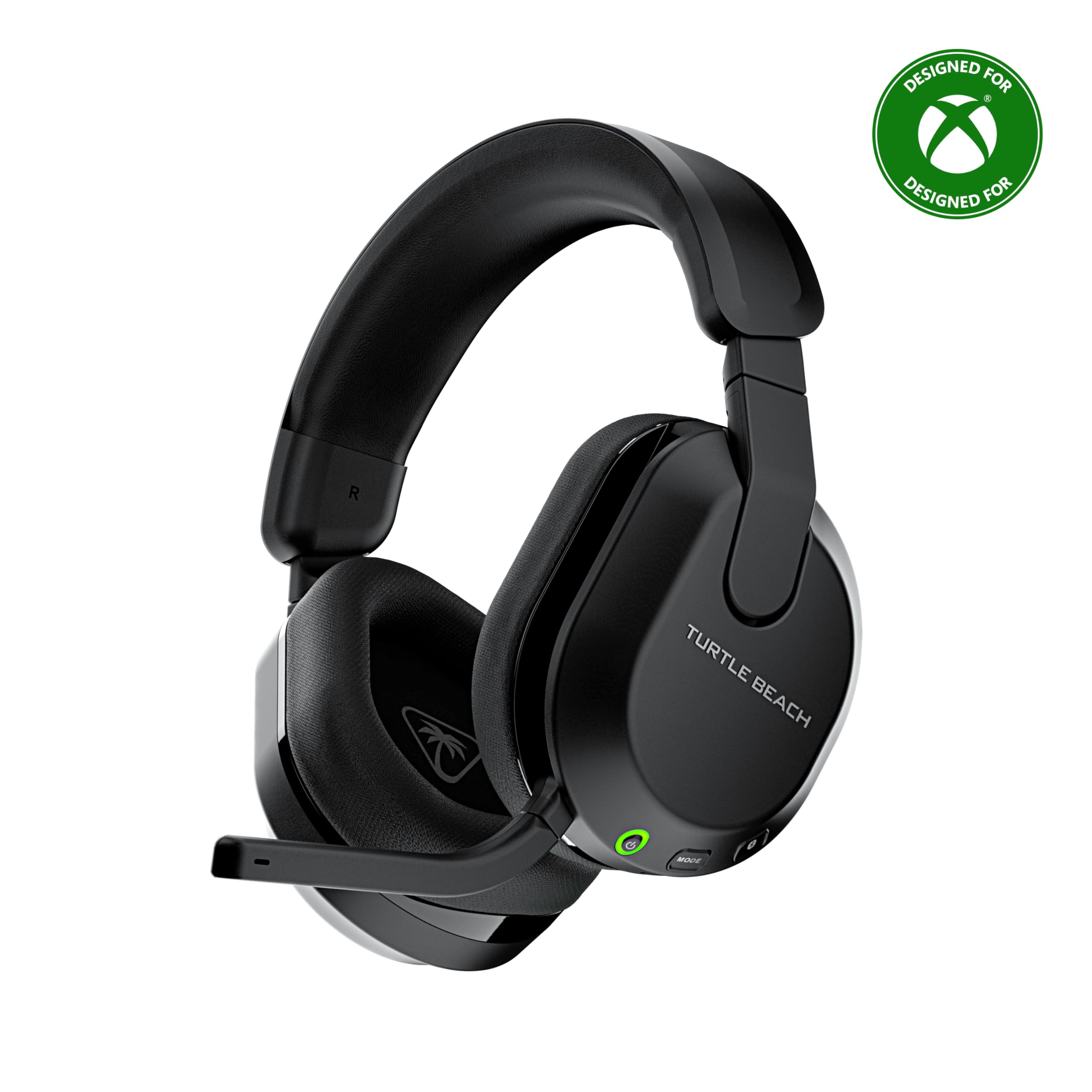
Turtle Beach Stealth 600

88 /100
Lab Score Excellent

Key details

Battery
80 hours
Drivers
50 mm Nanoclear
Earcups
Memory foam, glasses-friendly
Connection
2.4 GHz + Bluetooth 5.2
View on Amazon

If you wear glasses, start here. Turtle Beach builds the memory foam cushions with a channel that lets the arms of your frames sit without being driven into the side of your head, and across an evening the difference between this and a standard clamp isn't subtle. The 50 mm Nanoclear drivers are tuned lively rather than clinical, which suits big single-player soundtracks better than it suits counting footsteps.

The rest of the package is unusually generous for the tier: 80 hours of battery with quick charge, a mappable wheel and mode button so the controls you actually use live under your thumb, and a 10-band EQ in the Swarm II app that does more for the sound than any preset. The flip-to-mute mic with A.I. noise reduction is the practical kind of design — down to talk, up to stop.

The caution is longevity. Earcup separation and units that stop taking a charge are the wear patterns worth knowing about before you buy, and this is the one place in the set where a one-year warranty feels short. At 320 g it's also mid-weight rather than light, though the lay-flat design keeps it from feeling clumsy on a desk.

Pros

  • Glasses-friendly memory foam cushions
  • 80 hours of battery with quick charge
  • 10-band EQ and mappable wheel in the app
  • Flip-to-mute mic with A.I. noise reduction

Cons

  • Wireless link can drop and need re-pairing
Our verdict

The headset we hand to glasses wearers first: generous battery, a genuinely useful EQ app, and cushions that leave your frames alone, for less than the premium sets here.

Check Latest Price
5

Best Budget Wireless

AOC Captain 300

86 /100
Lab Score Excellent

Key details

Weight
12.7 oz
Battery
45 hours
Connection
2.4 GHz dongle, Bluetooth, 3.5 mm
Microphone
Detachable omni-directional
View on Amazon

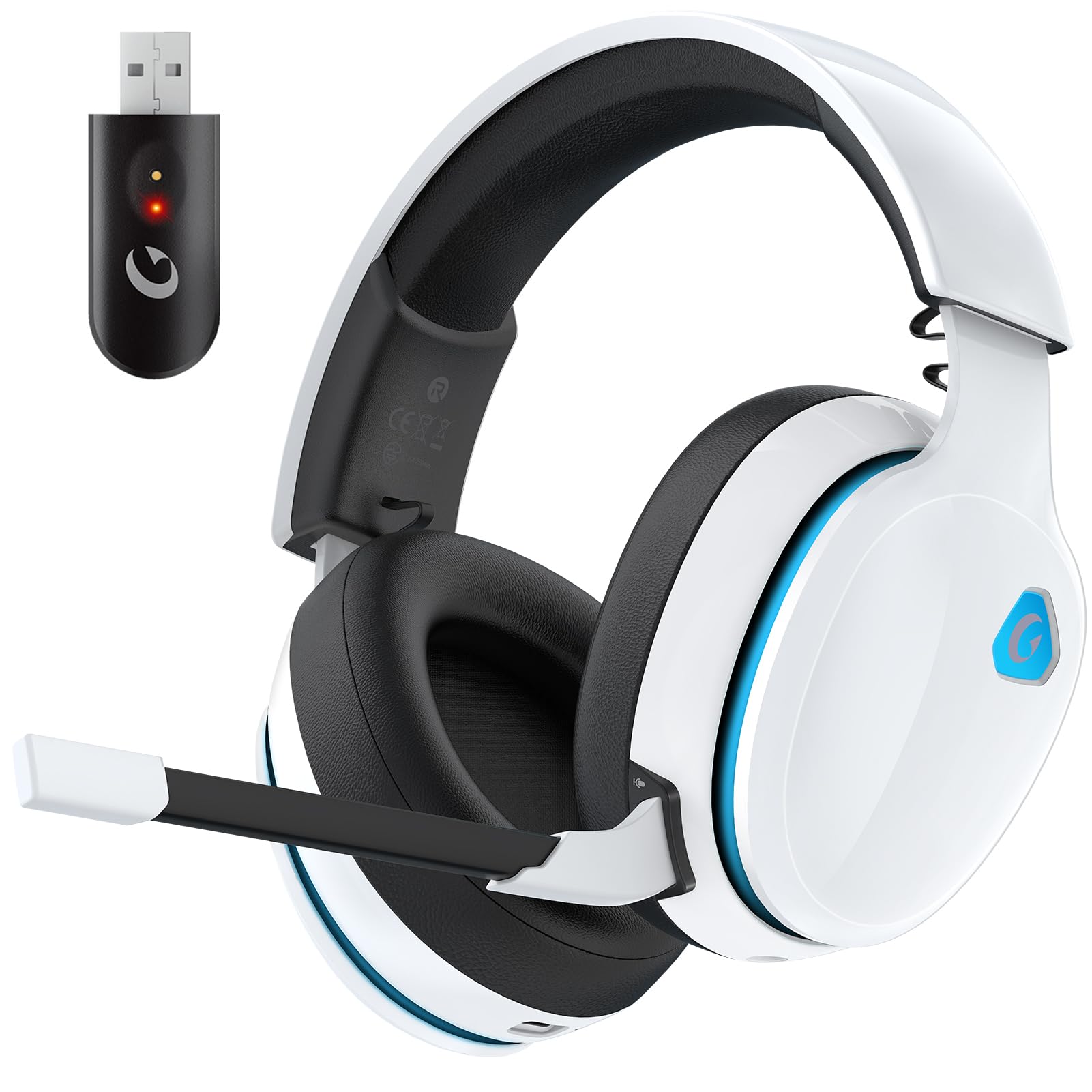
The Captain 300 is the cheapest way into wireless PS5 audio here, and it doesn't look or feel like the cheap option. The white mirror finish reads as deliberate rather than flashy, the memory-protein earcups are soft enough for a long evening, and the 50 mm drivers produce a clear, loud signal that doesn't need much correcting. The 45-hour battery covers a week of evenings, and a three-hour charge refills it.

It covers all three routes — 2.4 GHz dongle for the PS5, Bluetooth for a phone, 3.5 mm cable if the battery runs down — and moving between them is simple enough to do in the dark. The compromise is the microphone. It's omni-directional rather than cardioid, so it collects more of the room than the mics on the Razer and SteelSeries sets do. In a quiet room that's nothing; next to a fan, a window unit or a talkative housemate, expect to be asked to repeat yourself. At this price, that's a trade we take.

Pros

  • Wireless on PS5 for the least money here
  • 45 hours of battery plus a 3.5 mm backup
  • Soft memory-protein earcups
  • Dongle, Bluetooth and cable in one set

Cons

  • Omni-directional mic picks up more room noise
  • 360 g is the heaviest wireless set here
Our verdict

The budget wireless set we recommend without much hedging: three ways to connect, a battery that covers the week, and only the omni microphone giving anything meaningful away.

Check Latest Price
6

Best Budget Wired

Razer BlackShark V2 X

88 /100
Lab Score Excellent

Key details

Weight
8.47 oz
Drivers
50 mm TriForce titanium
Controls
On-cup volume wheel and mute
Connection
3.5 mm wired
View on Amazon

The control layout is what we noticed first: a volume wheel and a mic mute on the left earcup, both reachable without looking. That sounds minor until you've fumbled for an inline control mid-match. The catch is that the mute switch sits proud enough for a thumb to find — and to bump, which is how a teammate ends up telling you that you've gone silent.

At 240 g it's the lightest headset on this page, and the memory foam and leatherette cups seal well enough that the passive isolation does real work. The TriForce titanium drivers are bright and positional, good for picking a side from a reload. It's 3.5 mm only, so it plugs into the DualSense and inherits PS5's 3D audio with no dongle, no battery and no charging routine to stay on top of.

What you accept at this price is the microphone. It's a cardioid unit and perfectly usable, but it's the weakest link in the package — thinner than the HyperX's and quicker to pick up keyboard clatter. Buy this one for the weight, the comfort and the two-year warranty, and treat chat as the compromise you're making.

Pros

  • 240 g, the lightest headset in this set
  • Memory foam cups that seal out room noise
  • Volume wheel and mute on the earcup
  • Two-year warranty at a budget price

Cons

  • Mic sounds thin next to pricier sets
  • Long-term durability is the open question
Our verdict

Our budget wired pick: the lightest thing here, comfortable for hours, and it plugs straight into the controller — just make your peace with the microphone.

Check Latest Price
7

Battery Life

NUBWO G06

88 /100
Lab Score Excellent

Key details

Weight
12.3 oz
Battery
100 hours
Latency
23 ms
Connection
2.4 GHz, Bluetooth 5.3, 3.5 mm
View on Amazon

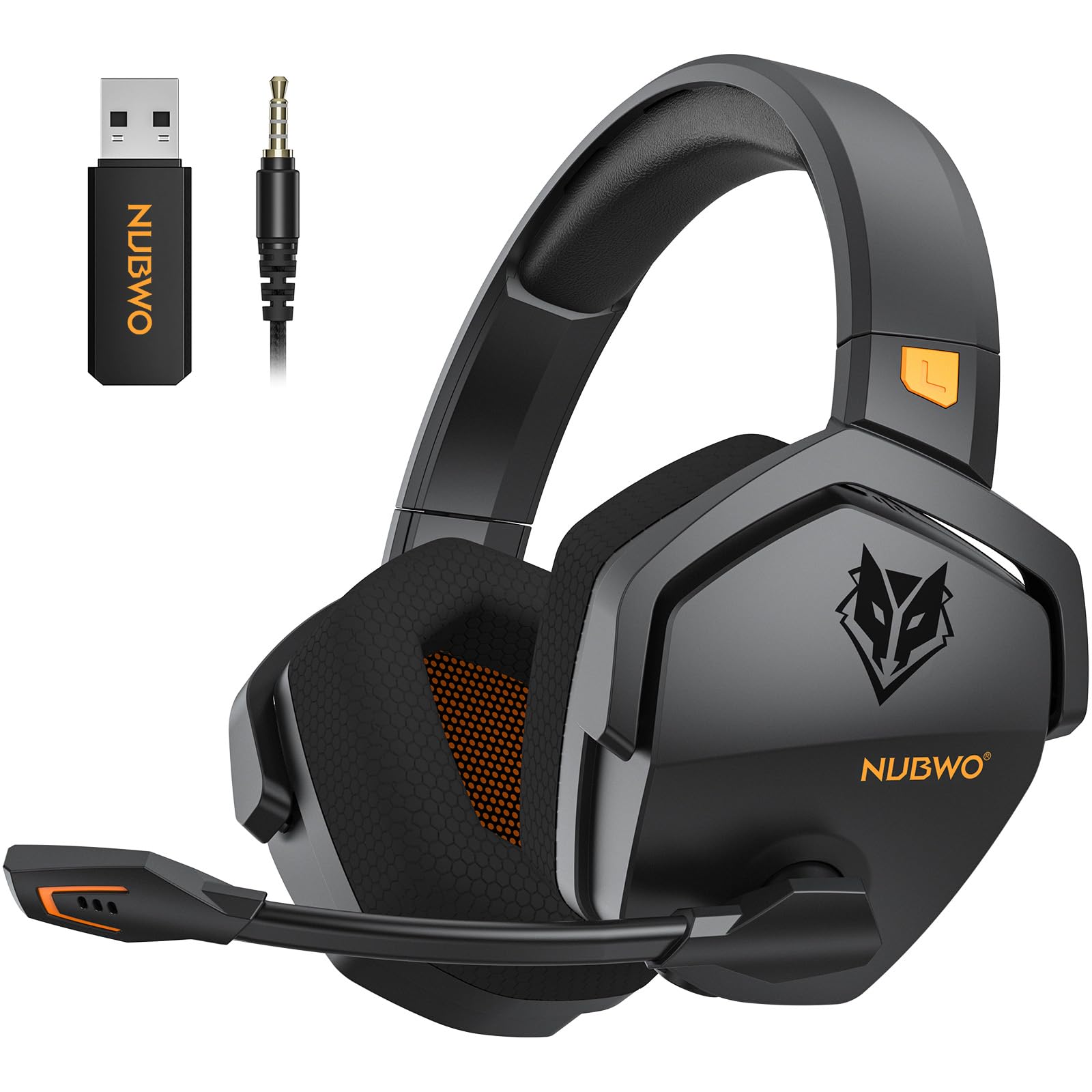
A hundred hours is the claim, and even allowing for optimistic marketing it's in a different league from anything else here. A 1200 mAh battery paired with a low-power chipset means the G06 spends most of its life off the charger, which for a console headset is the whole convenience argument in one number.

The rest of the package is flexible in a way that usually costs more: 2.4 GHz dongle for the PS5, Bluetooth 5.3 for a phone or tablet, 3.5 mm for anything with a jack. The quoted 23 ms of latency is low enough that audio stays in step with the picture, and the 50 mm composite drivers handle game audio well for the money.

Consistency is where it gives ground. Sound is the soft spot — this set can arrive loud and full or thin and quiet — and the wireless link is the other weak point, with pairing trouble and dropouts the things that go wrong. The mic is fine for callouts and no more.

So buy it as a second headset, a spare for the spare room, or the way to get a kid wireless on PS5 without spending much. It's also the pick here if you genuinely hate charging things: the battery is the part of this headset we defend hardest.

Pros

  • 100-hour battery claim leads the whole set
  • Dongle, Bluetooth 5.3 and 3.5 mm in one
  • 23 ms wireless latency

Cons

  • Sound quality is inconsistent between sets
  • Wireless pairing and dropouts go wrong
Our verdict

The long-battery specialist: 100 hours on a charge and three ways to connect, and the easiest way to put wireless audio in a second room or a kid's setup.

Check Latest Price
8

No-Fuss Wired

Turtle Beach Recon 50

89 /100
Lab Score Excellent

Key details

Weight
5.43 oz
Drivers
40 mm
Controls
In-line volume and mic mute
Connection
3.5 mm wired
View on Amazon

There's nothing here to impress anyone: no dongle, no app, no lights, no battery. The Recon 50 is 154 g of plastic with 40 mm drivers, a removable mic and a 3.5 mm plug, and it costs less than anything else on this page.

The in-line controls are why it earns a place anyway. Volume and mic mute sit on the cable where your hand already is, which beats reaching for an earcup, and the mic pops off when you're playing solo or using it as plain headphones. One plug covers the PS5 through the DualSense, plus an Xbox, a Switch or a laptop.

Set expectations. Forty-millimeter drivers can't do what the 50 and 53 mm sets here do — the low end is thin and the soundstage is small — and the build is basic enough that the cable entry and the cups are where it will eventually fail. It also can't match the cushioning of the pricier sets over a very long session.

Where it earns its spot is as the headset you don't have to think about: leave it plugged into the controller, throw it in a bag, hand it to a kid who is rough on things. For a first headset or a second console, it's the one you replace without wincing.

Pros

  • 154 g, lighter than everything else here
  • In-line volume and mic mute
  • Removable mic doubles as plain headphones
  • One plug for PS5, Xbox, Switch and PC

Cons

  • 40 mm drivers sound thin next to bigger sets
  • Basic build; cable entry is the weak point
Our verdict

The no-fuss cheap one: 154 grams, controls on the cable, and a plug that fits everything — the right first headset or spare, not the right main one.

Check Latest Price

How We Tested 12 Headsets Over Six Months

We started by pulling together more than 40 headsets sold for console play — wireless dongle sets, Bluetooth models, and wired ones — then cut the list by connection type, platform support, and what you actually get for the money. That left 12 that we bought ourselves and ran for six months, rotating them through the same console and the same chair so no set got an easier run than another.

Comfort was usually the first thing to fall apart. We wore each headset for a full four-hour session on day one and wrote down where it started to bother us — jaw, crown, ears — and whether it was still wearable at hour four. Battery life we timed with a stopwatch: charged to full, mic live, haptics on, running until the low-battery warning chimed. Results ranged from a single evening to nearly a week of casual play, which is a bigger spread than the spec sheets let on.

For sound, we replayed the same three scenes on every set — a crowded firefight, a quiet dialogue stretch, and a positional check where something creeps up behind you — and judged whether we could place it without looking. Each mic got the same 30-second paragraph read aloud with a mechanical keyboard clacking nearby, then played back over speakers so we could hear room tone and how much of the keyboard came through. Connectivity got a real-world test: dongle in the front port, then a walk to the far end of the house to find where the audio started to stutter. Durability meant three drops from desk height onto hardwood and a week riding loose in a bag, and we logged every rattle, creak, and re-pairing along the way.

How to Choose a Ps5 Gaming Headset

Start with how it connects, not what's inside

The PS5 does not send game audio to Bluetooth headsets. A set connects either through a USB dongle — the 2.4 GHz route most wireless models here use — or through a cable into the DualSense. Bluetooth on these headsets is for your phone, and a listing that shouts about Bluetooth 5.3 can still be wired-only on PlayStation.

Both routes cost you something. A dongle occupies a USB port and lives there; the controller jack drains the DualSense, which stings on a long session if the battery is already low. If you play with the controller on a charging cable anyway, wired costs you nothing at all.

Wired or wireless: pick the chore you'd rather have

Wired means no charging, no pairing and no latency, at the price of a cable to the controller. Wireless means a battery to remember and a dongle to keep track of, and quoted runtimes across this set run from about 40 hours to a claimed 100.

Our rule is simple: if you already resent charging a controller every night, don't add a second thing to charge. If you play at a desk or on a couch a few feet from the console, a cable is nowhere near the inconvenience it sounds like.

Comfort is weight plus clamp

The sets here run from 154 g to 360 g, and lighter ones are easier on the neck over four hours — but weight isn't the whole story. A 240 g headset with a firm headband can be worse than a 320 g one that spreads the load, which is why we judge clamp as much as grams.

Glasses change the calculation. Look for cushions with a channel for the arms of your frames, and prefer fabric or breathable foam if you run warm. Leatherette seals better for isolation; it also gets sticky in August.

The microphone decides whether chat is fun

A headset can sound superb and still be exhausting to own if your squad can't hear you. Cardioid mics reject the room from behind and the sides; omni-directional mics hear everything, which is fine in a quiet room and tiring in a shared one.

Two conveniences are worth paying for: a mic that mutes without a menu, whether it flips up or takes a button press, and a detachable boom for solo play. Whatever you buy, spend two minutes setting your input level in party chat before a real match, not during one.

What the extra spend actually buys

Above the budget tier you are paying for four things: a longer warranty, a metal frame instead of plastic, a bigger battery, and app-based EQ. None of them change how a game sounds on day one; all of them change how the headset holds up in year two.

Wear points are predictable — earcup pads, the cable entry, the charging port — so check that pads can be replaced and that the warranty covers the parts you will actually break. Drivers rarely fail. Everything around them does.

Frequently Asked Questions

Final Verdict

Buy the Razer BlackShark V3 X HyperSpeed if the PS5 is your main machine. At 270 g it's the lightest wireless headset here, it runs for weeks between charges, and PlayStation's 3D audio comes through the dongle with no PC in the chain.

Spend more only when chat quality is the priority: the SteelSeries Arctis Nova 5 has the best microphone in this set and a Bluetooth handoff worth having. On a tight budget, the HyperX Cloud III is the wired headset that will outlast the rest — provided the clamp suits your head.