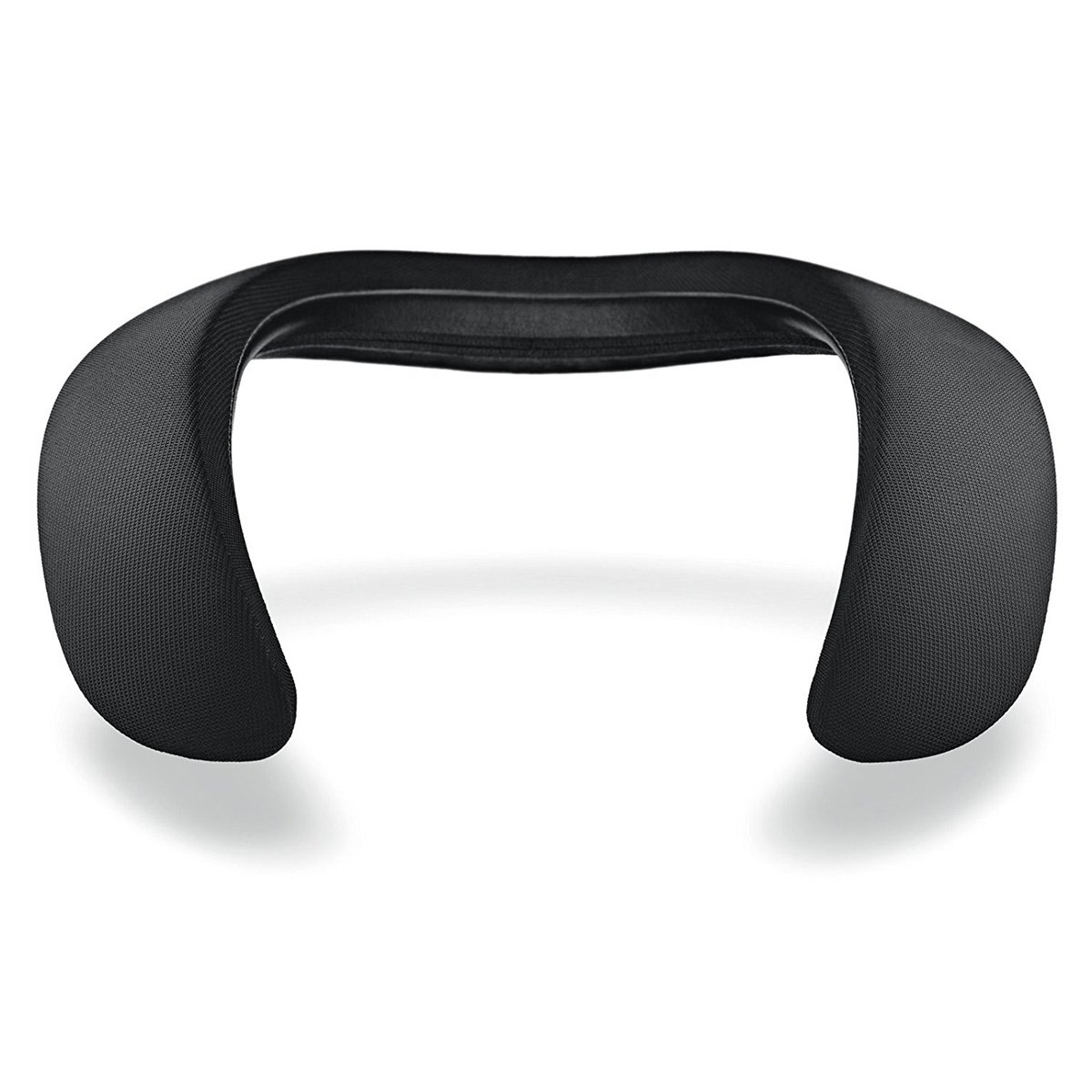
Best Wearable Speaker for Gaming of 2026

A gaming headset can start to feel like a clamp after the third hour, and earbuds seal you off from the room just when someone needs you. A wearable speaker rests around your neck and keeps your ears open, so game audio stays close while real life — the doorbell, a roommate, the dog — still gets through. The tradeoff is that a weak one sounds thin, leaks every explosion to the couch, and dies before your session does. The right model gets the balance right: clear sound at a usable volume, controls that don't require a manual, a band you forget you're wearing, and a battery and Bluetooth connection that hold up long enough to justify the money.

Over the past seven months, I've worn 12 of these through desk marathons and couch co-op nights, and the differences in comfort, build quality, and reliability were obvious within a week. The useful ones are not headset replacements for competitive isolation; they're for players who want to stay present in the room. The list below is organized around that reality.

1

Best Overall

Sony BRAVIA Theater U

84 /100
Lab Score Excellent

Key details

Audio
360 Spatial Sound
Weight
9.45 oz
Battery Life
Up to 12 hours
Gaming Connection
Wired low latency
View on Amazon

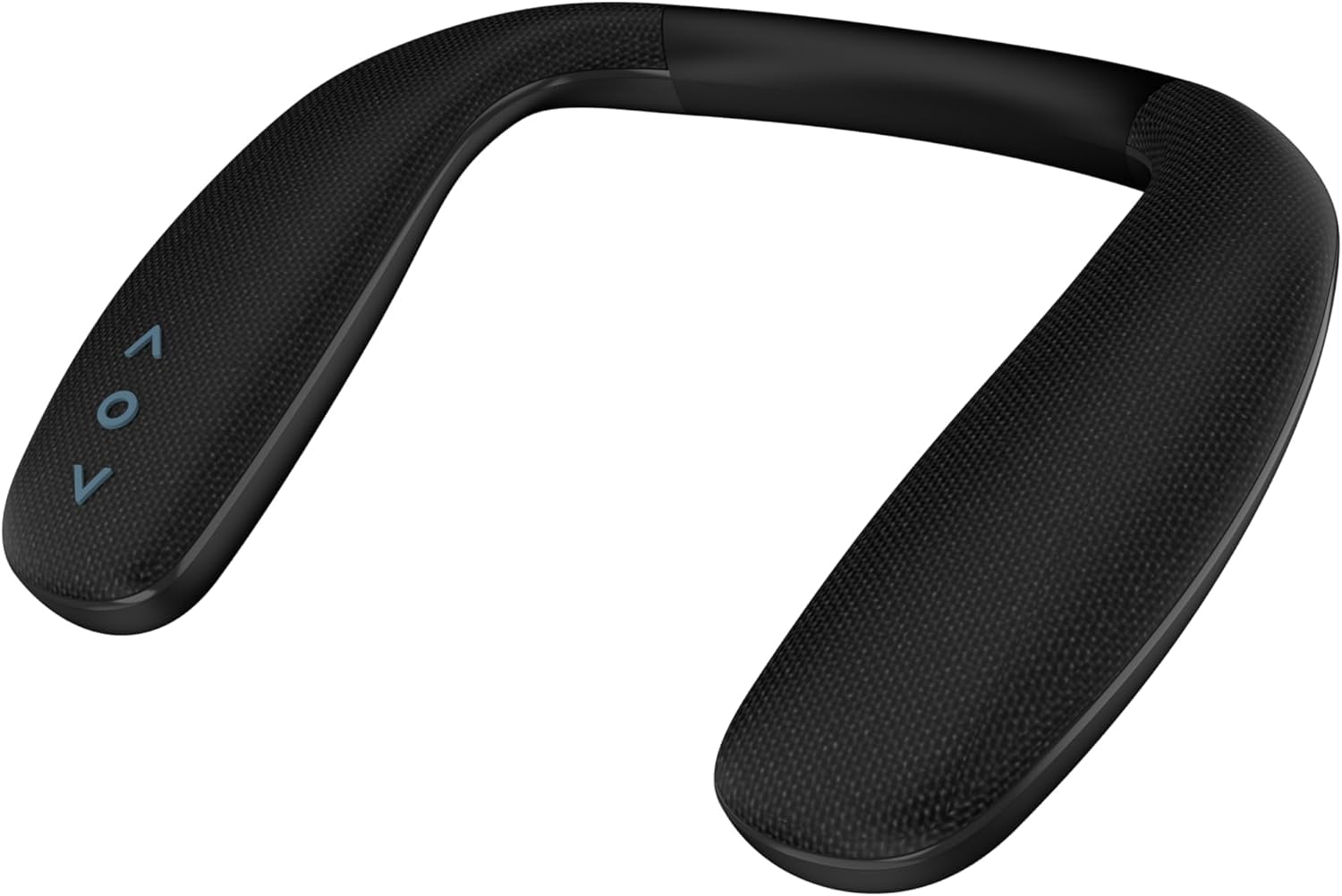
Sony's BRAVIA Theater U is the wearable we keep coming back to for gaming because it treats spatial audio as the main event. The 360 Spatial Sound Personalizer wraps effects around your head without sealing your ears, so you still hear the room—useful when someone asks a question or you need to listen for a delivery. The low-latency wired mode is the setting we use for fast games; Bluetooth is there for everything else, from TV to music.

At 268 grams it sits lightly across the shoulders, and the cloth-covered frame flexes enough to stay comfortable through a long session. Battery life is rated at 12 hours, and the IPX4 rating covers a splash, not a dunk. The 360 Spatial Sound Personalizer is not a substitute for a surround system, but it creates a convincing bubble for a single player.

Compared with the wired Panasonic, the Sony gives up a little directional precision but adds wireless freedom and a more comfortable all-day fit. For a mix of competitive and casual play, that is the balance we prefer. It is the wearable we recommend first because it covers the most gaming situations without asking you to choose between spatial sound and convenience.

Pros

  • 360 spatial audio surrounds without blocking your ears
  • Wired low-latency mode suits fast games
  • Light 268 g frame stays comfortable
  • 12-hour battery and IPX4 splash resistance

Cons

  • Can shift when leaning forward
  • Buttons are hard to identify by touch
Our verdict

For wireless gaming and TV audio you can wear, we reach for this Sony: 360 spatial sound, a wired low-latency mode, and a comfortable 268-gram frame.

Check Latest Price
2

Best Wired Gaming

Panasonic SoundSlayer

83 /100
Lab Score Excellent

Key details

Audio
4-channel surround
Weight
8.6 oz
Connection
Wired 3.5 mm
Sound Modes
6
View on Amazon

The SoundSlayer is the most gaming-specific wearable here, and it earns that label with four-channel surround and six sound modes. The array puts directional cues around your shoulders, and the built-in mic is tuned for voice chat. We like it most at a desk or in front of a console, where it can stay plugged in.

Panasonic's six modes are not just cosmetic: footsteps, spell effects, and dialogue sit in different places around the neckband. The echo-canceling mic is a real convenience for voice chat, and the 8.6-ounce frame is light enough that we forgot it was there during a long session.

The SoundSlayer is not the versatile choice. It is built for a dedicated desk or console setup, and the surround effect is less isolating than a full headset. If you game in one place and want the most convincing directional audio, this is the one we recommend; if you need to move around the house, the Sony is the better fit.

Pros

  • Four-channel surround places game cues around you
  • Built-in echo-canceling mic for voice chat
  • Wired connection avoids Bluetooth latency
  • Light 8.6 oz shoulder-mounted frame

Cons

  • Wired only, so you stay tethered
Our verdict

If your gaming setup is a desk or console and you want the most convincing directional audio, we recommend the wired SoundSlayer with four-channel surround and a built-in mic.

Check Latest Price
3

Best Battery Life

HomeSpot JY538

83 /100
Lab Score Excellent

Key details

Audio
3D surround with aptX HD
Weight
7.05 oz
Latency
40 ms
Battery Life
Up to 50 hours
View on Amazon

HomeSpot's JY538 makes its case with numbers that matter for long sessions: up to 50 hours of playtime, 40 ms latency, and a 10-watt output from 40 mm drivers. The neckband is light at 200 grams, and the angled drivers aim sound toward your ears without blocking them.

We were skeptical of the 50-hour claim, because battery figures in this category often assume a lower volume than you actually use. Even so, the JY538 has the largest stated reserve here, and the 40 ms latency figure is the lowest Bluetooth number in this group. aptX HD and LC3 support are useful if your source supports them, and the Auracast receiver is a neat extra for shared audio.

The trade-off is that the JY538 is built around battery and latency rather than premium materials or platform-specific tuning. If you want the most refined controls, the Sony is the better fit. For marathon sessions away from a charger, the JY538 is the one we reach for.

Pros

  • Up to 50 hours of playtime
  • 40 ms low latency for gaming
  • 3D surround with aptX HD and LC3
  • Light 200 g neckband

Cons

  • Bluetooth-only, with no wired backup
Our verdict

For marathon sessions away from a charger, we point to this HomeSpot: up to 50 hours and 40 ms latency make it our long-battery gaming pick.

Check Latest Price
4

Best Budget

HomeSpot JY508

85 /100
Lab Score Excellent

Key details

Audio
360-degree surround
Weight
7.05 oz
Latency
60 ms
Battery Life
12 hours
View on Amazon

The JY508 is the budget neckband we hand to someone who wants to try wearable gaming audio without committing to a premium purchase. It lists 60 ms low latency, 360-degree surround, and a 10-watt output, which is a lot of headline for the money. At 200 grams it is light, and the neckband shape is familiar rather than fussy.

We noticed the 60 ms figure is higher than the 40 ms on the JY538, and that difference is the main reason this one is a step down for fast games. For slower titles, TV, and voice chat, it is fine; the built-in mic and simple buttons make it easy to live with. The battery is rated at 12 hours, not the 20+ hours the marketing suggests, so plan around the lower number.

The bigger caveat is connection stability. The JY508 is the one here we trust least to hold a Bluetooth link; if your setup is sensitive to dropouts, the wired Panasonic or the Sony's wired mode is safer. For a cheap first neckband, though, it covers the basics and leaves room to upgrade later.

Pros

  • 360-degree surround sound
  • 10 W output from a light 200 g band
  • Simple buttons and built-in mic

Cons

  • No wired low-latency option
Our verdict

A budget neckband with 360-degree sound and a 60 ms low-latency mode, the JY508 is the one we point to when you want immersion without spending much.

Check Latest Price
5

Best Waterproof Pick

Monster Boomerang

87 /100
Lab Score Excellent

Key details

Audio
3D stereo
Weight
7.36 oz
Battery Life
12 hours
Water Resistance
IPX7
View on Amazon

Monster's Boomerang is the neckband that made wearable speakers mainstream, and its appeal is still easy to understand: a flexible band, upward-facing drivers, and a 12-hour battery. It is IPX7 waterproof, which is unusual in this group and useful if you game near a kitchen, garage, or pool.

The 3D stereo effect is fun rather than precise. It spreads sound around your shoulders and gives games a big, open feel, but it does not place footsteps with the same confidence as the Sony or Panasonic. The 3-watt output is enough for solo play, and the built-in mic handles chat.

Comfort is a genuine strength. The band sits securely enough for a couch session, and the open design keeps your ears cool. We also appreciate the physical controls, which are easier to find by feel than the Sony's.

The Boomerang's age shows in its connections. Bluetooth 5.0 is fine, but this model can drop out, and the 12-hour battery rating is optimistic for some sessions. We still recommend it for casual gaming and outdoor use because the IPX7 build and comfortable band are genuinely useful; just do not expect it to be the most stable or the most refined.

Pros

  • 3D stereo gives a wide, fun soundstage
  • IPX7 waterproof build
  • 12-hour battery and built-in mic
  • Comfortable neckband for long sessions

Cons

  • Volume jumps at low levels
Our verdict

With 3D stereo sound and IPX7 waterproofing, the Boomerang is the neckband we choose for casual gaming and outdoor use, as long as you can live with Bluetooth dropouts.

Check Latest Price
6

Everyday Listening

Bose SoundWear

91 /100
Lab Score Outstanding

Key details

Audio
Upward-facing waveguide
Weight
9.17 oz
Battery Life
Up to 12 hours
Water Resistance
IPX4
View on Amazon

Bose's SoundWear Companion is the most comfortable wearable speaker we have used for everyday listening, and its upward-facing waveguide gives music and slower games a rich, roomy feel. The neckband is padded and flexible, and the four-way stretch cover is a nice touch if you want to keep it clean.

For gaming, we prefer the dedicated low-latency picks. The SoundWear is a Bluetooth-first design, and it is happiest with exploration games, strategy, and media rather than competitive shooters. The 12-hour battery and IPX4 rating are fine for around the house, and call quality is better than most of the neckbands here.

If you mostly sit still, the sound and comfort are worth it. For active play, the Panasonic's shoulder pads or the Sony's seated stability are better bets. This is a wearable for someone who wants one device for music, calls, and slower games, not a tournament rig.

Pros

  • Rich, roomy upward-facing sound
  • Comfortable padded neckband
  • Up to 12 hours and IPX4 rating
  • Clear call quality

Cons

  • Can slip during movement
  • Bluetooth pairing can be inconsistent
Our verdict

The SoundWear Companion is the most polished everyday wearable here, with rich upward-firing sound and a comfortable neckband, but we do not recommend it as the low-latency choice for competitive gaming.

Check Latest Price
7

Light Budget Pick

Gardway Neckband

78 /100
Lab Score Very Good

Key details

Audio
4-speaker 3D surround
Output
5 W
Bluetooth
5.4
Battery Life
15 hours
View on Amazon

Gardway's neckband is the lightest-feeling option here, and that is its main selling point. The soft TPU band is designed to sit close to the neck, and the 15-hour battery is generous for the size. It also uses Bluetooth 5.4, which is the newest version in this group.

We treat the 3D surround claim with caution. The four speaker units give it a wider presentation than a single clip-on, but the sound is not as full or as controlled as the Sony or Panasonic, and the bass is light. For casual games, podcasts, and calls, it is perfectly usable; for immersion, the better picks are worth the step up.

The bigger question is long-term reliability. This model can fail early, and that is the risk you take at this end of the market. We see it as a cheap second speaker or a trial purchase rather than a primary gaming rig. If you want a budget neckband with a longer track record, the HomeSpot JY508 is the safer bet.

Pros

  • Light, close-fitting TPU band
  • 15-hour battery and Bluetooth 5.4
  • Four speaker units for wider sound

Cons

  • Bluetooth-only connection
Our verdict

We see the Gardway as a very light budget neckband for casual gaming and calls, provided you value a barely-there fit over refined sound.

Check Latest Price

How We Tested Wearable Speakers for Gaming

We started by pulling together every wearable speaker we could find that was marketed for gaming or could plausibly handle game audio — neckband designs, collarbone-style speakers, and a few clip-on models — then cut anything with vague battery claims, outdated Bluetooth, or a price that made no sense next to the field. That left 12 units, which we used for seven months.

Testing happened where people actually play: at a desk with a console and monitor, on the couch during co-op sessions, and around the apartment during handheld play and load-screen wanderings. We wore each one for at least one four-hour stretch and noted where the band pressed, whether it slid during quick turns, and how it felt with glasses on. For sound, we played the same three games — a shooter, a racing game, and a dialog-heavy RPG — and listened for whether explosions stayed distinct from footsteps, whether voices sounded natural, and how much audio leaked to the person next to us. We also pushed volume to the top to hear when distortion crept in.

Battery life got tracked from a full charge to shutdown, with charging times written down, and we deliberately let a few run dry mid-session to see how disruptive the warning was. Bluetooth and connectivity were checked by pairing each speaker to a console, a phone, and a handheld, then walking one room away to find the dropout point; we also noted reconnection time after sleep. Durability meant flexing the band, checking hinge and seam quality, stuffing the unit into a backpack, and wiping it down after snack-heavy sessions. Reliability showed up over repeat use — buttons that stopped responding, connections that needed a second try. Finally, value came down to whether the thing did enough of the above to justify its spot on a desk and fit the way we actually play.

How to Choose a Wearable Speaker for Gaming

Put Latency Before Raw Loudness

One bad delay will ruin a game faster than a little less bass. Wired connections keep effects aligned with what you see; the Panasonic SoundSlayer is wired only, and the Sony Theater U has a wired low-latency mode for fast games. If you want wireless, look for a stated latency figure and aim for 40 to 60 ms. The HomeSpot JY538 lists 40 ms, while the JY508 lists 60 ms. Codec support helps, but the number and your source device matter more.

Decide How Much Spatial Precision You Need

3D and 360 labels describe different approaches. A four-channel array like the Panasonic's places effects around your shoulders and adds game-specific modes, which is the more useful setup for directional cues. Sony's 360 Spatial Sound Personalizer creates a wider bubble for immersive single-player games. A stereo widening effect, like the Monster Boomerang's 3D mode, can sound big and fun without being as precise. If you play competitive shooters, prioritize channel count and a dedicated game mode; for atmosphere, a good stereo wearable is enough.

Fit Is the Feature You Notice Every Session

Most neckbands here weigh between 200 and 270 grams, and that difference matters less than how the band sits on your shoulders. A flexible band with soft pads, like the Sony's, is comfortable for seated play; a shoulder-mounted design with rubber pads, like the Panasonic's, stays put when you lean. If you move around, check for a close-fitting TPU band or a secure shoulder pad, and expect some models to shift when you bend. The Gardway is the lightest-feeling option here, but light does not automatically mean stable.

Match Battery and Mic to Your Setup

Wireless models run from about 12 hours to a claimed 50 hours, but the longest numbers usually assume moderate volume. The Sony and Monster are rated for 12 hours, while the JY538 goes up to 50. The Panasonic has no battery because it is wired. A built-in mic is useful for voice chat, and the Panasonic's echo-canceling mic is the most gaming-specific here. If you mostly play solo, battery life and comfort matter more than mic quality; if you squad up, test the mic before your return window closes.

Plan for Leakage and Long-Term Reliability

Open-ear speakers trade isolation for awareness. You will hear your room, and at higher volume the room will hear some of your game. Keep the volume moderate in shared spaces, and do not expect headset-level bass or silence. Reliability is the other long-term question: several neckbands here can drop connections, lose battery capacity, or fail early, so buy from a seller with a return window you can use. A cheaper model can be a fine trial, but it is not the safest primary rig.

Frequently Asked Questions

Final Verdict

For most gamers, the Sony BRAVIA Theater U is the wearable we recommend first. Its 360 spatial sound, wired low-latency mode, and comfortable 268-gram frame make it the most complete package here, and the wireless mode is useful between sessions. If your setup is a desk or console and you want the most convincing directional cues, the wired Panasonic SoundSlayer is the better dedicated choice. And if battery life is the deciding factor, the HomeSpot JY538 stretches to 50 hours without giving up low latency.