Best Wireless PS4 Gaming Headsets of 2026

Nothing kills a squad night faster than a headset that cuts out mid-round or dies without warning, and in the wireless world those two failures are the whole ballgame. A good wireless PS4 headset does something simple: it puts game audio and party chat in the same place, on your head, untethered from the controller, so you can hear footsteps behind you and your friends at the same time. What separates a great one from an okay one is everything after that — comfort in hour four, a mic that doesn't sound like a drive-thru speaker.

Over six months, my team and I played through 11 wireless headsets on PS4s in living rooms and bedrooms, timing battery life and wearing each one well past the point where bad ear pads start to bite. One thing worth knowing first: the PS4 doesn't support Bluetooth audio for headsets, so almost every wireless option pairs through a USB dongle, which makes dongle placement and range more important than the box lets on. The picks below are the ones that survived that.

1

Best Overall

WESEARY WG1

88 /100
Lab Score Excellent

Key details

Drivers
50mm dynamic
Connection
2.4GHz dongle and Bluetooth 5.4
Battery Life
50 hours
Stated Latency
20 ms
View on Amazon

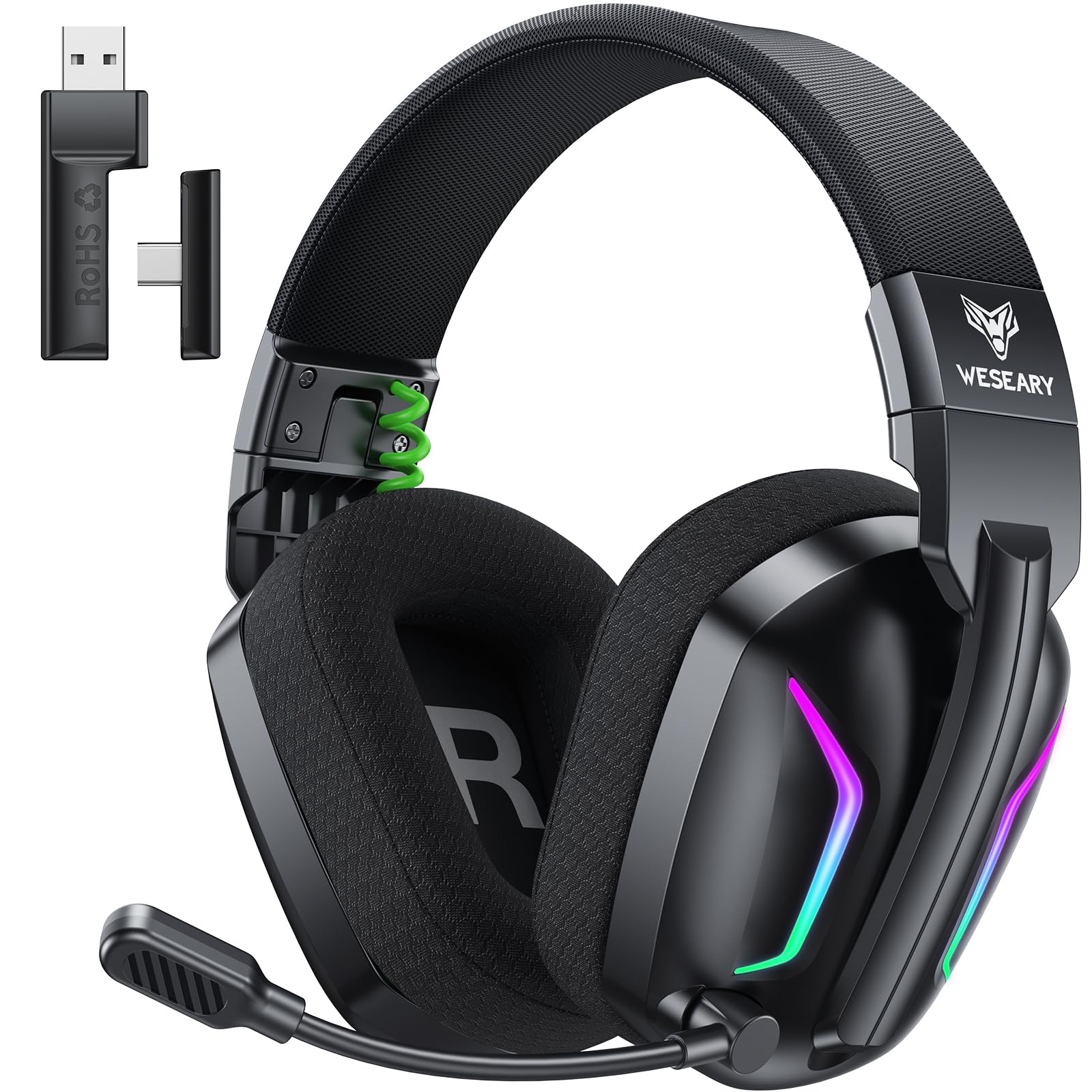
Fifty hours is the battery figure on the box, and it comes with a footnote: with the RGB lighting running, the same spec sheet drops to about 35. Either number covers a week of evening sessions, which is the point — you charge it on a Sunday and stop thinking about it. We like that the drivers are the full 50mm units rather than the 40mm ones the lighter picks use, and that the dongle is the main path rather than an afterthought.

On a PS4 that dongle is the whole connection. Plug the transmitter into a front USB port and the console treats the headset as its audio device. Bluetooth 5.4 is for your phone or laptop, and a two-second press on the mic button moves between the two modes. The quoted latency of 20 ms sits in the band where the gap between the picture and the sound stops being something you notice.

The mic is the part to manage. It's a noise-cancelling boom with one-touch mute, and it's the least predictable piece of the package — the level can arrive low enough that party chat struggles, and moving the boom closer to your mouth plus raising the input in the console's mic settings sorts out most of it. Do that before your first match rather than during it.

Comfort is unremarkable in the best way: soft, breathable earcups on an adjustable headband that stayed put through a long evening. The frame folds flat, which matters more than it sounds when the alternative is a headset balanced on top of a console, and the charging cable is USB-C, so it shares a lead with everything else on your desk.

Pros

  • 50-hour battery, about 35 with RGB on
  • 2.4GHz dongle plus Bluetooth 5.4
  • Full-size 50mm drivers
  • Folds flat and charges over USB-C

Cons

  • No 3.5mm fallback when the battery dies
Our verdict

We'd buy this one first: dongle audio that behaves, a 50-hour battery, and full-size drivers for about what the mid-priced picks here cost.
Check Latest Price
2

Best for Long Sessions

NUBWO HG04

87 /100
Lab Score Excellent

Key details

Weight
9.52 oz
Connection
2.4GHz dongle and Bluetooth 5.3
Microphone
Boom with mic monitoring
Battery Life
80 hours
View on Amazon

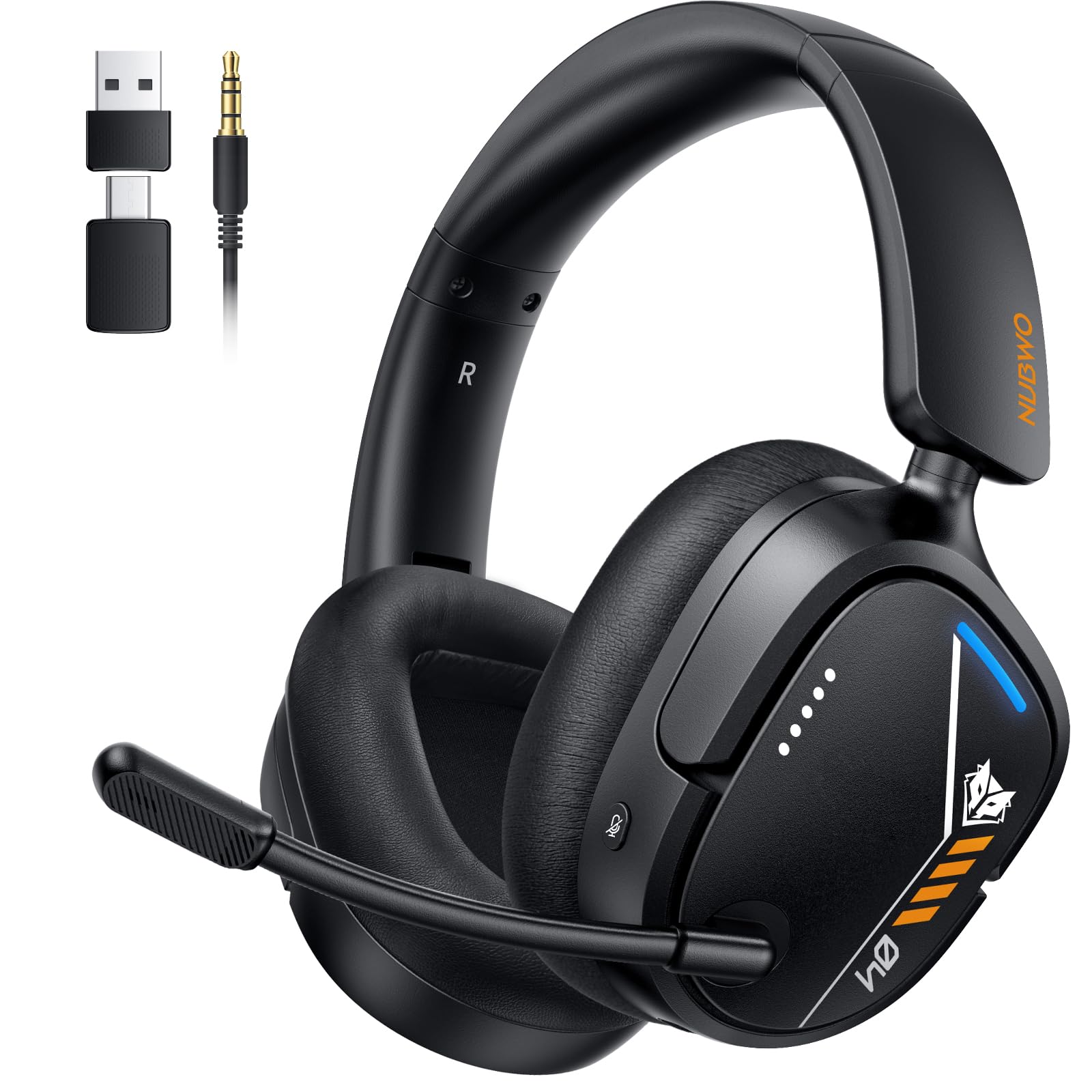
Sidetone is the feature nobody shops for and everybody misses once it's gone. Hold the mute button for three seconds and the HG04 feeds your own voice back through the earcups, so you can hear your level at one in the morning without taking the headset off. None of the other picks here do it, and it's the reason this is the one we reach for when the house is asleep.

The rest of the package is built for length: 80 hours on a charge, 270 g on your head, and a folding frame. That combination is why it's our pick for a whole weekend of a new release, and why it's the one that goes in a bag. The 40mm drivers are the compromise — they're smaller than the 50mm units in the WESEARY, the Tatybo and the AOC, and the low end is where we noticed it. Explosions land; they just don't have the same weight behind them.

Wireless is the usual pair, with the 2.4GHz dongle doing the work on a PS4 and Bluetooth 5.3 handling a phone. There's a USB-C to 3.5mm cable in the box, so a flat battery means a corded evening rather than a dead headset. The boom mic is clear enough for party chat and not the thing you'd record a podcast on.

Pros

  • 80 hours per charge
  • 270 g with a folding frame
  • Sidetone mic monitoring
  • 3.5mm cable included as backup

Cons

  • Clamp runs tight on larger heads
Our verdict

Our pick for long sessions: 80 hours, 270 grams, and sidetone monitoring so you can hear how loud you're being.

Check Latest Price
3

Best for Competitive Play

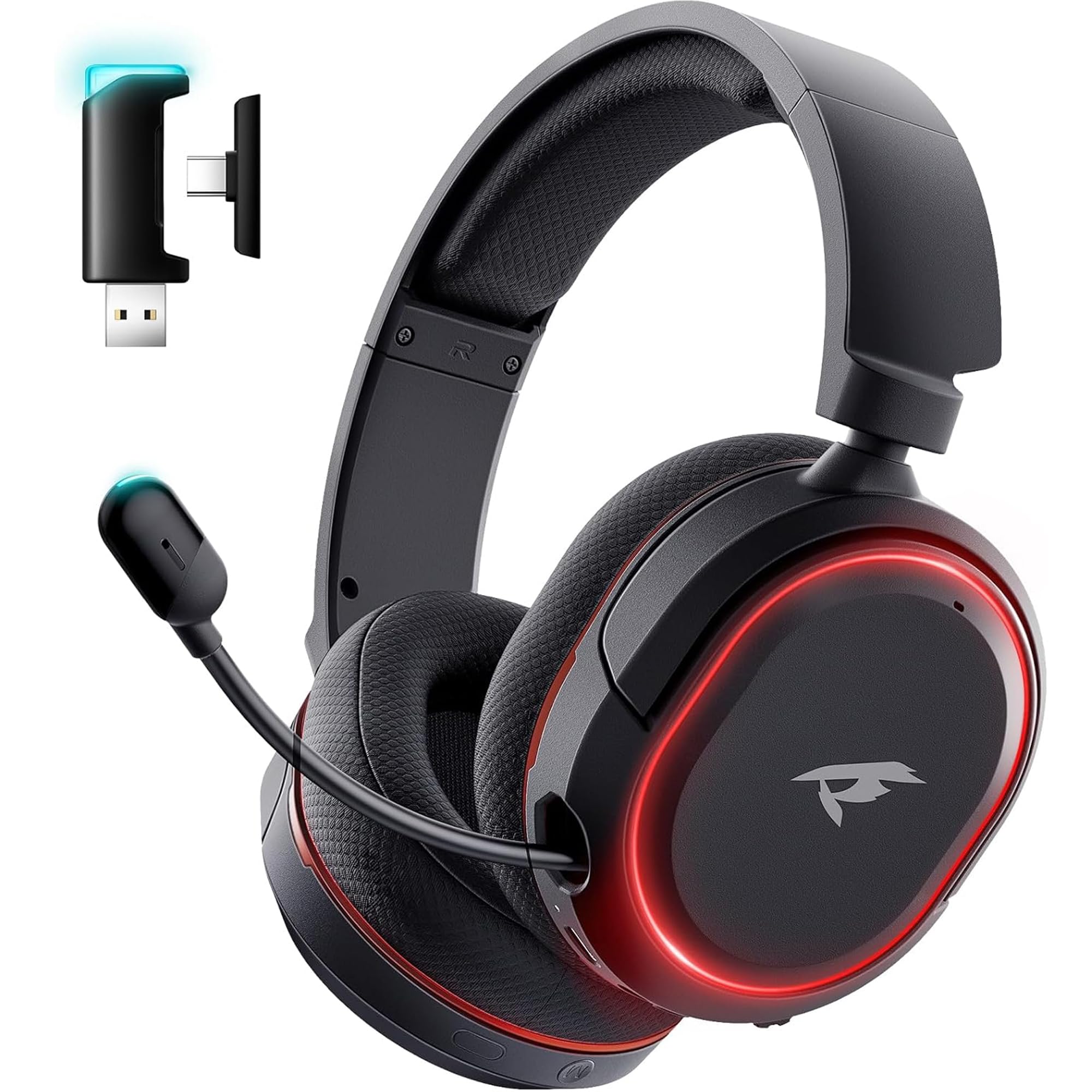
Tatybo WT01

89 /100
Lab Score Excellent

Key details

Weight
1.1 lb
Drivers
50mm dynamic
Connection
2.4GHz USB-A/USB-C dongle, Bluetooth
Battery Life
40 hours
View on Amazon

The dongle is a small piece of sense. One transmitter carries both a USB-A plug and a USB-C plug, so the same stick goes into the front of a PS4, the side of a laptop, or a Switch without an adapter hunt. We have a drawer full of orphaned adapters; this design ends that.

Around it sits a genuinely competitive package: 7.1 virtual surround from 50mm drivers, 20 ms quoted latency, 40-plus hours from a 1000mAh cell with a three-hour charge, and a three-year warranty that only the Valorise and the Ozeino match. At the budget end of this group, that warranty is the part we'd weigh heaviest — it's the difference between a cheap headset and an inexpensive one.

The earcups are breathable nylon mesh rather than the protein leather most of these use, and it shows over a summer evening: your ears stay cooler and the pads don't go sticky. The fit is ordinary in the good sense, with an adjustable headband that goes small enough for a teenager and wide enough for an adult.

Where it gives ground to the top pick is battery. Forty hours is generous until you've lived with 50, and the low-battery alert is there so it doesn't ambush you. The RGB is a nice flourish, and switching it off in the first week is the easiest way to get closer to the claim.

Pros

  • Dongle covers USB-A and USB-C
  • 7.1 surround from 50mm drivers
  • Three-year warranty
  • Breathable nylon mesh earcups

Cons

  • Heaviest pick here at a listed 1.1 lb
Our verdict

The most complete budget package here: a dongle that fits anything, 7.1 surround, and a three-year warranty.

Check Latest Price
4

Best for Comfort

Valorise UG-08S

89 /100
Lab Score Excellent

Key details

Connection
2.4GHz dongle, Bluetooth 5.4, 3.5mm
Microphone
Retractable noise-cancelling
Battery Life
45 to 100 hours
Stated Latency
5 ms
View on Amazon

The microphone retracts into the earcup. Pull it out to talk, push it back, and the headset stops looking like gaming kit — no boom in the corner of your vision during a film, and nothing to snap off in a bag. Of the three mic designs in this group, it's the one we'd pick for a headset that has to do double duty.

Comfort is where it earns its place in this list: memory-foam cushions under breathable fabric, on earcups that rotate flat, with enough padding that a long session doesn't turn into a countdown. That's the impression we came away with, and it's why we'd point anyone sensitive to clamp pressure this way before the rest.

Battery spans a wide range depending on how you run it — the listing gives 100 hours in Bluetooth with the lighting off, and 45 at the other end with the 2.4GHz dongle and the RGB lit. The dongle is the two-in-one type, USB-A on one side and USB-C on the other, and there's a removable 3.5mm cable for the day the battery doesn't make it.

The mic is omnidirectional with one-touch mute, and level is the first thing to check, because at default gain it can come across thin and quiet; a minute on the console's mic-level screen sorts most of it. The retractable arm also wants to sit close to your mouth — it isn't a boom you can leave parked out at your jaw.

Pros

  • Retractable noise-cancelling mic
  • Memory-foam cushions that rotate flat
  • Up to 100 hours in Bluetooth mode
  • Combo USB-A/USB-C dongle and 3.5mm cable

Cons

  • Build can fail within weeks of use
Our verdict

Comfort first: memory foam, a retractable mic and up to 100 hours for anyone who lives in a headset all evening.

Check Latest Price
5

Best Detachable Mic

AOC Captain 300

86 /100
Lab Score Excellent

Key details

Weight
12.7 oz
Connection
2.4GHz dongle, Bluetooth 6.0, 3.5mm
Microphone
Detachable noise-cancelling
Battery Life
45 hours
View on Amazon

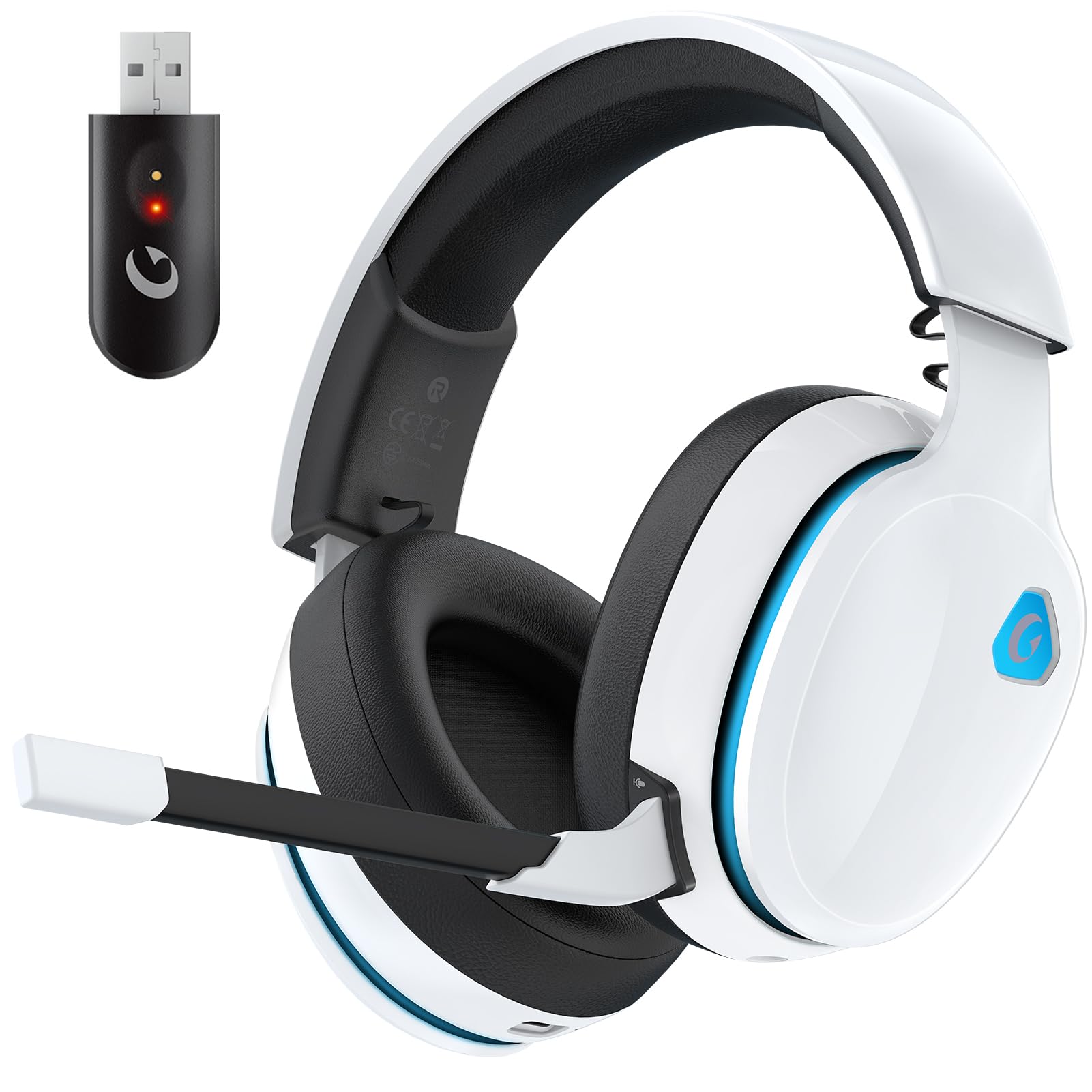
The microphone comes off entirely. For single-player games that's the whole point: you get a pair of wireless headphones with a glossy white shell, no boom against your cheek, and a mic that clips back on the moment a friend invites you into a party.

The spec sheet is complete rather than clever — 2.4GHz dongle for the PS4, Bluetooth 6.0 for everything else, a 3.5mm cable in the box, 7.1 virtual surround from 50mm drivers, 20 ms quoted latency, 45 hours from a three-hour charge, and memory-protein earmuffs. Nothing there is a gimmick, and nothing is the best in the group either.

What we appreciate most is how little it asks of you. Plug the dongle in, put it on, and it behaves. There's no app, no EQ preset to cycle through and no RGB to switch off, which sounds like an absence until you've spent an evening turning lights off on other headsets. The white-and-mirror finish is the nicest-looking thing in this group, if the console sits in a living room rather than a den.

The one thing to manage is the mic itself — a separate part that ends up in a drawer if you're not careful, so clip it to the headband between sessions. Beyond that there's very little to think about, which is the highest compliment we can pay a headset at this level.

Pros

  • Detachable mic for solo play
  • 7.1 virtual surround from 50mm drivers
  • No software or RGB to manage
  • Three-hour charge for 45 hours

Cons

  • 45-hour battery trails the 70- and 80-hour picks
Our verdict

We'd choose the Captain 300 for solo games with the occasional party — the mic clips off, and nothing else here looks this good on a shelf.

Check Latest Price
6

Second Setup

Ozeino OW810

88 /100
Lab Score Excellent

Key details

Weight
1.08 lb
Drivers
50mm dynamic
Connection
2.4GHz USB-A/USB-C dongle, Bluetooth
Battery Life
40 hours
View on Amazon

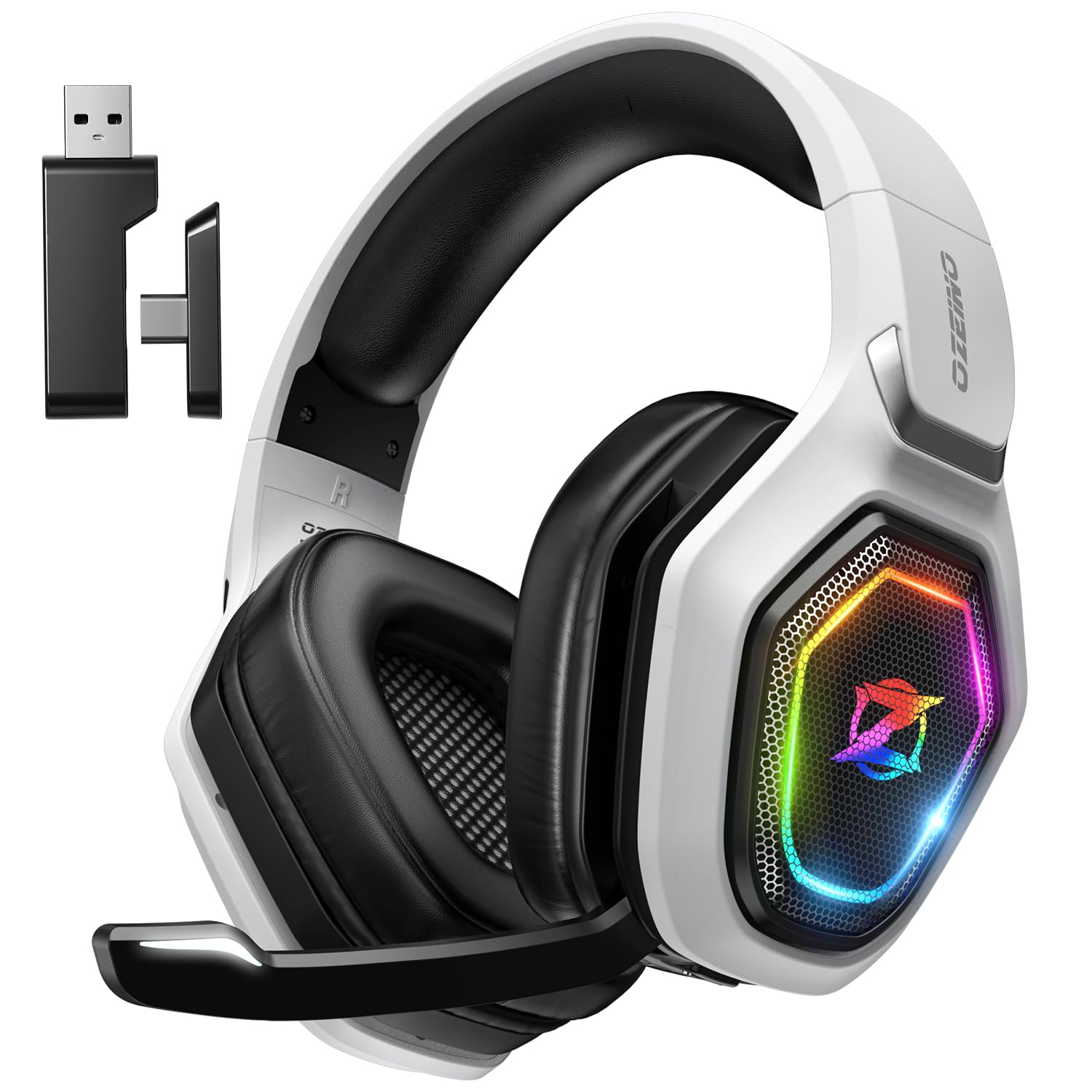
Three years of warranty is the longest cover in this group, matched only by the Valorise and the Tatybo. It's the least exciting reason to buy a headset, right up until the first one dies at fourteen months.

The OW810 is a straightforward package: a dongle with both USB-A and USB-C, Bluetooth for a phone, a 50mm driver, 40 hours from a charge, a flip-down boom with one-touch mute, and a 3.5mm cable in the box. Play-and-charge is supported too, so a flat cell turns into a corded session rather than a full stop.

Where we'd place it is a second setup — a bedroom PS4, a kid's first wireless pair, the console in the spare room — rather than the headset you make your daily driver. What decides that isn't the spec sheet but the 490 grams, the heaviest thing on this page and roughly double the Turtle Beach. A wide headband spreads it and a two-hour session is fine, but you'll be aware of it in a way you won't be with the lighter picks.

Pros

  • Three-year warranty
  • Plays while charging
  • 50mm drivers and a combo dongle
  • 3.5mm cable included

Cons

  • Bluetooth 4 is dated for phone use
Our verdict

A sound choice for a second setup or a spare-room console, and the longest warranty here at three years.

Check Latest Price
7

Lightest Ride

Turtle Beach Stealth 500

84 /100
Lab Score Excellent

Key details

Weight
8.11 oz
Drivers
40mm amplified
Connection
2.4GHz dongle and Bluetooth 5.2
Battery Life
40 hours
View on Amazon

At 230 g the Stealth 500 is the lightest headset here — 40 g under the NUBWO, less than half the Ozeino — and the gap is obvious the moment you swap between them. Some of that comes from a floating headband that spreads the load, and some from 40mm amplified drivers instead of the 50mm units most of these carry. We'd take that trade for a four-hour session.

The rest is proper adult kit: a flip-to-mute mic with variable monitoring so you can hear your own level, four EQ presets and a 10-band equalizer in the Swarm II app, and a QuickSwitch button that jumps between the 2.4GHz dongle and Bluetooth 5.2 without menu-diving. Forty hours is on the low side for this group, and it's the number to plan around rather than a bonus.

On a PS4 the dongle does the work. Pair it over Bluetooth and you get nothing, because the console doesn't route game audio that way — that's true of every pick here, and it's the first thing to check if the console seems to have ignored the headset you just bought.

What you're paying for is the tuning and the weight, and both earn their keep if a headset stays on your head for hours at a stretch. The app is what makes the difference: pull the bass back for shooters, put it in for everything else, and keep the setting once instead of hunting for it every session.

Pros

  • Lightest here at 230 g
  • Flip-to-mute mic with monitoring
  • 10-band EQ in the Swarm II app
  • QuickSwitch between dongle and Bluetooth

Cons

  • Frame and mic are the weak points over time
Our verdict

Worth the premium if weight is what ends your sessions: 230 grams, an EQ app, and a mic that mutes by flipping it up.

Check Latest Price
8

Cheap Second Setup

Krysenix KGH2

85 /100
Lab Score Excellent

Key details

Drivers
50mm titanium-coated
Connection
2.4GHz dongle and Bluetooth 5.4
Battery Life
70 hours
Stated Latency
20 ms
View on Amazon

Fold the earcups flat and the KGH2 disappears into a backpack, which is the right shape for a headset travelling between a PS4 and a friend's place. Seventy hours on a charge makes it the second-longest runner here, and the 50mm titanium-coated drivers are the same size as the ones on the picks near the top of this list.

It's a budget headset that doesn't feel like a punishment: 2.4GHz dongle and Bluetooth 5.4, 20 ms quoted latency, RGB along the earcups, a foldable frame and an adjustable headband. The lighting is the kind of thing you either want or switch off in the first hour, and switching it off is what gets you anywhere near the 70-hour claim. We'd have liked a 3.5mm cable in the box for the day the battery gives up mid-match, and there isn't one.

The mic is the ordinary part — a noise-cancelling boom that carries your voice well enough for party chat and picks up a little of the room along with it. Fit runs snug, so if you're between sizes or wear glasses, the NUBWO HG04 or the Valorise will treat you better. What it gets right is the expensive stuff: battery, drivers, and a frame that folds.

Pros

  • 70 hours per charge
  • 50mm titanium-coated drivers
  • Folds flat for travel
  • Bluetooth 5.4 alongside the dongle

Cons

  • Some units stop working within weeks
Our verdict

The budget pick we'd still recommend: 70 hours, 50mm drivers and a folding frame for a second setup or a kid's console.

Check Latest Price

How We Tested 11 Wireless PS4 Headsets

We built the shortlist by pulling every wireless PS4 headset that either ships with a dedicated USB dongle or officially supports the console, then filtering by price, ear pad material, mic design, and whether the battery can be replaced. That left 11 headsets, all bought at retail, all used for six months.

Testing happened where the console actually lives. Each headset got evening sessions of two to four hours, party chat with friends in other states, and late-night single-player runs at low volume with a roommate asleep down the hall. One pair rode in a backpack to a friend's apartment and back.

We charged each one to full and played until it shut off, logging the hours and noting whether it warned us first or just went dark. Comfort was judged in four-hour stretches, with and without glasses, watching for hot ears, clamp pressure, and whether the headband left a dent. For connectivity, we walked to the kitchen, sat behind the couch, and shut the console inside a media cabinet to see where the dongle gave out, and we counted the steps it took to pair. Microphone tests ran through live party chat, with friends rating how we sounded while a box fan and a mechanical keyboard hummed in the background. We also noted how much outside noise each pair blocked on its own, since none of these lean on active noise cancellation. Finally, we dropped each headset from couch height, twisted the hinges, stuffed them into bags, and had testers from small to extra-large heads report on fit.

Value came last: we asked what each pair gave us for the money that the next tier up didn't, and a few answers were surprising.

How to Choose a Wireless Headset for Your Ps4

The Dongle Comes First

Every headset here connects over a 2.4GHz USB transmitter, and that is the only wireless path the PS4 uses for game audio — the console's Bluetooth radio is there for controllers, not headsets. So the dongle, not the Bluetooth version printed on the box, decides whether you can play at all.

Check the plug before you buy. The PS4's front ports are USB-A, so a Type-C-only transmitter needs an adapter or a swap to the rear. Two-in-one sticks that carry both plugs, like the ones on the Tatybo and the Valorise, move between a console and a laptop without one.

Latency Figures Are Not the Deciding Number

Everything in this group quotes 20 ms or less, and the Valorise claims 5 ms. Do we think the gap changes how a game feels? Not much. The range where audio visibly drifts away from the picture sits well above what any of these quote, and a link that holds all evening matters far more than a smaller number on the spec sheet.

Put the weight on stability instead. A headset that drops out mid-match will cost you more evenings than five milliseconds ever will, which is why we rank the dongle's behaviour above the latency claim in every card above.

Battery Hours Are Quoted With the Lights Off

The big battery figures here all assume the RGB is switched off. The WESEARY's 50 hours drops to around 35 with the lighting running, and the Valorise runs from 45 to 100 depending on mode and glow. Plan on the low end and turn the lights off if you game in long stretches.

Play-and-charge support is the detail that rescues a forgotten battery: the Ozeino and the Valorise both run while they refill, so a dead cell costs you a cable rather than a session.

Weight and Clamp Beat Cushion Depth

The spread here runs from 230 g on the Turtle Beach to 490 g on the Ozeino, which is the difference between forgetting you have a headset on and adjusting it every twenty minutes. Grams only tell half the story, though — a tight band on a 270 g set can be worse than a wide one at 360 g.

If you wear glasses or have a large head, favour the lighter picks and read the clamp notes on each card. Cushion depth is the easy thing to change later with a pad swap; clamp pressure is not.

The Microphone Decides Whether You Keep It

Drivers get the marketing, but the mic is what you live with, and a thin, quiet signal is the usual reason a cheap headset ends up in a drawer. A boom near your mouth beats any amount of processing, so start there.

Fixed booms are simplest. The Valorise retracts its mic into the earcup and the AOC detaches entirely, which trades a little convenience for a cleaner look when you play solo. Whichever you pick, spend two minutes in the PS4's microphone-level screen before your first party.

Frequently Asked Questions

Final Verdict

If you want the one we'd buy with our own money, it's the WESEARY WG1. Dongle audio that behaves on a PS4, 50 hours of battery (35 with the lights on), full-size 50mm drivers, and a mic that needs two minutes of setup rather than a replacement.

Go to the NUBWO HG04 if your sessions run six hours or more — 80 hours, 270 grams and sidetone are worth the smaller drivers. And if the mic has to come off for solo games, the AOC Captain 300 is the one.