10 Best XLR Microphone for Streaming 2026: Clear Voice Without Room Treatment

Which XLR mic delivers pro voice for streaming without needing a treated room? We cut through the hype to match you with the right dynamic or condenser for your setup.

Many streamers jump into XLR expecting studio clarity, only to find their new condenser mic picks up every keyboard click and room echo. Dynamic microphones handle untreated spaces far better, but they often need extra preamp gain to sound their best.

The real question isn't whether to go dynamic or condenser — it's whether your room can handle a condenser's sensitivity. Most gaming setups don't have acoustic treatment, which makes a dynamic cardioid mic the safer bet for clear voice capture without background noise.

This guide focuses on matching the mic to your actual environment and gear. Whether you run a budget interface or a full mixer, you'll find picks that cut through game chat without forcing you to soundproof your room first.

1

Best Overall

Shure SM7B

96 /100
Lab Score Outstanding

Key details

Type
Dynamic
Connection
XLR
Polar Pattern
Cardioid
Gain Requirement
60+ dB preamp
View on Amazon

Its cardioid dynamic capsule captures voice with a rich, balanced presence while rejecting room noise, keyboard clatter, and other background sounds. The all-metal chassis and electromagnetic shielding hold up to daily use in active studios and streaming setups.

This mic is for professional podcasters and voiceover artists who already own a high-quality audio interface or mixer capable of 60+ dB of clean gain. Without that preamp headroom, an inline booster like a Cloudlifter becomes necessary to reach reasonable recording levels.

💡 Pair with a Cloudlifter or FetHead to bring the output to standard interface levels — the mic delivers its best with clean 60+ dB gain.

Pros

  • Warm, balanced broadcast sound with excellent off-axis rejection
  • Robust all-metal construction with electromagnetic shielding
  • Industry standard for podcasting and voiceover

Cons

  • Requires 60+ dB of clean gain from your preamp
Our verdict

The SM7B is the right choice for streamers and podcasters who have a quality interface and want the best vocal clarity. If your setup lacks high-gain input, factor in the cost of an inline booster.

Check Latest Price
2

Best Budget Dynamic

RØDE PodMic

96 /100
Lab Score Outstanding

Key details

Type
Dynamic
Connection
XLR
Polar Pattern
Cardioid
Gain Requirement
50+ dB preamp
View on Amazon

The RØDE PodMic delivers broadcast-level clarity and warmth in a desk-friendly metal body with built-in pop filter and shock mount — no extra accessories required. The integrated pop filter and internal shock mount reduce plosives and handling noise effectively, streamlining setup. Its low output demands an audio interface with at least 50 dB of clean gain; users with weaker preamps may need an inline booster. For streamers and podcasters who already own a capable interface, this mic provides sound quality that rivals professional dynamics at a budget price.

Pros

  • Clear, warm broadcast sound that rivals more expensive dynamics.
  • All-metal build with integrated pop filter and shock mount for easy setup.
  • Exceptional value for money under $100.

Cons

No notable drawbacks to flag.

Our verdict

For streamers with a capable audio interface, the PodMic offers broadcast sound quality without the premium price tag.

Check Latest Price
3

Best Condenser for Quiet Studios

AT2035

96 /100
Lab Score Outstanding

Key details

Type
Condenser
Connection
XLR
Polar Pattern
Cardioid
Gain Requirement
Phantom power
View on Amazon

The AT2035 delivers an exceptionally quiet signal (10 dBA) with a switchable high-pass filter and -10 dB pad, giving home studio users more control than the entry-level AT2020. Its cardioid pattern focuses on the source, but as a condenser, it will pick up room reflections and background noise in untreated spaces. This microphone suits vocalists, instrumentalists, and podcasters who have invested in acoustic treatment and an audio interface with phantom power — the included shock mount and padded pouch add convenience, though an XLR cable is sold separately.

💡 Plug into an interface or mixer with 48V phantom power; the high-pass filter helps reduce low-end rumble from desk vibrations.

Pros

  • Low self-noise (10 dBA) for clean recordings with minimal hiss.
  • Smooth, natural sound with switchable high-pass filter and -10 dB pad.
  • Solid build quality with included shock mount and protective pouch.

Cons

  • Requires phantom power and a quiet environment for best results
  • XLR cable not included, adding an extra purchase for first-time buyers.
Our verdict

For streamers and podcasters with a treated recording space, the AT2035 offers studio-grade clarity at a mid-range price — just budget for an XLR cable.

Check Latest Price
4

Best Premium USB/XLR Dynamic

Shure MV7+

93 /100
Lab Score Outstanding

Key details

Type
Dynamic
Connection
USB + XLR
Polar Pattern
Cardioid
Gain Requirement
Low (auto-level)
View on Amazon

The MV7+ delivers Shure's dynamic broadcast quality in a hybrid design that simplifies setup with USB-C and automated gain control. OBS certification and a built-in denoiser make it a direct fit for streaming software, while the digital pop filter reduces cleanup later. Where the SM7B demands a high-gain preamp and manual tweaking, the MV7+ prioritizes ease of use — auto-level handles volume consistency, and the touch panel adds visual feedback. This mic suits streamers who value convenience and want the flexibility to move to XLR down the road. Purists who prefer hands-on gain staging and no software will find the automation unnecessary, and the premium price reflects those extras.

💡 The auto-level mode works best in consistent speaking environments; disable it for dynamic performances where you want manual control.

Pros

  • Auto Level Mode smooths out gain for consistent volume without manual adjustments.
  • OBS certification and real-time denoiser integrate directly with streaming software.
  • Premium build with multi-color LED touch panel adds visual polish.

Cons

  • Software-dependent features like auto-level may not appeal to those who prefer analog control.
  • Premium pricing puts it above many USB/XLR hybrids.
Our verdict

A smart choice for streamers who want Shure's quality without the setup hassle — provided you're comfortable with a higher upfront cost and software integration.

Check Latest Price
5

Best Budget Condenser

AT2020

95 /100
Lab Score Outstanding

Key details

Type
Condenser
Connection
XLR
Polar Pattern
Cardioid
Gain Requirement
Phantom power
View on Amazon

The AT2020 captures vocals and instruments with a clean, detailed sound that rivals pricier mics — its 144 dB SPL handling handles loud sources without distortion. This clarity comes with tradeoffs: it needs an XLR interface and cable (not included), and its condenser design picks up ambient noise in untreated rooms. For streamers and podcasters who have already invested in acoustic treatment and an audio interface, the AT2020 delivers professional-grade audio at an entry-level price.

💡 To minimize background noise, position the mic close to your mouth and use a pop filter — the cardioid pattern helps, but quiet surroundings make the biggest difference.

Pros

  • Clear, articulate capture of vocals and acoustic instruments
  • Handles loud sound sources up to 144 dB without clipping
  • Low price for a condenser with this level of detail

Cons

  • No XLR cable in the box
  • Condenser sensitivity means background noise like fans or keyboard clicks may be picked up in untreated rooms
Our verdict

If your streaming setup already includes an XLR interface and acoustic panels, the AT2020 is a cost-effective way to upgrade your voice quality. Without those, factor in the cost of a cable and room treatment.

Check Latest Price
6

Live Streaming

Shure SM58

96 /100
Lab Score Outstanding

Key details

Type
Dynamic
Connection
XLR
Polar Pattern
Cardioid
Gain Requirement
Low (50+ dB preamp)
View on Amazon

The Shure SM58 delivers clear, present vocals with a warm signature that suits live performance and karaoke. Its rugged build handles drops and years of use without issue, and the bundled 25-ft XLR cable makes it a grab-and-go option for first-time XLR buyers. However, the handheld form factor feels awkward on a boom arm, and its cardioid pickup rewards close proximity – a mismatch for desk setups where a fixed mic is more practical. The sound is optimized for stage presence, not the flat neutrality some broadcasters prefer.

Pros

  • Withstands drops and years of heavy use
  • Clear, warm vocal presence for live and spoken word

Cons

  • Handheld shape is less stable on a boom arm; close mic technique required
Our verdict

A budget-friendly workhorse for karaoke, live streaming, or rugged outdoor use – but not the first choice for a desk-bound podcaster who wants a set-and-forget mic.

Check Latest Price
7

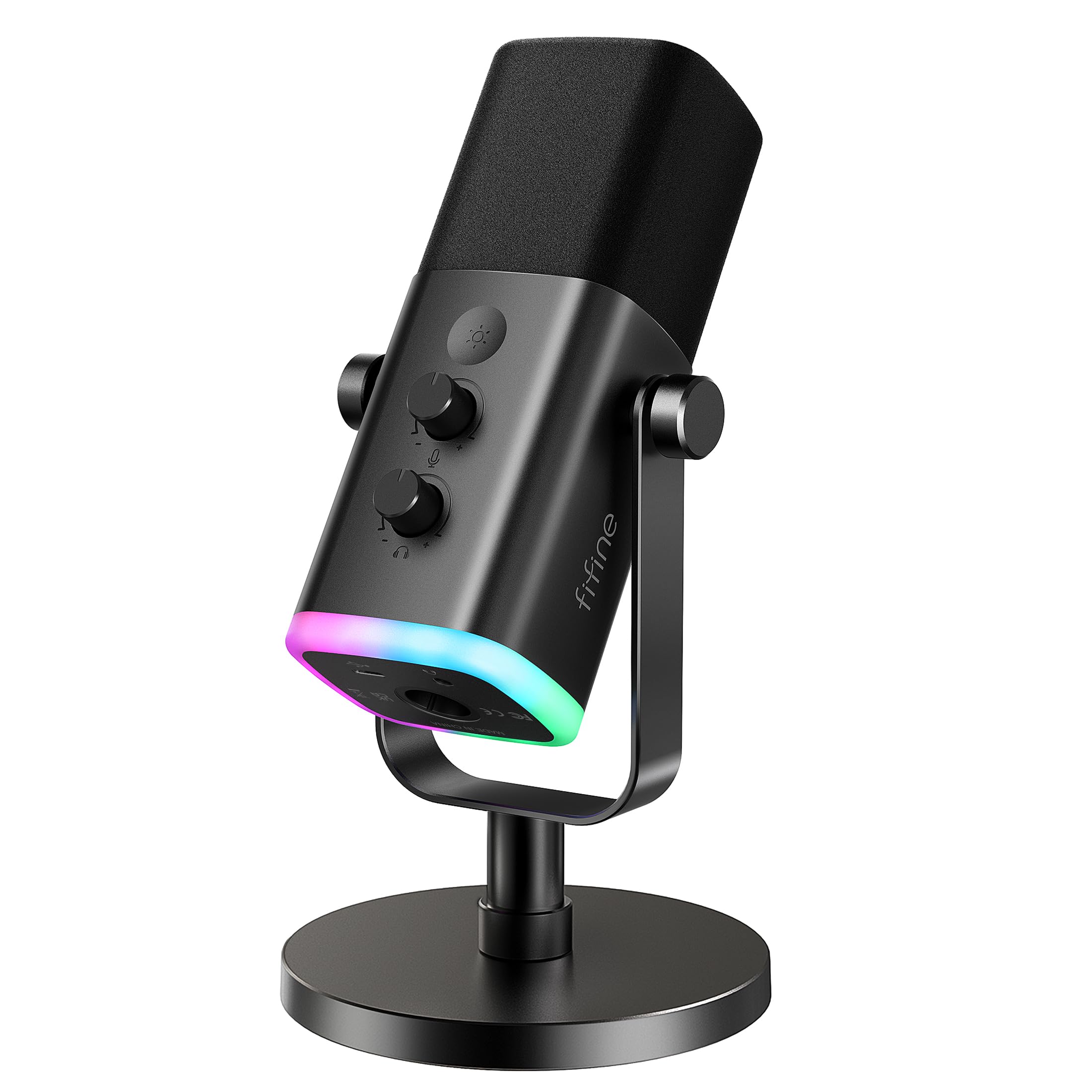
Budget Gaming RGB

FIFINE AM8

93 /100
Lab Score Outstanding

Key details

Type
Dynamic
Connection
USB + XLR
Polar Pattern
Cardioid
Gain Requirement
50+ dB preamp
View on Amazon

The FIFINE AM8 delivers clear spoken-word audio and customizable RGB lighting at a price that undercuts most XLR options. Its USB/XLR flexibility lets beginners start with USB and upgrade later. However, some units develop static hum or stop working after a few months, and background noise rejection is inconsistent in untreated rooms. This mic suits a temporary or secondary gaming setup where reliability is not critical.

Pros

  • Clear audio for spoken word with bright customizable RGB.
  • Dual USB/XLR connectivity offers an easy upgrade path.

Cons

  • Inconsistent noise rejection may pick up room echo in untreated spaces.
Our verdict

Best as a low-risk starter mic for a short-term gaming stream or secondary rig where you can tolerate unit-to-unit variance.

Check Latest Price
8

Quiet Studio Vocals

RØDE NT1 Signature

94 /100
Lab Score Outstanding

Key details

Type
Condenser
Connection
XLR
Polar Pattern
Cardioid
Gain Requirement
Phantom power
View on Amazon

This condenser offers exceptionally low self-noise (4 dBA) and includes a shock mount, pop filter, and XLR cable out of the box. The tradeoff: its sensitive capsule picks up room noise, so it works best in treated home studios or quiet spaces – not livestreaming setups without acoustic treatment.

Pros

  • Exceptionally low self-noise (4 dBA) for silent background in vocal recordings.
  • Complete package: shock mount, pop filter, and XLR cable included.

Cons

  • Room noise becomes noticeable in untreated spaces
Our verdict

Best for streamers with acoustic treatment who prioritize vocal clarity and ultra-low noise floor.

Check Latest Price
9

Budget Home Studio

AKG P120

94 /100
Lab Score Outstanding

Key details

Type
Condenser
Connection
XLR
Polar Pattern
Cardioid
Gain Requirement
Phantom power
View on Amazon

The AKG P120 handles loud vocals and instruments without distortion thanks to its 150 dB max SPL and built-in pad, making it a capable budget condenser for quiet, treated home studios. Its basic packaging skips the XLR cable, and the cardioid capsule still picks up room noise – so it suits streamers who already own an interface, cables, and acoustic treatment.

Pros

  • Handles loud sources without distortion.
  • Includes -20 dB pad and bass cut filter for flexibility.

Cons

  • Condenser design picks up room noise
Our verdict

A decent choice if your streaming setup already has the essentials and your room is acoustically treated.

Check Latest Price
10

Live Karaoke

Sennheiser XS 1

94 /100
Lab Score Outstanding

Key details

Type
Dynamic
Connection
XLR
Polar Pattern
Cardioid
Gain Requirement
50+ dB preamp
View on Amazon

The Sennheiser XS 1 delivers solid build and clean vocal pickup for karaoke, live streaming, or as a backup mic. Its handheld shape and XLR-only connection make desk streaming setups awkward — better suited for performers who already own an audio interface and don't mind holding the mic.

Pros

  • Solid metal construction feels durable for the price
  • Silent mute switch and clear, noiseless audio for live speech

Cons

  • Handheld form factor and lack of USB reduce convenience for desk streaming
Our verdict

Fits best as an affordable live mic or secondary XLR option, not as a primary desk streaming mic.

Check Latest Price

How to Choose

Dynamic vs Condenser

Dynamic microphones are built for loud, untreated environments. They use a moving coil to convert sound, which inherently rejects background noise like keyboard clicks, fan hum, and room echo. This makes them the go-to for most streaming setups where acoustic treatment is minimal.

Condenser microphones have a thin diaphragm that captures more detail and transient response, but they also pick up every rustle and reflection. Unless your room has acoustic panels, bass traps, or heavy curtains, a condenser will likely introduce more noise than it adds clarity.

Polar Pattern

Cardioid patterns are standard for voice isolation. They capture sound from the front and reject sound from the sides and rear. For a streaming mic placed on a desk, a cardioid pattern prevents your keyboard and mouse sounds from bleeding into the feed.

Some mics offer supercardioid or hypercardioid patterns, which tighten the front lobe and reject even more side noise but pick up more from the rear. Unless you have a controlled booth, stick with standard cardioid for the best balance.

Connection Type

Pure XLR mics require an audio interface or mixer that provides phantom power if it's a condenser, or clean gain for dynamics. This setup offers the highest sound quality and upgrade path, but adds cost and complexity.

USB/XLR hybrid mics like the Shure MV7+ let you start with USB and later switch to XLR when you invest in an interface. This is ideal for beginners who want future-proofing without buying everything upfront. The trade-off is that the USB circuitry may introduce slight noise compared to a dedicated XLR chain.

Gain Requirement

Many dynamic mics, especially broadcast-style ones like the Shure SM7B and RØDE PodMic, have low output levels. They need a preamp capable of 50 to 60 dB of clean gain to reach normal speaking volume. Without sufficient gain, you'll raise the noise floor and hear hiss.

If your audio interface can't provide that much clean gain, you'll need an inline booster like a Cloudlifter or FetHead. Condenser mics, by contrast, have built-in amplifiers that only need phantom power — they usually output a stronger signal without extra boost.

Included Accessories

A shock mount isolates the mic from desk vibrations and footsteps that would otherwise thump through your stream. A pop filter reduces plosive 'p' and 'b' sounds. Some mics include these standard, others sell them separately.

The RØDE PodMic integrates a pop filter and shock mount into its body, which saves money and reduces setup clutter. The Audio-Technica AT2020 ships with only a stand adapter, forcing you to buy a shock mount and cable separately. Factor these costs into your budget.

Frequently Asked Questions