11 Best Abstract Strategy Board Game of 2026: Picks That Travel and Play Fast

Find the abstract strategy board game that matches your play style, whether you want quick duels, family-friendly fun, or portable travel games.

Abstract strategy games demand a clear head and a sharp eye, but the sheer variety in player counts, playtime, and portability can make choosing one feel like a puzzle itself. Some thrive as deep 2-player duels, others shine with a full table of friends, and a few pack into a bag for a café session.

The real trade-off often comes down to how you plan to play. A game that scales gracefully from 2 to 4 players offers flexibility at the cost of some tactical purity, while a dedicated 2-player design rewards focused repetition. Portability adds another layer: a boardless tile bag means you can play anywhere, but smaller components may challenge dexterity.

This guide cuts through those choices by matching each game’s strengths to the situations where they matter most. Whether you need a quick filler, a family staple, or a travel companion, the right abstract is one that fits your actual habits, not just the box specs.

1

Best Overall Abstract Strategy Game

Azul

96 /100
Lab Score Outstanding

Key details

Players
2–4
Playtime
30–45 min
Complexity
Medium
Portability
Standard box
View on Amazon

Azul's tile-drafting system combines simple rules with a depth that reveals itself after repeated plays. Each turn you pick tiles from shared factory displays and place them on your personal board, aiming to complete patterns without wasting pieces. The core loop is quick to grasp, but scoring penalties for incomplete rows force you to balance risk and reward every round.

In practice, the game shines with two players where each decision feels consequential, and scales to four without descending into chaos. The resin tiles have a satisfying weight and the art on the board draws compliments from non-gamers. The only friction is the rulebook: some scoring nuances are easy to misinterpret, but a five-minute video clears up the confusion.

This is the abstract for couples who want a game that looks good on the coffee table and offers genuine tactical depth without requiring a rulebook marathon. It also works for mixed-skill groups because the tile draw gives a chance for less experienced players to stay competitive. If you are a strategy purist who wants zero luck and perfect information, the randomness of the tile pool will feel intrusive. Likewise, if you need a game that wraps up in under 20 minutes, Azul's 30-45 minute pace may feel slightly long.

💡 For a smooth first game, watch a short video tutorial on scoring — the rulebook's layout is less clear than the game itself.

Pros

  • Simple enough to teach in five minutes, yet each game reveals new strategic layers.
  • The resin tiles and illustrated board make it one of the most visually striking games on the table.
  • Works equally well as a tense two-player duel or a four-player family affair.
  • High replay value from randomized tile draws keeps the game fresh long term.

Cons

  • The rulebook is not the most intuitive; first-time players may need a short video tutorial to grasp scoring.
  • Tile draw introduces calculated luck that may frustrate players seeking pure perfect-information strategy.
Our verdict

If you want an abstract that shines with two players, looks great on a table, and has depth that rewards multiple plays, Azul is a strong fit for the mid-range price.

Check Latest Price
2

Best for Pure 2-Player Duels

Onitama

95 /100
Lab Score Outstanding

Key details

Players
2
Playtime
15–20 min
Complexity
Medium
Portability
Standard box
View on Amazon

Onitama condenses the tension of a full chess match into a 5x5 grid where each player holds two movement cards and shares a fifth card that changes each turn. The rules are so crisp that a novice can finish their first game in under ten minutes, yet the positional depth keeps experienced players engaged across multiple rounds. The ink-wash art and scroll-like board elevate the tactile experience without distracting from the logic of the duel.

This is the best choice for chess players who want a faster, more portable alternative, and for two-person households where table time is limited. The game offers no hidden information — every move is calculated from the same set of cards, making every loss a learning opportunity. However, the included 16 movement cards may feel limited after many plays; players who log dozens of sessions will eventually see the same patterns repeat.

💡 For high-frequency play, supplementing with the Sensei’s Path expansion can restore variety without changing the core mechanics.

Pros

  • Elegant rule set that novice and expert players pick up in minutes
  • Fast-paced duels that take 15 minutes yet feel like a full chess match
  • Beautiful components with a unique shared-movement-card mechanic

Cons

  • After dozens of games, the 16 movement cards may feel repetitive for frequent players
Our verdict

Onitama delivers classic abstract depth in a fraction of the time, making it a strong secondary duel for any strategy enthusiast — just be prepared to expand the card pool if you play weekly.

Check Latest Price
3

Most Portable Abstract

Hive Pocket

96 /100
Lab Score Outstanding

Key details

Players
2
Playtime
10–20 min
Complexity
Medium
Portability
Pocket bag
View on Amazon

Hive Pocket delivers pure abstract strategy using durable hex tiles that fit in a small drawstring bag, eliminating the need for a board. The included Ladybug and Mosquito expansions add tactical variety while keeping the game strictly two-player with perfect information – no dice, no luck, just positional play. This makes it a more portable alternative to tile-drafting games like Azul, which require a table and accommodate more players.

The pocket tiles are compact, which may feel small for players with larger hands or vision concerns – but this tradeoff enables the unmatched portability that travelers and commuters value. The game plays in 10-20 minutes, making it easy to fit into a lunch break or a short bus ride. Durability is a strong point: the tiles are thick and resistant to wear, surviving repeated packing and unpacking.

For those seeking a chess-like duel that can be set up anywhere, Hive Pocket offers surprising depth in a tiny package. The lack of a board means you can play on any flat surface – a cafe table, an airplane tray, or even a park bench. Just be prepared for the small component size if that is a known annoyance.

💡 Use a flat, stable surface for easier tile manipulation – a tray table or cafe counter works well.

Pros

  • Ultra-portable with a bag
  • Deep, chess-like strategy in a compact, quick package.
  • High-quality, indestructible components with a unique boardless design.

Cons

  • Pocket tiles can feel too small for players with larger hands or dexterity issues.
Our verdict

The most portable abstract strategy game with two expansions included, ideal for travelers who want deep 2-player duels without a board.

Check Latest Price
4

Best Family-Friendly Abstract

Blokus XL

96 /100
Lab Score Outstanding

Key details

Players
2–4
Playtime
20–30 min
Complexity
Low
Portability
Large box
View on Amazon

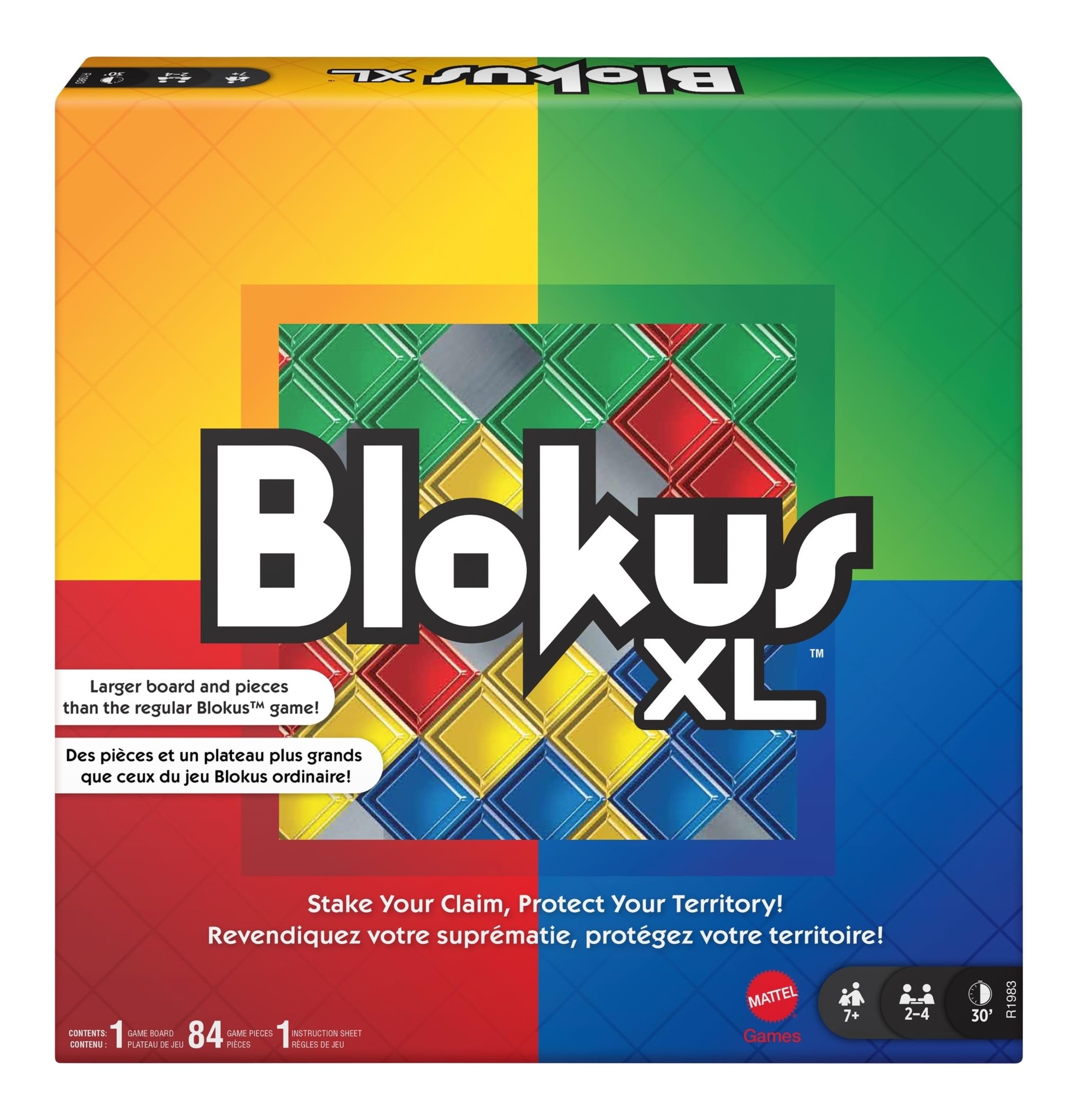
Blokus XL wins on onboarding – a single corner-touch rule and you are playing in seconds, making it the rare abstract that works across generations without a rules explanation. The oversized board and chunky pieces eliminate fumbling for small or aging hands, a tangible upgrade over the standard edition. For the 2-player abstract purist, however, the board’s openness at lower player counts reduces the tension found in tighter duels like the top pick Azul.

This game fits best in multi-generational gatherings where a child, a parent, and a grandparent can all compete on equal footing after one teach. Teachers and parents will value the spatial reasoning workout disguised as colorful tile placement. If your game nights lean toward two-player head-to-head battles with deep positional tactics, the less competitive 2-player experience here may feel unsatisfying – the real sweet spot is three or four players.

The XL version’s larger pieces and board eliminate the fiddliness of the original, a quality boost that justifies its mid-range price. Each piece clicks into place cleanly, and the simple placement logic hides enough blocking and planning depth to keep regular play fresh over many rounds.

💡 For tighter 2-player games, place a neutral third color piece on the board to close off space – a common house rule.

Pros

  • One-rule teaching takes seconds
  • Spatial reasoning and blocking strategies emerge naturally, offering depth beneath the simple setup.
  • Giant board and pieces make handling easy for all hand sizes and visual impairments.

Cons

  • At exactly two players, the board can feel too open, reducing the competitive back-and-forth found at higher player counts.
Our verdict

Blokus XL is the abstract strategy choice for groups and families, not for the dedicated 2-player duelist seeking maximum tactical tension.

Check Latest Price
5

Best Solo & Relaxed Play

Harmonies

96 /100
Lab Score Outstanding

Key details

Players
1–4
Playtime
30 min
Complexity
Low
Portability
Standard box
View on Amazon

Harmonies shifts the abstract strategy focus from direct competition to individual landscape creation. Players place wooden tokens to match animal card requirements, building oneiric scenes on personal boards. The gorgeous artwork and premium wooden pieces create a relaxing atmosphere, and the 30-minute playtime keeps sessions breezy. Unlike the top pick which thrives on tile-drafting tension, Harmonies offers a parallel puzzle experience where each player solves their own spatial challenge.

This suits solo players who want a rewarding puzzle without setup overhead, and couples looking for a low-stress game to play side by side. The included solo mode is well-integrated, with clear scoring goals. However, minimal player interaction means those seeking a head-to-head duel or direct blocking mechanics will find the experience too solitary. The game works best when each player enjoys the beauty of their own board rather than competing for resources.

Learning the rules takes under five minutes, with each animal card introducing a unique placement condition. While simple on the surface, the tactical depth emerges as players juggle multiple requirements and plan several moves ahead. This makes it accessible for newcomers yet engaging for experienced gamers looking for a relaxed mental challenge.

💡 The solo mode uses a separate scoring track and is fully playable out of the box no house rules needed.

Pros

  • Stunning artwork and premium wooden tokens create a relaxing atmosphere.
  • Simple to learn but offers satisfying tactical depth with each animal requirement.
  • Excellent solo mode and scales gracefully from 1 to 4 players.
  • Quick 30-minute playtime accommodates multiple rounds in one session.

Cons

  • Minimal player interaction; each player solves their own puzzle in isolation.
  • No take-that or blocking mechanics makes it unsuitable for head-to-head dueling.
Our verdict

For those who find competitive abstracts stressful, Harmonies offers a beautiful, meditative alternative with a strong solo option just don't expect the interactive edge of a duel.

Check Latest Price
6

Best for Large Groups (2-8 Players)

Tsuro

96 /100
Lab Score Outstanding

Key details

Players
2–8
Playtime
15–20 min
Complexity
Low
Portability
Standard box
View on Amazon

Tsuro delivers a rare combination: a genuinely simple rule set that explains itself in under a minute, paired with a visual elegance that draws in non-gamers. The board and marble-like dragon stones make it a centerpiece that looks good on any table, and rounds wrap up in 15–20 minutes, making it a natural opener or filler for social gatherings.

Where Tsuro shines is with larger groups — it supports up to 8 players and scales smoothly across mixed ages and attention spans. If your household predominantly plays 2-player games, this isn't the pick; the chaos and interaction level drop significantly at lower counts. For hosts who want a game that anyone can join without a rules lecture, Tsuro fits that slot perfectly.

The tradeoff for that speed and accessibility is a heavy reliance on luck from tile draws. Strategy can be overridden by random path options, which may frustrate players seeking deeper control. That chaotic element works in a party setting where social interaction carries the experience, but it's a real boundary for those who want a pure skill-based abstract.

Pros

  • Teachable in under a minute and plays up to 8
  • Board and dragon stones are visually striking; upgrade the table presence.
  • Rounds finish in 15–20 minutes, ideal as a starter or filler.

Cons

  • Tile draw luck can override strategic choices
  • Best with 4+ players; 2-player mode feels less engaging and more random.
Our verdict

Great for large, mixed-skill groups who want a quick, beautiful game — not the choice for 2-player strategy duels.

Check Latest Price
7

2-Player Purists

Othello

96 /100
Lab Score Outstanding

Key details

Players
2
Playtime
20 min
Complexity
Medium
Portability
Standard box
View on Amazon

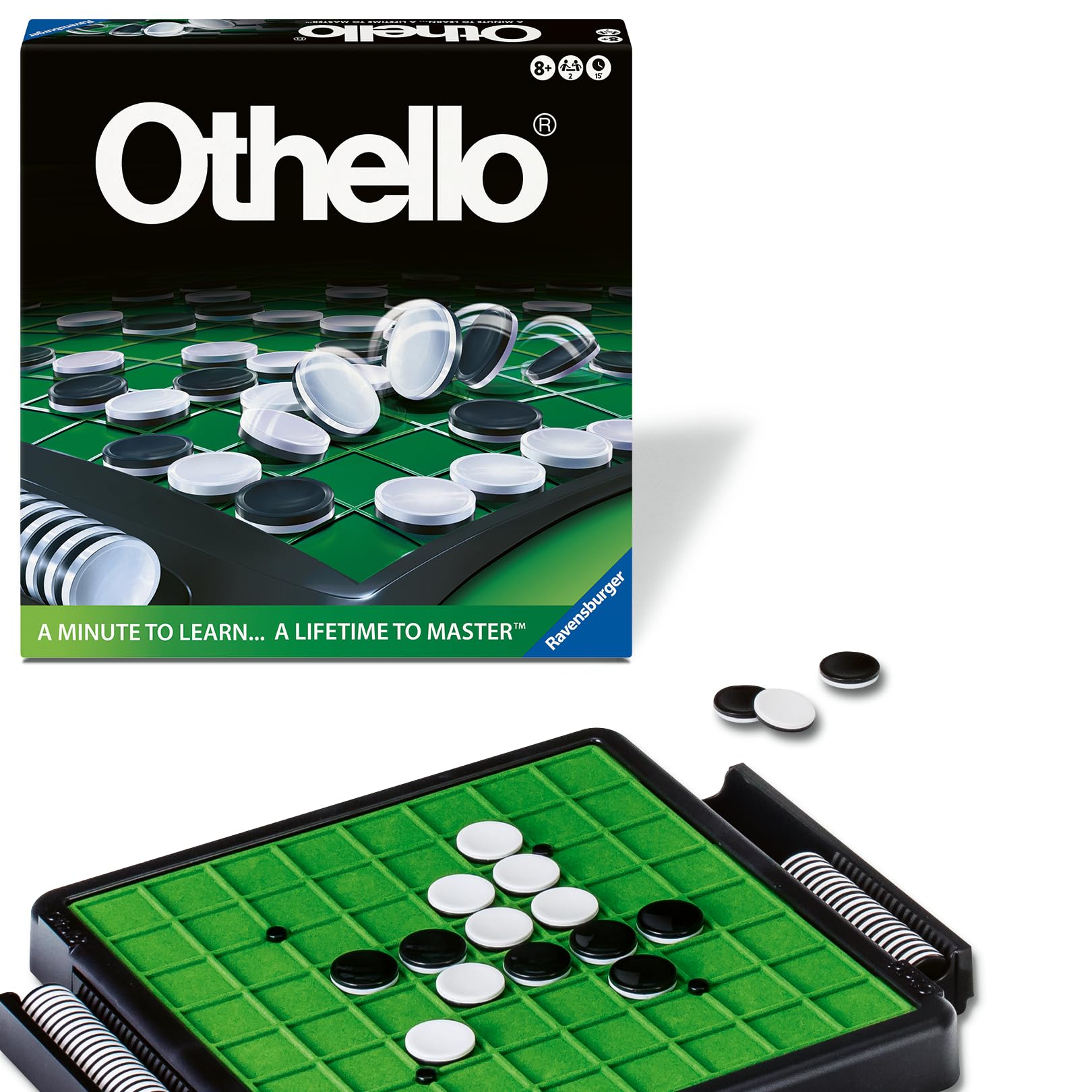
Othello delivers one of the purest two-player area control experiences available. The rules take under a minute to explain, yet the positional depth of flipping pieces creates tension that rewards repeated play. Its 20-minute rounds and high nostalgia appeal make it an easy pickup for both casual and more serious abstract fans.

Othello earns a place in this guide for its accessible depth, but it is not our top recommendation due to its narrower scope. For buyers who know they want exactly this type of fast, head-to-head abstract and are not concerned with premium materials or flexible player counts, it remains a logical addition to any collection.

Pros

  • Extremely easy to learn with rules that explain in under a minute.
  • Offers genuine strategic depth that keeps players engaged over many sessions.
  • Classic design with high nostalgia value and quick 20-minute playtime.

Cons

  • Board and pieces may feel flimsy compared to vintage editions.
  • Strictly two-player
Our verdict

Othello fits best when you want a pure, fast, two-player abstract – its gameplay is timeless, and the price makes it an easy trial.

Check Latest Price
8

Budget & Travel

Mancala

95 /100
Lab Score Outstanding

Key details

Players
2
Playtime
10–15 min
Complexity
Low
Portability
Compact folding
View on Amazon

Pressman's Mancala delivers the classic seeding-and-capture gameplay that has entertained for centuries. For less than $16, buyers get a compact wood board with glass stones that feels more substantial than the price suggests. The rules take under a minute to teach, making it a strong choice for family game nights or introducing young children to turn-based strategy.

The real limitation is in the folding board's hinge, which can loosen or break after repeated opening and closing. This makes it better suited for occasional use than daily sessions. Serious abstract enthusiasts will also find the strategy simpler than modern two-player duels in the same price bracket.

💡 Store the board flat and avoid over-tightening the hinge to prolong its life.

Pros

  • Timeless gameplay that is incredibly easy to learn and teach.
  • Excellent value for the price
  • Great introduction to strategy for young children.

Cons

  • Folding hinge can weaken or break with repeated use; stones may chip.
  • Lacks the strategic depth of modern abstract games for experienced players.
Our verdict

A budget-friendly entry for families and young children; accept that the board may not withstand frequent long-term use.

Check Latest Price
9

Budget Families

Shifting Stones

94 /100
Lab Score Outstanding

Key details

Players
2–5
Playtime
20 min
Complexity
Low
Portability
Compact box
View on Amazon

Shifting Stones introduces a fresh mechanic where players slide tiles to match patterns, rewarding spatial planning in each 20-minute round. Its compact box and simple rules make it a natural travel companion or a quick filler for game nights. However, the luck introduced by card draws is higher than in perfect-information abstracts like Onitama or Azul, so it suits families and casual groups better than competitive strategists seeking a pure skill test.

Pros

  • Unique sliding tile mechanic requires spatial planning and feels fresh each game.
  • Compact box and simple components make it highly portable for travel or gatherings.

Cons

  • Luck from tile draws can frustrate players who prefer pure strategy and minimal randomness.
  • Theme (stones) is neutral and may feel uninspired to those seeking narrative context.
Our verdict

Best for families or casual game nights wanting a portable, quick puzzle with a novel twist – less suited for those seeking a pure skill-based duel.

Check Latest Price
10

Memory & Strategy

Gobblet!

94 /100
Lab Score Outstanding

Key details

Players
2
Playtime
10–20 min
Complexity
Medium
Portability
Standard box
View on Amazon

Gobblet! reimagines tic-tac-toe by letting players stack and nest wooden cups of different sizes, forcing you to track which piece sizes are hidden under larger ones. The all-wood components look and feel premium, making it a display-worthy addition for strategy collectors. However, the wooden cups may crack or misalign after repeated use, so careful inspection upon purchase is wise. The game is strictly two-player, which limits its audience compared to more flexible abstract games like Azul. While engaging for duos, these constraints keep it from being a top pick for everyone.

Pros

  • Adds a memory layer to tic-tac-toe, creating a quick and addictive duel for two.
  • Wooden pieces look attractive on a shelf and feel substantial in hand.
  • Simple rules and 10-20 minute rounds make it suitable for ages 7 and up.

Cons

  • Wooden cups may crack or become misaligned after repeated use.
Our verdict

A clever two-player abstract for couples or collectors who value quick mental workouts and don't mind inspecting for component quality.

Check Latest Price
11

Wood Collectors

Otrio Wood

96 /100
Lab Score Outstanding

Key details

Players
2–4
Playtime
15–20 min
Complexity
Medium
Portability
Standard box
View on Amazon

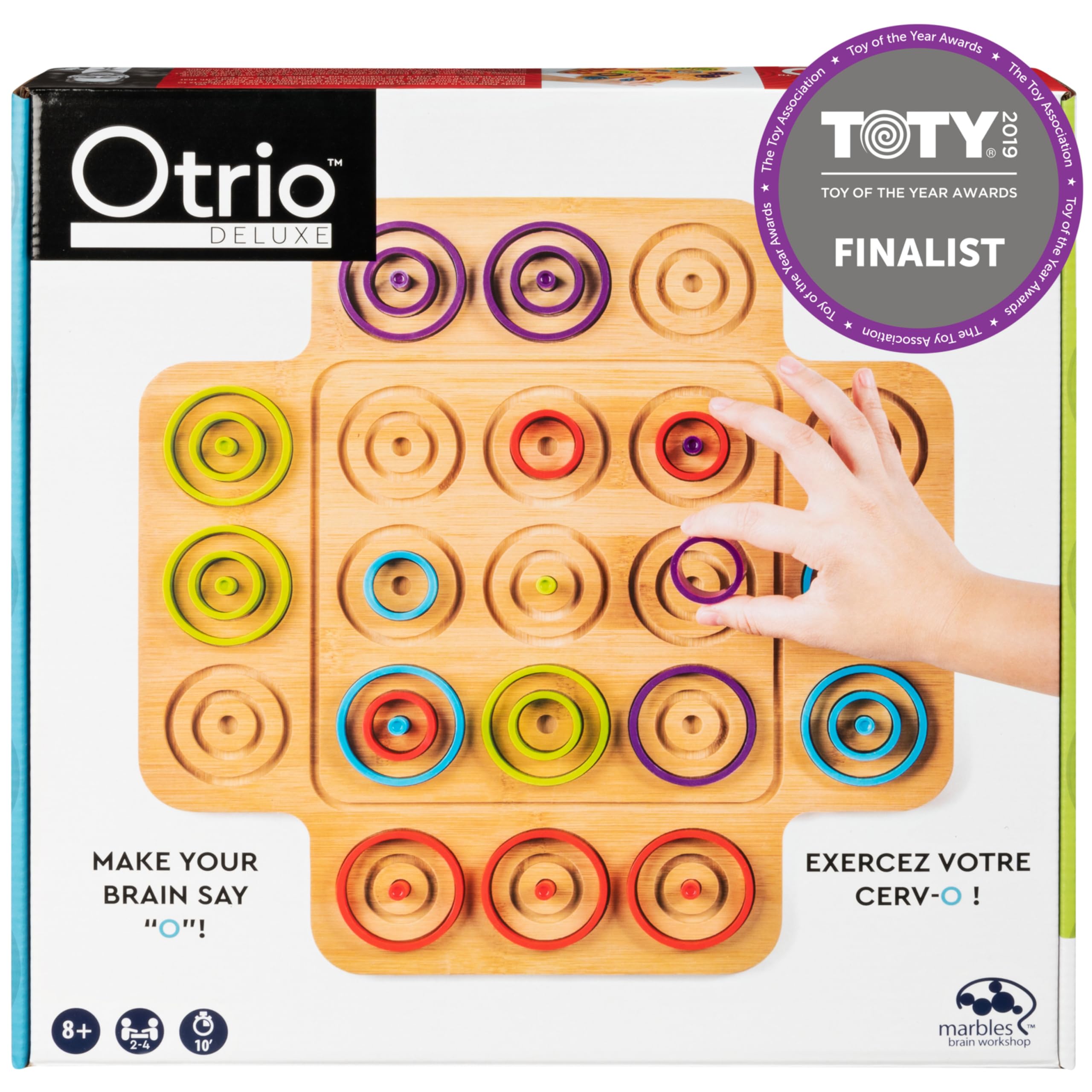
Otrio's wooden board and three win conditions (three-in-a-row on concentric rings, same-size pieces, or same-color pieces) make it a visually appealing twist on tic-tac-toe. Rounds finish in 15-20 minutes, fitting well as a filler between longer abstract duels. However, at a premium price, the game's strategic depth stays closer to a family puzzle than a competitive abstract. The bigger concern: some units arrive with missing pieces, so inspecting the contents on arrival is wise. For collectors who value wood craftsmanship and novelty, Otrio still offers a unique shelf presence.

Pros

  • Clever three-way win condition keeps each round unpredictable.
  • Sturdy wooden components look and feel premium on the table.

Cons

  • Strategic depth is limited to quick sessions; better as a filler than a serious duel.
  • Missing pieces have been reported in some units, requiring a return or replacement.
Our verdict

Otrio suits wood game collectors and casual players who want a quick, attractive abstract, provided they verify the component count on arrival.

Check Latest Price

How to Choose

Player Count

A game built for 2 players often feels too open or unbalanced with more people, while a 4-player game may lose focus in a 1v1 match. If you play mostly as a couple, a dedicated 2-player design like Onitama or Hive Pocket offers tighter tactics. For rotating group sizes, look for games that adapt without adding downtime.

The hidden trade-off: scaling a 2-player game to 4 usually requires rule variants that dilute the original tension. Games that natively support both player counts, such as Azul or Blokus, avoid this by design.

Playtime

Playtime directly affects how often a game hits the table. A 15-minute round fits a lunch break or a quick warm-up, while a 45-minute session demands more commitment. Quick duels encourage best-of-three matches but can feel shallow if rules are too simple.

The real cost of a short game is often reduced strategic depth. Games like Onitama and Hive Pocket pack surprising complexity into 20 minutes by using perfect information or limited moves. For deeper plays, Azul’s 30–45 minutes allows more layered scoring opportunities.

Complexity

Complexity determines how soon new players can compete. Simple rules (one sentence for Blokus) let anyone join instantly but may lack long-term depth. Medium-complexity games like Azul or Onitama take a round to learn but offer years of replayability.

The catch: low-complexity games often rely on luck or indirect interaction, which can frustrate players seeking full control. Conversely, high-complexity games require repeated plays to unlock their potential. Choose based on your group’s tolerance for initial confusion versus long-term engagement.

Portability

A boardless design like Hive Pocket turns any flat surface into a battlefield, making it ideal for travel. Compact boxes (Mancala, Shifting Stones) fit in a bag, while large boards (Blokus XL) stay at home. Portability often trades off with component size: smaller tiles can be fiddly for larger hands.

If you play mostly at home, standard packaging is fine. If you commute or travel frequently, prioritize games that come with a drawstring bag or fold into a small footprint. Tsuro’s square box is still portable, but its board requires a table.

Component Quality

Wooden tokens, resin tiles, and thick boards enhance the tactile experience and longevity. Premium components (Azul, Quoridor) justify higher prices but may chip or warp over years. Budget options (Mancala, Shifting Stones) use lighter materials that can wear faster.

The trade-off: high-quality components often increase the box size and weight. For a game that sees frequent travel, durable but lightweight materials like Hive’s plastic tiles are a practical compromise. Inspect reviews for recurring defects like missing pieces or loose hinges before committing.

Frequently Asked Questions