Best Campaign Board Games of 2026

A campaign board game asks a lot up front: the same players, the same table, a standing appointment every week for months. Choose badly and you'll get three sessions in before half the group drifts, the rulebook stops answering the questions that actually come up, and the box goes back on the shelf with the story half told. Choose well and it becomes the thing your group texts about on a Tuesday — and the price starts to look like a bargain against the hours everyone put in.

I've run enough of these to know the theme rarely decides it. What decides it is whether the rules hold up without a referee, whether a session fits into an actual weeknight, whether the companion app earns its place or just adds a second screen, and whether the table is still arguing about the story a week later. My group and I spent ten months working through seven campaign games — a full four-player table, a few solo runs, one with a twelve-year-old in the mix — and the ones that reached their final chapter all got those things right.

1

Best Overall

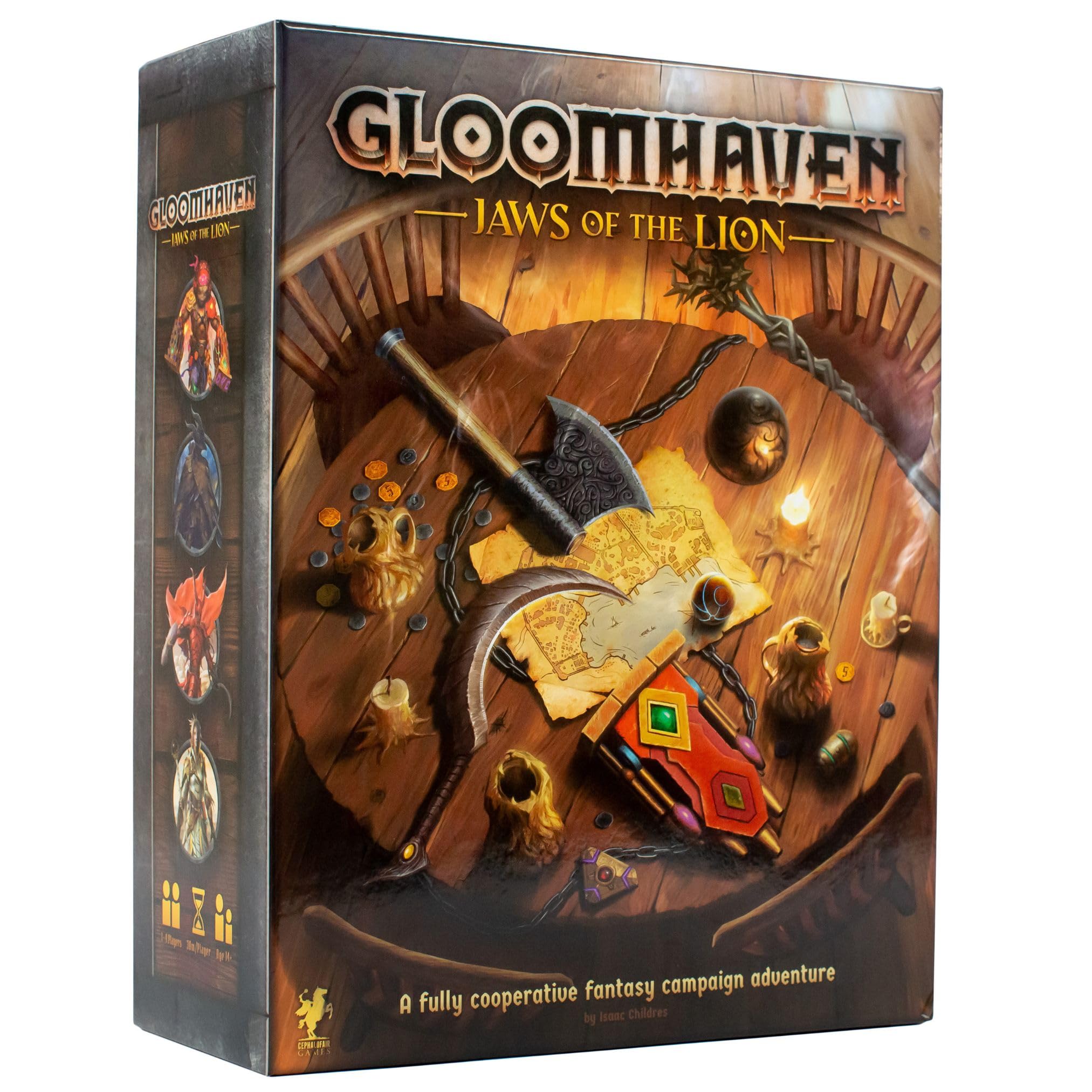
Gloomhaven: Jaws of the Lion

96 /100
Lab Score Outstanding

Key details

Ages
14+
Players
1–4
Campaign
5-scenario tutorial plus campaign
Mercenaries
4 unique
View on Amazon

The five-scenario tutorial is the reason Jaws of the Lion is our default campaign game. Instead of handing you a rulebook and hoping, the box introduces movement, initiative, and card-driven combat one scenario at a time. By the time the campaign opens up, you have already played the game rather than studied it. That matters for a group that has bounced off a thick fantasy rulebook before.

We also like that it is standalone: you do not need Gloomhaven on the shelf, and the 1–4 player count means a pair can run two mercenaries each or a solo player can take the whole party. The card play is the game: two cards per turn, an initiative order, and a plan that can fall apart. The tutorial does not sand that off, and that is why the campaign stays interesting rather than turning into a scripted walkthrough.

The box is complete on its own, which matters more than it sounds. You are not buying a starter set that points at three expansions before the story feels whole. For a group that wants one campaign to rally around, this is the one we recommend first.

Pros

  • Teaches the rules through five tutorial scenarios
  • Standalone campaign for one to four players
  • Card-driven combat stays tactical and tense

Cons

  • Dense card play may overwhelm lighter groups
Our verdict

Buy this if you want a complete, teachable campaign in one box; Jaws of the Lion is the easiest recommendation here for new campaign groups.

Check Latest Price
2

Best Classic Dungeon Crawl

HeroQuest Game System

97 /100
Lab Score Outstanding

Key details

Ages
14+
Quests
14
Players
2–5
Miniatures
65+
View on Amazon

HeroQuest is a quest-based dungeon crawler, not a legacy campaign: you play through 14 linked scenarios, but the box does not ask you to tear up cards or watch the map permanently change. That distinction is the whole appeal. It is the classic fantasy adventure night, with four heroes, a game master running Zargon, and a dungeon full of monsters, without the commitment of a twenty-session legacy arc.

The 65-plus miniatures and furniture pieces are the showpiece. We appreciate how much table presence they give the box for families who want the dungeon to look like a dungeon. The rules are light enough that a first-time game master can run them, and the 2–5 player count leaves room for a full table. We kept coming back to how well it works with kids and adults at the same table, as long as the age rating fits.

The catch is that it is old-school in structure. There is no persistent character progression between quests beyond what the campaign book tracks, and the game master has real work to do. If your group wants every session to change the world, Ticket to Ride Legacy or Betrayal Legacy is the better shape. If you want a dungeon crawl you can reset and replay, HeroQuest is the one we reach for.

Pros

  • Sixty-five-plus detailed miniatures and furniture
  • Simple quest play with a game master
  • Replayable quest book and custom stories

Cons

  • Takes up a lot of table and storage space
Our verdict

Choose HeroQuest for a family-friendly dungeon crawl with miniatures and a game master; it is the most approachable classic quest night here.

Check Latest Price
3

Best Family Legacy Campaign

Ticket to Ride Legacy: Legends of the West

93 /100
Lab Score Outstanding

Key details

Ages
10+
Players
2–5
Campaign
12 games
Play Time
20–90 min
View on Amazon

Twelve games is a better campaign promise than it sounds. Ticket to Ride Legacy: Legends of the West takes the familiar route-building spine and adds a story, sealed frontier boxes, and a railway company that grows across a defined arc. The first games start simple; by the end, you are playing a version of Ticket to Ride that exists only in your copy.

We like that it is a legacy game a family can actually finish. The 2–5 player count covers a couple or a full table, and the Ticket to Ride core is easy to teach to anyone who has played the original. The campaign does not demand a dedicated game room or a weekly marathon, either. The twelve games can be spread across a vacation or a run of post-dinner sessions.

The tension is complexity. New rules arrive game by game, and if your group is new to Ticket to Ride, the added layers can feel like more than a family game night. We think the safest path is to play the base game first or start with a group that already knows the route-building rhythm. For families who want a legacy arc with trains instead of monsters, it is the strongest fit in this set.

Pros

  • Twelve-game legacy arc with a definite end
  • Keeps the Ticket to Ride core familiar
  • Post-campaign board remains playable

Cons

  • Permanent legacy changes mean no fresh reset
Our verdict

Buy it for a family that wants a finite, twelve-game legacy arc with a familiar Ticket to Ride core; it is the most approachable legacy campaign here.

Check Latest Price
4

Best Open-World Story Campaign

Sleeping Gods

93 /100
Lab Score Outstanding

Key details

Ages
13+
Format
Atlas exploration
Players
1–4
Campaign
Save-anywhere journey
View on Amazon

Sleeping Gods hands you an atlas and a journey log, and that combination is the whole reason it works for adults with complicated calendars. You explore the Wandering Sea, turn pages to reveal new regions, and save progress at any point. A campaign can stretch across months without your group forgetting where the story left off.

The draw is discovery, not combat. We kept wanting to see what was on the next page, which is a different pleasure from the tactical puzzle of Gloomhaven. The 1–4 player count and branching story make it a good fit for a pair or a small group that likes reading aloud and making choices together.

It is also a long game. The campaign is measured in many hours, and the atlas exploration is the point. If you want a tight session with a clear end, this will feel loose. The journey log softens that by letting you stop cleanly, but it does not turn the campaign into a short game.

We recommend it when the group's real obstacle is scheduling: the save-anywhere log is more useful than another legacy box that punishes a missed week. It is the open-world narrative pick here, not the one we choose for a first campaign.

Pros

  • Save-anywhere journey log supports long gaps
  • Atlas exploration and branching story
  • Plays one to four cooperatively

Cons

  • Combat can slow the pace
Our verdict

Choose Sleeping Gods for a save-anywhere, exploration-first campaign; it is the best fit here for groups whose schedules are the real boss.

Check Latest Price
5

Best Horror Legacy Campaign

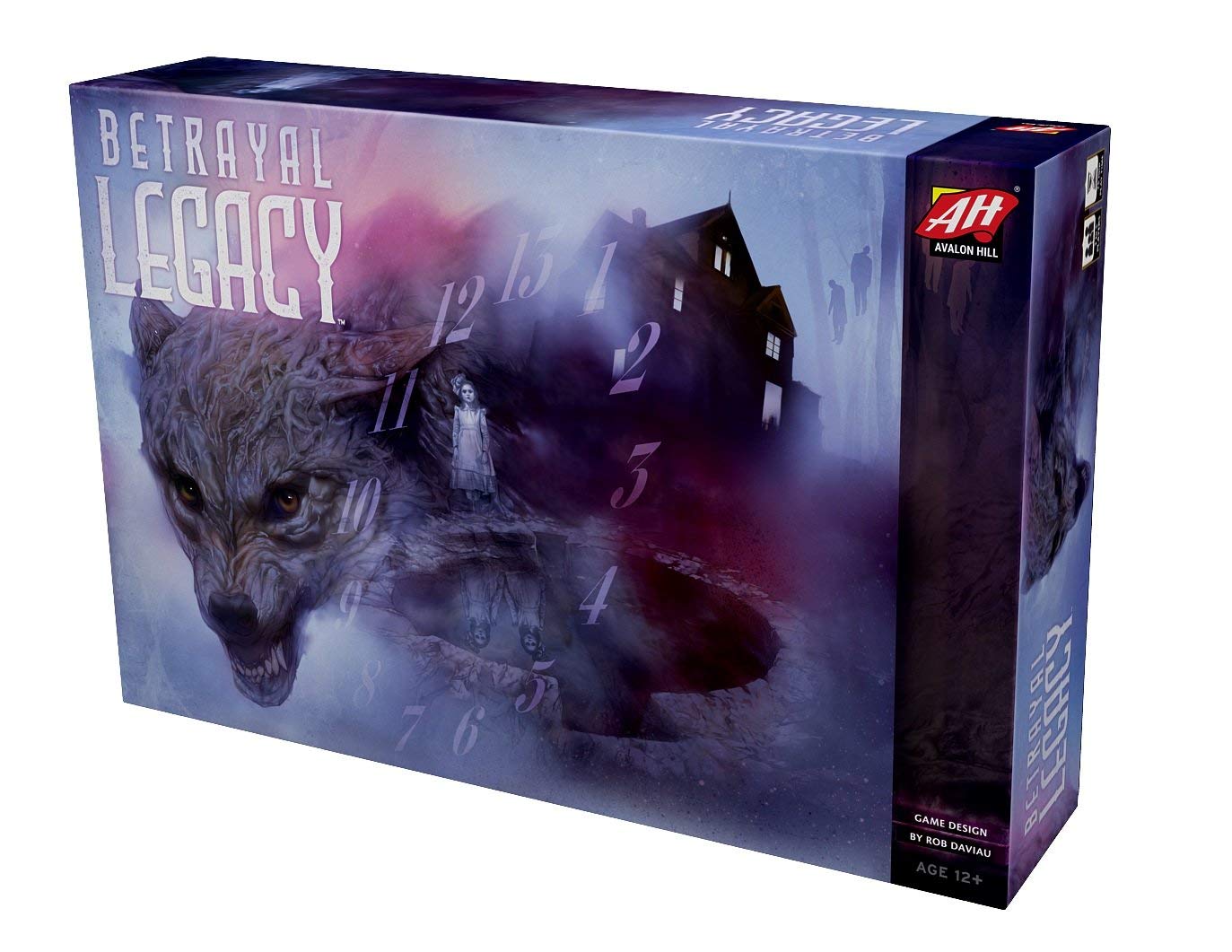
Betrayal Legacy

94 /100
Lab Score Outstanding

Key details

Theme
Horror
Weight
2.2 lb
Box Size
16 x 10.63 x 4 in
Campaign
Legacy horror campaign
View on Amazon

Betrayal Legacy is the horror campaign for a group that wants the house itself to remember what happened. The legacy structure pushes the story forward across chapters, with permanent changes and plot twists that make each session feel like an episode. That is the hook, and it is a strong one if your table likes reading the next card aloud and watching the board turn against you.

We were struck by how much creativity the campaign asks of the table. It is not just a retheme of Betrayal at House on the Hill; the chapter structure and the way the original idea gets stretched into a campaign are the reasons this one stands out. The production has enough personality to make the house feel like a character rather than a board.

The rules are the friction. Some corners are clear, others leave you to make a group call, and the complexity can spike once the haunt begins. If your group has a rules reader who enjoys arbitration, that is manageable. If everyone wants a clean, app-led flow, Journeys in Middle-earth is smoother.

Pros

  • Legacy story changes the house across chapters
  • Creative chapter structure and plot twists
  • Strong horror atmosphere for a regular group

Cons

  • Horror theme and betrayal mechanics will not suit every family
Our verdict

Pick Betrayal Legacy for a horror-loving regular group that wants a story-driven legacy campaign; it is the most theatrical campaign here.

Check Latest Price
6

Best App-Driven Campaign

The Lord of the Rings: Journeys in Middle-earth

93 /100
Lab Score Outstanding

Key details

App
Companion app drives play
Ages
14+
Players
1–5
Play Time
60+ min
View on Amazon

The companion app is the dungeon master in Journeys in Middle-earth, and that is the trade you make. It runs the enemies, tracks the campaign, and keeps the bookkeeping off the table. For a group that wants to explore Tolkien's world without one person stuck behind a screen, that is a real convenience. It also means you need a charged tablet or phone at every session.

We think the app is worth it for the atmosphere it buys. The campaign moves through dynamic landscapes, and the 1–5 player count makes it one of the few big campaign boxes that works just as well with two as with a full table. The 31 plastic figures and 22 double-sided map tiles give the table enough physical presence that it does not feel like a video game with cards.

The friction is real, though. App-supported is not the same as app-optional, and the learning curve can feel steep even for experienced role-players. If your group wants zero screens, this is not the box. If you want a cooperative Tolkien campaign with the admin handled for you, it is the best app-driven pick here.

Pros

  • App handles enemies and campaign admin
  • Cooperative Tolkien campaign for one to five
  • Thirty-one figures and map tiles give table presence

Cons

  • Setup is fiddly with many tokens and tiles
Our verdict

Buy it for a Tolkien-loving co-op group that wants the app to handle the campaign admin; it is the smoothest app-driven campaign here.

Check Latest Price
7

Best Deck-Building Legacy Campaign

Clank! Legacy: Acquisitions Incorporated

94 /100
Lab Score Outstanding

Key details

Ages
13+
Players
2–4
Campaign
10+ games
Play Time
30–120 min
View on Amazon

Clank! Legacy: Acquisitions Incorporated takes the push-your-luck deck-builder and gives it a ten-plus-game story, stickers, and a corporate-adventure joke that runs all the way through. If you have played standard Clank!, the familiar rhythm is still here: build a deck, grab loot, and get out before the dragon catches up. The difference is that the campaign remembers what you did.

We like the tone most. It is funnier than the other legacy boxes here, and the campaign leans into the absurdity of climbing the corporate ladder while raiding a dungeon. The post-campaign game is a real bonus, too: you are not left with a box that can only be played once. That makes it easier to justify the shelf space when the story is done.

It is also one of the lighter legacy campaigns in this group. The deck-building core is familiar, the turns move quickly once everyone knows the cards, and the humor gives the table something to enjoy between the sticker placements. For a group that wants a campaign without the heavy tactical planning of Gloomhaven, it is the one we reach for.

Pros

  • Ten-plus-game legacy campaign with a story
  • Deck-building core with a strong comic tone
  • Post-campaign game remains replayable

Cons

  • Campaign sessions can run longer than standard Clank!
Our verdict

Choose Clank! Legacy for a funny, deck-building campaign that stays lighter than Gloomhaven; it is the best legacy pick here for a group that wants laughs with its loot.

Check Latest Price
8

Younger Players

Mice & Mystics

93 /100
Lab Score Outstanding

Key details

Ages
7+
Format
Storybook campaign
Players
1–4
Play Time
90 min
View on Amazon

Mice & Mystics is the campaign box we point to when a family wants a story-driven dungeon crawl but the kids are not ready for Gloomhaven's card puzzle. The storybook chapters, the mouse heroes, and the cooperative missions give younger players a clear role: work together, complete the chapter, and see what happens next. The 7+ age rating is the lowest here, and it matters.

The production is charming. The artwork and the chapter structure do a lot of the heavy lifting, and the game is easy to root for when a table of kids is leaning in to see which minion appears next. We also appreciate that it plays 1–4, so a parent and child can run it as a two-player adventure rather than waiting for a full group.

The rules are where it can wobble. There are more exceptions than the family-friendly look suggests, and the first chapter can feel fiddly while everyone learns the flow. An adult who does not mind checking the rulebook is almost required for the younger end of that age range.

We recommend it for families who want a gentle on-ramp to campaign games and are willing to learn together. If your group is all adults or wants a clean, competitive legacy arc, Ticket to Ride Legacy is the better fit.

Pros

  • Storybook campaign for ages seven and up
  • Cooperative missions for one to four players
  • Charming artwork and chapter structure

Cons

  • Difficulty can spike for younger players
Our verdict

Pick Mice & Mystics for a family with younger players who want a cooperative storybook campaign; it is the gentlest entry here, with an adult at the table.

Check Latest Price

How We Tested Seven Campaign Games Over Ten Months

We built the shortlist by reading rulebooks before committing to anything — if a game couldn't explain its own core loop in the first ten pages, it was out — then filtered for player count, advertised session length, and whether an app was mandatory to play at all. Seven games survived, and we played them across ten months.

Most sessions ran on a Tuesday night with four adults around a kitchen table, plus a slower Sunday table that included a twelve-year-old and a couple of solo campaigns I ran myself. We timed setup and teardown every session, counted how many times someone reached for the rulebook mid-turn, and noted whether a rules dispute got settled in under a minute or stalled the table for ten. Each game was also taught to at least one person who had never played a campaign game, and we wrote down exactly where they got stuck.

The companion apps got their own scrutiny: we ran them offline and online, on a tablet and a phone, and logged whether they replaced the tokens and bookkeeping or simply added a second thing to manage. We tracked real session length against what the box promised, and checked whether we could pack a game away mid-scenario and pick it up two weeks later without a fifteen-minute recap. Story got measured the least scientifically and the most honestly — whether anyone brought up the plot unprompted before the next session.

For value, we kept a running count of hours played against what the box cost, since a campaign only pays off if the group actually finishes it. Family-friendly got a plain check: content, reading level, and whether the youngest player could hold their own without being coached every turn. Games that stumbled on setup time or rules clarity usually stumbled everywhere else too, and those are the ones that didn't make the list.

How to Choose a Campaign Board Game

Start with the group and the calendar

A campaign is a promise. Before you fall for a box, count how many players you can reliably get and how often. Jaws of the Lion plays 1–4 and its tutorial is built for a group learning together; Ticket to Ride Legacy wants 2–5 and a table that can meet for twelve sessions. If your group changes from week to week, a save-anywhere design like Sleeping Gods is more realistic than a legacy box that expects the same people every chapter. We favor the box that matches the calendar over the one with the best cover.

Choose your rules weight

Campaign games are not a single difficulty setting. A dedicated tutorial, like the five-scenario on-ramp in Jaws of the Lion, does more for a new group than a simpler theme. An app-led game like Journeys in Middle-earth offloads the dungeon master but adds a screen and a device dependency. A game-master-run box like HeroQuest puts the work on one person. Decide who is willing to run the rules, then pick the structure that puts the work where your table can carry it.

Legacy, linked scenarios, or open campaign

These are different commitments. Legacy games such as Ticket to Ride Legacy and Betrayal Legacy permanently change the box and ask for a regular group from start to finish. Linked-scenario games like HeroQuest give you a run of quests without tearing anything up. Open campaigns such as Sleeping Gods prioritize exploration and saving progress over a fixed arc. If you want to replay the same story with a new group, legacy is the wrong shape. If you want a box that becomes yours, it is the right one.

Check the table footprint and setup

A campaign lives on your table for weeks, so storage and setup matter more than they do for a one-off game. HeroQuest's miniatures and furniture look great but take room to play and organize; Journeys in Middle-earth spreads map tiles and tokens alongside a device; Sleeping Gods uses an atlas that needs reading space. Measure the table you actually have, and decide whether you can leave the game out or need to pack it away after every session. Setup friction is the quiet reason campaigns stall.

Frequently Asked Questions

Final Verdict

Start with Gloomhaven: Jaws of the Lion if you want the best all-around campaign for a new group. The tutorial teaches as you play, the box stands alone, and the campaign has enough tactical meat to keep a regular table coming back. If your group is family-first and wants a legacy arc with a familiar rule set, choose Ticket to Ride Legacy: Legends of the West instead; it asks for twelve sessions but gives you a campaign you can finish together.