14 Best Cooperative Board Games of 2026: For Every Group Size and Skill

Which cooperative board games actually fit your group's size, complexity preference, and play time? From family fun to hardcore strategy.

Finding a cooperative board game that everyone in your group enjoys is harder than the games themselves. Many titles either offer shallow experiences that bore experienced players or pile on rules that overwhelm casual groups. The market splits cleanly between accessible family games and heavy strategy titles, with very little in between.

The real challenge is matching the game's player count, complexity, and playtime to your group's actual habits. A game that works brilliantly with 4 players can fall flat with 2. A 90-minute brain-burner is a poor fit for a post-dinner quick session. This guide picks games that solve specific fit problems, not just high ratings.

Component quality and rulebook clarity vary significantly even among top-rated titles. We highlight which games arrive ready to play and which need a little patience or preparation. The right game for your shelf is the one your group will actually want to pull out again next week.

1

Best Overall

Z-Man Games Pandemic

96 /100
Lab Score Outstanding

Key details

Age
8+
Players
2-4
Playtime
45-60 min
Complexity
Medium
View on Amazon

Pandemic sets the standard for cooperative strategy. Its role-based mechanics force genuine teamwork — each player's unique abilities matter, and one mistake can trigger a cascade of outbreaks. The variable difficulty and randomized setup ensure no two games play the same, keeping the tension fresh across dozens of sessions.

The learning curve is real: the initial rules can feel overwhelming, and the first game often involves rulebook flipping. A quick tutorial video removes most of the friction. This game rewards groups that enjoy strategic planning and tense, collaborative decision-making. It is best suited for families with older kids (10+) or adults who want a cooperative challenge rather than a light party game.

💡 Starting with a rules explanation video from Watch It Played reduces the initial confusion significantly.

Pros

  • Role-based mechanics create genuine teamwork where each player's actions directly impact the outcome.
  • Variable setup and difficulty scaling give near-limitless replayability.
  • Widely considered the benchmark for cooperative games

Cons

  • The rules can be dense for newcomers; expect a rough first game or two until the outbreak mechanics click.
Our verdict

For gaming groups that want a cooperative challenge where every decision carries weight, Pandemic delivers an unmatched experience — just plan for a practice round or a video walkthrough first.
Check Latest Price
2

Best for Families & Newcomers

Gamewright Forbidden Island

96 /100
Lab Score Outstanding

Key details

Age
10+
Players
2-4
Playtime
30 min
Complexity
Easy
View on Amazon

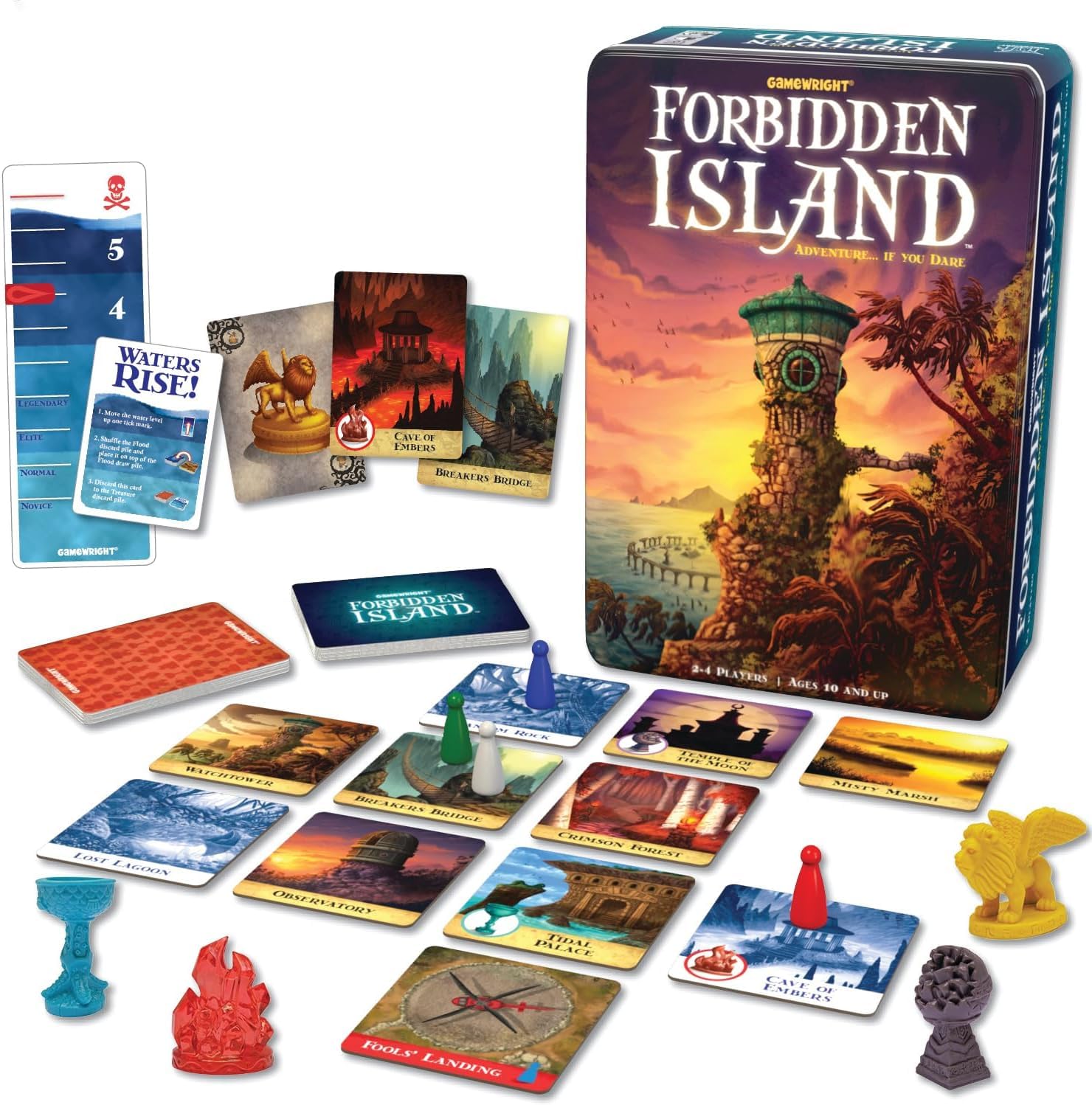
Forbidden Island gets players working together within minutes: flip tiles, collect treasures, and escape before the island sinks. The rising flood level keeps tension high without complex rules, making it an ideal first cooperative game for families with kids ages eight and up. Adults who have logged many hours with heavier strategy titles will find the decision space narrows after a few games — better treated as a stepping stone than a long-term staple.

💡 Rotate role assignments each round to extend the game's shelf life for repeat plays.

Pros

  • Rules explained in under five minutes; first game possible within the listed 30-minute playtime.
  • Encourages teamwork across ages; works well with children and adults who rarely play board games.
  • Variable difficulty levels (novice, normal, expert) stretch the challenge for different groups.

Cons

  • Experienced groups may find the puzzle repetitive after several plays
Our verdict

Best as an entry point for families or groups new to cooperative games; those ready for deeper strategy should look to Pandemic or Forbidden Desert.

Check Latest Price
3

Best Filler & Travel Game

Thames & Kosmos The Crew

96 /100
Lab Score Outstanding

Key details

Age
10+
Players
3-5
Playtime
20 min
Complexity
Easy
View on Amazon

The Crew reuses familiar trick-taking rules but flips them into a fully cooperative experience where players must complete specific objectives without openly discussing their hands. With 50 missions escalating in difficulty and a 20-minute playtime, it fits neatly into travel bags and game nights alike. Unlike the abstract deduction of similar portable card games, The Crew’s appeal depends on a group’s comfort with trick-taking conventions — players who know when to lead low or trump will find it rewarding, while those new to the mechanic may hit early frustration. The limited communication rule (only a single clue per trick) adds tension but can stall progress if the group prefers talking through plans. Best for three to five players ages ten and up who want a tight, replayable cooperative puzzle and already enjoy card games.

Pros

  • Innovative cooperative twist on trick-taking that is easy to learn but offers deep strategic puzzles across 50 missions.
  • Compact and quick to play, making it an ideal travel game with strong replayability from escalating difficulty.

Cons

  • Relies on trick-taking conventions
Our verdict

For card game groups seeking a cooperative challenge in a small box, The Crew delivers precise, repeatable fun without overstaying its welcome.

Check Latest Price
4

Best Party Game

Asmodee Just One

96 /100
Lab Score Outstanding

Key details

Age
8+
Players
3-7
Playtime
15-20 min
Complexity
Easy
View on Amazon

Just One draws players in with a deceptively simple premise: give one-word clues without matching each other, then guess the mystery word as a team. It works with players of any age or gaming experience, making it a natural fit for family reunions and holiday parties. Best suited for groups of 3-7 who want quick rounds and frequent turns, but the included markers can dry out over time, and the word deck may feel repetitive after regular play — expansions are available.

💡 Keep the markers capped tightly after each game to slow drying.

Pros

  • Works with any group size from 3 to 7 with no rules explanation needed
  • Encourages creative thinking and generates consistent laughter across rounds

Cons

  • Markers can dry out quickly, reducing erasability after a few uses
  • Word card pool may feel limited after many sessions without the expansion
Our verdict

Just One is the cooperative party game for groups that value inclusive fun over component polish — if marker longevity matters, budget for replacement pens.

Check Latest Price
5

Best for Hardcore Gamers

Greater Than Games Spirit Island

96 /100
Lab Score Outstanding

Key details

Age
14+
Players
1-4
Playtime
90-120 min
Complexity
Hard
View on Amazon

Spirit Island sets itself apart from lighter cooperative games like Pandemic by giving each player a unique spirit with asymmetric abilities, area control, and a resource management puzzle that demands careful coordination. It's designed for experienced board gamers who want a brain-burning challenge and for solo players — the solo mode is often ranked among the best in the hobby. However, the steep learning curve and 90-120 minute playtime make it a poor fit for casual game nights or families with young children.

💡 Plan for a full evening session; the game doesn't work well as a quick pick-up.

Pros

  • Deep asymmetric gameplay ensures each session feels distinct, with high replayability.
  • Strong solo mode that holds its own alongside multiplayer games.

Cons

  • Complexity: new players face a steep learning curve that requires dedicated attention.
  • Playtime: sessions often run 90 minutes or more, limiting spontaneous play.
Our verdict

If you're looking for a cooperative game with immense strategic depth and a top-tier solo experience, Spirit Island is a benchmark — just know it demands commitment.

Check Latest Price
6

HP Fans

USAOPOLY Harry Potter Hogwarts Battle

96 /100
Lab Score Outstanding

Key details

Age
11+
Players
2-4
Playtime
30-60 min
Complexity
Medium
View on Amazon

The Harry Potter theme is woven into every card and location, making each game feel like a chapter from the books. The campaign gradually introduces new mechanics and tougher villains, mirroring the rising stakes. However, the first few years are too easy for veteran board gamers, and replay value drops once the campaign is completed.

Pros

  • Immersive Harry Potter campaign that mirrors the books' progression
  • Progressive difficulty and deck-building create a satisfying sense of growth

Cons

  • Early years are too easy for experienced players; difficulty only ramps up later
Our verdict

Best for Harry Potter fans who want a cooperative campaign and don't mind a slow start; less ideal if you need balanced challenge from the first game.

Check Latest Price
7

Step-Up Challenge

Gamewright Forbidden Desert

96 /100
Lab Score Outstanding

Key details

Age
10+
Players
2-5
Playtime
45 min
Complexity
Medium
View on Amazon

Forbidden Desert introduces a modular board that shifts each turn, requiring tighter resource management and planning than its predecessor. The adjustable difficulty keeps it accessible for families with older kids, though the learning curve is steeper than Forbidden Island. Some sand tile pieces may not fit together perfectly — a minor assembly variance that doesn't affect gameplay once set up.

Pros

  • More strategic than Forbidden Island with a board that changes every turn
  • Adjustable difficulty makes it work for both casual and focused family groups

Cons

  • Sand tile pieces can have slight fit inconsistencies during setup
Our verdict

Pick this if your group has outgrown Forbidden Island but isn't ready for heavier cooperative titles like Pandemic.

Check Latest Price
8

Horror Story Lovers

Hasbro Betrayal House on the Hill

95 /100
Lab Score Outstanding

Key details

Age
12+
Players
3-6
Playtime
120 min
Complexity
Medium
View on Amazon

A horror exploration game with 50 distinct scenarios, Betrayal combines cooperative exploration with a mid-game betrayal that turns one player against the rest. The rulebook’s missing clarifications can cause confusion during play. Best for groups who love story-driven tension and don’t mind a temporary rival, but not for those wanting a fully cooperative board game or straightforward rules.

Pros

  • 50 unique haunts provide near-endless story variety and replayability
  • Immersive horror theme with a traitor mechanic that keeps the tension high throughout the game

Cons

  • Rulebook clarity issues can leave players confused about haunt rules and setup
Our verdict

Choose Betrayal if your group enjoys narrative surprises and can tolerate some rule ambiguity — it’s a story generator, not a precision board game.

Check Latest Price
9

Dice-Chucking Fun

IELLO King of Monster Island

96 /100
Lab Score Outstanding

Key details

Age
10+
Players
1-5
Playtime
60 min
Complexity
Easy
View on Amazon

King of Monster Island shifts the King of Tokyo formula into a cooperative boss battle with quick turns and vibrant art. The production quality is high, with colorful components. It plays in about 60 minutes, fitting nicely into a family game night. This is a solid choice for casual game nights and King of Tokyo fans seeking a cooperative variant.

Pros

  • Excellent gateway for King of Tokyo fans transitioning to cooperative play.
  • Fast-paced dice action with beautiful monster artwork.

Cons

  • Heavy luck from dice rolling can make outcomes feel random, frustrating strategy-focused groups.
Our verdict

A solid pick for casual family game nights, but skip if your group prefers strategic cooperative challenges.

Check Latest Price
10

Deduction Fans

R&R Games Hanabi

96 /100
Lab Score Outstanding

Key details

Age
8+
Players
2-5
Playtime
20-30 min
Complexity
Easy
View on Amazon

A compact award-winner that flips card play: you see everyone's hand but your own, relying on vague clues from teammates. This deduction puzzle demands a group that enjoys limited communication -- a brilliant fit for travel or filler sessions when the mood is right.

Pros

  • Unique 'see everyone's hand' mechanic creates a cooperative deduction challenge unlike any other card game.
  • Small box and minimal components make it easy to carry and play anywhere.

Cons

  • Card stock is thin and may wear out with repeated play; sleeving is a practical addition.
Our verdict

For groups that enjoy mental deduction games and can accept the need for card sleeves with frequent use, Hanabi offers a unique cooperative experience at a budget-friendly price.

Check Latest Price
11

Minimalist Puzzle

Pandasaurus The Game

94 /100
Lab Score Outstanding

Key details

Age
8+
Players
1-5
Playtime
20 min
Complexity
Easy
View on Amazon

Plays in 20 minutes with 1-5 players, requiring everyone to sequence numbered cards onto shared piles. The rules take two minutes to explain, but winning demands tight coordination. However, box may arrive with damaged corners, and the card-only contents can feel overpriced for a mid-range deck.

Pros

  • Simple rules make setup quick, but the cooperative challenge keeps sessions tense.
  • Compact size fits in a bag for solo or group play anywhere.

Cons

  • Box may arrive with damaged corners, and the card-only contents can feel overpriced.
Our verdict

Best as a portable puzzle for solo players or a filler between heavier games, provided packaging condition isn't a priority.

Check Latest Price
12

Gateway to D&D

Hasbro D&D Adventure Begins

94 /100
Lab Score Outstanding

Key details

Age
10+
Players
2-4
Playtime
60-90 min
Complexity
Easy
View on Amazon

This cooperative board game lowers the barrier to role-playing with simple mechanics and a story-driven format — ideal for families with kids ages 8-12 new to RPGs. However, some units arrive missing components (cards, dice, health trackers), a quality-control variance that may require a replacement request. It lacks the depth experienced players want, but for a first taste of cooperative fantasy, it does the job.

Pros

  • Simplifies role-playing for first-time players with minimal rules.
  • Encourages imaginative storytelling without burdening players with heavy mechanics.

Cons

  • Some units may arrive missing components like cards, dice, or health trackers, requiring a replacement.
Our verdict

A solid pick for families seeking a low-commitment intro to cooperative role-playing, but verify contents on arrival.

Check Latest Price
13

Age 5-7

Peaceable Kingdom Race to the Treasure

96 /100
Lab Score Outstanding

Key details

Age
5+
Players
2-4
Playtime
20 min
Complexity
Easy
View on Amazon

This cooperative path-building game for ages 5+ gets kids working together to collect keys before the ogre — simple rules and 20-minute play hold attention well. The tradeoff is limited complexity: once children reach age 8, the strategy feels repetitive, making this a short-term investment for early elementary years.

Pros

  • Teaches young children basic cooperation and strategic planning.
  • Quick setup and short playtime keep young kids engaged.

Cons

  • Older children (8+) may find the game too easy after a few rounds.
Our verdict

Best suited for families with children ages 5-7 looking for a simple, cooperative introduction to board gaming — expect to outgrow it within a year or two.

Check Latest Price
14

Preschoolers

Peaceable Kingdom Hoot Owl Hoot

96 /100
Lab Score Outstanding

Key details

Age
4+
Players
2-4
Playtime
15 min
Complexity
Easy
View on Amazon

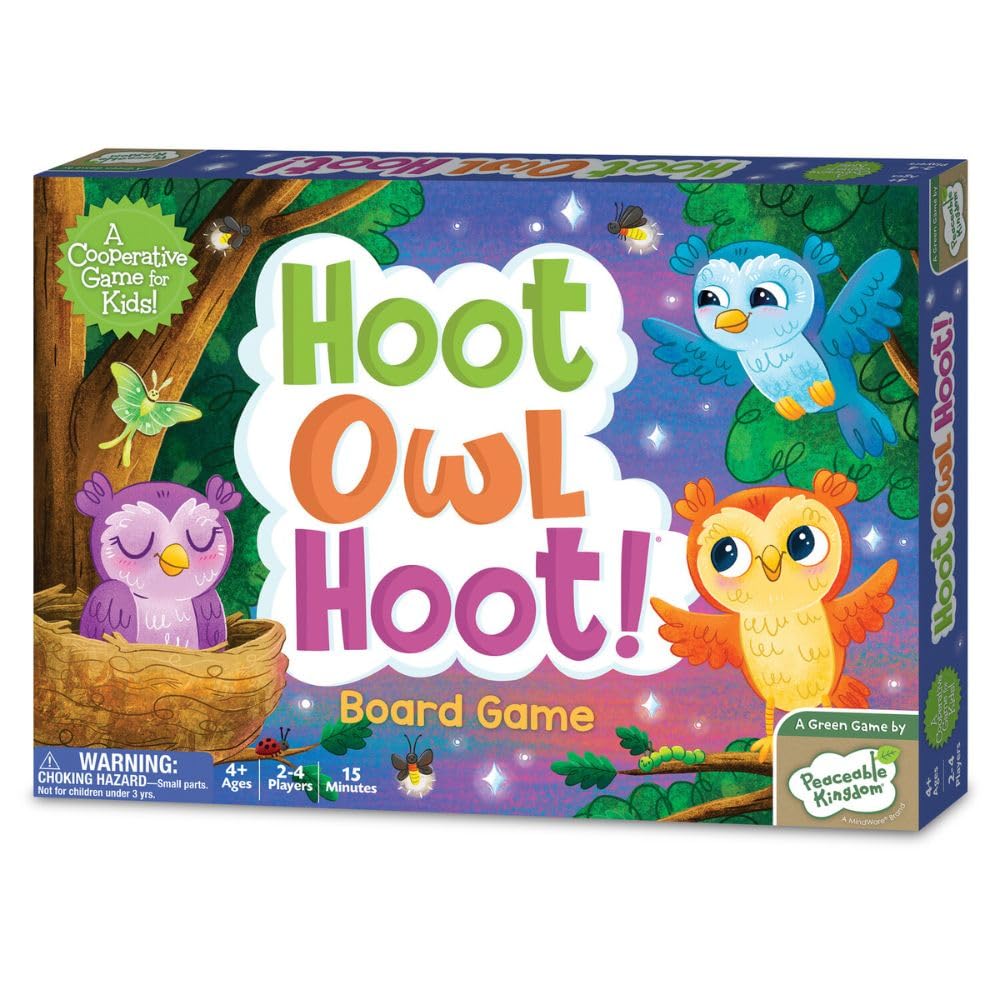
Hoot Owl Hoot uses color-matching cards to move owls to their nest, with every player working together to beat the sun track. The rules are simple enough for a three-year-old to grasp, and the cooperative format eliminates the tears of losing. However, the game is extremely simple; children past age six will find little challenge, and adults playing without kids will have no reason to return.

Pros

  • A gentle introduction to cooperative play for young children using simple matching mechanics.
  • Teaches teamwork and basic color recognition in a non-competitive, everyone-wins format.

Cons

  • Children beyond age 6 will quickly outgrow this game, as the matching tasks offer no challenge.
Our verdict

This game shines as a first cooperative experience for preschoolers; older kids and adults should look for more complex options.

Check Latest Price

How to Choose

Player Count

Most cooperative games list a range like 2-4 players, but the experience often shifts drastically at the extremes. Games that rely on discussion and shared information can bog down with 5 or 6 players, while two-player versions of some games may require dummy hands or modified rules.

For example, The Crew is best with 3-5 because trick-taking requires a critical mass of players. Spirit Island scales well with fewer because each player controls multiple spirits. Check reviews for the specific player count you'll actually use most.

Playtime

Playtime on the box is often a best-case estimate. A game like Betrayal at House on the Hill can run 2+ hours once the haunt begins, while Forbidden Island's 30-minute estimate holds steady even with new players.

Hidden trade-off: longer games require stronger group commitment and tolerance for rule refreshes mid-game. If your group meets for an hour after dinner, stick to games with a 45-minute or less average playtime to avoid leaving a scenario unfinished.

Complexity

Complexity isn't just about rulebook thickness. It's about decision weight: how many options players must evaluate each turn. Pandemic gives each player a distinct role with special actions, adding depth without overwhelming. Spirit Island forces constant trade-offs with multiple paths to victory.

Many games use a difficulty slider (Pandemic's epidemic cards, Forbidden Island's flood level) to adjust challenge without changing core rules. That's a better indicator of long-term replay value than a static difficulty rating.

Theme & Replayability

A strong theme can pull players into the game faster, but theme alone doesn't guarantee replayability. Story-driven games like Harry Potter Hogwarts Battle offer a campaign that peaks midway and then loses momentum after completion. Modular scenarios (The Crew, Betrayal) or variable board setups (Pandemic, Spirit Island) stretch replay value.

Watch for games where the theme is predominantly a reskin of mechanics: King of Monster Island is effectively King of Tokyo with a cooperative coat. That's fine if the group loves dice-chucking, but disappointing if they expect deep strategic control.

Frequently Asked Questions