10 Best Dynamic Microphones for Streaming in 2026: Match Your Setup and Budget

Which dynamic mic fits your game stream setup? Whether you want plug-and-play USB or XLR broadcast quality, we break down the trade-offs so you don't waste money.

Choosing a dynamic mic for streaming comes down to one fork: USB simplicity or XLR upgradeability. USB mics let you plug in and go, but many lock you out of future mixer setups. XLR mics offer pro sound quality and room to grow, but they need an audio interface and often a preamp booster.

That gap leaves streamers wondering which route actually delivers clean game commentary without extra gear. The answer depends on your current desk: if you already own an interface, an XLR mic can save you money while sounding better. If you don't, a USB mic with built-in processing removes the biggest hurdle to good audio.

Neither path is wrong, but buying the wrong one doubles your costs later. This guide maps the real performance differences between popular USB, XLR, and dual-connectivity mics so you can pick the one that matches your setup today and won't force an expensive swap tomorrow.

1

Best Overall

Shure MV6

91 /100
Lab Score Outstanding

Key details

Connectivity
USB-C
Polar Pattern
Cardioid
Frequency Response
50Hz–15kHz
Signal-to-Noise Ratio
View on Amazon

The Shure MV6 delivers crisp, rich vocal capture right out of the box – no audio interface needed. Its DSP processing includes Auto Level Mode for consistent gain and a Real-Time Denoiser that reduces background hum and fan noise, making it ideal for untreated rooms.

The Denoiser handles most ambient noise, but the microphone's cardioid pattern focuses on sound directly in front of it. For best results, position the mic within a few inches of your mouth – this maximizes voice clarity and minimizes environmental pickup.

This microphone is built for streamers and content creators who want Shure quality without the complexity of XLR gear. It's a USB-only device, so it suits those committed to a simple setup rather than a future mixer-based rig.

Pros

  • Out-of-the-box sound quality with built-in DSP processing
  • Beginner-friendly plug-and-play USB setup
  • Auto Level Mode and Real-Time Denoiser reduce background noise

Cons

  • USB-only connectivity means no XLR upgrade path for streamers planning a mixer later
  • Mechanical keyboard clicks may still be audible in quiet scenes despite the Denoiser
Our verdict

The Shure MV6 is the simplest way to get professional vocal quality for streaming – no extra gear, no learning curve. If USB-only fits your plan, this is the top pick.

Check Latest Price
2

Best Value XLR Broadcast Mic

Rode PodMic

96 /100
Lab Score Outstanding

Key details

Connectivity
XLR
Polar Pattern
Cardioid
Frequency Response
20Hz–20kHz
Signal-to-Noise Ratio
78 dB
View on Amazon

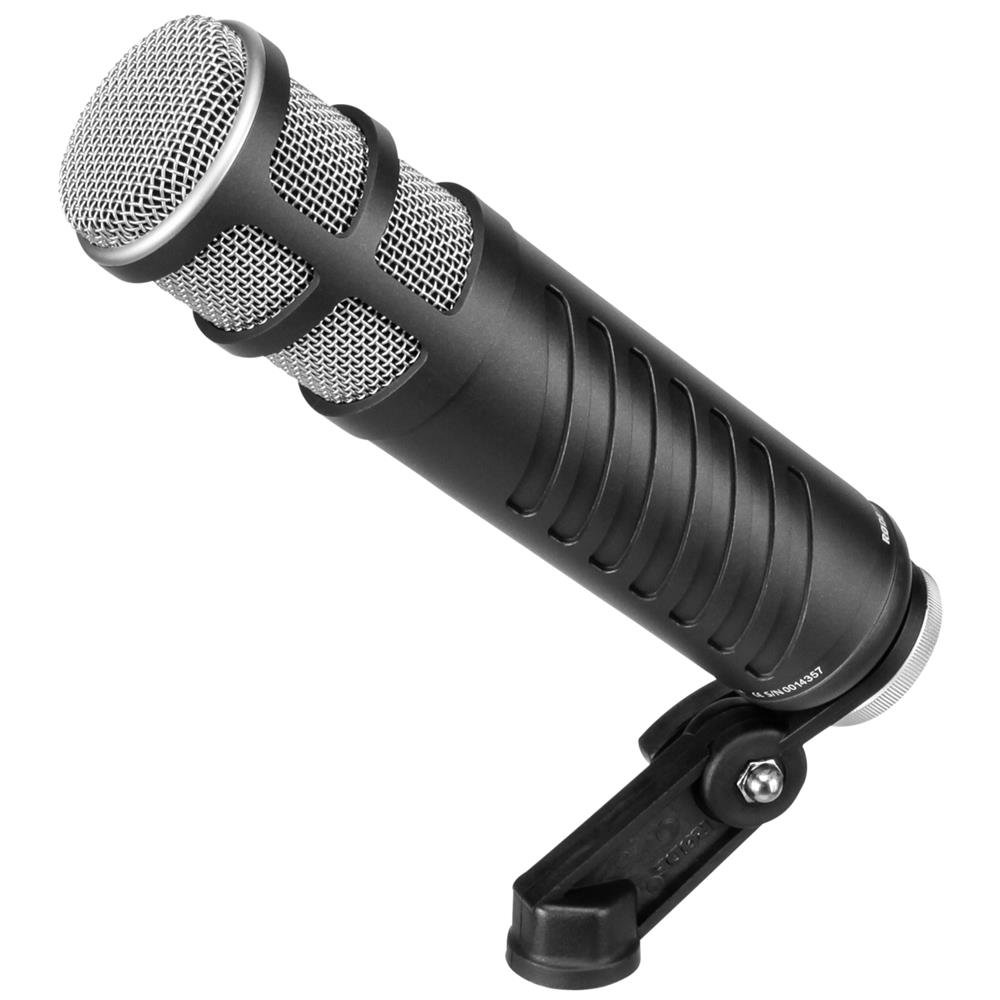
Broadcast-grade sound with integrated pop filter and swing mount for under $100 — the Rode PodMic brings professional warmth to budget XLR setups. Its cardioid pattern rejects room noise effectively, and the built-in pop filter reduces plosives without extra accessories. Unlike the heavier Rode Procaster, the PodMic is more manageable but still requires a sturdy boom arm.

This mic is for streamers and podcasters who already own an audio interface with at least 50dB of gain. Without a preamp booster, you will find yourself cranking the gain knob and introducing noise. The 937g weight also means your boom arm needs to handle it — a light spring arm won't cut it. If you have the right gear, the PodMic delivers a warm, clear broadcast tone that rivals mics costing far more.

💡 Pair with a cloudlifter or an interface offering 60dB+ gain for optimal levels.

Pros

  • Warm broadcast tone with clear vocal reproduction
  • Integrated pop filter and swing mount reduce accessory costs
  • Value for money in XLR dynamics - often compared to mics at double the price

Cons

  • Heavy design (937g) may require a robust boom arm to avoid sagging
  • Low output demands a preamp with at least 50dB gain for comfortable levels
Our verdict

If you already own an interface with adequate gain, the PodMic delivers professional warmth at a budget price — but skip it if you need plug-and-play USB.

Check Latest Price
3

Best Budget Dual-Connectivity Mic

FIFINE K688

93 /100
Lab Score Outstanding

Key details

Connectivity
USB, XLR
Polar Pattern
Cardioid
Frequency Response
50Hz–16kHz
Signal-to-Noise Ratio
80 dB
View on Amazon

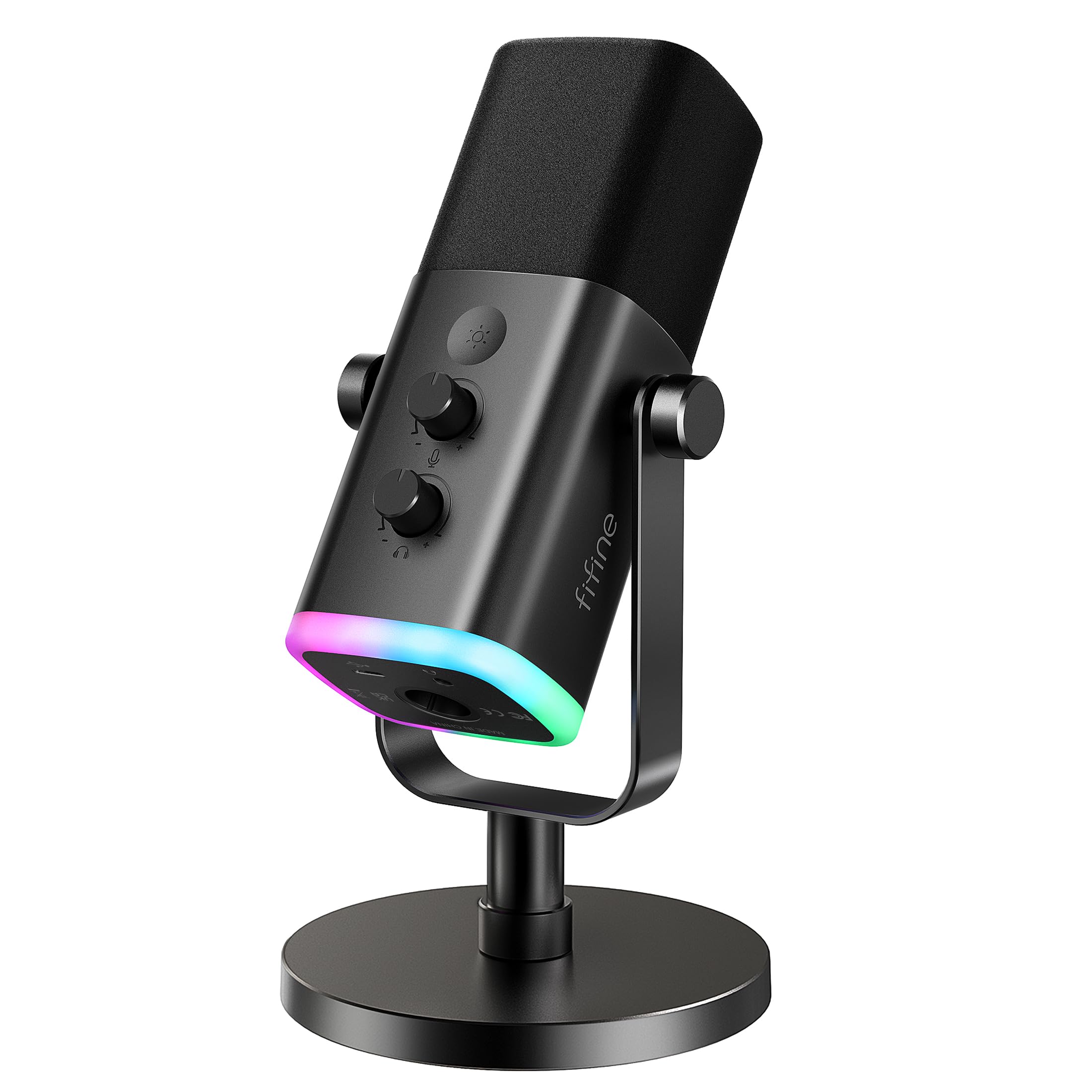
The FIFINE K688 delivers clear spoken-word audio with a dynamic range that punches above its price tag. Its all-metal construction gives it a premium feel missing from many budget mics. Unlike the Shure MV6's USB-only design, this mic adds XLR connectivity for future upgrades. Some units exhibit handling noise or static, so consistency isn't as tight as pricier mics.

This mic suits budget streamers and podcasters who want the flexibility of dual connectivity without a heavy investment. Beginners testing the waters will appreciate the metal build that doesn't feel cheap. If you need near-silent operation in a quiet recording space, the occasional static may be a concern – this mic works best for those who can tolerate minor imperfections or who mount it securely on a boom arm away from vibrations.

💡 Using a shock mount and boom arm reduces handling noise – a worthy investment with this mic.

Pros

  • Clear spoken-word audio with good dynamic range for streaming and voice recording
  • All-metal construction feels solid and premium at this price point
  • Dual USB and XLR connectivity offers flexibility for future upgrades

Cons

  • In quiet recording setups, handling noise or static may be audible on some units
Our verdict

For streamers on a tight budget who want the flexibility of both USB and XLR, the K688 delivers strong audio and build quality – just be aware that occasional noise may require careful mounting.

Check Latest Price
4

Premium Broadcast Standard

Shure SM7B

96 /100
Lab Score Outstanding

Key details

Connectivity
XLR
Polar Pattern
Cardioid
Frequency Response
50Hz–20kHz
Signal-to-Noise Ratio
View on Amazon

The SM7B delivers a smooth, warm vocal presence with outstanding background noise rejection that sets the standard for broadcast audio. Its controlled cardioid pattern isolates the voice from room echo and mechanical hum. The all-metal build and shock mount further reduce handling noise, making it suitable for close-mic recording.

This performance depends on having a preamp with at least 60 dB of gain, or an inline booster, because the mic's output is very low. The 2.7-lb weight also requires a sturdy boom arm for secure positioning. For podcasters and streamers who already operate a full XLR rig with adequate gear, the SM7B provides studio-quality vocal reproduction without coloration.

It specifically suits voice-over artists and broadcasters who need consistent clarity without sibilance or harshness. Not for budget-conscious buyers or those seeking USB convenience, it remains the reference standard for serious vocal capture.

💡 A preamp with at least 60 dB gain or an inline booster will resolve the low-output limitation.

Pros

  • Smooth, warm vocal capture with natural presence.
  • Rejects background noise and vibration effectively.
  • All-metal build with shock mount minimizes handling noise.

Cons

  • Heavy build requires a sturdy boom arm for stable positioning.
  • Very low output forces investment in a high-gain preamp or inline booster.
Our verdict

The SM7B is the right choice for serious XLR setups that already have a capable interface and mount; those without should consider the USB top pick for easier setup.

Check Latest Price
5

Best for Noise Rejection

Audio-Technica AT2040

91 /100
Lab Score Outstanding

Key details

Connectivity
XLR
Polar Pattern
Hypercardioid
Frequency Response
90Hz–15kHz
Signal-to-Noise Ratio
76 dB
View on Amazon

The AT2040's hypercardioid pattern rejects off-axis noise more aggressively than standard cardioid mics, making it a strong choice for noisy rooms. For streamers frustrated by keyboard clicks and fan hum, this focused pickup isolates your voice cleanly. The warm broadcast voicing adds presence to spoken word, and the integrated shock mount and pop filter reduce handling noise and plosives without extra gear.

The mic's 2.2-pound build demands a heavy-duty boom arm, and the narrow pattern requires careful positioning to avoid off-axis coloration. It competes with the SM7B in noise rejection at a lower price, but demands similar setup: an XLR interface and a robust arm.

Best suited for streamers and podcasters who already own an XLR interface and a sturdy boom arm, the AT2040 trades universal convenience for focused noise rejection. Not for those seeking USB plug-and-play or lightweight setups, but for untreated rooms with persistent background noise, it's a targeted solution that works.

Pros

  • Hypercardioid pattern effectively rejects keyboard and fan noise
  • Warm broadcast sound enhances vocal clarity for podcasting and voice-over
  • Integrated shock mount and pop filter reduce handling noise and plosives

Cons

  • XLR-only connectivity requires an audio interface, limiting use to existing XLR setups
  • At 2.2 pounds, needs a heavy-duty boom arm; not suitable for lightweight stands
Our verdict

For streamers battling background noise with an XLR interface, the AT2040 delivers focused vocal isolation without breaking the bank.

Check Latest Price
6

Ultra-Budget Gaming Kit

TONOR TD510

89 /100
Lab Score Excellent

Key details

Connectivity
USB, XLR
Polar Pattern
Cardioid
Frequency Response
Signal-to-Noise Ratio
View on Amazon

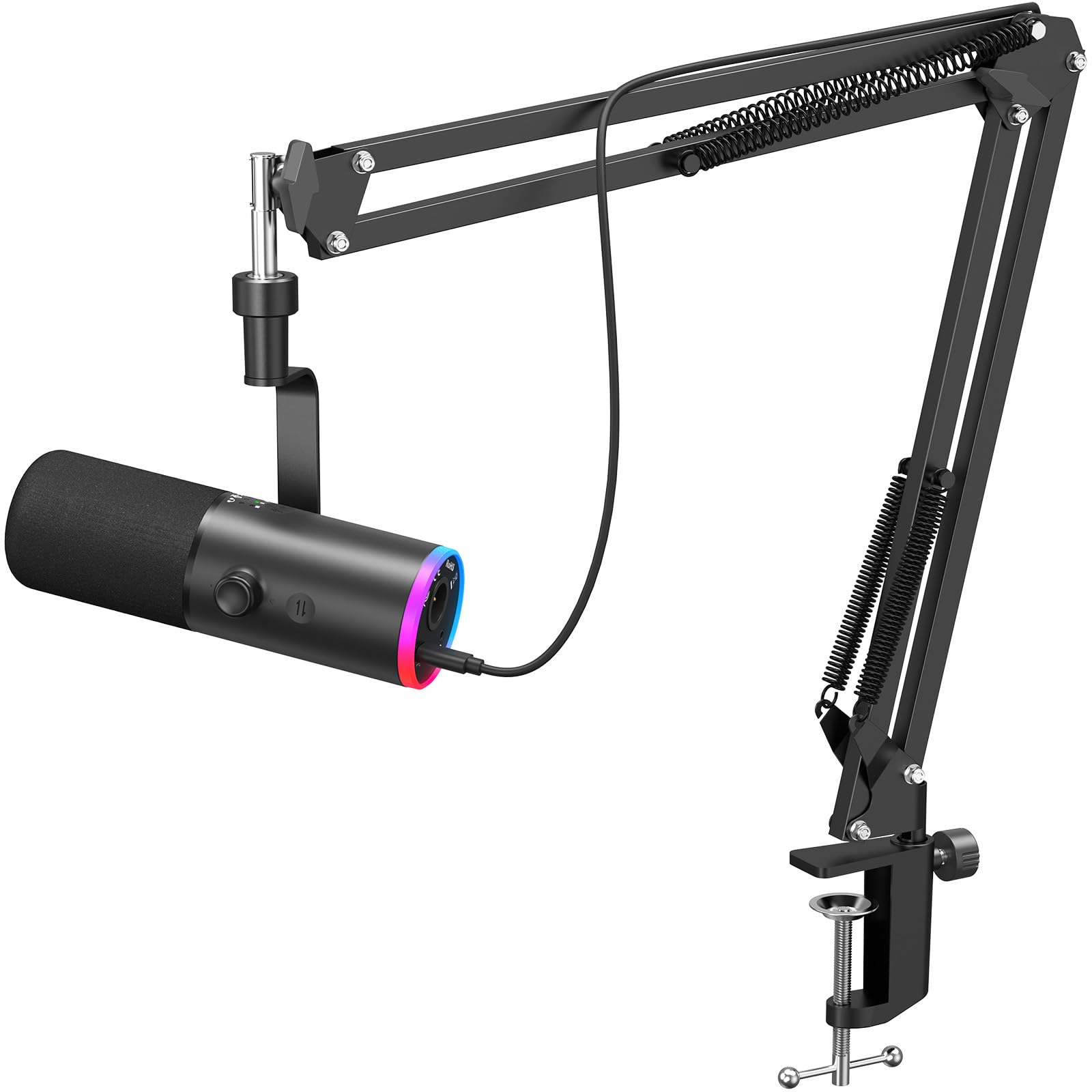
The TONOR TD510 packs AI noise cancellation that effectively silences keyboard clicks and fan hum, a rare feature at this price point. The kit includes a boom arm, shock mount, and customizable RGB lighting – everything a first-time streamer needs to go live immediately. USB connectivity is plug-and-play, so no interface is required.

This mic suits extreme budget streamers and gamers who prioritize AI noise reduction and visual flair over broadcast-grade audio. Long-term durability is unproven, making it a better fit for casual or starter setups than for heavy daily streaming. The XLR output may be quiet on some interfaces – USB mode sidesteps that issue entirely.

💡 If using the XLR output, pair with a preamp that delivers at least 50 dB of gain for adequate volume.

Pros

  • Complete streaming kit with boom arm, shock mount, and RGB at an entry-level price
  • AI noise cancellation reduces keyboard and fan noise effectively
  • Plug-and-play USB setup gets you streaming in minutes

Cons

  • XLR output may be quiet on interfaces with lower gain
Our verdict

A feature-packed starter kit for budget-conscious streamers – stick to USB and treat it as an entry point to dynamic microphone streaming.

Check Latest Price
7

Broadcast Alternative

Rode Procaster

95 /100
Lab Score Outstanding

Key details

Connectivity
XLR
Polar Pattern
Cardioid
Frequency Response
75Hz–18kHz
Signal-to-Noise Ratio
View on Amazon

The Rode Procaster delivers strong off-axis rejection and warm broadcast tone that suits male vocals. It lacks USB, needs a preamp with 60+ dB gain, and its 1.1-pound weight requires a sturdy boom arm – making it a specialist tool for experienced XLR users. For those with the right gear, it approaches SM7B performance at half the price.

Pros

  • Strong off-axis rejection minimizes background noise in untreated rooms.
  • Warm broadcast tone adds richness to vocals without harshness.

Cons

  • Heavy 1.1-pound body requires a sturdy boom arm to avoid sagging.
  • Low output level demands a preamp with high gain (60+ dB) or an inline booster.
Our verdict

Ideal for streamers and podcasters who already own a capable XLR interface and a robust mount, and want broadcast-grade sound without paying SM7B prices.

Check Latest Price
8

RGB Gaming

FIFINE AM8

93 /100
Lab Score Outstanding

Key details

Connectivity
USB, XLR
Polar Pattern
Cardioid
Frequency Response
50Hz–16kHz
Signal-to-Noise Ratio
80 dB
View on Amazon

The FIFINE AM8 delivers solid value with USB and XLR flexibility plus customizable RGB lighting that fits a gaming desk aesthetic. However, some units may develop static or stop working after a period of use, and noise rejection can be hit-or-miss in rooms with keyboard or fan noise. This makes the AM8 suitable as a low-cost entry point for first-time streamers who treat it as a starter microphone rather than a long-term investment.

💡 Check the unit promptly after purchase – any static or intermittent behavior is best caught early under return policy.

Pros

  • Dual USB and XLR connectivity at an entry-level price
  • Plug-and-play USB setup with no additional software required

Cons

  • Some units may develop static or stop working over time
  • Noise rejection is inconsistent; picks up ambient sounds in noisy rooms
Our verdict

Best suited for first-time streamers on a tight budget who prioritize RGB aesthetics and don't mind the possibility of needing a replacement down the line.

Check Latest Price
9

Complete Starter Kit

MAONO PD200XS

90 /100
Lab Score Outstanding

Key details

Connectivity
USB, XLR
Polar Pattern
Cardioid
Frequency Response
40Hz–16kHz
Signal-to-Noise Ratio
80 dB
View on Amazon

The MAONO PD200XS provides clear audio with software EQ control and a full accessory package including boom arm and shock mount at a budget-friendly price. However, the included accessories may not hold up over time; the shock mount and boom arm can wear down with regular use, and occasional USB connectivity problems have been noted. This makes it a solid starting point for beginners or streamers wanting a complete setup without a high investment, but less suitable for those who need long-term durability.

💡 Handling the boom arm joints gently can help extend its lifespan.

Pros

  • Clear audio with software EQ control for customizing tone.
  • All-inclusive kit with boom arm and shock mount for easy setup.

Cons

  • Included shock mount and boom arm may show wear over time
  • Some units may experience USB connectivity issues that affect consistent performance.
Our verdict

A functional starter kit for streamers who want a complete, low-cost setup and are willing to handle the accessories with care to avoid early wear.

Check Latest Price
10

Starter Mic

Samson Q2U

91 /100
Lab Score Outstanding

Key details

Connectivity
USB-C, XLR
Polar Pattern
Cardioid
Frequency Response
50Hz–15kHz
Signal-to-Noise Ratio
70 dB
View on Amazon

The Samson Q2U delivers clear spoken word audio with its cardioid dynamic capsule and dual USB-C/XLR connectivity, including all necessary cables — a strong value for first-time podcasters. The headphone jack and power switch can become unreliable over time, and the included stand is flimsy, so this mic is better suited as a low-stakes starter or backup than for daily streaming use.

Pros

  • Clear spoken word audio with cardioid pattern ideal for solo vocal recording.
  • Dual USB-C/XLR connectivity with included cables and accessories for flexible setup.

Cons

  • Headphone jack and power switch can become unreliable over time.
  • Included stand is flimsy and may break during regular repositioning.
Our verdict

A good starter mic for trying out podcasting or streaming on a budget, but plan to replace it if you move to regular streaming.

Check Latest Price

How to Choose

Connectivity: USB vs. XLR vs. Dual

USB mics are plug-and-play: connect to your PC, select the device, and go. No extra gear required, but you cannot upgrade to a professional mixer later without replacing the mic.

XLR mics need an audio interface or mixer to work, adding $100–$300 to your initial cost. The payoff is that you can swap mics, preamps, and mixers independently, and XLR carries balanced audio over longer cable runs with less interference.

Dual-connectivity mics (USB and XLR) let you start with USB and later switch to XLR without buying a new mic. They are the best choice for streamers who are unsure about committing to XLR hardware.

Pickup Pattern: Cardioid vs. Supercardioid vs. Hypercardioid

Cardioid picks up sound from the front and rejects noise from the sides and rear. It works well in most home studios but still captures reflections from walls and monitors if your room is untreated.

Hypercardioid (and supercardioid) narrows the pickup angle further, rejecting more side noise at the cost of a slight rear lobe that can pick up sound directly behind the mic. This trade-off makes hypercardioid mics better for noisy rooms where keyboard clicks or fans are off to the side, but you must position the mic carefully to avoid the rear lobe.

Output Sensitivity and Gain Requirements

Dynamic microphones produce lower electrical output than condenser mics. Many popular dynamic stream mics (SM7B, Procaster, PodMic) require 50–60 dB of preamp gain to hit optimal recording levels. If your interface or mixer can't supply that, the signal will be too quiet even at maximum gain.

Low-output mics often need an inline preamp booster (Cloudlifter, FetHead) that adds $100–$150. Some USB dynamic mics (MV6) include built-in DSP gain processing, eliminating the need for external boosters. Always check your interface's maximum gain before buying a low-output XLR mic.

Built-in Features: Pop Filters, Shock Mounts, and Monitoring

Integrated pop filters reduce plosive bursts ('p' and 'b' sounds) without requiring an external foam cover. However, many built-in pop filters are less effective than separate mesh screens, so you may still need an add-on for heavy plosives.

Shock mounts isolate the mic from desk vibrations and boom arm movements. Cheap included shock mounts often use thin rubber bands that stretch or snap over time, while third-party shock mounts use thicker elastic or metal springs. If your mic is heavy (over 800g), a sturdy shock mount is essential.

Build Material and Weight

All-metal construction resists drops and wear, but adds weight. A heavy mic (over 1 kg) requires a high-quality boom arm with a strong spring or gas lift to hold position without sagging.

Plastic-bodied mics are lighter and cheaper, but the threads that attach to stands and shock mounts are more likely to strip. If you plan to move your mic frequently or mount it on a boom arm, prioritize metal construction at the connection points.

Frequently Asked Questions