9 Best Gaming Router of 2026: Reliable Low-Latency, No Headaches

Which gaming routers actually deliver stable low ping for competitive play without random disconnections or early failure.

Many gaming routers promise blistering speeds and futuristic specs, but the real test happens when you're in a ranked match and the connection drops. Frequent disconnections, random reboots, and units that stop working after a few months are far too common, even at $600 price tags.

The smartest buying decision isn't chasing the highest number on the box. It's finding a router that delivers consistent low latency for your specific setup — whether that's wired PC gaming, console play, or mobile. After looking at what actually works, the most stable performers tend to be those with mature firmware and genuine QoS rather than raw speed.

This guide focuses on routers that earn their reputation through reliable connections and honest performance, helping you avoid the headaches that plague many 'gaming' models.

1

Best Overall Gaming Router

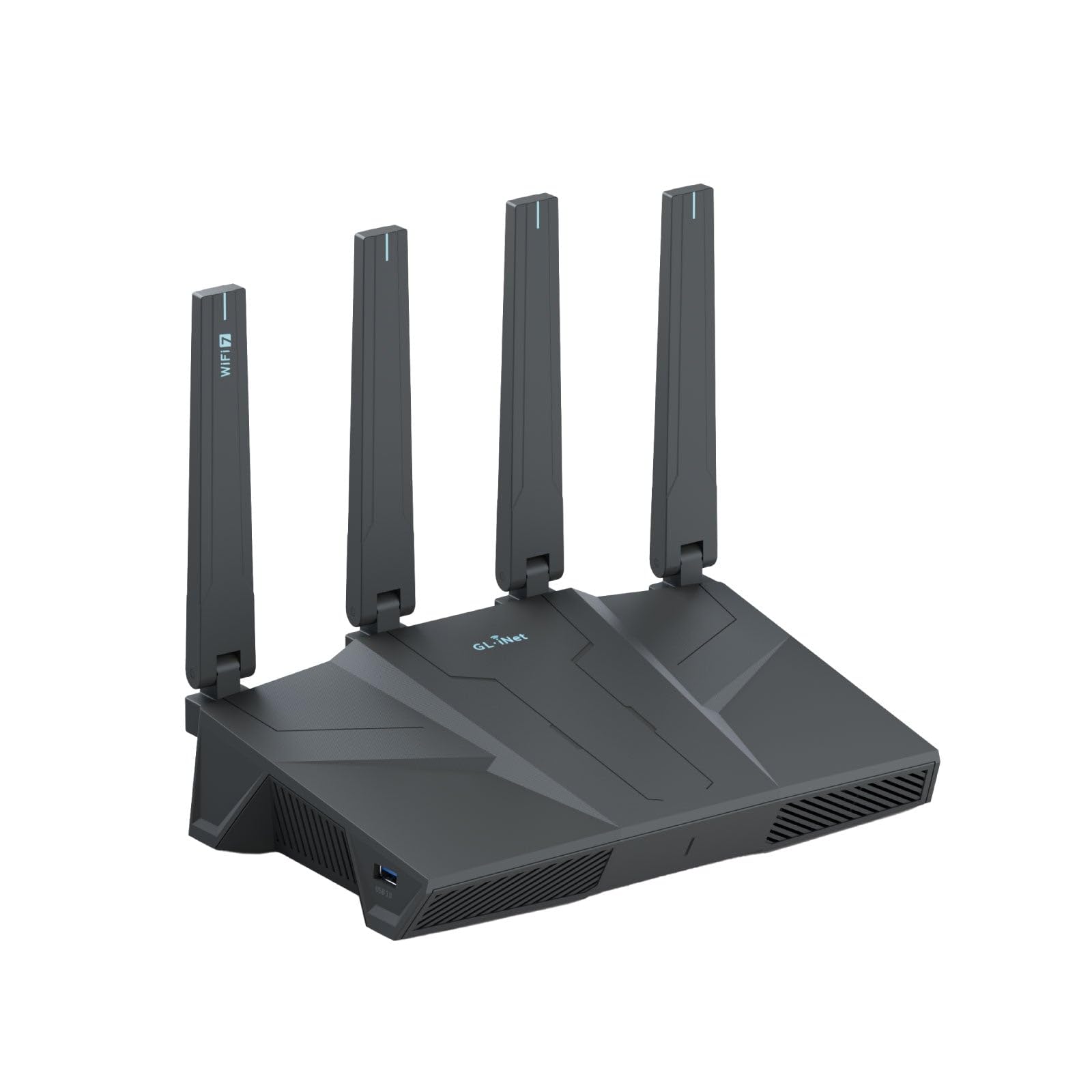
GL.iNet Flint 2

92 /100
Lab Score Outstanding

Key details

Band Count
Dual-Band
Port Speeds
2x2.5G + 4x1G
Mesh Support
Gaming Features
Software QoS
View on Amazon

The Flint 2 delivers consistently fast speeds and strong signal coverage across its dual-band WiFi 6, with dual 2.5G multi-gig ports ensuring low latency for wired gaming connections. Its pre-installed OpenWrt firmware provides fast VPN throughput with WireGuard and OpenVPN, making it a strong choice for users who route gaming traffic through a VPN.

In some configurations, the router may experience brief connectivity drops, though these occurrences are less common than on many competing gaming routers. An initial firmware update is often needed to achieve optimal stability, a one-time step that most target users will handle without issue.

This router is built for power users and tinkerers who value customization and stable wired performance over chasing the latest WiFi 6E or 7 bands. It lacks a 6GHz band, so households with many WiFi 6E devices may want to look at newer options. The initial setup requires some comfort with router configuration, but the payoff is a platform that remains consistent and adaptable over time.

Compared to the newer Flint 3 with WiFi 7, the Flint 2 offers a more mature firmware and fewer stability concerns, making it the safer choice for gamers who prioritize consistent performance over peak speed.

💡 Applying the latest firmware update upon setup reduces the chance of intermittent disconnections.

Pros

  • Solid build quality with consistent performance across wired and wireless connections.
  • Fast VPN speeds and deep customization via OpenWrt firmware.
  • Consistently fast speeds and strong signal coverage in real-world use.

Cons

  • Occasional connectivity drops can occur in some units, especially during competitive gaming sessions.
  • No 6GHz band; requires an initial firmware update and configuration to achieve full performance.
Our verdict

For gamers who want control and stable performance over raw spec numbers, the Flint 2 delivers a platform that stays out of the way once configured.
Check Latest Price
2

Best Budget WiFi 6E

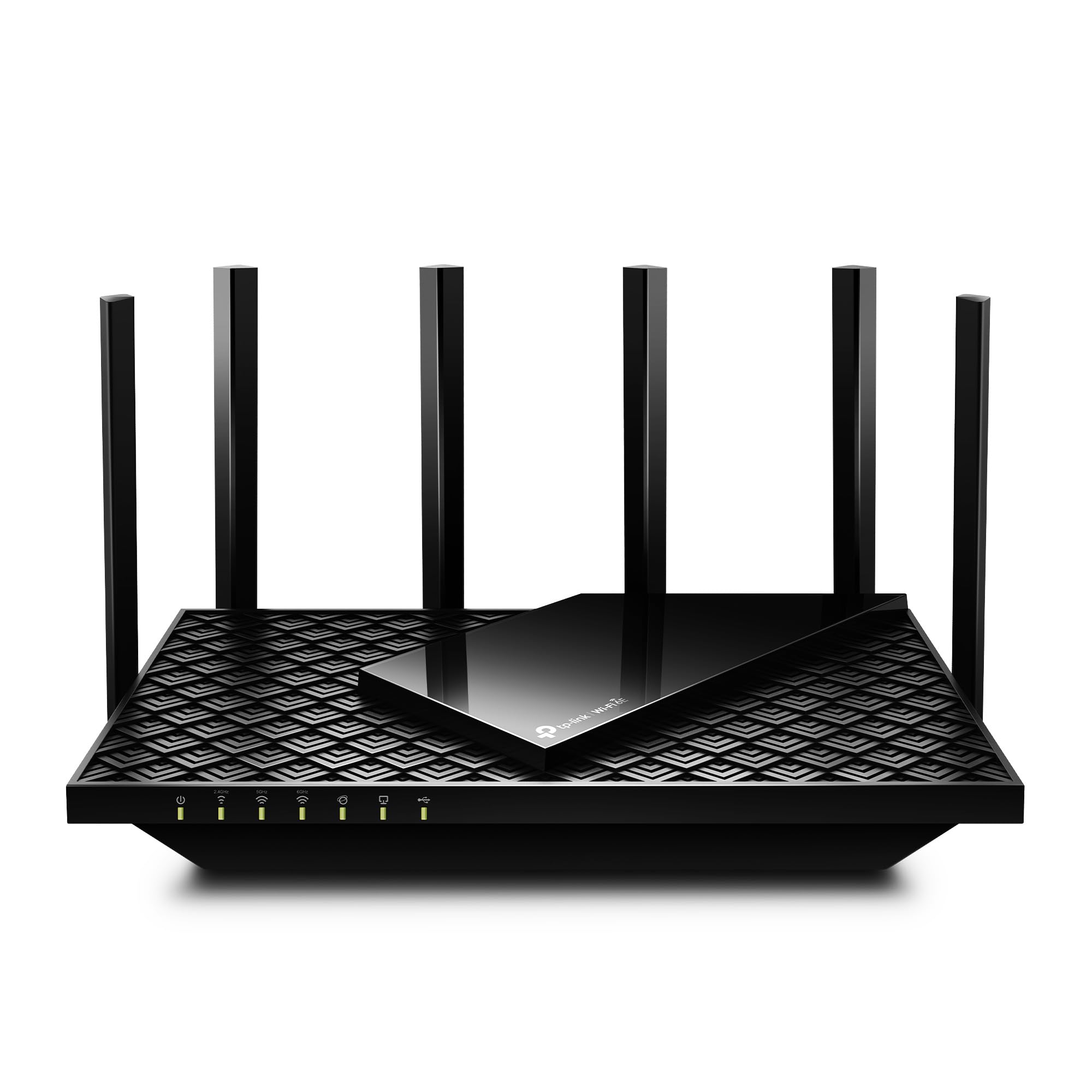
TP-Link Archer AXE75

88 /100
Lab Score Excellent

Key details

Band Count
Tri-Band
Port Speeds
1x2.5G + 4x1G
Mesh Support
OneMesh
Gaming Features
QoS, Game Acceleration
View on Amazon

The Archer AXE75 offers the most affordable way to access WiFi 6E's 6GHz band, with a setup process that takes minutes through the TP-Link app. While the top pick delivers proven stability, this TP-Link is for budget-conscious gamers who want 6GHz without spending premium.

This router suits first-time WiFi 6E buyers who prioritize low entry cost over long-term consistency. Some units may experience connectivity drops or stop working within months — a tradeoff worth checking before purchasing.

For streaming and typical gaming, speeds and range are solid at this price. The 2.5G WAN port accommodates fast internet plans, and the tri-band layout helps reduce congestion. However, the inconsistent reliability means this is best as a secondary or trial router.

💡 Keep an eye on connection stability during the return period.

Pros

  • Setup completed in minutes via the TP-Link app
  • Budget-friendly price for tri-band WiFi 6E with 6GHz access
  • Good speed and range for the cost

Cons

  • In a gaming session, random disconnections may occur
  • Some units may stop functioning or require replacement within months
Our verdict

Buy this if you're on a tight budget and want to test 6GHz; plan to replace it if you get a problematic unit.

Check Latest Price
3

Best for Customization & VPN

GL.iNet Flint 3

87 /100
Lab Score Excellent

Key details

Band Count
Tri-Band
Port Speeds
5x2.5G
Mesh Support
Gaming Features
View on Amazon

Tri-band WiFi 7 with a 6GHz band and five 2.5G ports make the Flint 3 a future-ready option for gamers who want the latest wireless standard. While the Flint 2 offers time-tested dependability on WiFi 6, the Flint 3 trades some of that maturity for faster raw speeds and the flexibility of OpenWrt. The trade-off is that some units can experience unexpected disconnects or signal hiccups during early firmware cycles.

This router suits gamers who enjoy tweaking OpenWrt settings, prioritize high-throughput tasks like 8K streaming or large game downloads, and are comfortable with occasional firmware quirks. If you need rock-solid stability straight out of the box or plan to cover a large home without additional mesh nodes, the Flint 2 is a safer bet. The weaker 6GHz range in spacious layouts may require mesh extenders to maintain coverage.

💡 Enable automatic firmware updates to stay on the latest release — early adopters benefit from frequent patches that smooth out connectivity quirks.

Pros

  • Built-in AdGuard Home ad-blocking and robust VPN support for secure gaming traffic.
  • Tri-band WiFi 7 with 6GHz band delivers 9 Gbps wireless speed for demanding applications.
  • Intuitive web UI makes initial configuration quick even for advanced OpenWrt settings.

Cons

  • In competitive gaming sessions, occasional disconnects can interrupt play
  • 6GHz range may not reach all rooms in larger homes without adding mesh nodes.
Our verdict

The Flint 3 is a compelling option for OpenWrt enthusiasts who want WiFi 7 today and are prepared to manage firmware updates as the platform matures.

Check Latest Price
4

Best Console Gaming Booster

HYPEREV AX3000

82 /100
Lab Score Excellent

Key details

Band Count
Dual-Band
Port Speeds
1x1G LAN
Mesh Support
Gaming Features
Game accelerator, Ping reduction
View on Amazon

The HYPEREV AX3000 delivers measurable ping reductions for console gamers without requiring a full network overhaul. It plugs into your existing router and acts as a dedicated game accelerator, redirecting traffic for lower latency. In practice, ping can drop by up to 50% — a noticeable improvement for competitive play. This is simpler than swapping out your main router for a budget WiFi 6E model that may introduce its own headaches.

This booster is best suited for console gamers (PS5, Xbox, Switch) who want an easy ping fix without spending much. It works alongside your current network, so no advanced setup is needed. The catch is that after the 90-day GearUP VIP trial, the acceleration features require a monthly subscription — an ongoing cost that isn't immediately obvious. Additionally, it is not a standalone router, so you must keep your existing modem and router setup.

At the entry-level price, the HYPEREV AX3000 offers strong value for the targeted use case. The dual-band WiFi 6 connectivity ensures decent speeds, though the single LAN port limits wired expansion. For the budget-conscious player who only needs to boost a single console, this is a cost-effective way to reduce lag without replacing their home network.

💡 Keep the GearUP VIP subscription active for full acceleration — the 90-day trial covers initial setup.

Pros

  • Significantly reduces lag and ping for console gamers
  • Extremely easy setup
  • Excellent value for a dedicated gaming booster at the entry-level price point.

Cons

  • Not a standalone router
  • Requires a monthly subscription after the 90-day trial to maintain acceleration features.
Our verdict

If you play console games on a tight budget and want immediate lag reduction without replacing your router, this booster works well. Just plan for the monthly fee after the first three months.

Check Latest Price
5

Best for Mobile Gamers

ASUS RT-AX82U

89 /100
Lab Score Excellent

Key details

Band Count
Dual-Band
Port Speeds
4x1G LAN + 1xWAN
Mesh Support
AiMesh
Gaming Features
Mobile Game Mode, RGB
View on Amazon

The RT-AX82U stands out with its Mobile Game Mode, which prioritizes gaming traffic from phones, and support for AiMesh, letting you expand coverage by adding compatible ASUS nodes later. While newer WiFi 7 routers aim for raw speed, this model keeps features practical and the price accessible for mobile-focused gamers.

This router suits mobile gamers who want a dedicated gaming mode and plan to grow their network over time. Some units may experience occasional disconnections, making it a better fit for those who can tolerate minor instability rather than those requiring flawless uptime in competitive play.

Setup is handled smoothly through the ASUS app, and the range covers typical medium homes without dead spots. The build quality feels solid, and the RGB lighting adds a subtle gaming aesthetic without being overbearing.

💡 Enable Mobile Game Mode in the app to prioritize gaming traffic; this can help reduce dropped connections during heavy network use.

Pros

  • Mobile Game Mode prioritizes gaming traffic from smartphones and tablets
  • AiMesh support lets you add extra nodes for larger homes
  • Simple setup via the ASUS app with clear guidance
  • Solid range for medium-sized homes, covering most rooms

Cons

  • Some units may drop connections under heavy load
  • Reliability can degrade over time, with a portion of units requiring replacement within the first year
Our verdict

For mobile gamers who want a dedicated mode and the option to expand with AiMesh, the RT-AX82U delivers solid performance at a reasonable cost — provided you accept the occasional connectivity hiccup that some units exhibit.

Check Latest Price
6

Best Premium WiFi 7

ASUS GT-BE98 Pro

85 /100
Lab Score Excellent

Key details

Band Count
Quad-Band
Port Speeds
2x10G + 4x2.5G
Mesh Support
AiMesh
Gaming Features
Triple-level Game Accel, RGB
View on Amazon

This quad-band router pushes WiFi 7 to its theoretical limit, hitting a combined 30 Gbps with dual 10G ports that none of the more affordable ASUS gaming routers can match. But that speed comes with a tradeoff: early adopters must navigate potential connectivity hiccups that are not as prevalent on the top pick in this roundup.

Beyond raw speed, the router's solid build quality and premium design make a statement, and its range covers large homes and properties without needing additional extenders.

This router is best suited for early adopters who have multi-gig internet and want to future-proof their network with the fastest WiFi 7 connection possible. It also fits gamers building a mesh network with high bandwidth needs. However, buyers should be aware that some units can experience connectivity degradation or loss of internet, making this a high-risk investment at a premium price.

Pros

  • Exceptional raw speed on WiFi 7 with multi-gig wired performance.
  • Solid build quality and premium design that makes a visual statement.
  • Impressive range and coverage suitable for large homes and properties.

Cons

  • Value for money is questionable given the premium price point and potential performance inconsistencies.
Our verdict

If multi-gig internet is already at your doorstep and you want to push WiFi 7 to its limits, this router delivers unmatched speed — but only if you're prepared to accept intermittent connectivity issues that may require some hands-on troubleshooting.

Check Latest Price
7

Competitive QoS

NETGEAR XR500

89 /100
Lab Score Excellent

Key details

Band Count
Dual-Band
Port Speeds
4x1G LAN + 1xWAN
Mesh Support
Gaming Features
Geo-Filter, DumaOS, QoS
View on Amazon

The XR500's Geo-Filter gives you unprecedented control over which game servers you connect to, a feature that remains unmatched for reducing lag in specific regions. However, this router is limited to WiFi 5, and some units may experience occasional disconnections or require rebooting to maintain stability. It serves best as a secondary router for competitive play in a setup where you can tolerate those hiccups.

Pros

  • Geo-Filter enables precise server selection to minimize ping in competitive matches.
  • Advanced QoS prioritizes gaming traffic effectively over other household usage.
  • DumaOS interface is straightforward to configure for traffic management.

Cons

  • In some cases, the router may need an occasional reboot to keep performance steady.
  • WiFi 5 only, lacking modern speeds and 6GHz band for future-proofing.
Our verdict

Best suited as a dedicated competitive gaming router for players who want Geo-Filter control and can work around its aging hardware and occasional stability hiccups.

Check Latest Price
8

VPN Enthusiasts

GL.iNet Flint 3e

82 /100
Lab Score Excellent

Key details

Band Count
Dual-Band
Port Speeds
5x2.5G
Mesh Support
Gaming Features
View on Amazon

The GL.iNet Flint 3e brings WiFi 7 to a budget-friendly price point, with WireGuard and OpenVPN performance that rivals more expensive routers. Its built-in AdGuard Home adds system-wide ad blocking without extra hardware. However, it lacks the 6GHz band found in many WiFi 7 routers, which means less headroom for low-latency gaming traffic. Some units also exhibit intermittent internet drops under heavy load, making it a less consistent choice than tri-band alternatives. For gamers who want VPN capabilities at router level and are willing to trade 6GHz and reliability for cost savings, this router fits a specific niche.

Pros

  • Strong WireGuard and OpenVPN speeds with built-in ad blocking.
  • Easy setup through an accessible web interface.

Cons

  • No 6GHz band, limiting future-proofing and low-latency game performance.
  • Some units may experience intermittent internet drops during heavy usage.
Our verdict

Best for budget-conscious gamers who prioritize VPN and ad-blocking over 6GHz reliability and consistent uptime.

Check Latest Price
9

Game Panel & RGB

TP-Link Archer GXE75

83 /100
Lab Score Excellent

Key details

Band Count
Tri-Band
Port Speeds
1x2.5G + 4x1G
Mesh Support
EasyMesh
Gaming Features
Game Panel, RGB, Acceleration
View on Amazon

The Archer GXE75 delivers tri-band WiFi 6E speeds, a dedicated game panel with real-time diagnostics, and customizable RGB lighting — features that appeal to gamers wanting visual flair and acceleration tools. However, its signal range falls short in larger floorplans, and reliability has been inconsistent in some units, with occasional complete loss of connectivity after extended use. For users who value the game dashboard and aesthetics over expansive coverage and long-term consistency, this router fits well.

Pros

  • Performance for gaming workloads is solid, with fast speeds and low latency in close proximity.
  • Setup is quick via the TP-Link app, getting you online in minutes.

Cons

  • Signal range can be disappointing in larger homes or multi-story layouts.
  • Some units may lose connectivity or stop working after several months of use.
Our verdict

This router works best for gamers who want the dedicated game dashboard and RGB in a compact space where range isn't critical, and who are willing to accept potential reliability tradeoffs.

Check Latest Price

How to Choose

WiFi Generation

WiFi 6 is the mature, widely compatible standard that offers excellent real-world performance for most gamers. WiFi 6E adds a 6GHz band that reduces interference but has shorter range and requires compatible devices. WiFi 7 is the newest standard with even higher potential speeds, but many routers launch with immature firmware that can cause instability during the first year of ownership.

Band Count

Dual-band routers (2.4GHz + 5GHz) are sufficient for most gaming setups, especially if you keep your gaming device on a wired connection. Tri-band adds a second 5GHz or a 6GHz band, which helps reduce congestion when multiple devices stream or download simultaneously. Quad-band is overkill for all but the most extreme multi-gigabit home networks.

Port Speeds

A 2.5Gbps port is a meaningful upgrade if your internet plan exceeds 1Gbps, but for most gamers, a 1Gbps port is not the bottleneck. The real gain comes from having multiple high-speed LAN ports for wired PC and console connections. A 10G port is only useful if you have a multi-gig plan and wired devices that support it; otherwise, the extra cost is wasted.

Gaming Features

QoS (Quality of Service) and game acceleration features prioritize game traffic over other network activity, which can reduce lag during heavy household usage. However, many stock QoS implementations are poorly tuned and can actually add latency. Routers with third-party firmware like OpenWrt often provide more configurable and effective traffic shaping.

Mesh Extendability

Mesh support (like AiMesh or EasyMesh) lets you add additional nodes to cover dead zones without running cables. This is useful for large homes, but adding nodes introduces latency if the backhaul is wireless. Wired backhaul preserves performance, so check if the router supports wired mesh connections.

Frequently Asked Questions