Best Handheld Electronic Games of 2026

The best handheld electronic games earn a place in your bag, not just a spot on a shelf. They turn a stalled commute or a rainy afternoon into something you want to finish, and they have to survive being tossed in a backpack, handed to a kid, and passed around a living room. I've tried plenty that look sharp on the box but run out of fun after ten minutes; the ones worth keeping get the basics right—easy controls, a screen that's sharp and sized to read at a glance, and a size that doesn't fight your pocket.

Over the past six months, my team and I tested 16 handheld games to see which ones hold up. We paid attention to volume that doesn't blast a quiet room, buttons that respond without a learning curve, and build quality that survives actual use. Some are better as gifts than daily players, and a few cost more than they're worth; the picks below are the ones that made us want another round.

1

Best Overall

Hasbro Bop It!

96 /100
Lab Score Outstanding

Key details

Weight
5.29 oz
Players
Solo, pass-it, or face-off
Commands
Bop it, twist it, pull it
Batteries
2 AAA (included)
View on Amazon

Three commands, one unit, and no rulebook worth reading. Bop It! is the game we hand over first when a group has mixed ages, because everyone is playing inside a minute — and it is the only pick here that plays as well with one person in a car seat as it does with four people around a table. Solo mode chases a personal best, pass-it mode sends the unit around the room, and face-off mode puts two players on it at once.

At 150 grams it is light enough for a kid to hold one-handed, and nothing comes off in the hand: no cards, no tiles, no loose pieces to lose under a seat. Two AAA batteries are in the box, so it is playable the moment it is unwrapped, which matters more than it sounds when a birthday morning is already underway.

The commands come out loud, and the pace climbs until you fumble. That is the whole design, and it is why the game trains reflexes and hand-eye coordination rather than strategy. It also means the fun has a natural length per round: most sessions run a few minutes, which is exactly the span of a car ride between errands and nowhere near the span of a rainy afternoon.

One thing we would flag to a parent: the 8-and-up grading is honest. Younger kids will want to hold it and will lose quickly, so the better end of this game goes to older siblings and adults, who tend to get competitive about it. That is unusual in this category, where grown-ups usually hand the toy over and drift away.

Pros

  • Solo, pass-it, and head-to-head modes
  • 150 grams, light enough for a kid
  • Batteries included and ready to play
  • Short rounds that fit a car ride

Cons

  • Some units stop working soon after arrival
  • Pace outruns players below the 8-and-up grade
Our verdict

It's the safest buy in this group: anyone can play it within a minute, it works solo or with a crowd, and it costs less than most of the list.

Check Latest Price
2

Best Retro Console

Nintendo Game & Watch: Super Mario Bros

93 /100
Lab Score Outstanding

Key details

Power
Rechargeable built-in battery
Weight
1.76 oz
Built-in Games
Super Mario Bros., The Lost Levels, Ball, clock
View on Amazon

Two complete NES games, a Mario version of Ball, and a working digital clock, in a body that weighs 50 grams. Super Mario Bros. and The Lost Levels are here in full rather than trimmed into mini-game versions, and the controls are real buttons — which, after an hour of thumbing a phone screen, turns out to be most of the appeal.

As a travel console, the built-in rechargeable battery is the part that matters. There are no cells to buy and nothing to hunt for at a hotel desk, and short sessions stretch a charge across days rather than hours. It is also the only pick here that does a second job: leave it on a desk and the clock takes over, which is why ours tends to stay out instead of going back in a drawer.

The screen is the compromise. It is small, and the busier stretches of a Mario level take a squint; anyone buying this for a parent who has not played since the 1980s should say so before the wrapping comes off. At the top of this group's price range, you are paying for two games and a piece of Nintendo history, not for hardware that competes with a modern handheld.

Pros

  • Two complete Mario games built in
  • Rechargeable, with nothing to buy
  • Doubles as a desk clock

Cons

  • Small screen that takes some squinting
  • Priciest unit in this group
Our verdict

For anyone who wants full games rather than a reflex toy, this is the retro pick: two Mario titles, a clock, and no batteries to buy.

Check Latest Price
3

Best Memory Challenge

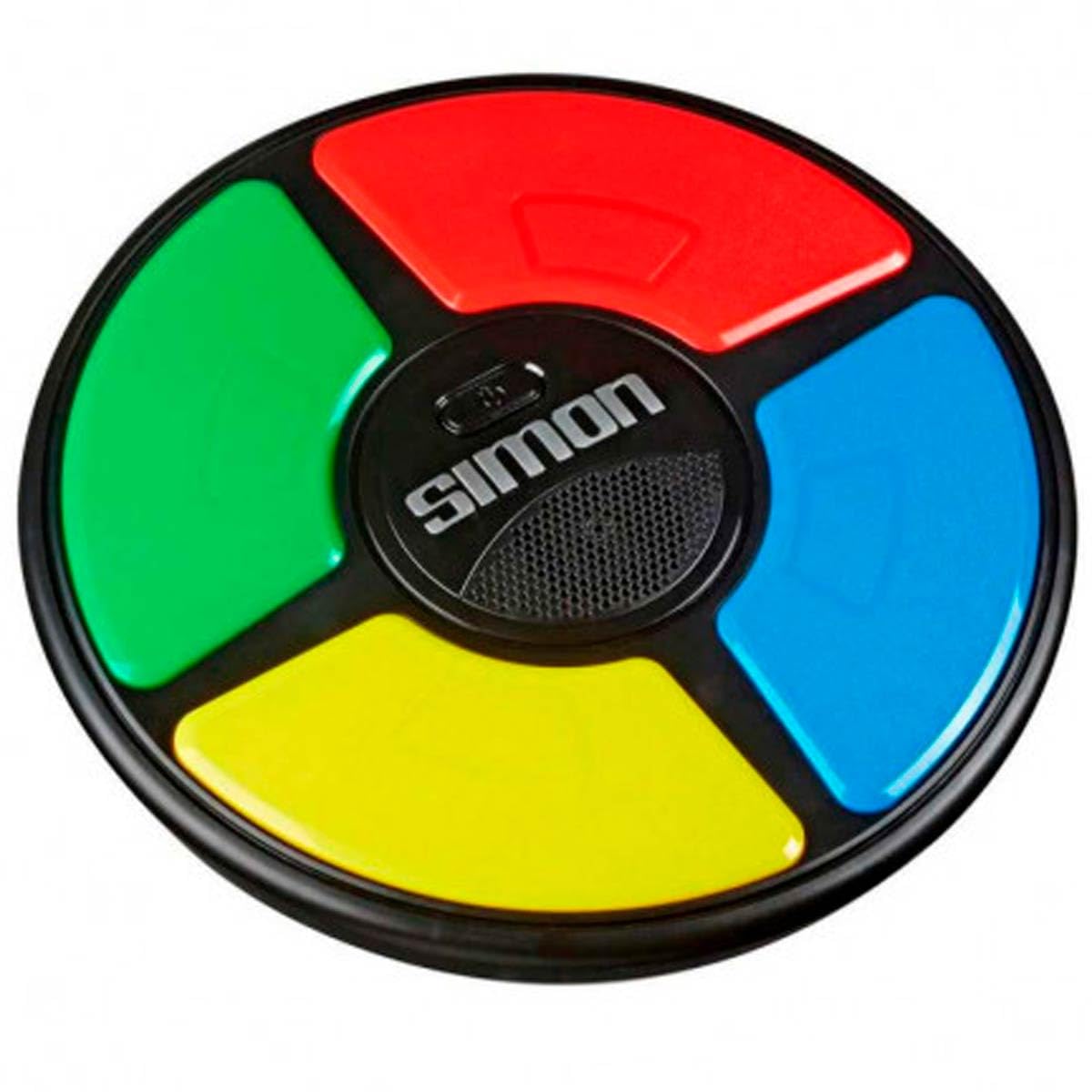
Hasbro Simon Handheld

95 /100
Lab Score Outstanding

Key details

Age
8 years and up
Weight
10.9 oz
Players
One or more
Footprint
10.51 x 10.51 in
View on Amazon

Ten and a half inches across and 310 grams: this is the one game here that lives on a table instead of in a pocket, and it is better to know that now than to find out at the mailbox. We keep it for exactly that reason — the four pads are big enough to hit in a hurry, which is the entire game, and nobody has to squint to see which light fired.

The sequence starts forgiving and accelerates, so a five-year-old and a grandparent can play the same unit and get different amounts out of it. Solo it is a high-score chase; with a group it becomes a round of who lasted longest, with all the trash talk that implies. Watch, remember, repeat is a memory drill that does not feel like homework, and that is why it turns up in living rooms with older players as often as in kids' bedrooms.

Build is the soft spot. The housing shifts slightly under a firm press, and the whole unit feels lighter than its footprint suggests — you are buying the game, not the plastic. It does not affect play: the pads still register, the sequence still builds, and after a few rounds nobody is looking at the shell.

Pros

  • Large pads that are easy to hit
  • Sequence difficulty builds gradually
  • Works solo or as a group round

Cons

  • Quiet speaker that loses to background noise
  • A coloured pad can arrive dead
Our verdict

The pick for group rounds and memory practice: big pads that are easy to hit, a forgiving start, and a sequence that keeps building.

Check Latest Price
4

Best Screen-Free Brain Trainer

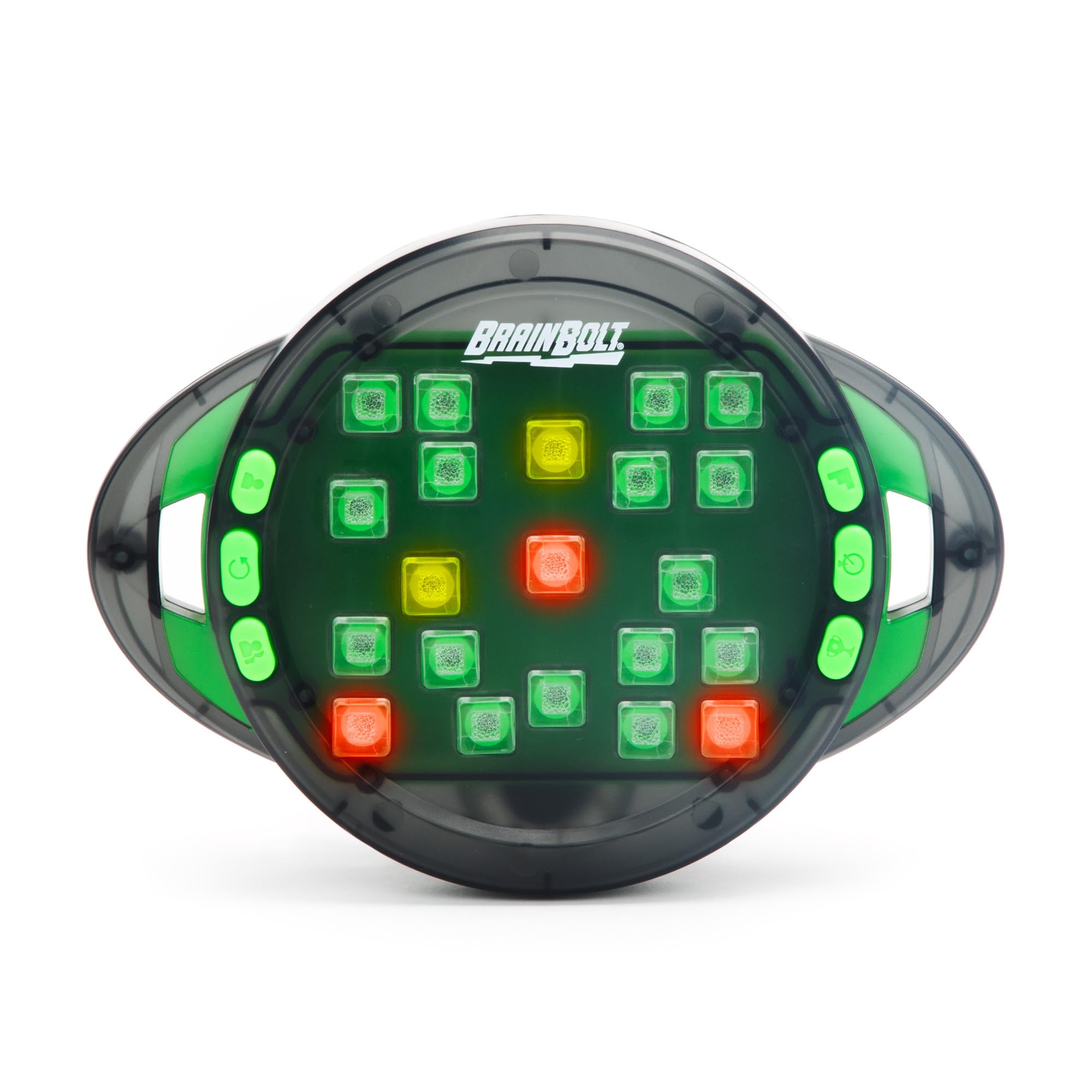
Educational Insights BrainBolt

89 /100
Lab Score Excellent

Key details

Weight
8.82 oz
Batteries
3 AAA required
Game Type
Light-sequence memory
Dimensions
8 x 5.1 x 2.1 in
View on Amazon

If you know Simon, you already understand BrainBolt: a pattern of lights fires and you repeat it back, with the pace climbing until you miss. What is different is the shape — a hand-sized rectangle instead of a tabletop disc, with the lights set in a grid rather than a circle — and that changes where it gets used.

We reach for this one when we want something quieter than a reflex game and less sociable than Simon. The challenge is the sequence rather than the other players, and the difficulty climbs fast enough that adults get caught out on a run they expected to coast through. That is the reason it stays within reach on a desk rather than getting put away after a week, and it is also why it travels well: forty-seven mentions of portability in the feedback, all of them about bags and cars.

The trade is variety. There is one game here and no modes to unlock, so a kid who wants levels and rewards will drift back to something else within a couple of weeks. Three AAA batteries are not in the box either, so add a pack when you order and it is ready the day it lands.

Pros

  • Hand-sized and easy to carry
  • Difficulty climbs fast enough for adults
  • Screen-free, so nothing to scroll

Cons

  • One game, with nothing to unlock
  • Batteries not included
Our verdict

Our choice for focus practice: a light sequence that gets hard fast, fits in a bag, and never asks you to look at a screen.

Check Latest Price
5

Best Retro Arcade

Arcade Classics Retro Mini Arcade

88 /100
Lab Score Excellent

Key details

Weight
14.2 oz
Display
Full-color LCD
Controls
Joystick and buttons
Dimensions
3 x 3.75 x 5.63 in
View on Amazon

A working joystick, a full-color screen, and the original maze, in a cabinet 5.63 inches tall. This one actually plays: the stick has real travel rather than a flat pad pretending to be a stick, and the dots and ghosts are readable at arm's length instead of being a blur you interpret from memory.

At 14.24 ounces it has genuine heft for its size, and the weight does a job — the cabinet stays put on a table while you work the stick instead of skidding away mid-maze. Three AA batteries come in the box, the sound is the arcade sound, and the whole thing fits in a backpack side pocket without an argument.

We think it is the pick for the kid who has watched the arcade original on a screen and wants it in miniature. The layout takes a few rounds: the joystick sits on the left, which is right for arcade authenticity and wrong for anyone raised on touch controls. Give it an evening and the hands adjust; give it five minutes on Christmas morning and it may get put down before that happens.

Pros

  • Real joystick with proper travel
  • Bright full-color screen
  • Heavy enough to stay put on a table

Cons

  • Stiff joystick when new
  • Only one game built in
Our verdict

The closest thing here to a real arcade cabinet, with a working joystick, a color screen, and the genuine maze in miniature.

Check Latest Price
6

Fast Solo Puzzling

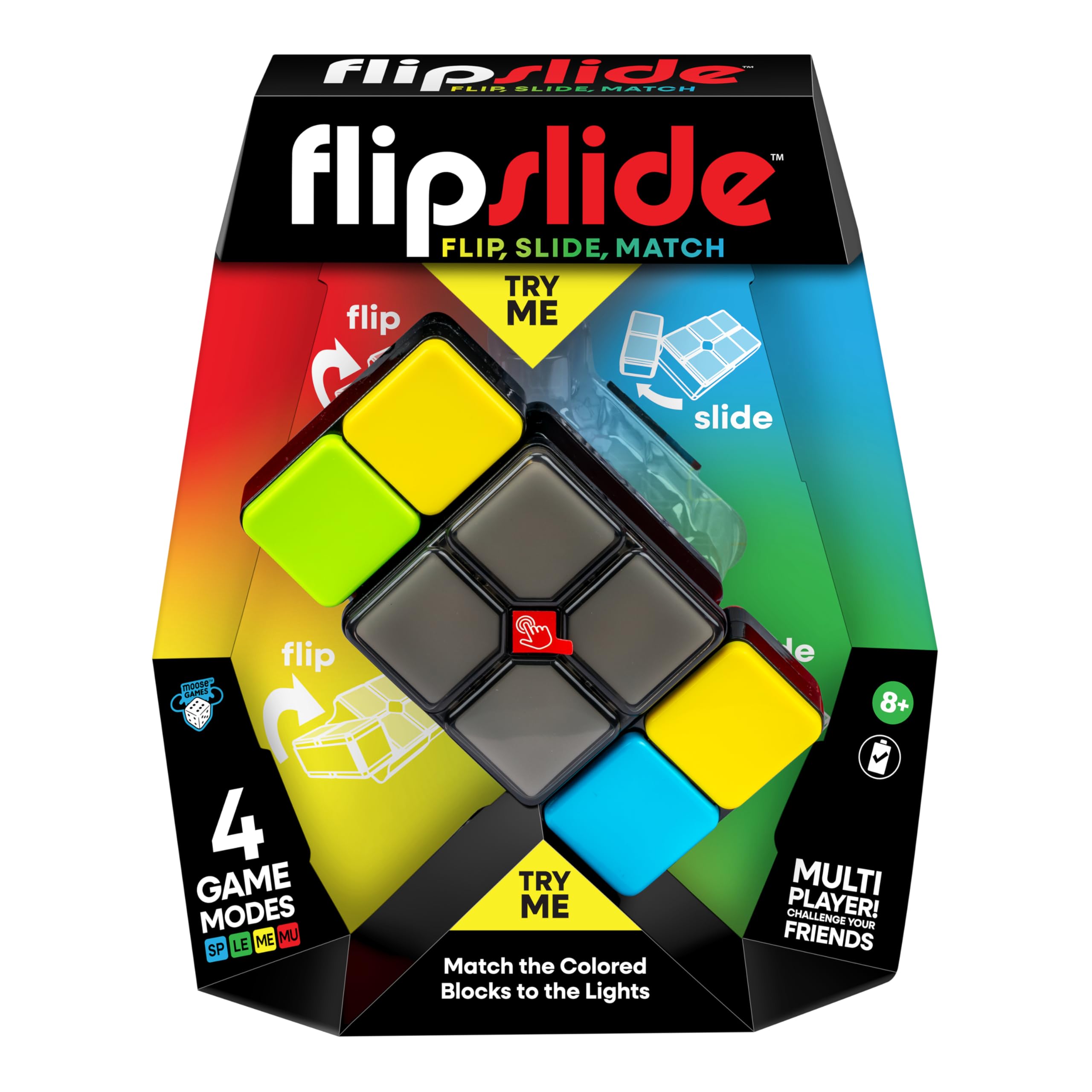
Moose Games Flipslide

93 /100
Lab Score Outstanding

Key details

Weight
4.23 oz
Players
Up to 4
Batteries
2 LR44 (included)
Game Modes
Speed, Multiplayer, Level, Memory
View on Amazon

Flip the unit to find the colour, slide the block to match the lights, and keep moving as the pace climbs. Flipslide is a physical puzzle first — you are working a slider with your thumb, not tapping a screen — and that is what separates it from the light-sequence games here: the hands are busy the entire time.

Four modes carry more of the load than most single-game units. Speed gives you a quick solo run, Level walks you up through harder stages, Memory turns it into a sequence challenge, and Multiplayer becomes a hot-potato round where the unit gets passed before the timer runs out. Kids who like cube puzzles take to it in minutes, and the level structure is why it does not get shelved.

The sound is the flaw. There is one volume level and no mute, so the beeps and the click of the slider carry across a back seat, and a car with two of these in it is a car you will hear from the front. That stops mattering in a playground and matters a great deal on a plane.

Where it works, it is the best value in this group: 120 grams, batteries in the box, and enough levels to keep a ten-year-old coming back for a second week. Buy it from a seller with an easy return and run a full round the day it lands — this is the pick most likely to need an exchange, and it is still the one we choose for a puzzle-minded kid.

Pros

  • Slider-based puzzle, not another screen
  • Four modes including multiplayer
  • 120 grams with batteries included

Cons

  • Units that stop responding soon after arrival
Our verdict

For a puzzle-minded kid, this is the one: four modes, a real slider to work, and a difficulty curve that keeps going.

Check Latest Price
7

Pocket Card Games

Trademark Poker 5-in-1 Handheld

89 /100
Lab Score Excellent

Key details

Games
Draw, Deuces, Bonus, 2X, 2x2 Bonus
Weight
3.84 oz
Dimensions
3.9 x 3.4 x 0.6 in
Auto Shut-Off
2 minutes idle
View on Amazon

Not every handheld here is a family game. This one is for the person who already knows what a Deuces Wild hand looks like: five video poker variants — Draw, Deuces, Bonus, 2X, and 2x2 Bonus — in a body the size of a coaster.

It measures 3.9 by 3.4 inches and weighs 3.84 ounces, so it disappears into a jacket pocket or a glove box and comes out in a waiting room without anyone noticing. One AA battery runs it, and the unit shuts itself off after two minutes idle — the difference between a dead game and a live one when you next reach for it.

The screen is small and the card text is smaller, which is the trade you make for the size: legible in good light, a squint in a dim room. The restraint is the appeal, though — no touchscreen, no app, no notifications, just buttons and a hand of cards that ends when you close it. For a commuter or a hospital waiting room, that is the whole point.

Pros

  • Five video poker variants in one unit
  • Pocket-sized at 3.84 ounces
  • Auto shut-off after two minutes idle

Cons

  • Small screen and small card text
  • One player only, no group play
Our verdict

For a card player who wants a solo time-killer, this is the pocket pick: five video poker games and a two-minute auto shut-off.

Check Latest Price

How We Tested 16 Handheld Games

We built a shortlist from current handhelds sold by major retailers, then filtered by age range, screen type, battery setup, size, and price. We also checked whether menus and buttons were clearly labeled in product photos and whether the game came with a charger or required one. From that list, we bought 16 units and used them for six months, rotating them through the same routines so every game got a fair shot.

Most testing happened where these games actually live: in a coat pocket on a morning commute, in a waiting room, in the back seat on a road trip, and on the couch after dinner. We started each unit cold and timed how long it took to get into a playable game without opening the manual, then noted whether the controls felt natural or needed constant correction. We held each one at arm's length and closer in to judge screen size and whether the display stayed sharp, then tilted it under a desk lamp and in daylight to see if glare washed out the action. Volume got the same treatment: we cycled through low, middle, and high in a quiet room and in a moving car, listening for tinny distortion or a lowest setting that still carried.

To test durability, we dropped each game from couch height onto carpet and wood, stuffed it in a backpack with keys, and checked the buttons and screen afterward. We also handed the games to a small group of adults and kids for 20-minute sessions and asked whether they'd spend their own money on one or give it as a gift. The games that kept us playing after the first week were the ones with gameplay that held up, not just a bright screen and a familiar logo.

How to Choose a Handheld Electronic Game

Start With Who Else Is Playing

Before anything else, count the players. A unit like the Bop It! or the Simon is built to be handed around: solo modes exist, but the design assumes an audience, and one unit serves a group better than four. A light-sequence game like the BrainBolt or a slider puzzle like the Flipslide works the other way — they are solo first, and the multiplayer mode is a bonus rather than the reason to buy.

If two children will share one unit, buy for the one who will actually hold it. A game that is too easy for the older kid gets abandoned; one that is too fast for the younger one gets abandoned faster.

Controls Matter More Than the Screen

Cheap handhelds fail at the controls before they fail anywhere else, and no amount of screen quality makes up for a pad that will not register. A joystick with real travel, a pad big enough to slap, or a slider that moves cleanly will do more for the experience than an extra half inch of display. Where a game depends on speed, big targets beat fine ones every time.

Layout matters too. A joystick on the left, as on a real arcade cabinet, is authentic and awkward for anyone raised on touch controls — worth knowing if the gift is for a child who has never used a stick.

Check the Volume Before You Commit

Sound is the specification people skip. Several units here have a single fixed volume with no mute, and none of them is quiet in a mechanical sense — a slider clicks, a pull knob gets yanked, a pad gets slapped. That is fine in a car and miserable on a plane or in a waiting room.

If quiet play matters, treat a mute or a volume control as a requirement rather than a nice-to-have, and expect the game to announce itself regardless.

Buy Where Returns Are Easy

These are inexpensive electronics with moving parts, and the failure pattern is consistent: a unit works or it does not, and the ones that fail tend to fail early. Shop where a return is simple, run the game through a full round the day it arrives, and keep the packaging until it has survived that round.

That single habit matters more than any specification on this page, because the difference between a great handheld and a frustrating one is often the same model on a different day.

Frequently Asked Questions

Final Verdict

For most households, the Bop It! is the handheld to buy. It plays with one person or six, nobody needs the instructions, and it is one of the least expensive picks here — a combination that makes it the easy default when you are not sure who will end up holding it.

If the person you are buying for would rather think than move, the Simon is the better fit: the same pass-it-around pleasure, built on memory instead of reflexes. And if they want actual Mario rather than a party trick, step up to the Game & Watch. That is a two-game console, not a toy, and it is priced like one.