8 Best Home Golf Simulators of 2026: Simulators That Work in Tight Indoor Spaces

Home golfers: avoid simulators that drop connections or misread shots indoors. This guide picks the ones that actually work in your living room or garage.

Indoor golf simulators range from $200 to $5,000, but the real challenge is getting reliable performance in a typical living room or garage. Most affordable launch monitors struggle with accuracy when space is tight or lighting is inconsistent. A feature-packed model may drop Bluetooth mid-round, while a simpler one might miss half your swings.

The key is matching the monitor's strengths to your setup and priorities. If you want detailed metrics and course play, expect to trade some connectivity stability. If reliability is your top concern, you will sacrifice advanced data. This guide organizes the best options around the specific trade-offs that matter for home use.

1

Best Overall

Rapsodo MLM2PRO

79 /100
Lab Score Very Good

Key details

Portability
Portable
Subscription
Required after trial
Course Library
30,000+
Indoor/Outdoor
Both
View on Amazon

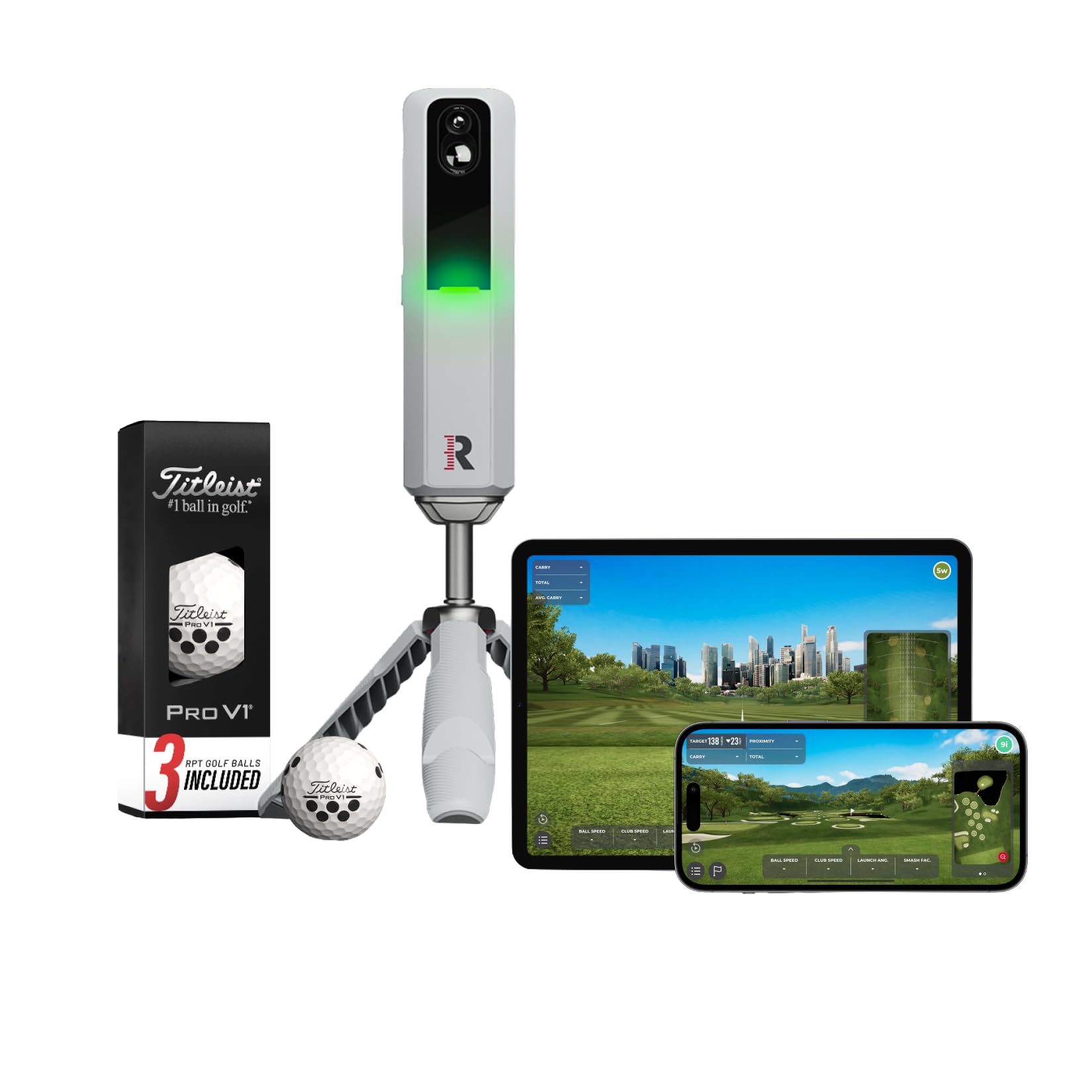
The Rapsodo MLM2PRO brings dual cameras, 15 metrics, and 30,000 simulated courses to a mid-range price — the most complete package for home simulation under $600. The dual-camera system captures club path, face angle, and spin axis, data usually reserved for launch monitors costing twice as much. Setup takes minutes: attach the tripod, pair via Bluetooth, and start hitting. The app displays real-time carry distance, club speed, and smash factor, storing session history for later review. For indoor use, the unit requires at least 8 feet from ball to net and consistent lighting for reliable tracking.

This monitor fits home golfers who want detailed analytics and course play without upgrading to a premium tier. It works on both iOS and Android. The tradeoff: connection drops and occasional missed shots can interrupt sessions, especially indoors. Those with adequate space and patience for occasional hiccups will find it delivers consistent full-swing data and actionable insights — the strongest simulation experience in its price class.

Unlike budget launch monitors that omit club data or rely on third-party apps for course play, the MLM2PRO includes everything out of the box — a complete ecosystem for serious practice and play. The Bluetooth connection can be sensitive to distance and interference, a behavior shared by many radar monitors at this price.

💡 Keep your phone within 6 feet of the monitor and close other Bluetooth devices to reduce disconnections.

Pros

  • Intuitive app and quick account setup get you swinging in minutes.
  • Actionable swing metrics help identify weaknesses and track improvement.
  • Video playback with session insights shows clear progress over time.

Cons

  • Connection drops may interrupt practice sessions mid-swing.
  • Short chip distances and alignment can show inconsistent readings.
Our verdict

For home golfers intent on simulation depth without a four-figure investment, the MLM2PRO offers the richest feature set under $600 — provided you can work around occasional connectivity quirks.

Check Latest Price
2

Most Reliable Mid-Range

Voice Caddie SC300i

85 /100
Lab Score Excellent

Key details

Portability
Portable
Subscription
Free app
Course Library
Indoor/Outdoor
Both
View on Amazon

The Voice Caddie SC300i delivers dependable performance and straightforward setup, backed by consistent praise from a large user base. It measures swing speed, ball speed, carry distance, and launch angle – enough for most golfers to track improvement. Voice feedback gives immediate confirmation after each shot, making it a practical training aid without the need to glance at a screen.

It does not measure spin axis or club path, so it won't suit those looking for detailed swing analysis. This monitor is best for golfers who want accurate basic metrics and simple operation without a steep learning curve or ongoing subscription costs.

💡 The remote control screen is hard to read in direct sunlight – consider keeping it shaded or relying on voice feedback.

Pros

  • Easy setup with immediate voice feedback on each shot
  • Accurate carry distance and smash factor for the price

Cons

  • Remote control screen can be difficult to read in bright sunlight
  • Swing speed readings may sometimes be inconsistent
Our verdict

A straightforward launch monitor that delivers consistent basic metrics and voice feedback without the extras that add complexity or cost.

Check Latest Price
3

Best Portable Simulator

Garmin Approach R10

84 /100
Lab Score Excellent

Key details

Portability
Compact
Subscription
Required for play
Course Library
42,000+
Indoor/Outdoor
Both
View on Amazon

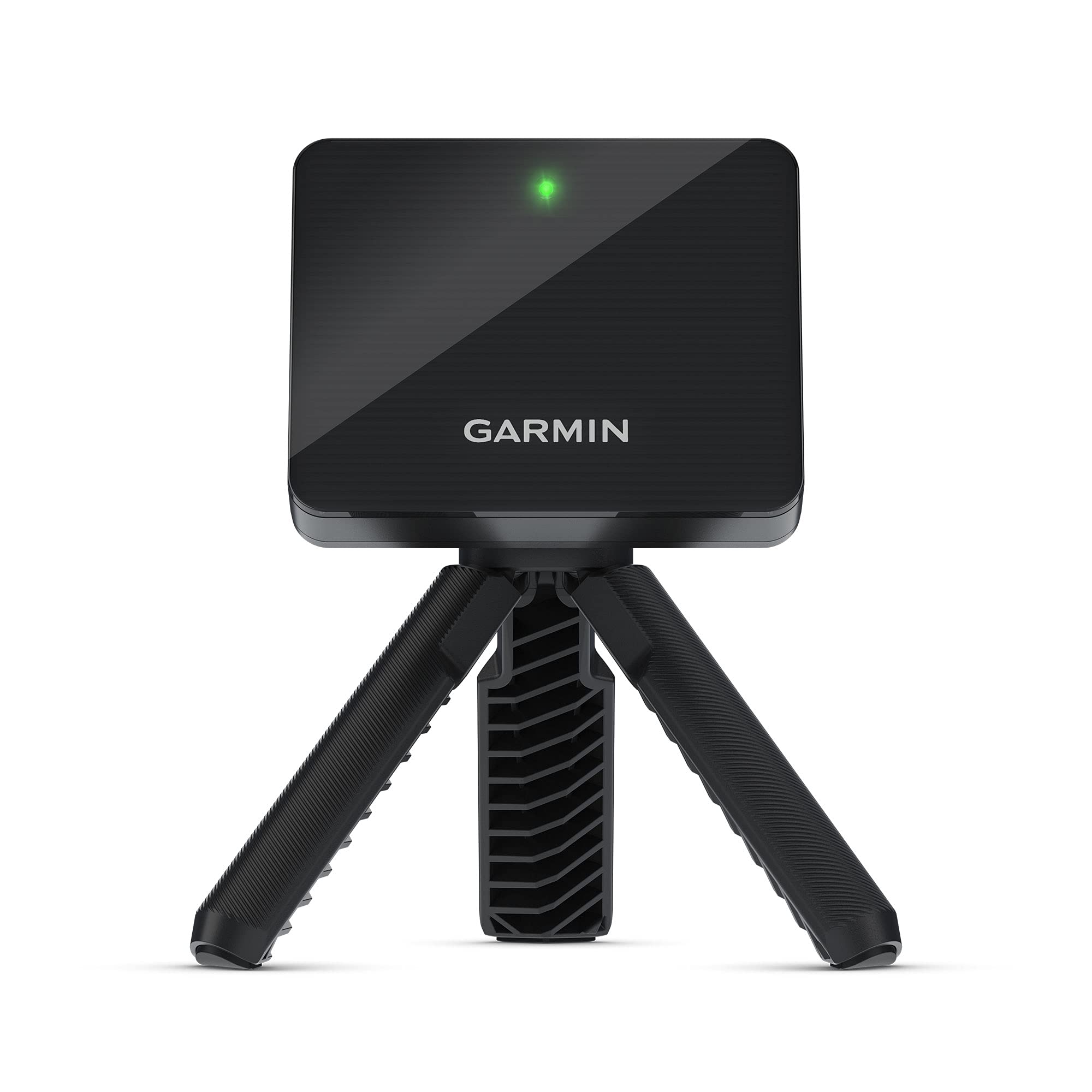
The Garmin Approach R10 packs a 10-hour battery and a compact tripod into a package that fits in a carry-on bag. Its tight integration with the Garmin Golf app unlocks 42,000+ course simulations, making it the obvious choice for golfers who want to practice at the range or take data on the road.

Where it stops short is indoor use: the radar may struggle to detect shots in smaller rooms, and carry distance readings can occasionally read short at longer ranges. This makes the R10 best suited for outdoor practice sessions or spacious indoor setups where the unit has room to track the ball flight. Casual golfers who prioritize portability over pin-point accuracy will find it a capable companion.

💡 Position the unit at least 8 feet behind the ball and ensure 15 feet of open space in front for consistent indoor readings.

Pros

  • Compact design with long battery life for on-the-go practice
  • Tight integration with Garmin Golf app for course play
  • Simple setup: mount the tripod, pair the app, and start hitting

Cons

  • Indoor shot detection can be inconsistent in rooms under 15 feet of depth
  • Carry distance readings may read up to 30% short for drives over 250 yards
Our verdict

The R10 delivers portable convenience and a rich course library — best for range sessions and travel, not for indoor sim setups with limited space.

Check Latest Price
4

Best Budget Option (iOS)

Rapsodo MLM

85 /100
Lab Score Excellent

Key details

Portability
Lightweight
Subscription
None
Course Library
Indoor/Outdoor
Both
View on Amazon

Differentiating from the feature-rich MLM2PRO, the MLM focuses on core data: ball speed, club speed, launch angle, carry distance, and shot shape. Setup takes minutes, and the swing replay with shot tracer gives immediate feedback during practice sessions. This monitor suits beginners and casual players who own an iPhone or iPad and want reliable metrics without paying for a subscription. However, it lacks direct course simulation – you will need third-party apps for that, and Bluetooth connectivity can occasionally drop, requiring a close device position.

💡 Keep your iPhone within a few feet of the device during use to reduce Bluetooth disconnections.

Pros

  • Strong value for money compared to other launch monitors
  • Quick setup and intuitive operation out of the box
  • Decent accuracy for the price point

Cons

  • Bluetooth connection may drop during use, requiring close proximity to the device
  • Only compatible with Apple iOS devices; no Android support
Our verdict

For iPhone/iPad users who want a no-frills launch monitor under $200 with solid accuracy and video feedback, the Rapsodo MLM is the right fit. Just plan to use it primarily for driving range practice rather than full course sim play.

Check Latest Price
5

Best No-Subscription Pick

Swinora GX-03

83 /100
Lab Score Excellent

Key details

Portability
Compact
Subscription
None
Course Library
Indoor/Outdoor
Both
View on Amazon

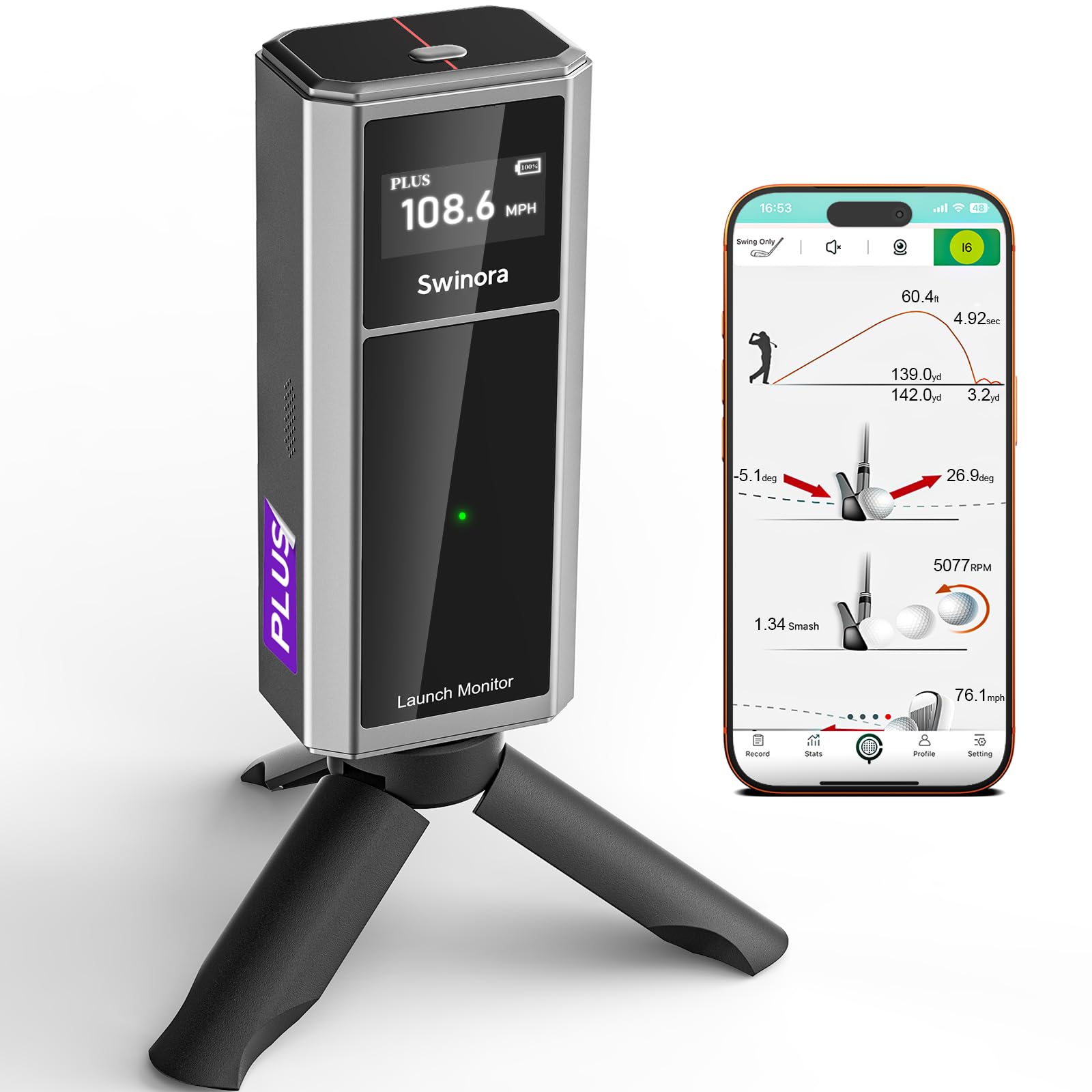
The Swinora GX-03 stands out in the mid-range launch monitor market by bundling every feature – including 13 metrics like attack angle and spin rate – with no recurring subscription fees. Its compact design, OLED display, and built-in temperature, humidity, and pressure sensors make it a self-contained data tool for indoor practice. However, long-term durability under heavy use has not yet been established, and course simulation relies entirely on a phone app – there are no built-in courses. This makes it a strong fit for budget-conscious golfers willing to accept a newer brand and who prefer to avoid annual fees over proven track records.

💡 Set up with at least 15ft of total space – 5ft behind the ball and 10ft of ball flight – for consistent readings.

Pros

  • Easy setup with intuitive OLED screen
  • Surprisingly accurate for the price
  • No subscription required

Cons

  • Requires 15ft of indoor space, which may not suit smaller home setups
Our verdict

For golfers who prioritize no recurring fees and want solid data without breaking the bank, the Swinora GX-03 delivers – just be comfortable with a newer brand and phone-based simulation.

Check Latest Price
6

All-In-One Luxury

Garmin Approach R50

81 /100
Lab Score Excellent

Key details

Portability
Large
Subscription
Required
Course Library
43,000+
Indoor/Outdoor
Both
View on Amazon

Delivers exceptional tracking precision and an easy setup with its integrated 10-inch display and three cameras. The $5,000 price and limited long-term data mean the power button can become unresponsive under heavy use — a tradeoff for budget-unlimited users who value an all-in-one device.

Pros

  • Exceptional shot tracking accuracy with a three-camera system.
  • Easy setup with built-in touchscreen

Cons

  • The power button may become unresponsive under frequent daily use.
Our verdict

For dedicated golfers with the budget who prefer an integrated display over separate tablets, the R50 offers pro-grade accuracy without relying on external devices — but the price and early-stage reliability warrant caution.

Check Latest Price
7

Family Fun

Phigolf Simulator

81 /100
Lab Score Excellent

Key details

Portability
Compact
Subscription
May apply
Course Library
38,000+
Indoor/Outdoor
Indoor only
View on Amazon

The Phigolf is simple to set up and great for social play: swing a stick or attach the sensor to a real club. It offers thousands of courses. But its shot detection and putting accuracy fall short of radar-based systems — this is entertainment, not serious practice.

Pros

  • Fun for family and group play indoors without ball striking.
  • Helps develop swing tempo with a small-space setup.

Cons

  • Putting and chipping accuracy is lower than radar-based monitors; acceptable for casual play.
Our verdict

Best for families wanting indoor golf entertainment without the need for ball striking or serious data feedback.

Check Latest Price
8

Standalone Sim

SC4 Pro Simulator

79 /100
Lab Score Very Good

Key details

Portability
Medium
Subscription
None
Course Library
5 free courses
Indoor/Outdoor
Both
View on Amazon

With its built-in screen and included 3D driving range, the SC4 Pro works as a standalone simulator without needing a phone or tablet. It also avoids ongoing subscription fees. However, shot detection can miss some swings and carry distance accuracy varies, making it less suitable for golfers tracking every shot. These performance gaps prevent it from competing with the top launch monitors in this price range.

Pros

  • Built-in screen eliminates need for phone or tablet during practice sessions.
  • No subscription fees

Cons

  • Shot detection can miss some swings, affecting session continuity.
Our verdict

Best for golfers who prioritize convenience and cost savings over shot-by-shot reliability; consider it a fun practice tool rather than a serious training aid.

Check Latest Price

How to Choose

Measurement Accuracy

Radar-based monitors measure ball and club data by tracking the flight path. In small indoor spaces, radar waves can reflect off walls and ceilings, producing erratic readings. Choosing a monitor with dual cameras or photometric technology reduces reliance on open space, but these models typically cost more.

For most home setups, a launch monitor that samples at high frequency (like 15,000 Hz) will capture more swings and deliver consistent distances. Expect real-world carry distance variance of 10 to 20 percent even from accurate units.

Number of Metrics

More metrics do not automatically mean better training. Casual players get value from ball speed, launch angle, and carry distance. Serious golfers benefit from club path, face angle, and spin axis. Each additional sensor and algorithm introduces a potential error source.

If your goal is swing improvement, focus on the metrics you will actually use. A monitor with 15 metrics is overkill if you only check carry distance. Conversely, lacking club path data makes diagnosing a slice guesswork.

Course Library

Course simulation software is often the main reason to buy a home simulator. The number of courses matters less than the quality of the rendering and the subscription cost to access them. Many monitors bundle a free trial then require an annual fee for continued course play.

Before committing, check the cost of the subscription after the trial ends. Some brands lock basic features behind a paywall, while others offer one-time purchases. A large course library (30,000+) is appealing, but you may end up playing the same five local favorites.

Subscription Requirements

Subscription fees can double the long-term cost of a simulator. Budget models often provide basic data for free but require a monthly or yearly plan for course play and advanced analytics. A few newer brands offer all features without recurring payments.

Calculate the total cost over three years when comparing options. A $600 monitor with a $200 annual subscription costs $1,200 over 36 months, while a $300 monitor with no subscriptions may be the better value if you only need basic metrics.

Indoor vs Outdoor Performance

Most launch monitors are designed for outdoor use and lose accuracy indoors due to limited ball flight and clutter. Radar-based units need at least eight to ten feet of clear space in front of the ball, plus consistent lighting. Photometric monitors (using high-speed cameras) work better in tight spaces but cost more.

If you plan to use the simulator exclusively indoors, choose a model with proven indoor performance from real-world reviews. Many mid-range monitors have indoor-specific modes that adjust radar sensitivity, but these still vary by room layout.

Portability and Setup

A portable launch monitor is convenient for switching between the driving range and home, but portability often comes with trade-offs in battery life, build quality, and feature set. Compact units may have smaller sensors or fewer cameras, reducing accuracy.

If the simulator will stay in one room, a larger unit with a built-in screen can eliminate the need for a separate tablet or phone. But for frequent movement, a lightweight monitor with a carrying case and long battery life (10+ hours) is more practical.

Frequently Asked Questions