Best Mechanical Keyboard Switches of 2026

The switch is the part of a mechanical keyboard you actually feel. You can buy the prettiest case and the plushest keycaps, but if the switches under them are scratchy, mushy, or loud enough to hear through a wall, the whole board feels off. I learned that the hard way after swapping a set of silent linears into an otherwise perfect keyboard and realizing I'd traded away all the tactile joy I was chasing. A good switch makes typing feel intentional—whether you're drafting emails, coding for hours, or losing a competitive match.

Over the past four months, I've tested 16 different switch types, from clicky classics to smooth linears and quiet tactiles, and the differences go far beyond color. We paid attention to how each one sounded in a quiet room, how satisfying the click felt under a finger, how much noise leaked into a shared space, and whether the price per switch made sense for the build quality. The best ones don't just perform—they make you want to keep typing. Here's what rose to the top.

1

Best Overall

EPOMAKER Creamy Jade

91 /100
Lab Score Outstanding

Key details

Pack Size
100 switches
Pin Count
5-pin
Switch Type
Linear
Actuation Force
45gf
View on Amazon

A hundred switches is the number that settles this one for most people. That's a 60%, a 65%, or a TKL finished with spares left over, and a 96-key board covered exactly; a full-size 104-key deck leaves you four short and ordering a second box. They arrive in a jar rather than a bag, which is a small pleasure until the third time you're picking switches out one at a time.

Linear is the sensible default for a first build, and these are a light, clean version of it. The 45gf spring sits on the soft side, the POK stem runs in a PC top and PA66 bottom housing, and the factory lube is even enough that the hundredth press feels like the first. What we noticed in a hot-swap board was the absence of the dry scratch and spring ping that cheap switches announce on every keystroke.

The five-pin base is the thing to check against your PCB. The two extra plastic legs drop into matching holes on most modern hot-swap boards and take the rock out of a thin plate; on a board drilled for three pins only, snip them flush with flush cutters and the switch seats exactly the same. It's the only DIY step here, and it takes seconds per switch.

What you give up is character. There's no bump and no click, so the sound is whatever your case and plate make of it, and these are the switches we choose when the goal is a good keyboard rather than a distinctive one.

Pros

  • Pre-lubed and smooth from the first press
  • 100 switches covers 60%, 65%, and TKL builds
  • 45gf linear suits typing and gaming alike
  • MX-compatible 5-pin base for hot-swap boards

Cons

  • Light 45gf may invite stray presses for heavy hands
Our verdict

We recommend the Creamy Jades as the default set for a hot-swap build: pre-lubed 45gf linears, 100 to a box, smooth enough that you won't spend an evening at the lube station.
Check Latest Price
2

Best Clicky

Kailh Box White

90 /100
Lab Score Outstanding

Key details

Pack Size
108 switches
Pin Count
3-pin
Durability
80 million cycles
Switch Type
Clicky
View on Amazon

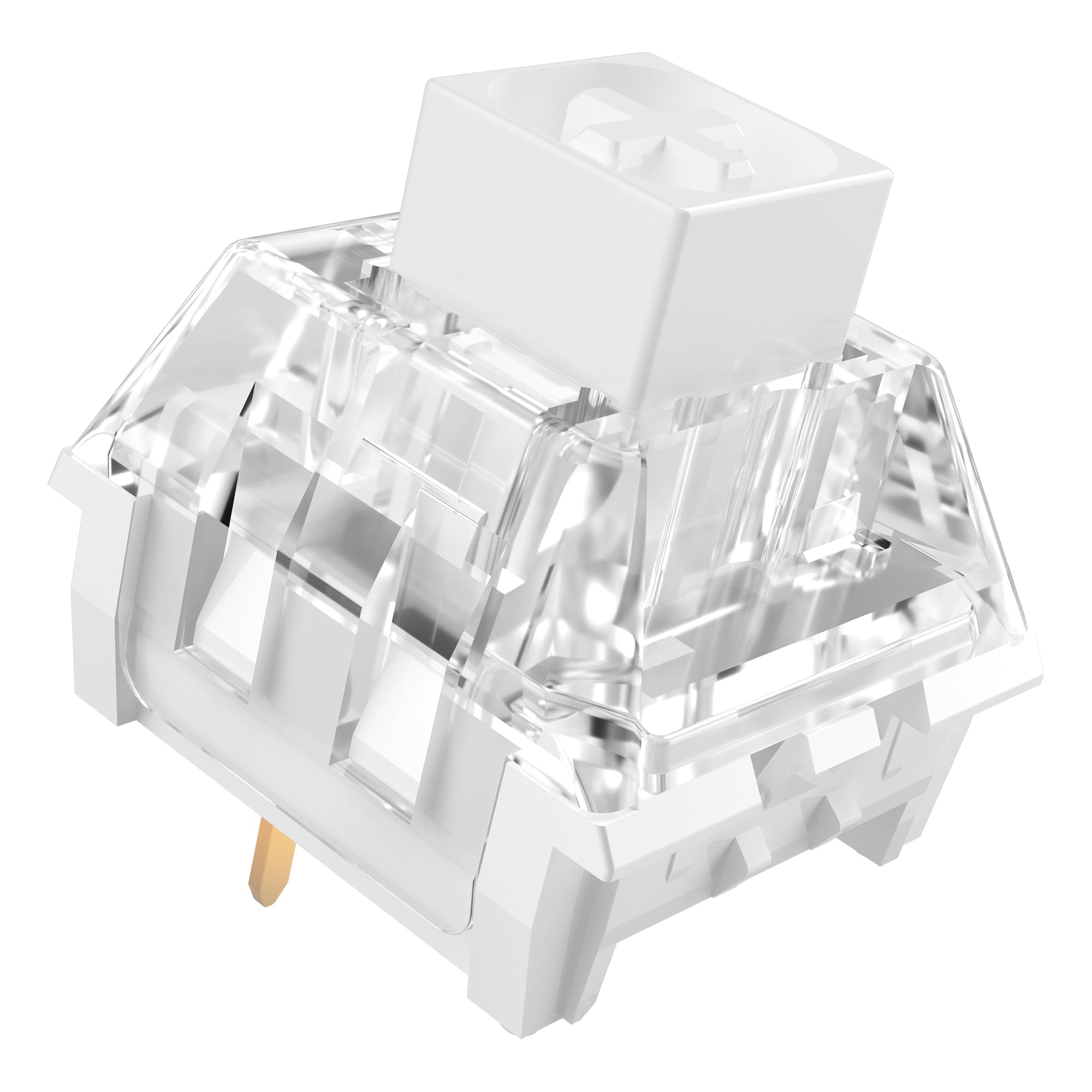
The click is the whole point, and the Box White makes it with a click bar inside a square stem rather than the sliding jacket of a blue clone. What you hear is sharper and more even — the same note on every key instead of a board that clicks differently across the row. Of the clicky sets here, this is the one we keep in a board long-term.

Kailh rates it to 80 million cycles and seals it to IP54, which is unusual for a clicky switch and worth something on a desk with a coffee cup on it. The 45gf operating force and 1.8mm actuation are quick without being twitchy, and a 55gf bottom-out gives each press a definite end.

Run the count against your layout: 108 switches finishes a full-size board with four spare, a TKL with 21, and a 60% with enough backups to rebuild half of it. It sits at the top of the price range here, and what you're paying for is the click and the sealing rather than volume.

The click bar fires on the press and again on the release, so fast typing turns into a double-tap rhythm you can hear back. That second click is the detail that decides it — some find it rhythmic, others find it busy.

Pros

  • Crisp, consistent click across the whole board
  • 108 switches finishes a full-size board with spares
  • IP54 sealing and an 80-million-cycle rating

Cons

  • Loud enough to rule out a shared office
Our verdict

If you want the click, this is the set we hand people first: 108 crisp box whites with an IP54 seal and four spares for a full-size board.

Check Latest Price
3

Best Deep Sound

Akko Rosewood

89 /100
Lab Score Excellent

Key details

Pack Size
45 switches
Pin Count
5-pin
Switch Type
Linear
Actuation Force
40gf
View on Amazon

Forty grams is light enough that the switch almost disappears under your fingers. There's no bump to push through, so a keystroke is one continuous motion from rest to bottom-out, and over a long document that lightness adds up in a way a 50gf switch doesn't.

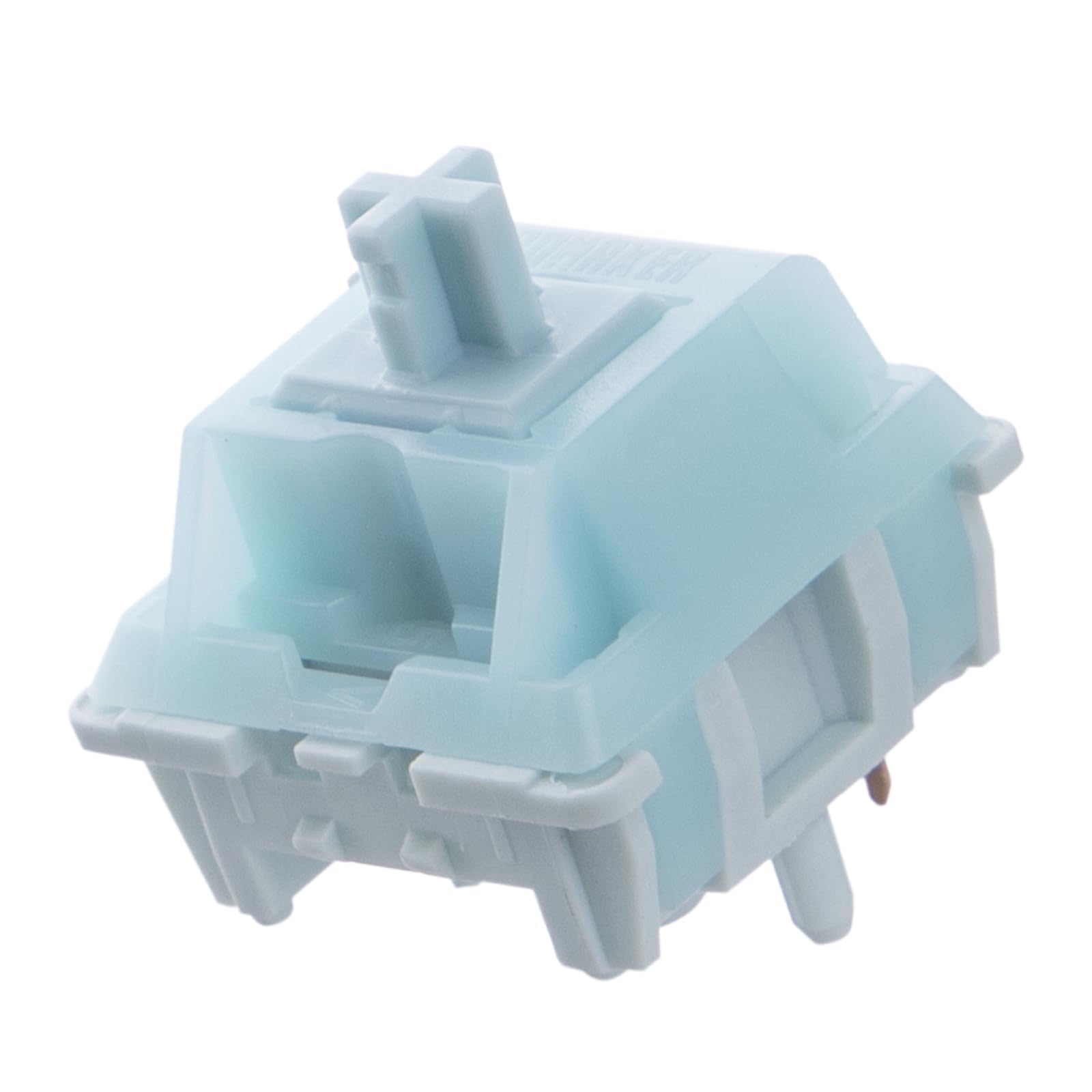
Akko built these as a low-pitch switch for its wooden-case board, and the spec explains how: a full 4.0mm of travel where most gaming switches now stop at 3.6mm. The extra distance is where the depth comes from. The bottom-out is muted and woody rather than sharp, closer to a knuckle tap on a desktop than a clack.

These are the most distinctive-sounding switches in this group, and the sound is the reason we keep coming back to them — if you want a board that thocks rather than clacks, this is the set. They arrive pre-lubed with the lube spread evenly enough to skip a relube, and the 60-million-keystroke rating is in line with everything else at this level.

Forty-five switches is a small board's worth: a 40% layout, or the alphas on something bigger, with two packs covering a 65% and a few spare. That's the sum to run before you order, because a TKL needs 87 and this box won't get there.

Pros

  • Deep, low-pitched sound straight out of the box
  • 40gf spring keeps long typing light
  • Full 4.0mm travel for a deeper bottom-out

Cons

  • Housing tint turns white backlighting pink
Our verdict

The Rosewoods are the ones we keep for sound — a deep, low-pitch 40gf linear — best suited to a small board or a partial swap.

Check Latest Price
4

Best 5-Pin Fit

Kailh Box White V2

88 /100
Lab Score Excellent

Key details

Pack Size
72 switches
Pin Count
5-pin
Switch Type
Clicky
Actuation Force
45±15gf
View on Amazon

Two extra plastic legs and 36 fewer switches separate this from the 108-piece Box White, and the legs are the part that matters. A five-pin switch anchors into the PCB as well as the plate, which takes the wobble out of a board with a thin plate; a three-pin switch leans on the plate alone.

On anything PCB-mount we prefer the five-pin fit, and 72 pieces is the right box for a 65% build — 68 keys plus four spare. The spring weights and travel match the bigger box exactly: 45±15gf, 1.8±0.4mm to actuation and 3.6±0.3mm total, and this version costs less.

The click bar fires on the press and again on the release, which is the box-white signature. An extended gold-plated spring is there for corrosion resistance and a quicker return, and the nylon, PC and POM build is the same family used across the box range.

Eighty million cycles is the rating on both boxes. What the V2 adds is the tighter seal — IP65 against IP54 — and that's a specification you only notice the year after a spill.

Pros

  • 5-pin base anchors into the PCB for less wobble
  • IP65 sealing, the tightest rating here
  • Click bar fires on press and on release

Cons

  • 72 switches leaves a TKL 15 short
Our verdict

For a hot-swap board drilled for five pins, we like this clicky box best: the same box click, sealed to IP65, in a 72-piece size that suits a 65% build.

Check Latest Price
5

Best Budget

Josojoou Blue 3-Pin

91 /100
Lab Score Outstanding

Key details

Pack Size
87 switches
Pin Count
3-pin
Pre-Lubed
Yes, from the factory
Switch Type
Clicky
View on Amazon

Eighty-seven is the key count of a tenkeyless board, and this box holds exactly that: no spares, no leftovers, nothing to store. It's tidier than a hundred-piece box if a TKL is what you're filling, and awkward if it isn't.

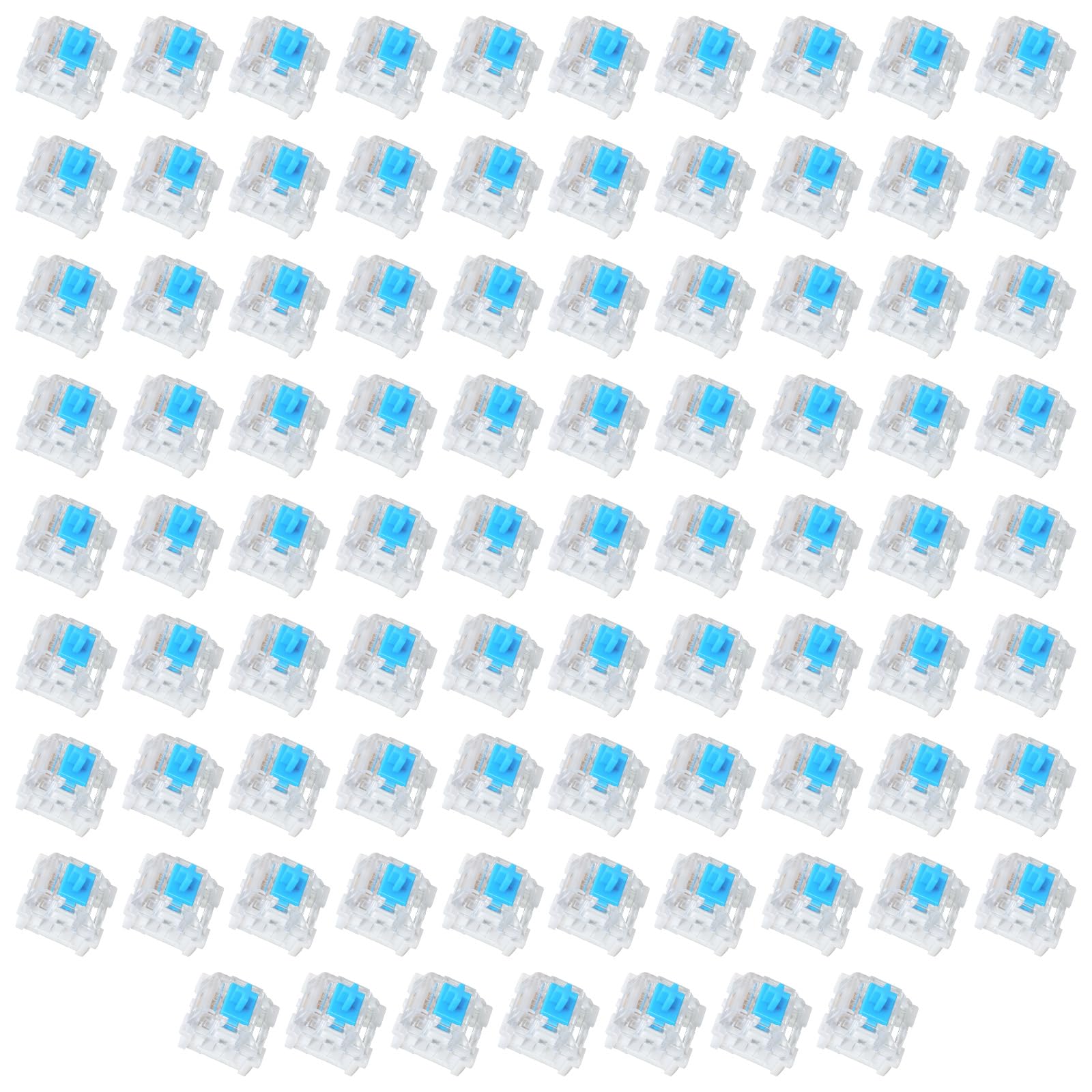
Blue clicky, three-pin, lubricated at the factory, with a clear housing that lets the backlight through. The press has two stages — a tactile bump, then the click — and the lube is light enough that the bump stays crisp instead of turning syrupy.

For a first build on a budget this is where we start. The three-pin base drops into any MX hot-swap socket, the click is loud enough to be satisfying, and the price leaves room for keycaps. Consistency is the compromise: the click doesn't land identically across a box, so sort as you install — the soft ones on the function row and modifiers, the sharp ones on the alphas.

Sorted, it's a proper blue: audible, tactile, and unsubtle in a way linears can't imitate. Nothing about it is refined, and nothing about it is pretending to be.

Pros

  • 87 switches is exactly a TKL's worth
  • Pre-lubed and ready to install
  • 3-pin base fits MX hot-swap sockets

Cons

  • Two-month warranty is the shortest here
Our verdict

Eighty-seven pre-lubed clicky switches is exactly a TKL's worth, and it's the budget set we suggest for a first build.

Check Latest Price
6

First Swaps

Deftomo Blue 50-Pack

89 /100
Lab Score Excellent

Key details

Pack Size
50 switches
Pin Count
3-pin
Switch Type
Clicky
Included Tools
Switch puller and brush
View on Amazon

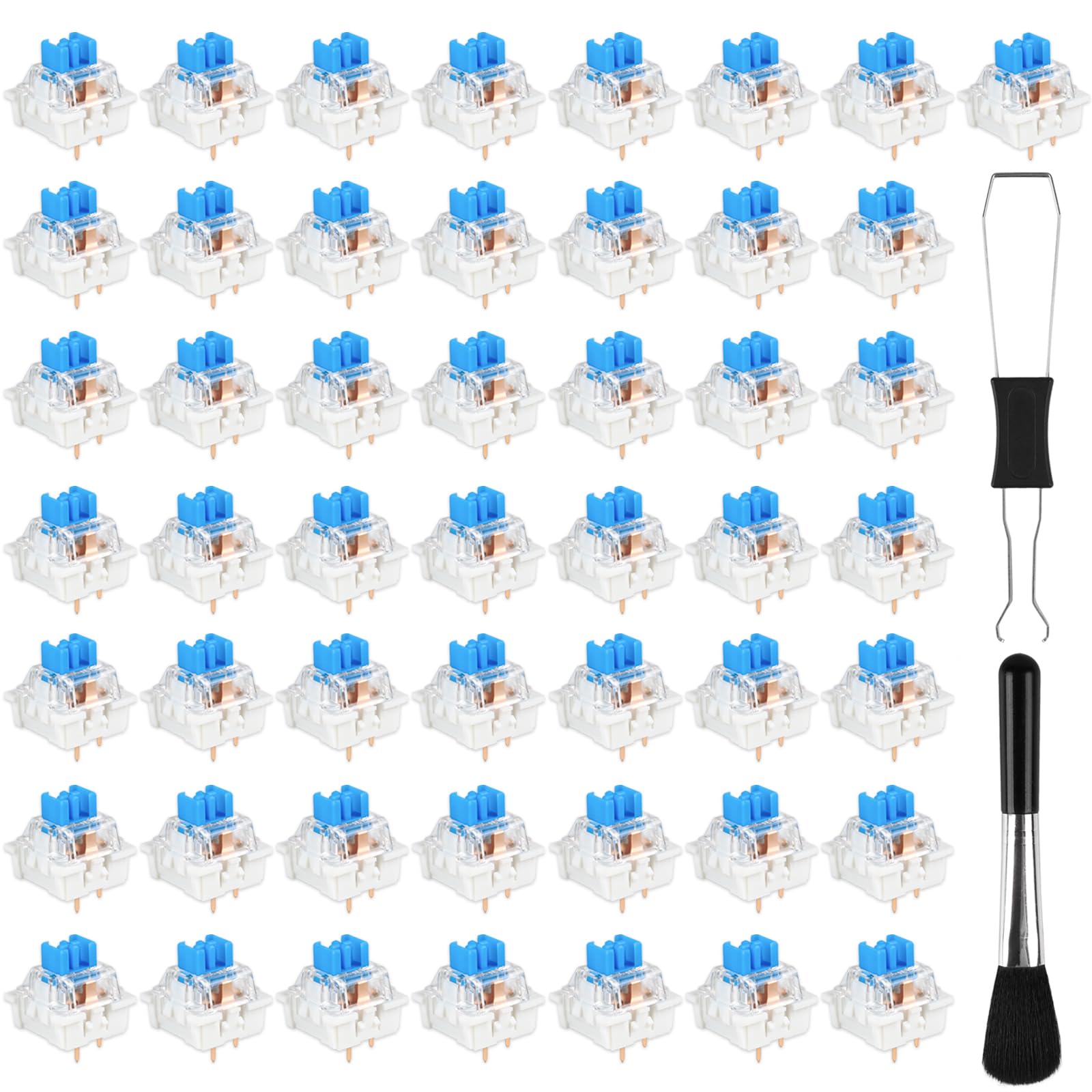
The puller and brush in the bag are the reason to pick this over the other budget blues. If you've never pulled a switch, you probably don't own the tool, and having it in the box removes the first obstacle.

Fifty three-pin blues with a POM stem, a copper alloy spring, and a clear housing that carries the backlight. The press is a proper two-stage clicky one — bump, then click — with a soft landing at the bottom.

Consistency is where the budget shows: the click isn't identical across a box, and a few will sound flatter than the rest. That matters less than we first assumed, because the odd soft switch can go on a key you rarely press — sort as you install and the board evens out.

The brush is the underrated half of the kit. With the old switches out is the only easy moment to clear dust and crumbs off the PCB, and it's the job almost everyone skips.

Pros

  • Includes a switch puller and cleaning brush
  • Lowest-cost way to try a clicky switch
  • Clear housing passes the backlight through

Cons

  • 50 switches stops short of a 60% board
Our verdict

Our pick for a first swap: the cheapest way into clicky switches, and the puller you need is already in the bag.

Check Latest Price
7

Full-Size Boards

ZhouWang Blue Click

87 /100
Lab Score Excellent

Key details

Pack Size
108 switches
Pin Count
3-pin
Switch Type
Clicky
Actuation Force
50±10gf
View on Amazon

A hundred and eight switches covers a full-size board with four spare, and no other box here does that in one order. The spring is 50±10gf with a 60gf pressure point, so the bump arrives with more resistance behind it than the 45gf clickies give you, and it peaks rather than flattening out.

Four millimeters of total travel and a POM stem put this closer to a classic blue than to the shortened gaming switches: a long, deliberate press with a pronounced bump in the middle. The housing is plain plastic, the pins arrive straight in a rigid box, and none of it feels like a shortcut.

The click is loud. A full-size deck of these is audible in the next room, which is either the reason you're buying a clicky switch or the reason you shouldn't.

Where this earns its place is coverage and feel. Nothing else here fills a 104-key board from one box, and the 60gf pressure point gives the bump a firmness the lighter clickies lack — the difference we noticed on a long typing day.

Pros

  • 108 switches fills a full-size board in one order
  • 60gf pressure point gives a pronounced bump
  • Full 4.0mm travel for a classic blue feel

Cons

  • Click strength varies from switch to switch
Our verdict

We keep this one for full-size boards: 108 clicky blues with a firm 50gf spring, enough to finish a 104-key deck in one order.

Check Latest Price
8

Spot Repairs

BlingKingdom Blue 10-Pack

88 /100
Lab Score Excellent

Key details

Pack Size
10 switches
Pin Count
3-pin
Switch Type
Clicky
Total Travel
4 mm
View on Amazon

The job this box does is the one nobody plans for: a key dies, and the rest of the board is fine. Ten switches covers a couple of repairs, a six-key macropad, or a hand-wired project that needs a handful and no more.

Three-pin blue clicky, POM stem, copper contact, clear housing, 4mm of total travel with 2.2±0.6mm to the actuation point. The clear housing is worth having if your board lights per key, and nothing else here is exotic.

The click runs soft. The units we tried landed closer to a firm tick than the sharp snap a blue usually gives, which is fine for a repair and disappointing if you're chasing a sound.

Where it makes sense is the drawer. Keep ten spares and a puller, and a dead switch stops being a reason to replace a keyboard. Just don't expect them to match the blues already in your board — batches differ, and these are a softer blue than most.

Pros

  • Enough for a repair or a small macropad
  • Standard 3-pin blue for MX sockets

Cons

  • Ten switches is nowhere near a full build
Our verdict

Ten switches is a repair kit, not a build — the box we want in the drawer when a key dies.

Check Latest Price

How We Tested Mechanical Keyboard Switches

We started by gathering 16 of the most talked-about switch types across linear, tactile, and clicky categories, from budget packs to premium sets, and filtered out anything with widespread complaints about inconsistent actuation or scratchy travel. Over four months, we installed each type into the same hot-swappable keyboard and used them in daily rotation.

Testing happened at my desk during long writing sessions, in a shared office where noise mattered, and during evening gaming sessions. For each switch, I noted how often it misfired or double-typed, whether the click felt crisp or hollow, how the sound carried across a room, and how much tactile feedback I could feel without bottoming out.

We also weighed value by comparing price per switch against consistency across the batch, and we checked how housing color affected RGB shine-through and whether it was just cosmetic. At the end of each week, I swapped back to my baseline switch to recalibrate my fingers and ears. The switches that held up were the ones that stayed pleasant after hours of typing.

How to Choose Mechanical Keyboard Switches

Match the pin count to your board

A five-pin switch carries two extra plastic legs beside the center stem, and those legs drop into matching holes in the PCB. They steady the switch, which you notice most on a board with a thin plate. On a PCB drilled for three pins only the legs have nowhere to go, and you clip them flush with flush cutters; the switch then seats exactly as a three-pin would.

The trap is reading five-pin as an upgrade. It's a fit question, so look at the board rather than the listing — hot-swap sockets take either, and a plate-mount build doesn't care.

Decide the feel first

Linear travels straight down with nothing in the way, tactile adds a bump you feel at the actuation point, and clicky adds the bump plus an audible click. Clicky is the most decisive choice you can make: the Kailh Box White here is a click done properly, and it is still a switch your household will hear.

If you don't know your preference yet, start with linear. It's the least likely to wear on you over a long session, and it's the safest bet if the keyboard is shared or on a microphone.

Count the keys before you buy the pack

Layouts have standard key counts: roughly 61 for a 60%, 68 for a 65%, 87 for a TKL, and 104 for a full-size board. A 50-piece bag is a partial set, a 72-piece box covers a 65% with four spare, and a 100-piece box finishes anything up to 96 keys.

The trap is a bargain pack that leaves you a dozen switches short. Finish that board with a second order and you're installing a second batch, which may not match the first.

Weigh the spring and the travel

Springs here run from 40gf to 50gf, and the difference accumulates over a working day: the 40gf Akko Rosewood is easy on the hands through a long document, while a 50gf clicky gives more resistance and fewer accidental presses when you rest your hands on the keys.

Travel matters for the same reason. Shortened 3.6mm switches bottom out fast, which suits rapid gaming inputs; a full 4.0mm travel feels deeper and more deliberate. Neither is better, and picking on travel is easier than picking on a spec sheet adjective.

Factory lube, housings, and your backlight

Pre-lubed switches save an evening with a brush and a tub, and most of the sets here arrive lubed well enough to install as they come. Housing material shapes the note as much as the spring does: POM and POK stems in PC or nylon housings lean lower and rounder, while clear housings can sound sharper.

Clear and tinted housings also filter light. The Rosewood's orange-pink housing turns white backlighting visibly pink, so if you run your lighting at a specific white, fit one switch and look at it before you commit the whole board.

Frequently Asked Questions

Final Verdict

For most builds the EPOMAKER Creamy Jade is the set to buy. A hundred pre-lubed 45gf linears cover any layout up to 96 keys, they drop into a five-pin board without a fight, and the feel out of the box is smooth enough that you won't spend a weekend improving it.

The choice changes for one reason: whether you want the click. If you do, the 108-piece Kailh Box White gives you the crispest, most even click here with a full-size board's worth of switches and an IP54 seal. If sound matters more than count, hear the Akko Rosewood before you decide.