13 Best Solo Board Games of 2026: Which Solo Modes Truly Deliver

From relaxing puzzles to brain-burning strategy, find the best solo board games that turn a solo evening into a full gaming experience—without compromise.

A '1 player' label on a box doesn't guarantee a good solo game. Many multiplayer board games tack on a solo variant as an afterthought, with clunky automata or unbalanced scaling that leaves you managing a spreadsheet instead of playing a game.

This guide cuts through that noise, focusing on games where solo play feels intentional—whether it's a dedicated solo design or a multiplayer game that nailed its single-player mode. We've prioritized replayability and design intent because a game that grows stale after three plays is just shelf clutter.

Your choice comes down to the kind of evening you want: a relaxing puzzle that unwinds the day, or a deep strategic challenge that burns the midnight oil. The picks that follow are grouped by playstyle so you can match the game to your mood. The best solo board game is the one you'll pull off the shelf again and again.

1

Best Overall

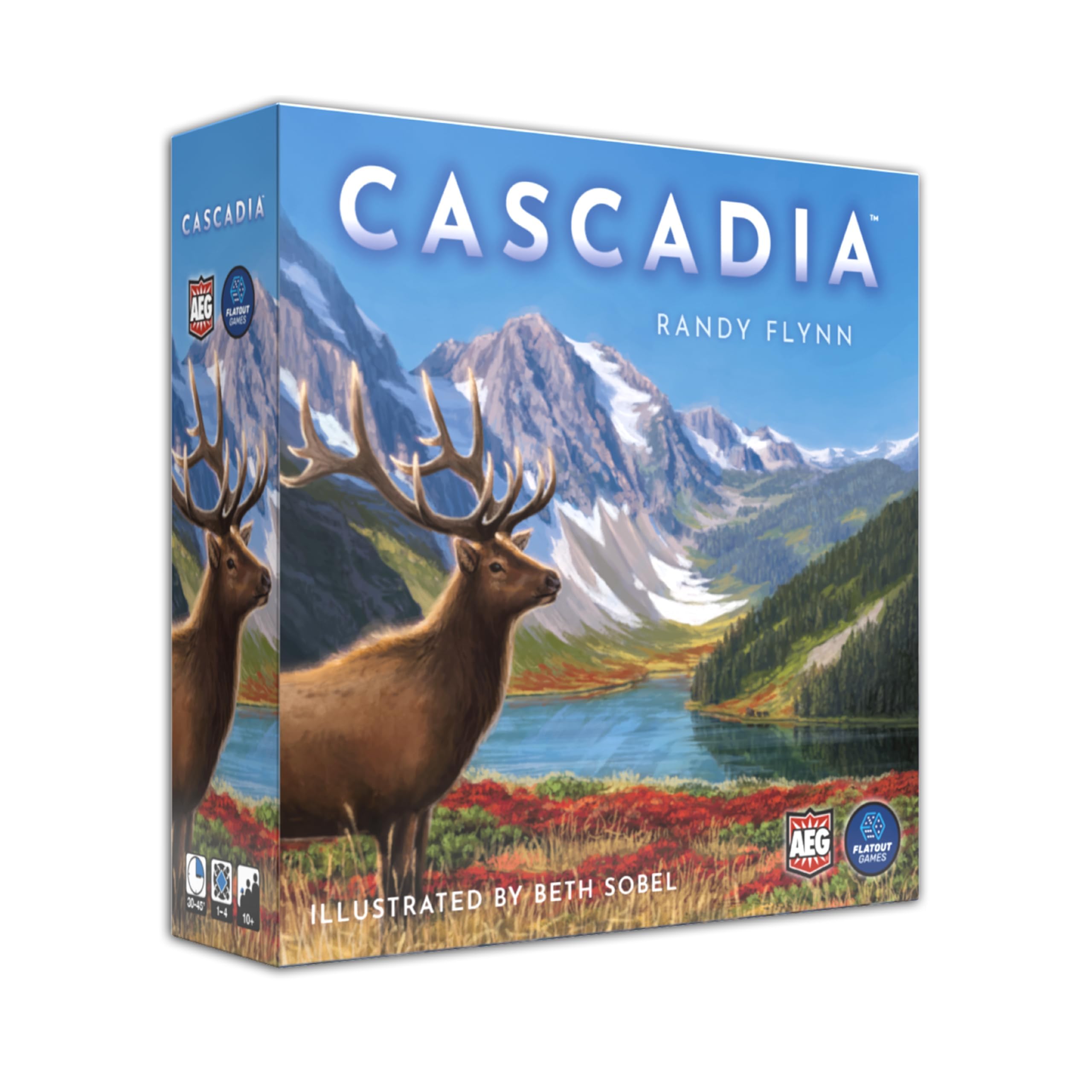
Cascadia

97 /100
Lab Score Outstanding

Key details

Theme
Nature puzzle
Play Time
30-45 min
Solo Mode
Integrated
Complexity
Easy
View on Amazon

Cascadia's core is remarkably simple: each turn, pick a habitat tile and a wildlife token, then place both into your expanding landscape. The twist is the set of 20+ variable scoring cards that shift objectives each play — one game rewards clusters of hawks, another wants widely spaced foxes. The integrated solo mode strips away automa management entirely, leaving just you, a target score, and the quiet challenge of sculpting a national park. The artwork, from misty mountains to river valleys, gives the table a serene presence, and the rules take about ten minutes to learn.

This is a game for solo players who want to unwind with a nature puzzle, not fight an opponent. It suits tired evenings or calm mornings. Players who need direct tension, surprise takeovers, or high-strategy crunch will find Cascadia too mild — the interaction is limited to taking a tile someone else might want, and victory is a personal best rather than a fist-pump win. The experience is meditative and low-conflict, which is precisely its appeal for the right buyer.

Pros

  • Relaxing, nature-themed puzzle that works equally well solo or with others, earning near-universal praise.
  • Extremely easy to teach and learn, with elegant rules that get out of the way quickly.
  • Gorgeous Pacific Northwest artwork and premium components make it a table presence delight.

Cons

  • The gentle, low-interaction puzzle may feel solitary and overly calm for those seeking high-stakes tension.
Our verdict

For solo gamers who want a calm, beautiful puzzle that resets with new scoring goals each time, Cascadia delivers. Its low-stakes nature won't suit those who need bite, but it's a masterclass in meditative solo design.

Check Latest Price
2

Best for Heavy Strategy Solo

Spirit Island

96 /100
Lab Score Outstanding

Key details

Theme
Spirit defense
Play Time
90+ min
Solo Mode
Integrated
Complexity
Heavy
View on Amazon

Asymmetrical spirits and high replayability define the solo experience here. You juggle unique power cards, spirit abilities, and expanding invaders simultaneously, creating a dense, whole-brain cooperative puzzle that rewards repeated plays. Heavy strategy fans who don't mind a steep initial climb will sink dozens of hours into mastering spirit synergies. Casual solo gamers, or anyone looking for a quick unwind, likely find the rules overhead and 90+ minute sessions draining.

💡 Start with low-complexity spirits as recommended in the rulebook to learn the game in stages and avoid the full rules dump.

Pros

  • Deeply strategic cooperative play that engages your whole brain across multiple interlocking systems.
  • Excellent solo replayability with varied spirit/adversary combinations that keep each session fresh.

Cons

  • Steep learning curve can intimidate newcomers, particularly when learning the rules solo.
Our verdict

If you want a lighter, instantly accessible solo puzzle, the top pick fits better. For solo gamers who relish cerebral struggle and long-term strategic depth, this is a worthy investment.

Check Latest Price
3

Best Dedicated Solo Experience

Under Falling Skies

92 /100
Lab Score Outstanding

Key details

Theme
Alien invasion
Play Time
30-40 min
Solo Mode
Dedicated solo design
Complexity
Moderate
View on Amazon

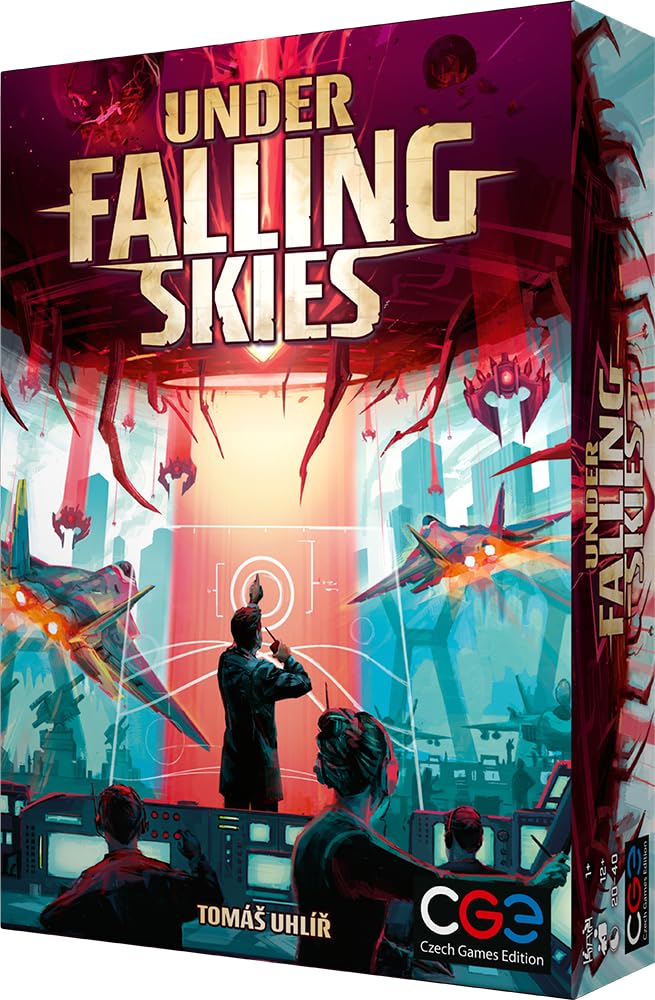
Where Cascadia provides a gentle spatial puzzle, Under Falling Skies offers a dedicated solo campaign that ramps up tension with each wave of descending alien ships. Dice rolls dictate your options for research, energy, and defense, forcing you to allocate limited resources under growing enemy pressure. The campaign mode introduces new mechanics and story twists across missions, extending its shelf life well beyond a one-off play. The dice-driven core can produce unexpected swings — a trait that suits players who thrive on adapting to shifting odds rather than executing a fixed strategy.

Pros

  • Tense solo dice placement where decisions feel weighty and consequential.
  • Campaign mode and variable difficulty add significant replay value.
  • Quick to set up and plays in 30-40 minutes, ideal for a solo evening session.

Cons

  • Dice-driven decisions can introduce luck that may frustrate those preferring deterministic control.
Our verdict

A solo campaign built around dice-based pressure that rewards adaptable play — less suited for strategy purists who dislike random outcomes.

Check Latest Price
4

Best Portable Solo Dungeon Crawl

One Deck Dungeon

92 /100
Lab Score Outstanding

Key details

Theme
Dungeon crawl
Play Time
30-45 min
Solo Mode
Integrated
Complexity
Moderate
View on Amazon

One Deck Dungeon shrinks the dungeon crawl into a deck of cards and a handful of dice, with a conversion system that lets you spend low rolls to gain abilities that then power future rolls. Unlike campaign-driven solo games, it resets each session for a quick-hit roguelike run. Solo players seeking a travel-friendly challenge will appreciate how little table space it needs, though parsing the rulebook is its own puzzle — plan on learning from a video tutorial to avoid initial frustration.

💡 Watch a how-to-play video before your first session — the included cards and dice make sense quickly once you see the flow.

Pros

  • Dice conversion turns bad rolls into future strength, keeping every throw relevant.
  • Fits in a bag and sets up in under a minute, perfect for solo coffee-shop sessions.
  • Solo mode delivers tense, escalating encounters without feeling watered down.

Cons

  • Rulebook layout can make learning from scratch more confusing than it needs to be.
Our verdict

The compact, dice-driven dungeon run for solo players who value portability over polished instructions.

Check Latest Price
5

Best Solo Dice Drafting Puzzle

Sagrada

96 /100
Lab Score Outstanding

Key details

Theme
Stained glass art
Play Time
30 min
Solo Mode
Dedicated variant
Complexity
Easy-Moderate
View on Amazon

Sagrada’s stained-glass aesthetic and chunky translucent dice make every turn a visual reward. Unlike the top pick’s open-ended scoring, Sagrada’s window cards impose specific color and shade restrictions, turning dice drafting into a tight optimization puzzle. Solo players who enjoy spatial constraints will find a satisfying repeatable challenge, while families appreciate its easy rules.

💡 House-rule a token refresh between rounds to make favor tokens more relevant.

Pros

  • Gorgeous translucent dice and vibrant window cards create a stunning tabletop presence.
  • Easy to learn with satisfying strategic depth that rewards careful placement.
  • High replayability from variable window patterns and tool cards.

Cons

  • Favor tokens can feel underutilized; they may go unused in standard play.
Our verdict

Sagrada delivers a beautifully crafted solo challenge that rewards pattern recognition over cutthroat competition. It suits art-minded soloists who value aesthetics as much as mechanics.

Check Latest Price
6

Best Solo Engine Builder

Wyrmspan

94 /100
Lab Score Outstanding

Key details

Theme
Dragon engine building
Play Time
90-120 min
Solo Mode
Integrated automa
Complexity
Moderate-Heavy
View on Amazon

Where some solo designs demand asymmetrical spirit management, Wyrmspan focuses on building a cavernous ecosystem with over 180 unique dragon cards. The official automa feels like a real opponent — it races for objectives and forces you to adapt without bogging down the pace. The initial rules overhead can feel heavy; the first game will be a learning exercise. This suits solo engine-building fans who want thematic depth and don't mind a front-loaded teach. If you need instant pick-up-and-play, it will feel cumbersome.

💡 Treat your first game as a tutorial; the rules click after one full playthrough.

Pros

  • Gorgeous dragon artwork and premium components elevate the table presence.
  • Deep engine-building with high replayability across vast card combinations.
  • Solo automa that mimics a real opponent without excessive management.

Cons

  • Steep learning curve may overwhelm first-time players; patience required.
Our verdict

For solo engine-building enthusiasts drawn to dragons, Wyrmspan offers a rich, replayable world — just plan for a dedicated learning session before settling into its rhythms.

Check Latest Price
7

Relaxing Nature Puzzle

Harmonies

96 /100
Lab Score Outstanding

Key details

Theme
Landscape creation
Play Time
30 min
Solo Mode
Integrated
Complexity
Easy
View on Amazon

Harmonies turns tile placement into a serene, meditative act, with stunning nature artwork and smooth, quick turns. Solo play is calm and thoughtful, but the scoring goals remain static, and the tile draft creates only light tension — less replay variety than the top pick. It is a quiet, introspective puzzle for those who want relaxation over confrontation.

Pros

  • Serene, nature-inspired artwork and pattern building create a relaxing, meditative experience.
  • Solo mode offers a calm tactical puzzle with quick turns and no automa overhead.

Cons

  • Tile draft interactions are minimal, so solo play can feel more isolated than interactive.
Our verdict

For solo players seeking a beautiful, peaceful puzzle that rewards gentle pattern-building rather than strategic combat, Harmonies is a soothing companion — just don't expect high-stakes tension.

Check Latest Price
8

Solo City Building

Tiny Towns

95 /100
Lab Score Outstanding

Key details

Theme
City building
Play Time
45-60 min
Solo Mode
Integrated
Complexity
Moderate
View on Amazon

Tiny Towns eliminates downtime entirely — every player picks resources at once, and solo play distills into a tight optimization challenge. However, a few building card interactions have unclear instructions, which can confuse solo learners without a quick internet search. This rule ambiguity, combined with a premium price, holds it back from the top tier despite its clever design.

Pros

  • Simultaneous resource selection keeps turns fast and downtime at zero, perfect for solo focus.
  • Simple rules hide deep strategic variety through randomized building cards.

Cons

No notable drawbacks to flag.

Our verdict

Tiny Towns works for solo gamers who prioritize zero-downtime puzzle solving and don’t mind the occasional rule lookup; if clarity is paramount, the top pick offers a cleaner path.

Check Latest Price
9

Quick Brain Puzzle

Genius Star

95 /100
Lab Score Outstanding

Key details

Theme
Abstract puzzle
Play Time
15-20 min
Solo Mode
Solo puzzle design
Complexity
Easy
View on Amazon

The Genius Star delivers a massive number of brain-burning puzzles in a grab-and-go format. It's a purely abstract shape-fitting game with no narrative or theme, so those seeking a story-driven solo experience will find it lacking. Some units may have chipped or miscut pieces, but the addictive challenge remains intact.

Pros

  • Challenging and addictive puzzle with 165,888 unique setups
  • Sharpens spatial reasoning skills across all ages

Cons

  • Abstract puzzle with no storyline; not for those wanting narrative or thematic immersion.
Our verdict

Best for solo puzzle enthusiasts who want quick, challenging shape-fitting sessions without story or theme; however, those sensitive to component quality should inspect pieces upon arrival.

Check Latest Price
10

Creative Solo Art

Canvas

93 /100
Lab Score Outstanding

Key details

Theme
Art card crafting
Play Time
30 min
Solo Mode
Integrated with variants
Complexity
Easy
View on Amazon

Canvas’s transparent card layering lets you build beautiful compositions with simple set-collection rules, making solo play a relaxing, creative ritual. The puzzle challenges are gentle, not brain-burning — this suits artistic souls, not strategists craving heavy decision space. That’s a preference, not a flaw.

Pros

  • Transparent card layering produces stunning, frame-worthy compositions.
  • Simple rules and a smooth solo mode make it easy to unwind with.

Cons

  • Solo puzzles are light and may not satisfy players seeking strategic depth.
Our verdict

Canvas fits solo players who want a calming, art-focused experience over heavy decision-making.

Check Latest Price
11

Horror Atmosphere

The Night Cage

92 /100
Lab Score Outstanding

Key details

Theme
Horror tile-laying
Play Time
60 min
Solo Mode
Integrated
Complexity
Moderate
View on Amazon

The Night Cage plunges solo players into a flickering, claustrophobic maze where every tile placement risks the lights going out. The light/dark mechanic is genuinely unnerving, and adjustable difficulty keeps the challenge sharp. Its horror concept is distinct, but the puzzle's long-term replay variety isn't fully clear, making it best for those who prioritize theme over proven longevity.

Pros

  • Tense candlelit horror with innovative light-and-shadow tile mechanics
  • Adjustable solo difficulty keeps the challenge fresh

Cons

  • Long-term replay variety isn't fully clear yet
Our verdict

This is a strong pick for solo players who want a thematic horror puzzle with tactile atmosphere, provided they accept that its long-term staying power remains uncertain.

Check Latest Price
12

Solo Escape Room

Box ONE

92 /100
Lab Score Outstanding

Key details

Theme
Escape room narrative
Play Time
2-3 hours
Solo Mode
Dedicated solo, one-time
Complexity
Moderate
View on Amazon

Box ONE's puzzles surprise with clever physical and digital integration, owing to Neil Patrick Harris's illusionist flair. The mandated 24-hour waiting period and internet requirement frame it as a planned event rather than a spontaneous session. Its one-time nature means the evening is memorable but not replayable — a fit for escape room enthusiasts who prioritize a singular, engrossing solo challenge over long-term shelf life.

Pros

  • Clever, surprising puzzle design with high-quality components.
  • Tailored single-player experience with no balancing compromises.

Cons

  • Designed for a single playthrough; cannot be reset or replayed.
Our verdict

If you're willing to trade replayability for a meticulously crafted 3-hour solo escape room with NPH's signature twists, Box ONE delivers an unmatched evening.

Check Latest Price
13

Budget Solo Escape

Exit: Abandoned Cabin

91 /100
Lab Score Outstanding

Key details

Theme
Escape room cabin
Play Time
1-2 hours
Solo Mode
Solo playable, one-time
Complexity
Moderate
View on Amazon

Clever puzzles and a tense atmosphere make this a tight one- to two-hour solo challenge. Cutting, folding, and destroying components means no replayability — it's a one-shot experience. For solo puzzle fans wanting a single evening's novel escape room, it's a budget-friendly choice.

Pros

  • Clever puzzles create a tense, immersive escape room atmosphere.
  • Excellent value for a single-session group or solo challenge.

Cons

  • Puzzle clues can be vague, leading to reliance on hints that may not clarify.
Our verdict

A budget-friendly one-off for solo puzzle fans who value a clever experience over a permanent collection.

Check Latest Price

How to Choose

Solo Mode Design

Solo modes fall into two camps: core design pillars and after-the-fact adaptations. A dedicated solo game builds its entire ruleset around one player, so every mechanic feels intentional.

Adapted solo variants often ask you to run an automa or manage multiple hands, which can shift focus away from your own strategy. Check whether the solo mode uses a well-crafted opponent AI or merely a beat-your-score mechanism.

Complexity

Complexity isn't just about rules weight—it's about the mental load you bring to the table. Heavy games reward mastery but require solo players to self-teach, so rulebook clarity matters enormously.

Light games trade depth for accessibility. A 30-minute puzzle can often hit the table more often than a sprawling strategic epic, simply because the setup and learning curve don't deter you.

Replayability

Replayability comes from systems, not promises. Variable player powers, randomized objectives, and modular boards create the kind of variety that keeps a solo game on your shelf for years.

One-time experiences like Box ONE or Exit games are incredibly creative, but once solved, they become a completed puzzle. Factor that into your cost-per-play calculation.

Playing Time

A game's advertised playtime often assumes familiarity; add 30% for your first few solo plays. Short sessions (under 45 minutes) fit easily into daily routines, while longer games need a planned evening.

Setup overhead multiplies alone—some heavy games can take 15 minutes to lay out components. If that feels like a chore, look for games with minimal pieces and quick reset.

Theme

Theme can carry a solo session when you're the only one at the table, but it must be supported by mechanics. A beautiful narrative with clunky rules quickly becomes a chore.

Match theme to mood: tense horror for evening thrills, calm nature for relaxing escape. The best games make the solitariness feel like a feature, not a compromise.

Frequently Asked Questions