Best Star Wars Board Games of 2026

There's a specific disappointment to opening a Star Wars box and finding Monopoly inside — a thin coat of paint over a game you already owned in 1998. Star Wars has earned some of that suspicion, but the good ones don't feel licensed at all: a designer clearly had something to say about the Death Star run and built the rules around it. What a great one actually fixes is the group problem — a game one person can learn, teach quickly, and finish before half the table drifts off.

I've owned a shelf of these for years, and the ones that survive are never the prettiest boxes. Over six months, my team and I played through 12 of them — duels, co-op missions, big-box campaigns — in groups of two to six, and the pattern held: theme gets people to sit down, rules decide whether they come back. First-time buyers don't hear this enough, but check the player count and skim the rulebook before you commit; a gorgeous game that takes an hour to teach will live on the shelf. The picks below are sorted by the table you have.

1

Best Overall

Star Wars: Outer Rim

95 /100
Lab Score Outstanding

Key details

Age
14 years and up
Players
1 to 4
Play Time
3 hours
Game Style
Open-world sandbox
View on Amazon

There's no single road to victory in Outer Rim, which is exactly why we point most people here first. You pick a smuggler, bounty hunter, or rogue — Han Solo, Boba Fett, Lando Calrissian, Doctor Aphra — then choose your own work across the galaxy's fringe: hauling cargo, chasing bounties, taking jobs, upgrading your ship. Nobody is forced to shoot at anybody else, and that makes it a rare Star Wars game a table of mixed appetites can share.

The encounter cards do the heaviest thematic lifting. Patrols, hired guns, and planets read as Star Wars rather than as generic space opera, and the modular boards mean the map is different enough between sessions that the third game doesn't feel like the first. Four players is where it drags — the gap between your turns stretches — but at two or three it keeps moving.

The rulebook is the hurdle, not the game. Fly somewhere, take a job, roll, get paid, buy something better: we found that loop clicks within a round or two, and after that you're reading card text rather than flipping through the manual. The first session is a teach. The second is a game.

Solo is a real mode rather than an afterthought, and it's the version we come back to on a weeknight — one character, a few jobs, no scheduling. There's an Unfinished Business expansion waiting once the base game starts to feel familiar.

Pros

  • Plays solo as well as with a group
  • Sandbox jobs, cargo, and bounties
  • Encounters carry the Star Wars theme
  • Modular boards change each game

Cons

  • Three-hour sessions need a clear evening
Our verdict

For solo play or a small group, Outer Rim is the Star Wars game we tell most people to buy first: open-ended, deeply thematic, and happy to let you avoid a fight.

Check Latest Price
2

Best for Two Players

Star Wars: Rebellion

93 /100
Lab Score Outstanding

Key details

Age
14 years and up
Players
2 to 4
Play Time
3 hours
Miniatures
Over 150
View on Amazon

Star Wars: Rebellion is a three-hour war for two players, and it doesn't pretend otherwise. Two boards cover 32 systems, more than 150 miniatures fill the box, and one side spends the game hunting a hidden rebel base while the other runs missions to survive. Clear a dining table, not a coffee table.

The asymmetry carries it. The Empire grinds across the map; the Rebels slip leaders like Leia Organa into systems, complete objectives, and buy time. Missions and character cards put more Star Wars on the table than the battles do — the combat is the thinnest part of the design, and the game is at its best before the shooting starts.

Here's where we land. This is the deepest game in this group and the wrong purchase for a casual four. The rules take an evening to absorb, the first playthrough runs long, and with four players you're really two teams splitting two commands. Two people who will sit down at the same table week after week get more out of it than out of anything else here.

Pros

  • Asymmetric Empire versus Rebel war
  • Over 150 miniatures and two boards
  • Missions and leaders carry the theme

Cons

  • Combat is the least interesting part
  • Long sessions with a steep first teach
Our verdict

Buy Rebellion if you have one regular opponent and a free evening a week; it's the richest strategy game here, and it asks for the time it takes.

Check Latest Price
3

Best Quick Two-Player Game

The Deckbuilding Game

94 /100
Lab Score Outstanding

Key details

Age
12 years and up
Players
2
Play Time
30 minutes
Game Style
Head-to-head deckbuilder
View on Amazon

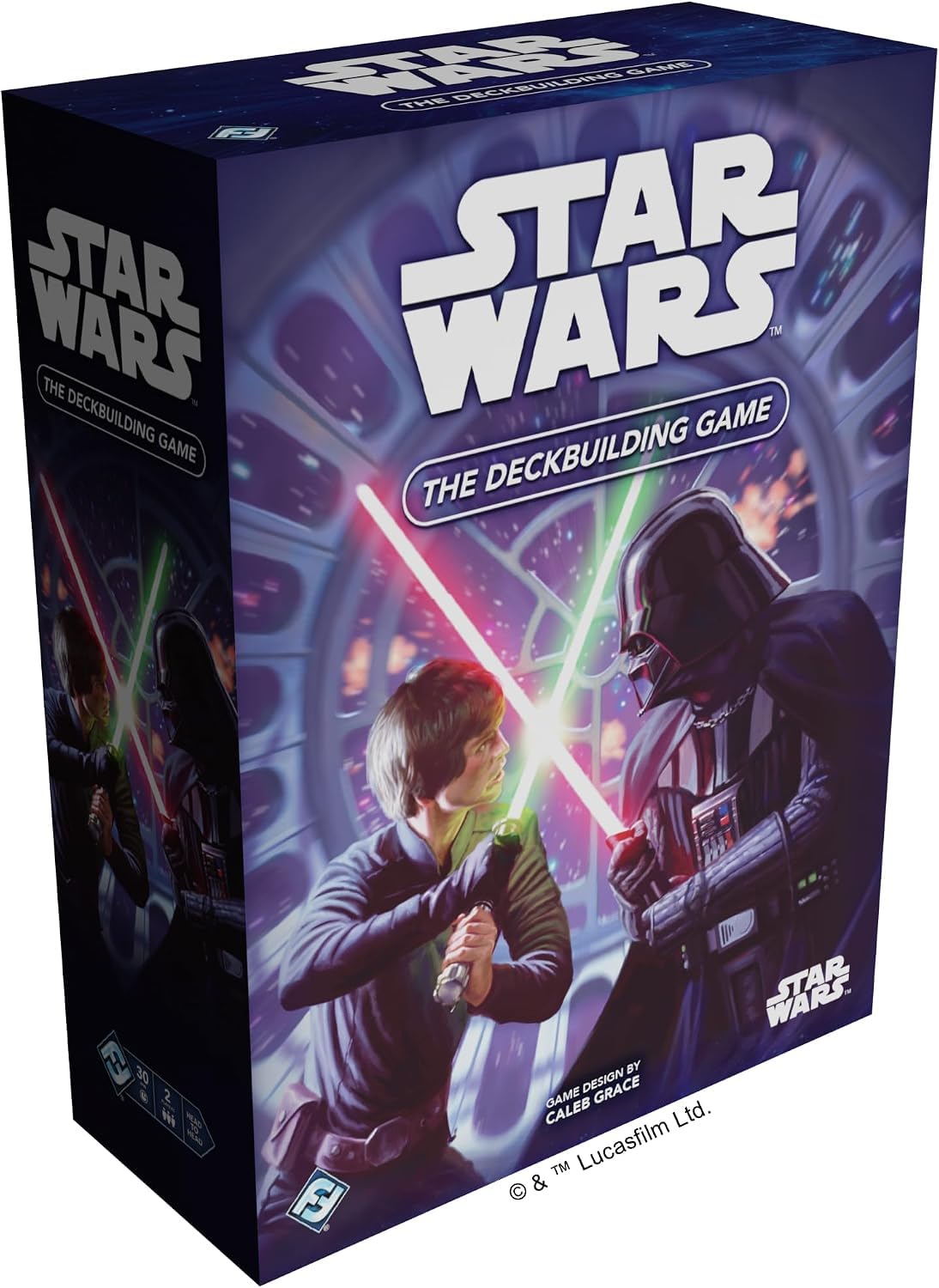
Most head-to-head deckbuilders converge: two players buy from the same row and end up with near-identical decks. This one splits the market, so the Empire and the Rebels are buying different things from the first turn, and the two sides never quite play the same game. You're racing to destroy three of your opponent's bases, and the deck you build is the only tool you get.

We kept dealing a second game, which is rare for us with a head-to-head card game — setup is quick, turns are fast, and the art puts ships and characters you actually recognize in front of you. Thirty minutes is an honest figure rather than a hopeful one. It also sits at the low end of what these games cost, which makes it the easy one to add to an order. What it isn't is a group game: it's built for exactly two and stays there.

Pros

  • Setup and play in about half an hour
  • Separate Empire and Rebel card pools
  • Strong art and card quality
  • Low cost of entry

Cons

  • Built for exactly two players
Our verdict

If your game nights are two people and an hour, this is the Star Wars game we reach for: quick to teach, quick to finish, and tense to the last base.

Check Latest Price
4

Best Miniatures Game

Star Wars: Legion Core Set

95 /100
Lab Score Outstanding

Key details

Age
14 years and up
Players
2
Play Time
3 hours
Miniatures
33 figures
View on Amazon

Before Legion plays a single game, you'll be assembling and gluing 33 figures. That's the trade. The Core Set hands you unpainted Luke Skywalker and Darth Vader miniatures, squads of stormtroopers and rebel troopers, barricades, dice, and command tools — and it expects an evening or two of work before any of it hits the table.

For anyone who wants the hobby side, that's the appeal rather than the tax. We think Legion produces the best-looking table of anything here — painted lines of rebels and Imperials do something a cardboard token can't — and the command and control system, built to simulate the fog of war, does a convincing impression of battlefield confusion without a referee. Budget for the fact that a Core Set is a starting point, not a full army.

The rules are more approachable than a box of miniatures suggests, and the figures are detailed enough to be worth painting rather than merely assembling. The honest question is whether you want a game or a hobby. Legion is both, and it won't let you skip the first part.

Pros

  • Best-looking table in this group
  • Command system simulates fog of war
  • Approachable rules for a miniatures game

Cons

  • Figures need assembly and paint
  • Core Set is not a full army
Our verdict

If you want Star Wars battles you build and paint yourself, Legion is the best-looking miniatures game here — and the one that expects a second purchase to feel complete.

Check Latest Price
5

Best Campaign Game

Star Wars: Imperial Assault

93 /100
Lab Score Outstanding

Key details

Modes
Campaign and skirmish
Players
1 to 5
Play Time
2 hours
Miniatures
34 figures
View on Amazon

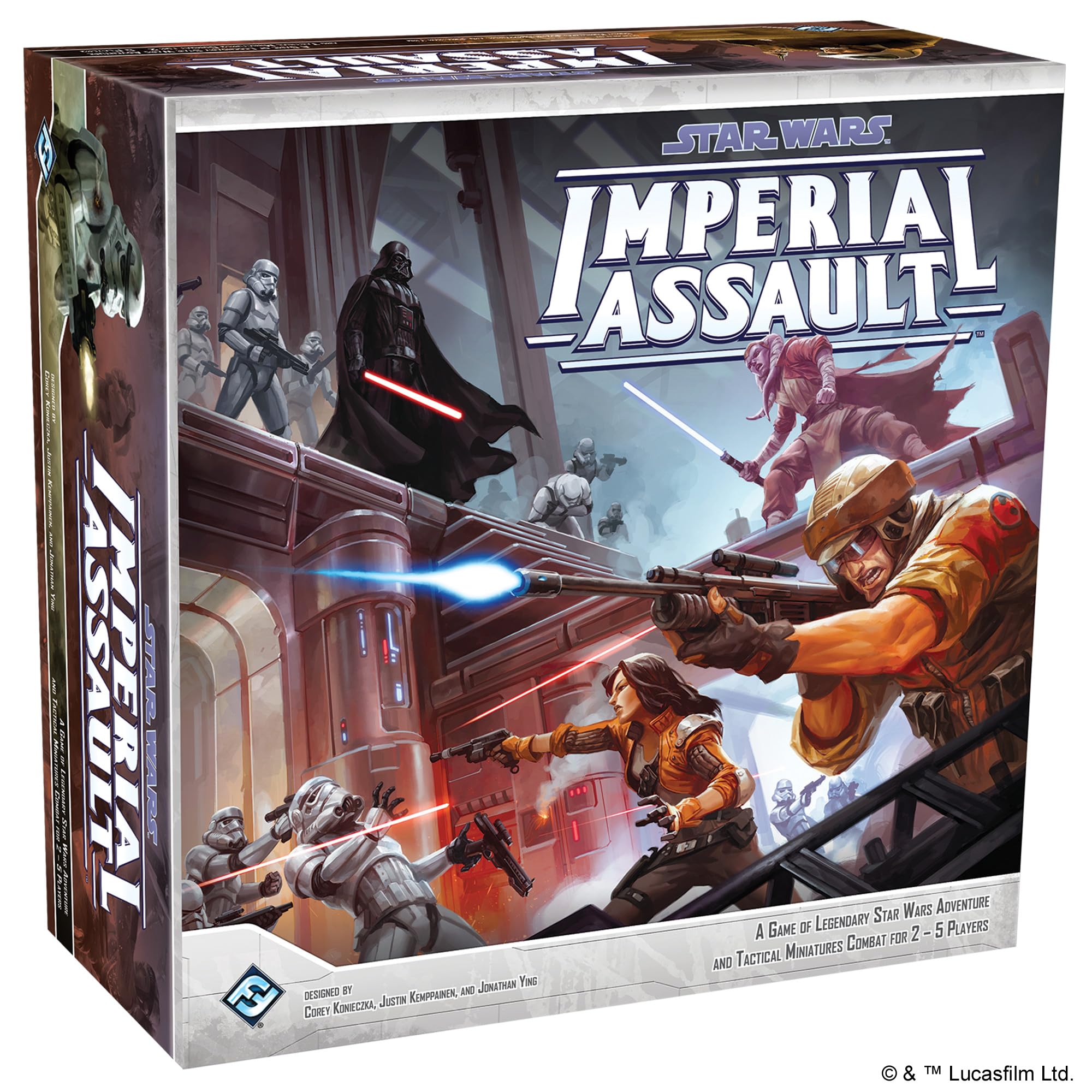
Open the box and the first thing you notice is volume: 34 figures, 59 double-sided map tiles, more than 250 cards, and both the Darth Vader and Luke Skywalker figure packs tucked in beside the campaign. It's the most contents for the money among the big boxes here, and it shows once the map is laid out.

Two modes share all of it. The campaign is the reason to buy: one player runs the Empire while the others take linked missions, carrying gear and skills from one session to the next. Skirmish strips it back to head-to-head battles over objectives, which is what you play when nobody has two hours to spare.

Rules are the friction. The alphabetical reference guide is genuinely useful, but the first mission still wants somebody at the table who has read it twice, and a few interactions are vague enough that you'll make a table call and move on. A free companion app will run the Empire if nobody wants that job, which turns the campaign cooperative.

Our verdict: this is the campaign game of this group, and it rewards a table that meets four or five times rather than once. It also arrives without a box insert, so the figures go into baggies the moment you unpack them.

Pros

  • 34 figures and 59 map tiles
  • Campaign carries gear between sessions
  • Skirmish mode uses the same pieces
  • Companion app can run the Empire

Cons

  • Rules reference is vague in places
  • No box insert for the figures
Our verdict

If your group meets regularly and wants a Star Wars story that carries between sessions, Imperial Assault is the campaign game we recommend.

Check Latest Price
6

Best Family Strategy Game

Star Wars Villainous

92 /100
Lab Score Outstanding

Key details

Age
10 years and up
Players
2 to 4
Villains
5
Play Time
60 minutes
View on Amazon

Five villains, five different win conditions, about an hour. You play Darth Vader, Kylo Ren, General Grievous, Asajj Ventress, or Moff Gideon, each with a private deck and a private objective, while your opponents spend their turns playing Fate cards at you — dropping Luke, Leia, and other heroes into your sector to slow you down. The artwork is gorgeous and consistently on-theme, which matters more here than in a game with a board to look at.

This is the box we put in front of a mixed-age table. It teaches in a few minutes, plays inside an hour, and the five villains are different enough that the box lasts. One caution: those villain goals are more involved than they first look, and a couple take a game or two to understand, so younger players will want an adult nearby for the first round.

Pros

  • Five villains with distinct objectives
  • Fate cards keep everyone involved
  • Hour-long playtime suits families

Cons

  • Villain goals take a game or two to learn
Our verdict

For a mixed-age table, Villainous is the easy recommendation: five villains, an hour, and enough asymmetry that the scheming stays interesting.

Check Latest Price
7

Fast Battles

Battle of Hoth

91 /100
Lab Score Outstanding

Key details

Age
8 years and up
Players
2
Play Time
30 minutes
Game Style
Miniatures skirmish
View on Amazon

This is the Star Wars miniatures game you can actually finish. Where Legion wants an evening and a paint station, Battle of Hoth sets out a handful of hex tiles, snowtroopers, snowspeeders, and AT-ATs, and resolves turns with custom dice. Two players, about thirty minutes, packed away.

The scenarios are the point. Terrain tiles, four campaign books, and a scenario book mean the same box gives you a one-off skirmish or a linked run of battles, and the rules are light enough to teach someone who has never pushed a figure around a table. It's the easiest of the miniatures games here to get out on a whim.

Two things to know. The dice decide a lot of fights, so a careful plan can come apart on a bad roll — that's the genre, but it's worth knowing before you buy — and the depth lives in the campaigns rather than in a single game. If you want tactics without a three-hour commitment, this is the pick.

Pros

  • Thirty-minute battles
  • Scenarios and campaigns in one box
  • Light rules, easy to teach

Cons

  • Dice decide a lot of fights
Our verdict

Battle of Hoth is our choice when you want real miniatures tactics in half an hour — light, fast, and honest about being a dice game.

Check Latest Price
8

Mandalorian Fans

Monopoly: The Mandalorian

95 /100
Lab Score Outstanding

Key details

Age
8 years and up
Theme
The Mandalorian, season 2
Players
2 to 4
Play Time
2 hours
View on Amazon

Plenty of licensed Monopoly sets are the same board with new names on the squares. This one isn't quite that. Each of the four character tokens — the Mandalorian, Bo-Katan Kryze, Ahsoka Tano, Boba Fett — carries an ability, and the Grogu token moves around the board: pass or land on him, take him, and you get the use of your character's power until somebody takes him off you.

The Imperial enemies do the rest. Stormtrooper, Dark Trooper, and Moff Gideon tokens move in and trigger battles, and Signet and Hideout cards sit on top of the familiar property-and-rent spine. It's still Monopoly, but there's a reason to watch other players' turns, and the Grogu tug-of-war keeps the table involved.

The physical side is where it's ordinary. The board and cards are thinner than the rest of this group, and it's a mass-market package rather than a keepsake. For a family game that will get played hard and spilled on, that's a reasonable trade.

Our take: this is the game to hand a nine-year-old who already knows Monopoly and loves the show, not a substitute for the strategy boxes here. Set it up expecting a family night, and the Grogu chase will carry it.

Pros

  • Grogu token changes the board
  • Character abilities for each token
  • Familiar rules for younger players

Cons

  • Thin board and card stock
  • Still Monopoly underneath
Our verdict

For a family with young Star Wars fans, this is the easy yes — familiar enough to teach in a minute, different enough that the fight over Grogu stays fun.

Check Latest Price

How We Played Our Way Through 12 Star Wars Board Games

We started with every Star Wars tabletop game currently in print, then cut the list down by player count, price, and one hard filter: if it was a mass-market reskin with a logo bolted on, it didn't reach the table. That left 12 titles, played over six months across a Tuesday-night two-player session at the kitchen table, a Saturday-afternoon four-player game with two people who had never touched it, a weekly campaign group, and a family table with a 10-year-old who reads rules faster than most adults.

Every game got a cold teach: one of us read the rulebook alone, then explained it to someone new while the clock ran, and we noted the first moment that new player took a real decision without asking a question. We timed actual play through to the final score and compared it to the number on the box, because a game that claims 60 minutes and runs 110 is a different purchase. Each title went around twice with the same group to see whether the rules stuck, and we tracked who won and by how much — a runaway leader kills a game faster than a bad rulebook.

Component by component, we shuffled, dealt, and packed each one away repeatedly, watching for cards that started peeling, miniatures that wouldn't stay put, and inserts that dumped everything on the floor. We tallied how many times each game actually hit the table in six months, which is where value lives; a box played eleven times beats a cheaper one played twice. And we kept asking the theme question — did the rules make us feel like we were flying the run, or were we moving cardboard with a familiar face on it?

How to Choose a Star Wars Board Game

Start With Your Player Count

Most Star Wars games are built for a specific table, and buying for the one you actually have saves a lot of shelf time. If you play alone or with one other person, Outer Rim covers one to four and genuinely works solo. The Deckbuilding Game is exactly two players and nothing else. Imperial Assault reaches five because one player runs the Empire while the others take missions. Rebellion says two to four, but four is two teams splitting two commands, and it plays slower that way.

If your regular group is bigger than four, you're looking at lighter games rather than the strategy boxes. The player count printed on the box is the honest limit; the games that bend it stop being the game you bought.

Match the Playing Time to Your Evening

Listed play times assume everyone already knows the rules. A first game of Rebellion or Imperial Assault runs well past the box figure, because somebody is reading cards aloud and everybody is checking the reference guide, and any four-player game stretches further with downtime between turns.

Decide what your realistic weeknight looks like before you buy. Thirty minutes fits after dinner; three hours needs a planned evening and a table nobody else needs. Battle of Hoth and the Deckbuilding Game are the two here that fit a weeknight without negotiation.

Decide Who Will Read the Rules

Every game here has a teacher problem: someone has to absorb the manual before the first session. The lighter boxes — Villainous, Battle of Hoth, Monopoly: The Mandalorian — can be taught from the rulebook at the table. Rebellion and Imperial Assault really want one person to read ahead, and Imperial Assault's alphabetical reference guide is worth bookmarking before you play rather than during.

That's not a reason to avoid the heavier games, but it is a reason to know who in your group will do it. Games stall on shelves when nobody wants to be the one who learns them.

Budget for the Hobby, Not Just the Box

Miniatures games carry a second bill. Legion's Core Set gives you unpainted figures that need assembly and paint, and enough of them to start rather than to finish — a full army means more purchases. Imperial Assault is far more complete out of the gate, with both modes and two figure packs inside the box, though it still sells you more later.

The board games in the strategy aisle are the cheaper habit. Rebellion and Outer Rim are complete as sold, and nothing in either box needs glue. If you want to buy once and play for years, that's the direction to look.

Frequently Asked Questions

Final Verdict

Buy Star Wars: Outer Rim if you want one game that covers solo nights, a partner, and a small group without teaching a new system every time. It's the most flexible box here and the one we recommend by default.

If your table is exactly two people and everyone wants the Galactic Civil War in full, Rebellion is the better purchase. Keep the Deckbuilding Game in mind for the nights when you have thirty minutes rather than three hours.