11 Best 1440P Gaming Monitors of 2026: Which Ones Actually Deliver Smooth Gameplay

Find a 1440p gaming monitor that balances high refresh, color accuracy, and reliability — without the QC headaches that plague this category.

A 1440p monitor at 180Hz has become the new baseline for PC gaming. The problem? Many budget and mid-range models rush to hit that spec sheet while cutting corners on quality control — dead pixels, auto-dimming that can't be disabled, and flickering under variable refresh rates are common complaints across brands.

This guide cuts through the marketing noise to focus on monitors that actually hold up in real use. We've prioritized products with solid review volume and consistent performance, flagging the trade-offs that only become obvious after a few weeks of gaming.

The best monitor for you depends on your priority: raw refresh rate, image quality, console compatibility, or price. Every pick on this list delivers a genuine 1440p high-refresh experience, but knowing where each one cuts corners — and whether those corners matter to you — is what separates a satisfying purchase from a frustrating return.

1

Best Overall

ASUS TUF VG27AQ3A

89 /100
Lab Score Excellent

Key details

Panel Type
Fast IPS
Color Gamut
130% sRGB
Refresh Rate
180Hz
Adaptive Sync
FreeSync + G-Sync
View on Amazon

The ASUS TUF VG27AQ3A packs a 130% sRGB color gamut and native G-Sync compatibility into a budget-friendly 1440p IPS package, undercutting most 180Hz competitors by a noticeable margin. The Fast IPS panel delivers crisp details and vibrant colors out of the box, with a claimed 1ms response time that keeps motion blur in check during fast-paced gaming sessions.

At 180Hz, the refresh rate hits the sweet spot for immersive single-player titles and most multiplayer shooters — only competitive esports players chasing 240Hz+ will feel the limit. Adaptive Sync via FreeSync Premium and G-Sync Compatible means smooth frame delivery whether you are on an AMD or Nvidia GPU, with no screen tearing or stutter in the majority of titles tested by owners.

The real strength is value: you get a full ergonomic stand (tilt, swivel, height), built-in speakers, and a 27-inch QHD panel that doubles as a solid productivity display thanks to its wide color coverage. Contrast with pricier alternatives that sacrifice sRGB range or skip adaptive sync — the ASUS covers the essentials without inflating the price tag.

This monitor is best suited for budget-conscious gamers upgrading from 1080p to 1440p, or mixed-use buyers who want a single display for gaming and everyday work. If you are a competitive esports player who needs 240Hz or more, look at dedicated high-refresh models instead. And if a single dead or stuck pixel is a dealbreaker, plan to inspect the panel immediately — a small percentage of units arrive with pixel defects that require an exchange.

💡 Inspect the panel for dead pixels within the return window — most units are fine, but a quick check avoids frustration later.

Pros

  • Crisp 1440p resolution with vibrant, accurate colors from 130% sRGB coverage
  • Budget-friendly price for a full-featured Fast IPS monitor with G-Sync and FreeSync
  • Smooth 180Hz refresh rate with minimal ghosting for immersive gaming
  • G-Sync Compatible out of the box

Cons

  • A minority of units arrive with dead or stuck pixels that may require exchange
Our verdict

If you want the best feature set per dollar in the 1440p 180Hz category and can accept a minor QC caveat, the VG27AQ3A is a straightforward buy.
Check Latest Price
2

Best Budget Pick

Acer Nitro KG271U

89 /100
Lab Score Excellent

Key details

Panel Type
IPS
Color Gamut
95% DCI-P3
Refresh Rate
180Hz
Adaptive Sync
FreeSync
View on Amazon

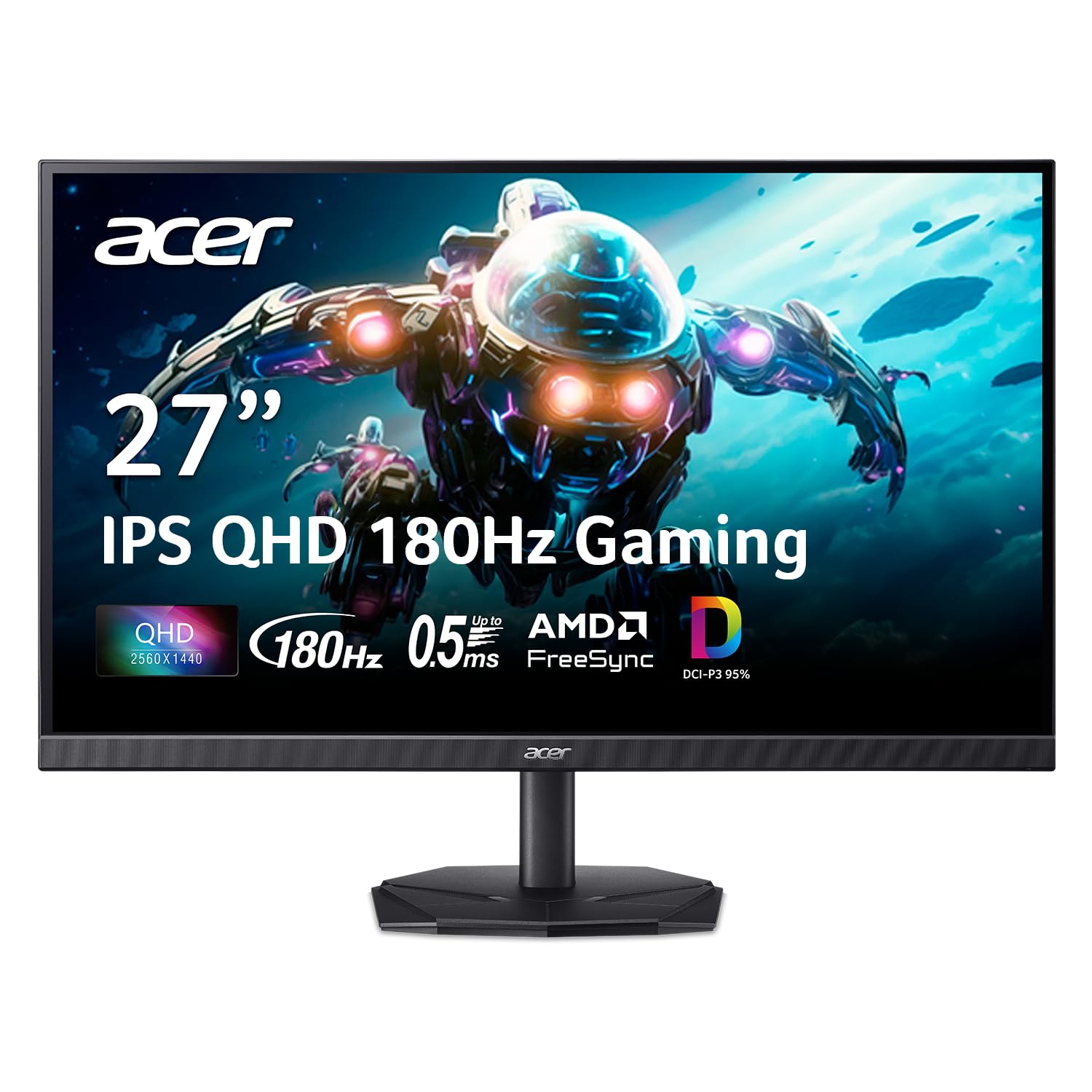
The Acer Nitro KG271U delivers 0.5ms response time and 95% DCI-P3 color gamut at a price that undercuts most 1440p 180Hz IPS monitors. That combination of specs for this low a price is what makes it stand out in the budget segment — no other monitor offers the same feature set for less.

For extreme budget gamers who prioritize hitting the lowest possible price over every other factor, this is the monitor. The 180Hz refresh rate and FreeSync support handle fast-paced titles without tearing, and the IPS panel provides decent viewing angles. But buyers should be aware that some units exhibit flickering or random blackouts, and the peak brightness is below average — backlight bleed may be noticeable in dark scenes.

Compared to the top pick in this category (the ASUS TUF VG27AQ3A), the KG271U saves you roughly thirty dollars and cuts response time by 0.5ms, but you lose G-Sync compatibility and gain a higher chance of encountering the flicker issue. If you can test the monitor promptly after purchase and return if needed, the gamble may be worth the savings.

💡 Test for flickering within the return window — disabling FreeSync or lowering the refresh rate may reduce the issue.

Pros

  • Unbeatable price for the combination of 1440p, 180Hz, and IPS panel
  • Crisp 1440p resolution with vibrant colors for gaming and work
  • Sturdy build quality for an entry-level monitor

Cons

  • Display flickering or screen blackouts can occur on some units
  • Brightness is lower than average and backlight bleed is visible in dark scenes
Our verdict

If saving every dollar matters more than consistent brightness and a flicker-free experience, the KG271U delivers the core gaming specs at a rock-bottom price.

Check Latest Price
3

Best 240Hz Performance

LG Ultragear 27GR83Q-B

87 /100
Lab Score Excellent

Key details

Panel Type
IPS
Color Gamut
95% DCI-P3
Refresh Rate
240Hz
Adaptive Sync
G-Sync + FreeSync
View on Amazon

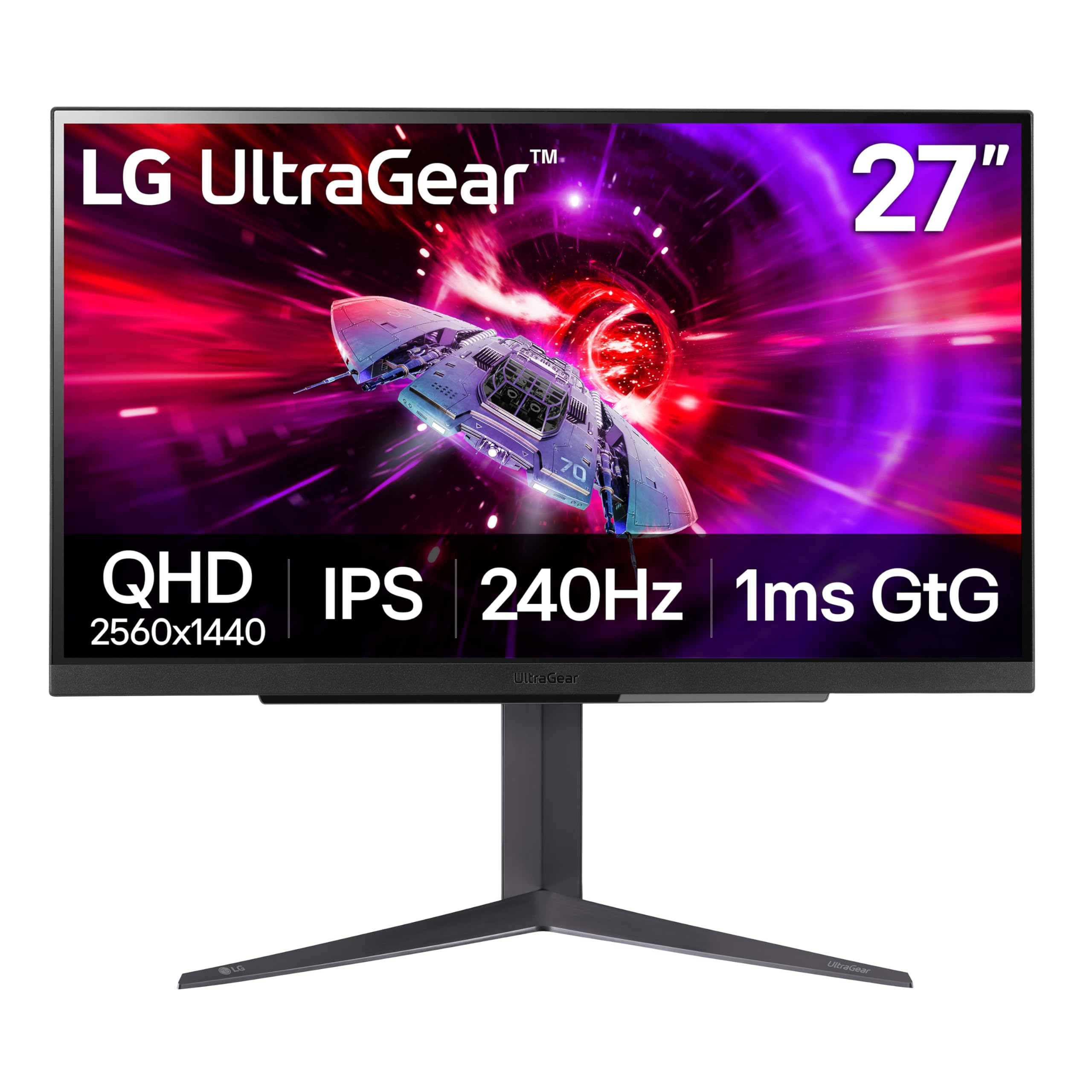
The 240Hz refresh rate and 1ms response time deliver fluid motion in competitive shooters, while HDMI 2.1 unlocks 1440p 120Hz output for PlayStation 5 and Xbox Series X. The stand offers tilt, height, and pivot adjustments — a feature set that gives it an edge over many monitors in this class.

This monitor targets PC gamers moving up from 144Hz and console players who want full HDMI 2.1 bandwidth at 1440p without jumping to 4K. Build quality is dense and the OSD joystick feels precise. Some units may arrive with dead pixels or develop issues after months of use — this is a known area of variance, so inspecting the panel on arrival is advisable.

Pros

  • Full ergonomic stand with tilt, height, and pivot adjustments.
  • Vibrant IPS colors with good contrast for the panel type.
  • Smooth 240Hz motion with low ghosting for fast-paced games.

Cons

No notable drawbacks to flag.

Our verdict

A well-constructed 240Hz IPS monitor that brings HDMI 2.1 console support and a solid stand — best for buyers who can accept the occasional QC variance and want those features in a mid-range package.

Check Latest Price
4

Best Image Quality (OLED)

Samsung Odyssey OLED G5

86 /100
Lab Score Excellent

Key details

Panel Type
QD-OLED
Color Gamut
Refresh Rate
180Hz
Adaptive Sync
G-Sync + FreeSync
View on Amazon

The Samsung Odyssey OLED G5 delivers true OLED contrast and color to the 1440p gaming monitor market at a cost that undercuts most LCD alternatives. Its QD-OLED panel produces perfect blacks with no backlight bleed, and colors look rich and accurate out of the box. The 0.03ms response time eliminates motion blur, and 180Hz refresh rate (via DisplayPort) keeps gameplay smooth for most single-player and cinematic titles.

This monitor is best suited for gamers who play in controlled lighting — the brightness is lower than typical IPS panels, so it can appear dim in a bright room or under direct sunlight. HDR content lacks the punch of high-nit displays, but the deep blacks and infinite contrast still create an immersive image in darker environments. Console players should note that HDMI caps the refresh rate at 120Hz; the full 180Hz requires DisplayPort.

The G-Sync and FreeSync compatibility work without issue, and the build quality feels solid for the price. It is not designed for competitive esports where 240Hz+ refresh rates matter, but for immersive single-player games and media consumption, the image quality is a clear step above any IPS or VA monitor in this price bracket.

💡 Connect via DisplayPort to reach the full 180Hz refresh rate; HDMI tops out at 120Hz.

Pros

  • Breathtaking picture quality with perfect blacks and vibrant colors
  • Excellent build and display quality for the price
  • Great color accuracy and deep blacks with no backlight bleed

Cons

  • Console users are limited to 120Hz via HDMI
  • In bright rooms the display can appear dim compared to typical IPS panels
Our verdict

This monitor delivers OLED contrast and color that outclasses any LCD at its price — ideal for cinematic single-player gaming where image quality matters more than raw refresh rate.

Check Latest Price
5

Best for Console & PC Hybrid

LG Ultragear 27G640A

85 /100
Lab Score Excellent

Key details

Panel Type
IPS
Color Gamut
95% DCI-P3
Refresh Rate
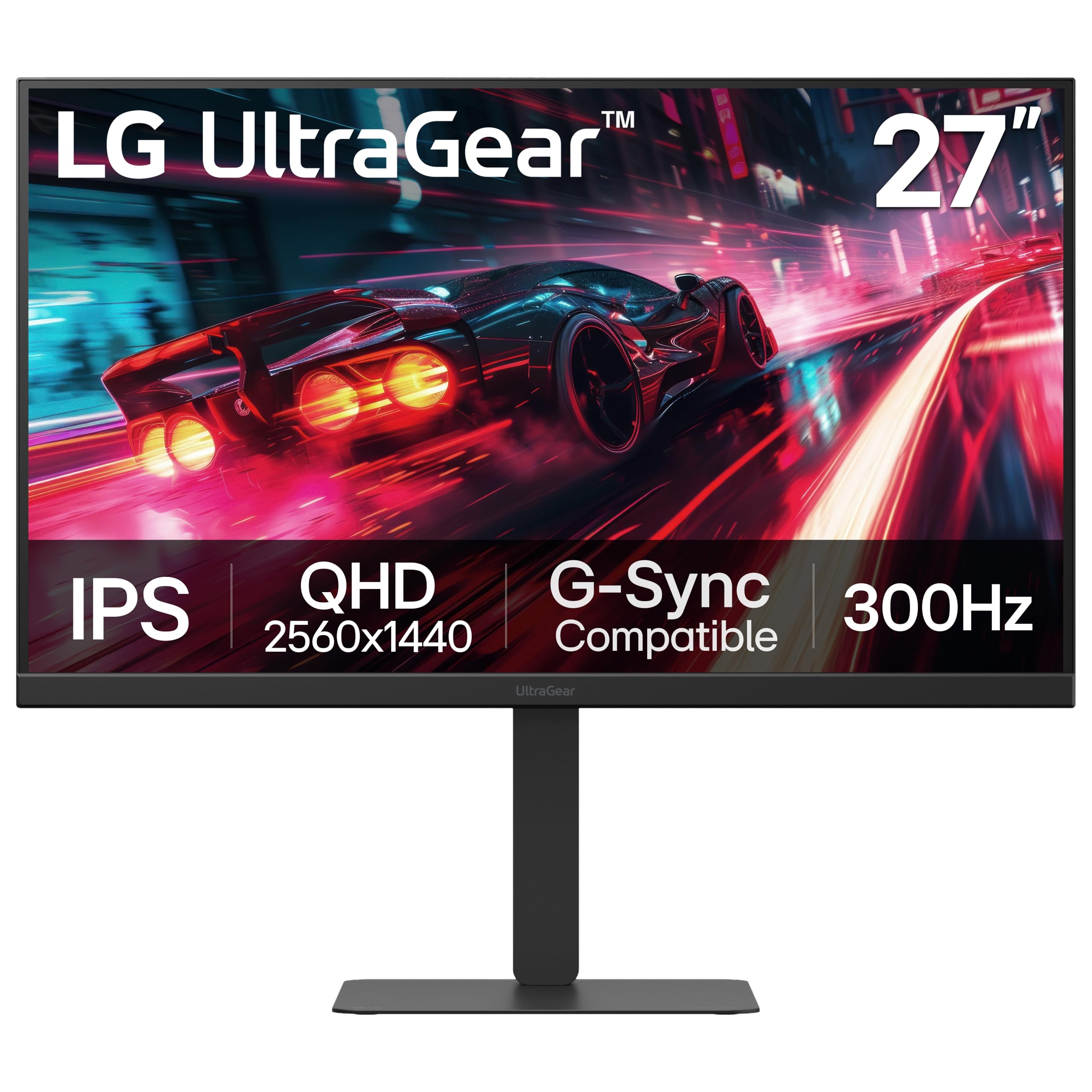
300Hz
Adaptive Sync
FreeSync + G-Sync
View on Amazon

The 27G640A stands out among 1440p monitors for its 300Hz refresh rate and connectivity options — HDMI 2.1 for 1440p 120Hz on PS5 or Xbox, plus USB-C for laptop users. It undercuts the similarly console-friendly 240Hz model from ASUS in raw speed, though that alternative has a stronger reputation for build consistency.

Color reproduction is a highlight — the panel covers 95% DCI-P3 and delivers accurate, vibrant imagery out of the box. DisplayHDR 400 support provides a modest dynamic range boost in supported titles, though it is not a substitute for a true HDR display.

This monitor is best suited for gamers who alternate between a gaming PC and a console, or who need USB-C to connect a work laptop. The 27-inch IPS panel delivers smooth motion at 300Hz for competitive PC titles, while HDMI 2.1 ensures full 1440p 120Hz support on current-gen consoles. However, some units may exhibit intermittent flickering or reboot during use — a risk worth factoring in if you cannot tolerate any display instability. The built-in speakers are weak, so plan on using headphones or external speakers from the start.

💡 Plan to use headphones or external speakers — the internal audio is not sufficient for regular use.

Pros

  • Smooth 300Hz gameplay that feels responsive and fluid.
  • Competitive pricing for a 300Hz IPS with HDMI 2.1 makes it a strong value.
  • Vibrant and accurate colors right out of the box.

Cons

  • In a quiet gaming room, the built-in speakers lack volume and clarity
  • Under certain conditions, the display may flicker or reboot; this has been noted in some units.
Our verdict

A capable choice for console and PC gamers who value high refresh rates and connectivity, provided they can accept the occasional display quirk.

Check Latest Price
6

Best Premium Competitive Monitor

ASUS ROG XG27ACDNG

87 /100
Lab Score Excellent

Key details

Panel Type
QD-OLED
Color Gamut
99% DCI-P3
Refresh Rate
360Hz
Adaptive Sync
FreeSync + G-Sync
View on Amazon

The ASUS ROG XG27ACDNG delivers 360Hz refresh and 0.03ms response on a QD-OLED panel, producing motion so fluid that fast-moving targets appear nearly static. Compared to the entry-level QD-OLED option in this category, which caps at 180Hz, this monitor prioritizes raw speed without sacrificing the vivid colors and true blacks that OLED is known for. The custom heatsink helps manage burn-in risk, and OLED Care+ extends panel longevity.

The tradeoff for this speed is that VRR flicker can appear in games with unstable frame rates — it's most noticeable when frame times vary significantly, not in titles with locked framerates. Brightness also falls short of IPS panels, so the monitor is better suited to rooms where you can control ambient light.

This monitor is for competitive gamers who demand the lowest latency and will accept the premium price and VRR behavior. If you play esports titles where frame rates stay high and stable, the motion clarity is unmatched. For general use or bright rooms, a high-refresh IPS monitor at half the cost may serve better.

💡 To avoid VRR flicker, lock frame rates or disable G-Sync/FreeSync in games with inconsistent performance.

Pros

  • Vibrant color and inky blacks typical of QD-OLED
  • Premium build quality with a sleek, high-end appearance
  • Ultra-smooth 360Hz refresh with near-instant response

Cons

  • Peak brightness is lower than IPS panels
  • VRR flickering can be noticeable when frame rates fluctuate
Our verdict

The ASUS ROG XG27ACDNG is a specialist tool for competitive players who can maintain stable frame rates and control their lighting environment — for them, the motion clarity is unrivaled.

Check Latest Price
7

Polished All-Rounder

Alienware AW2725DM

91 /100
Lab Score Outstanding

Key details

Panel Type
Fast IPS
Color Gamut
95% DCI-P3
Refresh Rate
180Hz
Adaptive Sync
G-Sync + FreeSync
View on Amazon

The Alienware AW2725DM combines a sturdy build with a vibrant 1440p Fast IPS panel that covers 95% DCI-P3, delivering rich colors and a 180Hz refresh rate. G-Sync and FreeSync support ensure tear-free gameplay. Its ergonomic stand and HDMI 2.1 inputs suit both PC and console use. The main drawback is the price: it often costs more than competitors with identical specs, which reduces its value proposition.

Pros

  • Premium build quality and adjustable stand for comfortable setup.
  • Vibrant colors covering 95% DCI-P3 for immersive gaming visuals.
  • G-Sync and FreeSync support for smooth variable refresh rate gaming.

Cons

  • IPS glow may be distracting in dark rooms, especially at higher brightness settings.
  • Some units may experience intermittent screen blackouts or flashing.
Our verdict

Consider this monitor if you prioritize brand and build quality over price, and are willing to accept the risk of occasional flickering — otherwise, cheaper alternatives with fewer reported issues offer better value.

Check Latest Price
8

Large Curved Budget

Samsung Odyssey G55C 32"

90 /100
Lab Score Outstanding

Key details

Panel Type
VA
Color Gamut
Refresh Rate
165Hz
Adaptive Sync
FreeSync
View on Amazon

The Samsung Odyssey G55C wraps your field of view with a 1000R curve and 32-inch VA panel, delivering deeper blacks than IPS monitors thanks to 2500:1 contrast. The 165Hz refresh and 1ms response keep gameplay smooth for most titles, though the slight gap to 180Hz may be noticed by competitive players. Some units have color tint or calibration quirks out of the box, and a portion arrive with display port or power issues. For the price, it gives you a large curved experience that flat screens can't match — if you're willing to check for QC on arrival.

Pros

  • 1000R curve creates an enveloping field of view for gaming and media.
  • VA panel provides deep blacks and sharp QHD resolution.
  • Priced below most 32-inch curved 1440p monitors with similar specs.

Cons

  • Some units arrive with a color tint or need calibration for accurate whites.
  • A portion of monitors may have display port connectivity issues or arrive non-functional.
Our verdict

Best for gamers who want an oversized curved screen for immersive single-player and media use, and who can accept potential QC variability for the low price.

Check Latest Price
9

Curved Budget Alternative

LG Ultragear 27GS60QC

87 /100
Lab Score Excellent

Key details

Panel Type
VA
Color Gamut
99% sRGB
Refresh Rate
180Hz
Adaptive Sync
FreeSync
View on Amazon

The LG Ultragear 27GS60QC brings a deep 1000R curve and smooth 180Hz performance to the budget 1440p segment, paired with VA contrast that gives dark scenes more depth than most IPS panels at this price. The 1ms response and FreeSync support keep fast-paced games feeling responsive.

Where this monitor stumbles is the auto-brightness feature that cannot be disabled — it dims the screen in darker content or rooms, which can be distracting for anyone who wants consistent brightness. Some units have also exhibited early failures (black screen, burnt smell) within months, so checking the return policy is wise. These limitations make it a better fit for gamers who play in a steady lighting environment and are comfortable with a bit of risk for the immersive curve and low price.

Pros

  • Solid build quality with a sturdy stand and clean borderless design
  • 180Hz refresh rate keeps gameplay fluid in shooters and racers
  • Budget-friendly entry into curved 1440p high-refresh gaming

Cons

  • Auto-brightness constantly adjusts the screen with no manual override
  • Some units may develop black screens or a burnt smell after a few months
Our verdict

This monitor fits gamers who prioritize an immersive curved experience and a low price over brightness control, and who can accept a small chance of early failure in exchange for the value.

Check Latest Price
10

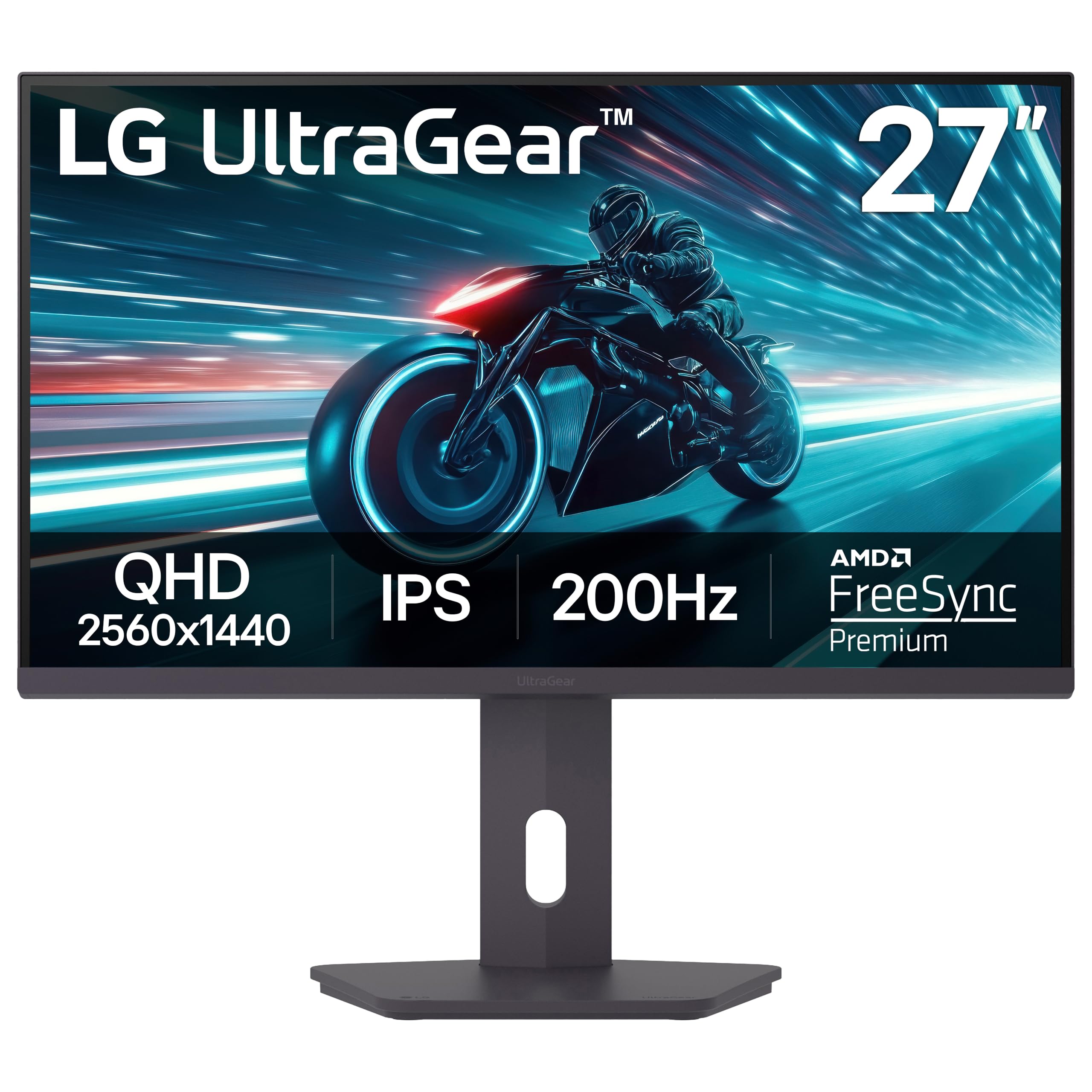
Flat IPS with Ergonomics

LG Ultragear 27GS75Q

86 /100
Lab Score Excellent

Key details

Panel Type
IPS
Color Gamut
99% sRGB
Refresh Rate
180Hz
Adaptive Sync
G-Sync + FreeSync
View on Amazon

The LG 27GS75Q-B offers the height, tilt, pivot, and swivel adjustments typically missing from budget gaming monitors, paired with a vibrant 1440p IPS panel and a smooth 180Hz refresh rate. Colors appear punchy out of the box, and motion handling at 180Hz feels fluid for fast-paced games. However, this model lacks the long user history of the top pick ASUS TUF, so confidence in its durability is lower. Some units have exhibited a yellow tint or backlight bleed, so inspecting the monitor immediately upon arrival is wise. For buyers who value an adjustable stand above proven reliability, this is a cost-effective entry into 1440p gaming.

Pros

  • Full ergonomic stand with height, tilt, pivot, and swivel
  • Vibrant IPS panel with 99% sRGB coverage and fluid 180Hz motion.
  • Flat 27-inch QHD resolution hits a sweet spot for gaming and productivity.

Cons

  • In a dark room, some units may show yellow tint or backlight bleed in the corners.
Our verdict

Best suited for budget-focused gamers who need a fully adjustable stand and are comfortable with possible color uniformity variation rather than a proven track record.

Check Latest Price
11

240Hz on a Budget

Acer Nitro XV272U W2

85 /100
Lab Score Excellent

Key details

Panel Type
IPS
Color Gamut
99% sRGB
Refresh Rate
240Hz
Adaptive Sync
FreeSync Premium
View on Amazon

The Acer Nitro XV272U W2 delivers sharp 1440p gaming with a fast 240Hz IPS panel and 0.5ms response, matching the specs of monitors costing significantly more. However, the advertising lists HDMI 2.1 ports that are actually HDMI 2.0, limiting console performance to 1440p 120Hz only via DisplayPort. Additionally, some units arrive with dead pixels or backlight bleed, making inspection on arrival necessary. Misleading advertising and high dead-pixel rates relegate it to a cautionary pick.

Pros

  • Sharp 1440p IPS panel with smooth 240Hz and 0.5ms response for competitive gaming.
  • Mid-range price for a 240Hz IPS

Cons

  • Console gamers expecting 1440p 120Hz via HDMI will find only HDMI 2.0 ports
  • Dead pixels or backlight bleed may appear within days; inspect immediately upon receipt.
Our verdict

Best for PC gamers who can use DisplayPort and are comfortable checking for defects on arrival.

Check Latest Price

How to Choose

Panel Type and Image Quality

IPS panels offer wide viewing angles and accurate colors but suffer from lower contrast and IPS glow in dark corners. VA panels provide deeper blacks and higher contrast (2500:1 to 3000:1) at the cost of narrower viewing angles and slightly slower pixel response. OLED delivers infinite contrast and perfect blacks but is significantly dimmer in bright rooms and prone to burn-in over years of static UI.

For mixed gaming and productivity, IPS is the safest choice. For dark-room cinematic games, VA or OLED excel. If you play in a bright room, avoid OLED — its peak brightness is roughly half that of a good IPS panel.

Refresh Rate and Response Time

Refresh rate determines how many frames per second the monitor can display. 144Hz to 180Hz is the sweet spot for most gamers — the jump from 60Hz is dramatic, but going from 180Hz to 240Hz provides diminishing returns. Response time (GtG or MPRT) indicates how fast pixels change color; 1ms GtG is sufficient for all but the most demanding esports players.

The hidden trade-off: higher refresh rates require a stronger GPU to push those frames. A 240Hz monitor is wasted if your graphics card only reaches 120fps in your favorite game. Similarly, advertised response times are often measured in ideal conditions — real-world motion clarity depends on overdrive tuning and panel technology.

Adaptive Sync Support

Adaptive sync (FreeSync or G-Sync) eliminates screen tearing by matching the monitor's refresh rate to the GPU's frame output. Most modern monitors are G-Sync Compatible and work with both NVIDIA and AMD cards over DisplayPort. FreeSync Premium adds low-framerate compensation (LFC) for smoother playback below 48fps.

VRR flicker is a known issue with OLED panels in this category — when frame rates fluctuate, the monitor may pulse in brightness. IPS and VA panels rarely exhibit this behavior. If you play variable-framerate titles, an IPS monitor with G-Sync will provide a more consistent experience.

Color Accuracy and HDR

Color gamut is measured as a percentage of sRGB or DCI-P3. 95% DCI-P3 provides vibrant, lifelike colors ideal for gaming and media consumption. HDR certification (DisplayHDR 400, 600, etc.) indicates peak brightness and color volume, but budget monitors rarely deliver convincing HDR — they lack the local dimming and brightness to make highlights pop.

The reality: a 1440p monitor with DisplayHDR 400 is fine for basic HDR support but won't match a true HDR experience. For most buyers, focus on color gamut (95% DCI-P3 or 130% sRGB) rather than HDR rating. The Samsung Odyssey OLED G5 is an exception — its infinite contrast gives a convincing HDR look despite only HDR10 support.

Connectivity and Ports

HDMI 2.1 is essential for console gamers: PS5 and Xbox Series X can output 1440p at 120Hz over HDMI 2.1, while HDMI 2.0 limits them to 1440p 60Hz or 1080p 120Hz. DisplayPort 1.4 is standard for PC — it can handle 1440p at 240Hz without compression. USB-C with DP Alt mode is useful for connecting a laptop with a single cable.

A common trap: some monitors advertise HDMI 2.1 but ship with HDMI 2.0 ports (the Acer Nitro XV272U W2 is a notorious example). Always verify in the spec sheet or user reviews. If you only use a desktop PC, HDMI 2.0 is fine — just use DisplayPort for high refresh rates.

Frequently Asked Questions