9 Best AM5 Gaming CPU of 2026: Get the Right Cores Without Waste

Which AM5 gaming CPU delivers real-world FPS without overspending on cores you won't use? A guide for gamers building a new PC.

Picking an AM5 gaming CPU often means balancing core counts against real-world frame rates. Many buyers reach for 12 or 16 cores thinking they need them for future-proofing, when most games barely use eight. That extra money could go toward a better GPU or faster memory.

Cooling is another blind spot. The difference between a 65W chip that runs quietly on a $30 tower cooler and a 170W beast that demands a 360mm AIO is massive, yet often ignored until the first thermal throttle. Understanding this trade-off is what separates a smart build from a frustrating one.

This guide focuses on what actually matters for gaming: single-core speed, cache architecture, and cooling headroom. The goal is to match you with the CPU that fits your actual workload and budget, not the one with the most impressive spec sheet.

1

Best Overall

Ryzen 7 9800X3D

96 /100
Lab Score Outstanding

Key details

TDP
140 W
3D V-Cache
Yes (96 MB)
Cache Size
104 MB
Core Count
8
View on Amazon

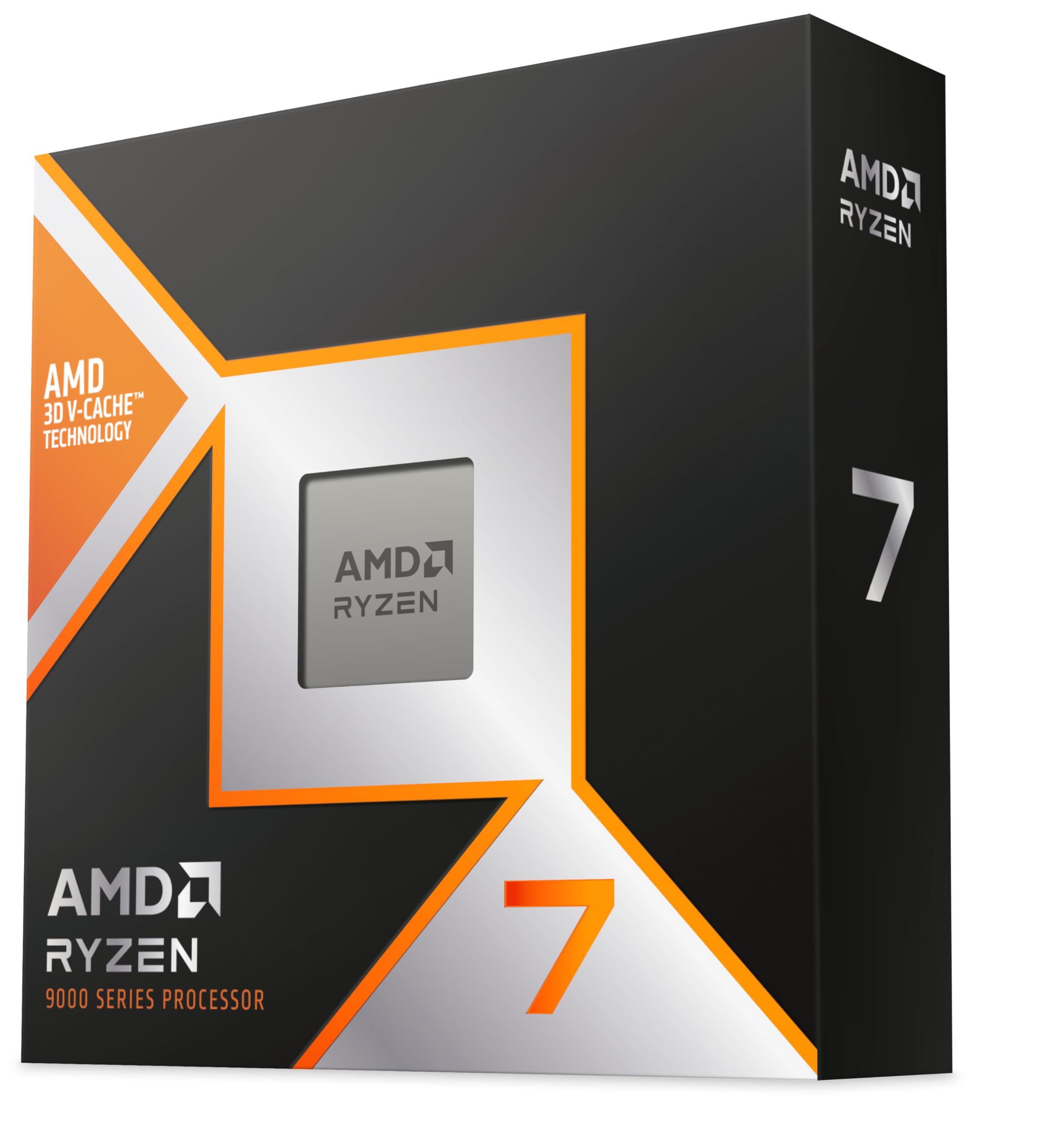
The Ryzen 7 9800X3D delivers the highest frame rates in any gaming title, driven by its Zen5 architecture and 96MB of 3D V-Cache. In cache-sensitive games the lead over competitors is especially clear, while the chip runs cooler than earlier X3D generations, easing cooling requirements.

During extended gaming sessions the 9800X3D holds consistent frame rates without throttling. The 8-core, 16-thread design handles simultaneous streaming and recording without noticeable dips, making it a strong fit for gamers who multitask.

This CPU suits hardcore gamers and high-end builders who prioritize maximum FPS and have the budget to match. It also manages light content creation alongside gaming without issue. However, the nearly identical gaming performance of the 7800X3D for about $100 less is a real consideration. For heavy productivity workloads, higher-core alternatives will outperform it.

The choice between the 9800X3D and the 7800X3D comes down to whether the extra investment buys a meaningful edge. In most games the difference is small, but the 9800X3D offers a cleaner thermal profile and slightly better consistency, appealing to builders who want the safest path to uncompromised performance.

Pros

  • Delivers the highest frame rates in any gaming title
  • Runs cooler than previous X3D chips, reducing cooling demands
  • Handles gaming, streaming, and productivity tasks simultaneously without stutter
  • Large 104MB cache reduces latency and improves performance in data-heavy workloads

Cons

  • Behind higher-core CPUs in heavy productivity tasks
  • Premium price - the 7800X3D offers nearly identical gaming performance for about $100 less
Our verdict

The 9800X3D is the fastest gaming processor available - if you want maximum FPS and are willing to pay for it, this is the pick.

Check Latest Price
2

Best Value High-End

Ryzen 7 7800X3D

96 /100
Lab Score Outstanding

Key details

TDP
120 W
3D V-Cache
Yes (96 MB)
Cache Size
104 MB
Core Count
8
View on Amazon

For gamers prioritizing frame-per-dollar value, the 7800X3D matches the top pick's performance in cache-heavy titles while costing roughly $100 less. It leverages the same 3D V-Cache technology to boost gaming throughput, making it a compelling alternative for those who can forgo the slight extra lead of the 9800X3D.

Power efficiency is a highlight — the chip idles at low wattage and draws under 120W under load, reducing heat output compared to other high-end CPUs. Some units have shown temperature sensitivity; an aftermarket cooler is recommended to maintain consistent boost clocks under sustained gaming sessions.

This processor fits gamers building a $1500–$2000 rig who want high-end gaming without overspending. The main tradeoff to weigh: some units may experience instability after extended use, so pairing it with a quality motherboard and adequate cooling lowers this risk. Those upgrading from Ryzen 5000 series will see a sizable gaming uplift.

💡 An aftermarket cooler is recommended to maintain consistent boost clocks during long gaming sessions.

Pros

  • Exceptional gaming performance for the price
  • Excellent power efficiency for an 8-core X3D chip
  • Easy installation and broad compatibility with AM5 motherboards

Cons

  • Stability after extended use can vary; some units may develop instability over months of heavy gaming.
Our verdict

The 7800X3D is the cost-effective choice for gamers who want top-tier frames without paying a premium — just pair it with a quality cooler and motherboard.

Check Latest Price
3

Best Mid-Range All-Rounder

Ryzen 7 9700X

95 /100
Lab Score Outstanding

Key details

TDP
105 W
3D V-Cache
No
Cache Size
40 MB
Core Count
8
View on Amazon

Single-core performance is notably strong here, with the 9700X handling modern games and everyday tasks with ease. The processor sips power at idle—around 20-25 watts—and stays cool under most loads, making it a quiet option even with a modest air cooler.

This CPU suits gamers who want a capable 8-core chip without paying a premium for X3D cache. It also fits energy-conscious builders aiming for a low-heat, quiet PC. Bear in mind that in cache-sensitive titles, frame rates won’t match those of the 7800X3D or 9800X3D—if leaderboard-topping performance is the goal, those chips are the better fit.

At its price point, the 9700X offers a well-rounded package: solid gaming performance, low power draw, and easy cooling. It doesn’t chase raw multi-core records or absolute gaming extremes, but it delivers where most buyers actually need it.

Pros

  • Excellent single-core speed that handles modern games and daily apps smoothly.
  • Very low idle power draw (20-25W) and easy to cool, perfect for quiet builds.
  • Good value for an 8-core Zen5 CPU, especially when discounted.

Cons

  • For heavy rendering or video editing, the eight-core configuration limits throughput compared to 12-16 core alternatives.
Our verdict

If you want a mid-range AM5 processor that balances gaming performance, low heat, and cost without chasing X3D extremes, the 9700X is the one to buy.

Check Latest Price
4

Best Budget Gaming

Ryzen 5 9600X

98 /100
Lab Score Outstanding

Key details

TDP
65 W
3D V-Cache
No
Cache Size
38 MB
Core Count
6
View on Amazon

The Ryzen 5 9600X offers the lowest entry point to AM5 gaming with a 65W TDP that stays cool even on budget air coolers, and delivers over 100 FPS in esports titles like Valorant and CS2. Its low power draw keeps electricity costs down and makes it a natural fit for compact builds where airflow is limited.

In actual gameplay, the 9600X handles modern competitive shooters and MOBAs without breaking a sweat, producing little heat even during extended sessions. The Zen5 architecture brings modest IPC gains over the previous 7000-series, showing a clear performance uplift for anyone upgrading from an older AM4 chip.

This chip is for gamers building their first AM5 system on a strict budget, or those upgrading from an older platform like Ryzen 5 3600. The 6-core/12-thread design is sufficient for pure gaming but shows limits when streaming and gaming simultaneously — consider an 8-core model if you need to multitask heavily while gaming.

Pros

  • 100+ FPS in popular esports titles at a budget-friendly price
  • 65W TDP runs cool on basic air coolers, reducing build complexity and cost
  • Low power draw keeps noise down and electricity bills low

Cons

  • When streaming and gaming simultaneously, the 6-core design may cause frame drops in CPU-heavy titles
Our verdict

For budget-focused gamers who don't multitask while playing, this is the most cost-effective AM5 option available today.

Check Latest Price
5

Best Extreme Gaming + Creator

Ryzen 9 9950X3D

93 /100
Lab Score Outstanding

Key details

TDP
170 W
3D V-Cache
Yes (144 MB)
Cache Size
144 MB
Core Count
16
View on Amazon

With 144MB of total cache and a 5.7GHz boost, the 9950X3D stands as the most cache-rich, highest-clocked AM5 CPU AMD offers. Where the 8-core 9800X3D takes the crown in raw gaming frame rates, this 16-core chip closes the gap in most titles while blowing past it in rendering, compilation, and other heavily threaded tasks.

This processor is built for the person who edits 8K video on a deadline and unwinds with a graphically intense game at max settings. The high price and 170W TDP mean it pairs best with a premium 360mm AIO and a budget that doesn't flinch at the $640 tag. For pure gamers, the 9800X3D delivers nearly identical gaming performance at a lower cost and thermal load.

The 144MB cache eliminates stutter in cache-bound games, delivering smooth frame rates at max settings across the board. The extra cores don't hurt gaming, but they shine when you switch to productivity, making this a single-system solution for demanding workloads.

💡 Pair with a 360mm AIO cooler from the start; air coolers will throttle under prolonged heavy loads.

Pros

  • Delivers elite gaming frame rates and workstation-level multi-core performance in a single socket.
  • 144MB cache and 5.7GHz boost prevent bottleneck in cache-sensitive games and heavy apps.
  • Sixteen cores and thirty-two threads handle parallel workloads like video editing, 3D rendering, and code compilation simultaneously.

Cons

  • The 170W TDP can push temperatures high under sustained all-core loads, demanding a high-end 360mm liquid cooler.
  • In compact or poorly ventilated cases, the heat output may require careful airflow planning.
Our verdict

A top-tier hybrid CPU that asks for a premium cooler and a premium budget - exactly right for creators who want no compromise in gaming and work.

Check Latest Price
6

Best for Small Form Factor

Ryzen 5 7600X3D

89 /100
Lab Score Excellent

Key details

TDP
105 W
3D V-Cache
Yes (96 MB)
Cache Size
102 MB
Core Count
6
View on Amazon

The Ryzen 5 7600X3D packs 96MB of 3D V-Cache into a six-core design, achieving frame rates that rival pricier X3D chips in cache-sensitive titles. Its 105W TDP keeps cooling demands manageable, making it one of the most gaming-efficient options for compact builds.

This processor is built for SFF enthusiasts and budget gamers who want X3D-level performance without reaching the $350+ mark. The compact footprint fits tight cases, and the price undercuts larger X3D models by a wide margin. However, the six-core limit means it's not suited for heavy multitasking or content creation; pure gaming is its strength.

Idle power draw and temperatures run higher than non-X3D competitors, something to consider if you prioritize low power consumption at idle. Under gaming loads, efficiency normalizes. A separate cooler is required, which is standard for this segment, and low-profile options work well in SFF builds.

Pros

  • Best-in-class gaming value for a 6-core CPU, delivering frame rates that often match larger X3D chips in cache-sensitive titles.
  • Compact size and efficient gaming performance make it an ideal fit for small form factor builds.
  • Lower cost than eight-core X3D models while offering comparable gaming performance in many scenarios.

Cons

  • Idle power consumption runs higher than non-X3D chips, and temperatures are warmer at light loads.
  • No cooler included, requiring a separate purchase; low-profile coolers may be needed for SFF cases.
Our verdict

For SFF builders and budget-conscious gamers, the Ryzen 5 7600X3D delivers top-tier gaming performance without the cost or size premium of larger X3D chips.

Check Latest Price
7

Streaming + Gaming

Ryzen 9 9900X

95 /100
Lab Score Outstanding

Key details

TDP
120 W
3D V-Cache
No
Cache Size
76 MB
Core Count
12
View on Amazon

The Ryzen 9 9900X brings 12 Zen5 cores and 24 threads to AM5 at a price that makes sense for users who need both gaming responsiveness and heavy multitasking. In titles like Cyberpunk or Warzone, it keeps frame rates high while handling a simultaneous stream encode or video export in the background — a task that burdens 6- and 8-core chips. Where it falls short is in pure gaming: the 9800X3D and 7800X3D pull ahead in cache-sensitive scenes, so pure gamers get more from those. Thermal management is the other boundary — under sustained all-core loads the CPU can push past comfortable temps with a stock or budget cooler, making a quality aftermarket unit a necessary addition rather than an optional upgrade.

💡 Pair with a quality 240mm AIO or large air cooler to keep temperatures in check during long rendering or streaming sessions.

Pros

  • Multi-core performance handles gaming alongside streaming or video editing without slowdown.
  • Good value among 12-core Zen5 processors at this price tier.
  • Memory support and installation are straightforward, with no unexpected hurdles.

Cons

  • Temperatures can climb under sustained full load even with decent coolers, requiring an upgrade.
Our verdict

Ideal for the gamer who also streams or edits video and is willing to invest in aftermarket cooling to unlock the multi-core headroom.

Check Latest Price
8

Productivity Focus

Ryzen 9 7900

92 /100
Lab Score Outstanding

Key details

TDP
65 W
3D V-Cache
No
Cache Size
76 MB
Core Count
12
View on Amazon

The Ryzen 9 7900 delivers 12 cores and 24 threads at a 65W TDP, staying cool and silent even under sustained loads. The bundled Wraith Prism RGB cooler is adequate for daily use, saving buyers the cost of an aftermarket unit. Multitasking and content creation workloads fly, making this a strong choice for mixed-use systems. However, gaming performance trails the 3D V-Cache models by a noticeable margin, so pure gaming-focused builders will get better frame rates from the 9600X or an X3D chip at a similar or lower price.

Pros

  • Runs at low temperatures with quiet operation even under load
  • Includes a decent RGB cooler that saves buyers money on the build
  • 12 cores handle demanding productivity and multitasking with ease

Cons

  • In cache-sensitive games, frame rates fall short of X3D models
  • 65W TDP limits overclocking headroom, so extreme tuning is not an option
Our verdict

For a quiet home office or media-editing PC that occasionally runs lighter games, this 12-core processor delivers strong performance with no extra cooler cost.

Check Latest Price
9

Cheapest AM5

Ryzen 5 7600X

96 /100
Lab Score Outstanding

Key details

TDP
105 W
3D V-Cache
No
Cache Size
38 MB
Core Count
6
View on Amazon

The Ryzen 5 7600X delivers capable gaming performance at the lowest AM5 price point, making it a practical option for budget builds. Its older Zen4 architecture draws more power than newer alternatives, and the lack of integrated graphics means a discrete GPU is mandatory. For users upgrading from very old platforms on a tight budget, this CPU offers good value, but those prioritizing efficiency or multi-threaded tasks should consider newer options.

Pros

  • Affordable entry into AM5 with strong single-core gaming performance
  • Solid upgrade path for users on very old Ryzen platforms

Cons

  • No integrated graphics
  • Higher power draw compared to newer Zen5 chips
Our verdict

Best for budget-conscious builders upgrading from older platforms who already own a discrete GPU and can accept slightly higher power usage.

Check Latest Price

How to Choose

Core Count

Most games today use six to eight threads effectively. Jumping from 6 to 12 cores rarely improves frame rates, but it adds $100–$200 and forces you to buy a bigger cooler. For pure gaming, an 8-core CPU is the sweet spot. Go higher only if you stream, edit video, or compile code alongside gaming.

3D V-Cache

AMD's 3D V-Cache stacks extra L3 cache on top of the CPU die, dramatically reducing memory latency for games that repeatedly access the same data. Titles like Cyberpunk 2077, Factorio, and simulation games see 15-30% higher 1% lows with X3D chips. The trade-off is higher standby power draw and slightly lower boost clocks on older X3D models.

Boost Clock

Higher boost clocks directly improve single-threaded game performance, but the gains above 5.0 GHz are marginal (1-3% per 100 MHz). A 5.4 GHz non-X3D chip might match an X3D chip in older titles but lose in cache-heavy ones. Focus on sustained boost under load rather than peak spec.

TDP and Cooling

TDP is a rough guide to the heat a cooler must dissipate. A 65W chip like the 9600X runs quiet on a $20 tower cooler. A 170W chip like the 9950X3D needs a 280mm or larger AIO to avoid throttling in multi-threaded workloads. Many buyers underestimate the total system noise and case airflow required for high-TDP CPUs.

Cache Size

Larger L2+L3 cache reduces trips to main memory, benefiting open-world and simulation games. X3D chips pack 96-144 MB of total cache versus 38-80 MB on standard models. For competitive esports titles the difference is small, but for AAA single-player games the cache advantage can smooth out stutters.

Frequently Asked Questions