12 Best Card Game of 2026: Find Games That Fit Your Group and Last

Which card games work for families with mixed ages? This guide highlights picks that balance fun, strategy, and durability for real game nights.

Most card game listings promise 'family-friendly' and 'easy to learn,' but the real test is whether a game actually works when you have a mix of ages and attention spans. The biggest pain points come down to two factors: player count that matches your group and card stock that survives more than a few sessions.

A game that shines with 5 players may fall flat with just 2, and a deck that feels flimsy after a few shuffles kills the fun fast. The picks here are chosen not just for high ratings but for proven replayability and honest player flexibility.

Whether you need a quick 2-player option, a loud party game, or something that sneaks in math practice, the right choice depends on matching the mechanic to your group's habits. This guide focuses on games that deliver on their promises without wearing out quickly.

1

Best Overall

PlayMonster Five Crowns

98 /100
Lab Score Outstanding

Key details

Age
8+
Playtime
~30 min
Portability
Paper, box basic
Player Count
1-7
View on Amazon

Five Crowns earns its reputation with a rotating wild card system that changes each round, keeping the game engaging without requiring a rulebook refresh. The rummy-style play is intuitive enough to teach in minutes, yet the shifting strategy from round to round gives it lasting appeal for both casual and more experienced players.

The game supports 2 to 7 players, a rare flexibility that makes it work equally well for couples and larger family gatherings. The card stock is standard paper and the box is basic – fine for occasional game nights, but frequent use may show wear around the edges. That tradeoff is offset by a budget-friendly price that makes it easy to replace or store in a sturdier container.

💡 If the original box shows wear, store the cards in a deck box or bag – the cards themselves hold up fine.

Pros

  • Addictive rummy variant that engages players from 8 to 80.
  • Rotating wild cards keep each game different, boosting replayability.
  • Works well for 2 players, a rare feature in the category.

Cons

  • Cardboard box may wear out sooner than expected in some cases.
Our verdict

For mixed-age groups and couples who want a quick, engaging card game without a steep learning curve, Five Crowns delivers consistent fun at a budget price.

Check Latest Price
2

Best for Learning Math

Magilano SKYJO

96 /100
Lab Score Outstanding

Key details

Age
8+
Playtime
~30 min
Portability
Cardstock, large box
Player Count
2-8
View on Amazon

SKYJO is an addictive card game where players aim for the lowest score, turning addition and negative numbers into a fun competition. The luck-and-strategy balance keeps rounds fresh, and it supports two to eight players smoothly.

Best for families with children aged 8 and up, it works well for large gatherings and casual game nights. The game requires a sizable playing area since each player manages twelve visible cards, so a large table or floor space is necessary.

💡 Spread cards across a large table or play on the floor to accommodate the layout.

Pros

  • Highly addictive gameplay that is easy to learn with a satisfying luck/strategy balance
  • Reinforces math skills (addition, negative numbers) for kids without feeling like homework
  • Scales from two to eight players without losing quality

Cons

  • Needs a large table or floor space due to each player having twelve visible cards
Our verdict

SKYJO is a strong fit for families who want educational card play without sacrificing fun, provided you have enough table room.

Check Latest Price
3

Best Party Game

TCGCP Original

96 /100
Lab Score Outstanding

Key details

Age
7+
Playtime
10-15 min
Portability
Cardboard, thin
Player Count
2-8
View on Amazon

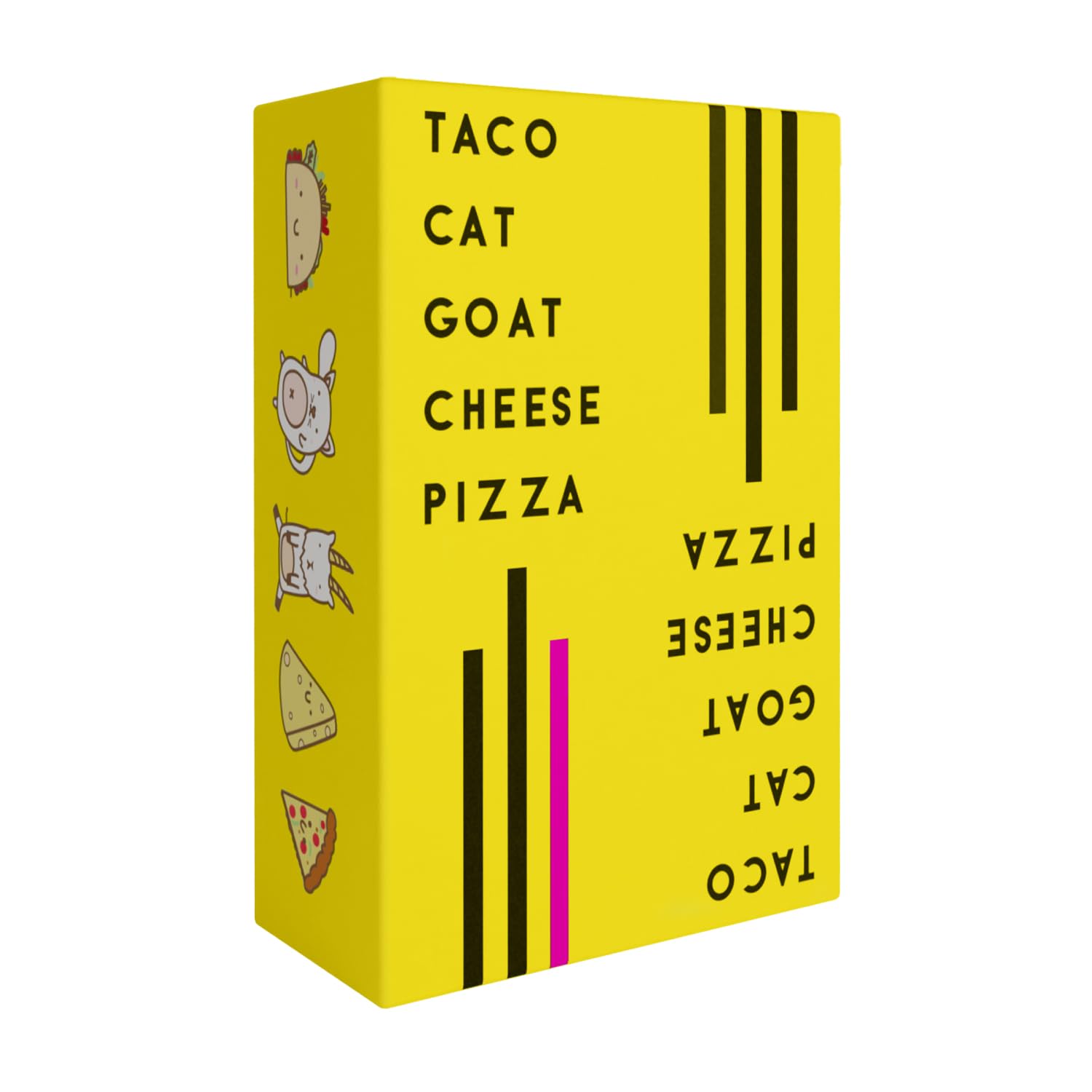
Taco Cat Goat Cheese Pizza plays in rapid 10-15 minute rounds where players slap matching cards and shout increasingly silly words. Rules are intuitive enough that a group starts playing within seconds of opening the box. This makes it a natural fit for party icebreakers, large groups, and kids who love active, silly games. Unlike the more calculated play of Five Crowns, this game trades strategy for pure reaction speed. Those who want a quiet strategic experience or long-lasting card stock should look elsewhere - the thin cardboard will show wear after regular play.

💡 Sleeving the cards is a low-cost way to keep them in good shape through repeated sessions.

Pros

  • Extremely fast-paced slap-and-shout game that generates laughter in groups.
  • Simple rules that even non-gamers can grasp instantly.

Cons

  • Card stock is thin cardboard; cards may show wear after repeated play.
Our verdict

A loud, fast party game ideal for large groups and icebreakers, best enjoyed knowing the cards will need replacing after regular play.

Check Latest Price
4

Best Strategy for Small Groups

Hasbro Monopoly Deal

96 /100
Lab Score Outstanding

Key details

Age
8+
Playtime
~15 min
Portability
Plastic coated, small
Player Count
2-5
View on Amazon

Monopoly Deal captures the strategic depth of its board-game parent—buying properties, charging rent, and negotiating—in a compact card format that plays in about 15 minutes. At under $6, it's a budget-friendly way to teach resource management and bluffing to small groups of 2–5 players. The game travels easily, so it's a solid option for family trips or quick game nights. One thing to keep in mind: the rules around certain card interactions (like 'Just Say No') can lead to table disputes, so having a tiebreaker agreed upon beforehand helps keep the pace.

💡 Agree on 'Just Say No' resolution before starting to keep rounds moving smoothly.

Pros

  • Delivers Monopoly's fun in a fraction of the time, with fast 15-minute rounds.
  • Teaches strategic thinking and resource management through a mix of luck and choice.
  • Extremely portable and affordable—easy to toss in a bag for travel or spare-time play.

Cons

  • Rule interpretation can cause minor arguments, especially around the timing of 'Just Say No' cards.
Our verdict

If you want Monopoly strategy without the hours-long commitment and have 2–5 players, this card version delivers strong value for the price.

Check Latest Price
5

Best Budget Game for Groups

USAOPOLY Flip 7

98 /100
Lab Score Outstanding

Key details

Age
8+
Playtime
20 min
Portability
Paper, small
Player Count
3+
View on Amazon

Flip 7 delivers fast rounds where each draw forces a choice: push for a higher number or bank your points before busting. Unlike louder party games that rely on reflex, this one quietly teaches probability while keeping the table engaged. The 20-minute playtime and compact box make it a natural fit for travel or family game nights where you need something quick between dinner and dessert.

Best suited for groups of three to eight — especially families with school-age kids who benefit from the addition practice baked into the scoring. The paper card stock is light, but at this price point it holds up fine for occasional use. Skip this if you are looking for a two-player option; the press-your-luck tension depends on multiple people at the table.

Pros

  • Simple risk-reward loop that anyone can understand in under a minute
  • Portable and quick to set up
  • Subtle math practice for kids disguised as a competitive game

Cons

  • Requires at least three players
Our verdict

If you regularly have three or more players and want a game that is both addictive and subtly educational, Flip 7 is a near-perfect fit. For two-player households, look at Five Crowns instead.

Check Latest Price
6

Golf Fans, Families

Play Nine Card Game

98 /100
Lab Score Outstanding

Key details

Age
8+
Playtime
~15 min
Portability
Paper, basic
Player Count
2-6
View on Amazon

Play Nine delivers a fast, golf-themed card game that works for ages 5 to seniors, with quick 15-minute rounds. The paper cards may bend over time, and the theme limits its appeal to non-golf fans. Worth considering for small groups who love the sport.

Pros

  • Fast-paced golf-themed gameplay that keeps rounds short and replayable.
  • Accessible to a wide age range, from young children to seniors.

Cons

  • Paper card stock can bend after moderate use, especially with frequent play.
Our verdict

Best for families who enjoy golf and want a quick, inclusive card game that bridges generations.

Check Latest Price
7

Toddlers, Classrooms, Gifts

Regal Games 6-Pack

96 /100
Lab Score Outstanding

Key details

Age
4+
Playtime
5-15 min
Portability
Plastic coated, multi-deck
Player Count
2-6 per game
View on Amazon

This six-pack bundles Go Fish, Crazy 8's, Old Maid, Slap Jack, Garbage Monster, and War into one box with cards sized for small hands. The variety and low price make it a natural choice for classrooms, daycares, or gift baskets. Each game is very basic, though — children around age 8 will lose interest quickly, and the coated card stock can feel thin after repeated shuffling.

Pros

  • Six classic games included, giving young kids plenty of variety without buying separate decks.
  • Cards are extra large and durable enough for small hands to hold and play comfortably.

Cons

  • Some decks use thinner card stock that may show wear sooner than expected for frequent play.
Our verdict

Ideal for introducing card games to toddlers and kindergarteners, but skip this set if you need something that will hold a 8-year-old's attention or survive heavy classroom use.

Check Latest Price
8

Fairy Tale Lovers, Math

Gamewright Sleeping Queens

98 /100
Lab Score Outstanding

Key details

Age
8+
Playtime
15-20 min
Portability
Plastic coated, small
Player Count
2-5
View on Amazon

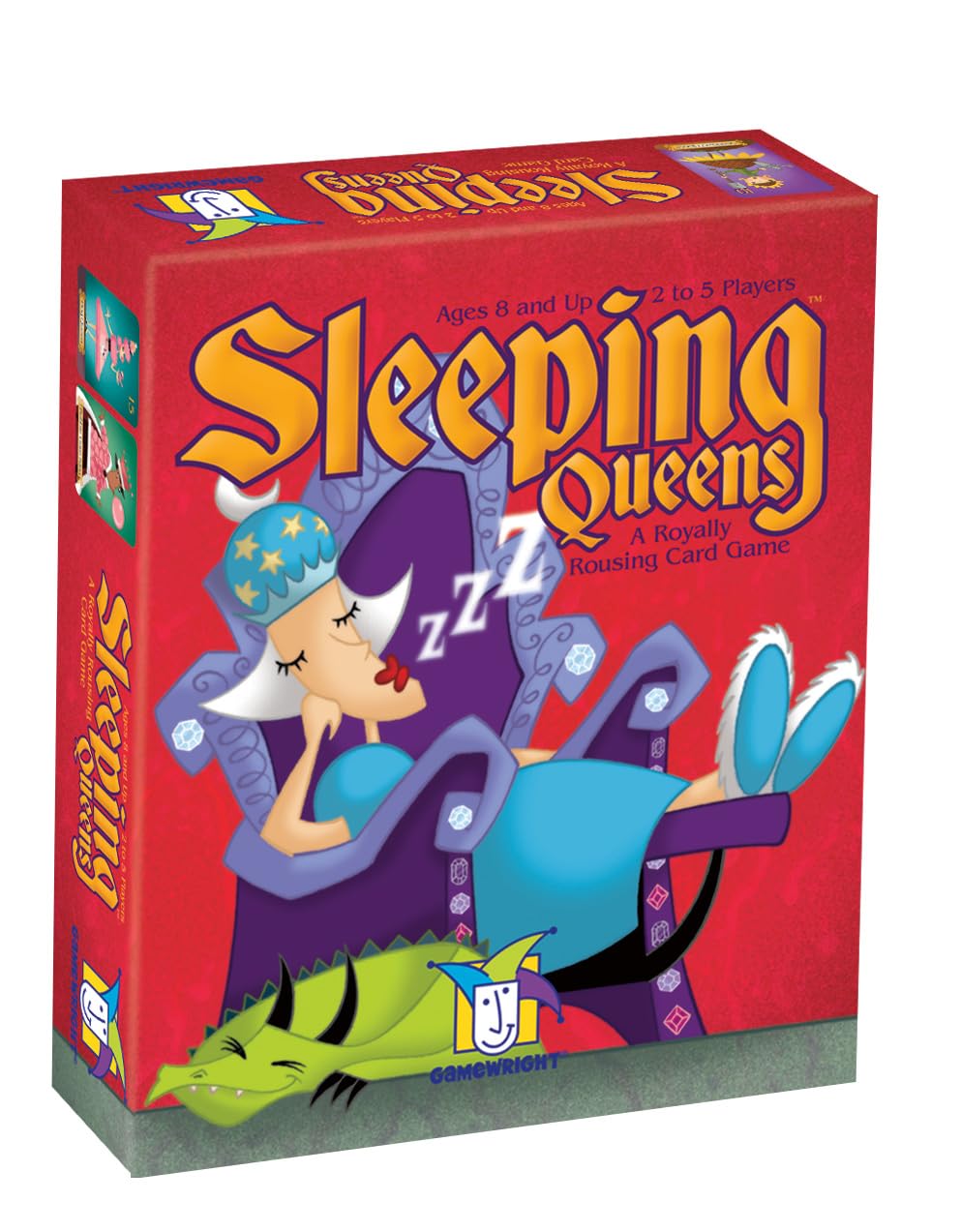
Sleeping Queens wraps addition practice in a fairy-tale adventure that holds attention across generations. Rounds last 15 minutes, ideal for short attention spans. The rulebook can confuse younger kids initially, needing adult help — a small hurdle that, with a smaller review count, explains its lower ranking. For families wanting math disguised as magic, this delivers.

Pros

  • Charming theme and mechanics engage both kids and adults, making family game night a shared delight.
  • Sneaks in math practice through gameplay without feeling like a lesson.

Cons

  • Rule complexity can confuse younger players; adult guidance may be needed initially.
Our verdict

Best for families with children ages 6+ who enjoy fairy tales and want a gentle math boost, especially if an adult can guide the first game or two.

Check Latest Price
9

Competitive Families, Take-That

Grandpa Beck's Cover Your Assets

96 /100
Lab Score Outstanding

Key details

Age
7+
Playtime
20-40 min
Portability
Paper, medium
Player Count
2-6
View on Amazon

Cover Your Assets delivers a speedy, cutthroat card game where players build asset sets and swipe others' collections. The rules are simple enough to teach in minutes, and the take-that action creates real table energy. However, the core loop of stealing can frustrate anyone who prefers building without interference, so it's best for groups that enjoy playful rivalry rather than cooperative or low-conflict play.

Pros

  • Fast to learn and play, with strategic layers beneath the simple rules.
  • Generates loud laughter and engagement through the asset-stealing mechanic.

Cons

  • Players who dislike having their progress undone may find the frequent stealing frustrating.
Our verdict

Great for families and game nights where friendly theft is part of the fun, but skip it if someone in the group hates losing what they've built.

Check Latest Price
10

Seniors, Retro, Education

Winning Moves Rack-O

96 /100
Lab Score Outstanding

Key details

Age
8+
Playtime
20-30 min
Portability
Cardstock, w/ plastic racks
Player Count
2-4
View on Amazon

The Rack-O Retro Edition is a straightforward number-sequencing game that helps build math sense without feeling like homework. The plastic card racks are a tactile upgrade over standard card games. However, the player cap of 4 and the distinctly 1950s aesthetic limit its appeal to larger modern family gatherings.

Pros

  • Teaches number sequencing and logic in an engaging way for school-age kids
  • Nostalgic appeal for retro game lovers, evoking a classic feel

Cons

  • Capped at 4 players - not suitable for larger gatherings or parties
Our verdict

Best for small family game nights where math practice is a bonus, but skip if you regularly host groups larger than 4.

Check Latest Price
11

Universal, Travel, Large Groups

Mattel UNO

96 /100
Lab Score Outstanding

Key details

Age
7+
Playtime
~15 min
Portability
Cardstock, tin
Player Count
2-10
View on Amazon

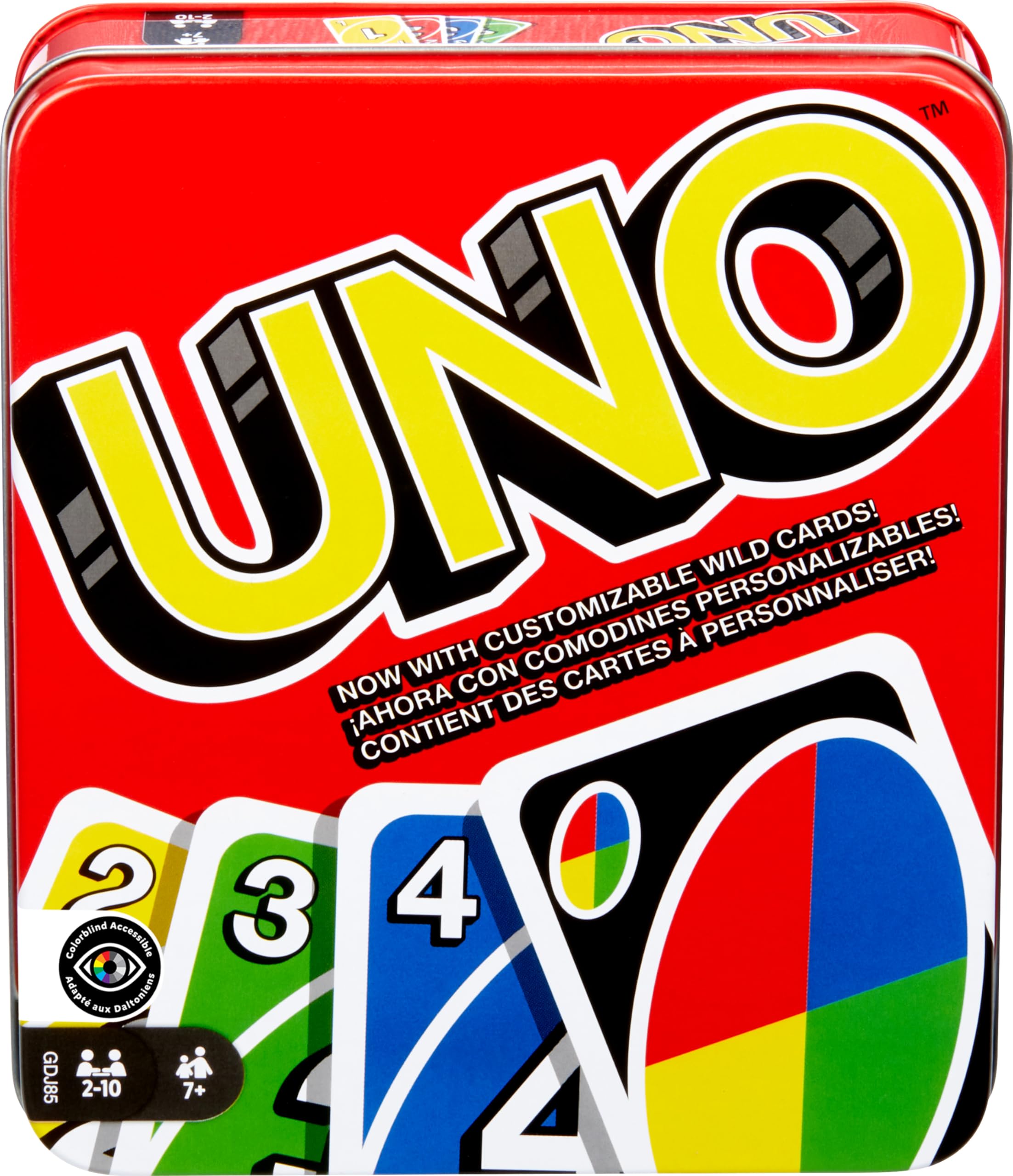
UNO's universal appeal and color-blind accessible symbols make it a staple for large family gatherings and on-the-go play. The metal tin keeps cards organized. However, the card stock can stick when new, making shuffling slightly annoying. For those seeking strategic depth, Five Crowns offers more challenge — UNO remains the go-to for quick, inclusive fun.

Pros

  • Classic gameplay that everyone knows, easy to pick up for any group.
  • Color-blind accessible symbols make it inclusive for players with color vision deficiency.

Cons

No notable drawbacks to flag.

Our verdict

For families with young kids or large groups who value simplicity and portability over strategic depth, UNO remains an essential addition to any game closet.

Check Latest Price
12

Humor, Teens, Filler

Exploding Kittens Original

93 /100
Lab Score Outstanding

Key details

Age
7+
Playtime
15 min
Portability
Cardboard, thin
Player Count
2-5
View on Amazon

The Oatmeal's signature artwork and silly theme make this a hit at parties, with simple rules that let anyone jump in for 15-minute rounds. However, the cardboard cards are thin and prone to bending after moderate use, and gameplay lacks depth for extended sessions — better suited as a novelty icebreaker than a staple for serious card game collectors.

Pros

  • Iconic Oatmeal artwork and silly humor create a lighthearted experience for teens and young adults.
  • Simple rules and fast 15-minute rounds make it an easy filler game for any gathering.

Cons

  • Card stock is thin and prone to damage after moderate play, especially for the price.
Our verdict

This works best as a budget-friendly, humorous icebreaker for groups who value theme over durability.

Check Latest Price

How to Choose

Player Count

Games that claim to support 2–8 players often work well only in the middle of that range. A game that needs 4 players to be fun will sit unused if your household is usually just two. Check the minimum player count where the game still feels balanced — for couples, look for games explicitly praised for 2-player play.

Five Crowns and SKYJO are rare examples that genuinely work with 2 players while still scaling to larger groups. Avoid games that require 4+ unless you have a consistent group.

Playtime

Short rounds (10–15 minutes) keep attention for young kids or party settings, but they can feel shallow for strategic players. Longer games (30+ minutes) offer deeper decisions but risk losing the table if someone is not engaged.

The hidden trade-off: fast games rely heavily on luck to wrap up quickly, while longer games need enough strategic depth to sustain interest. Pick based on your group's attention span and how many rounds you plan to play in a session.

Age Suitability

Most games are labelled 8+, but the real gatekeeper is reading ability and number sense. A 7-year-old who can add single digits will handle SKYJO or Flip 7 better than a game that requires reading card text like Monopoly Deal.

For families with a wide age range, choose games with visual cues and minimal text. Regal Games 6-Pack uses picture-based mechanics perfect for ages 4+, but older kids may outgrow them quickly.

Luck vs Strategy

Pure luck games (like Taco Cat or Exploding Kittens) level the playing field across ages but offer no room for skill improvement. Strategy-heavy games (like Monopoly Deal or Cover Your Assets) reward repeated play but can frustrate younger or casual players.

The sweet spot for most families is a balanced game like Five Crowns or SKYJO, where luck gives everyone a chance but smart decisions improve outcomes over multiple rounds.

Portability and Storage

Card stock is the most common durability complaint. Budget games often use paper that bends, sticks, or shows wear after a few sessions. Games with plastic-coated cards (UNO tin, Regal) or thicker cardstock (SKYJO) hold up better.

A metal tin or plastic case not only protects the cards but makes travel easier. If the game lives in a closet, box quality matters less; if it goes in a backpack, prioritize the container.

Frequently Asked Questions