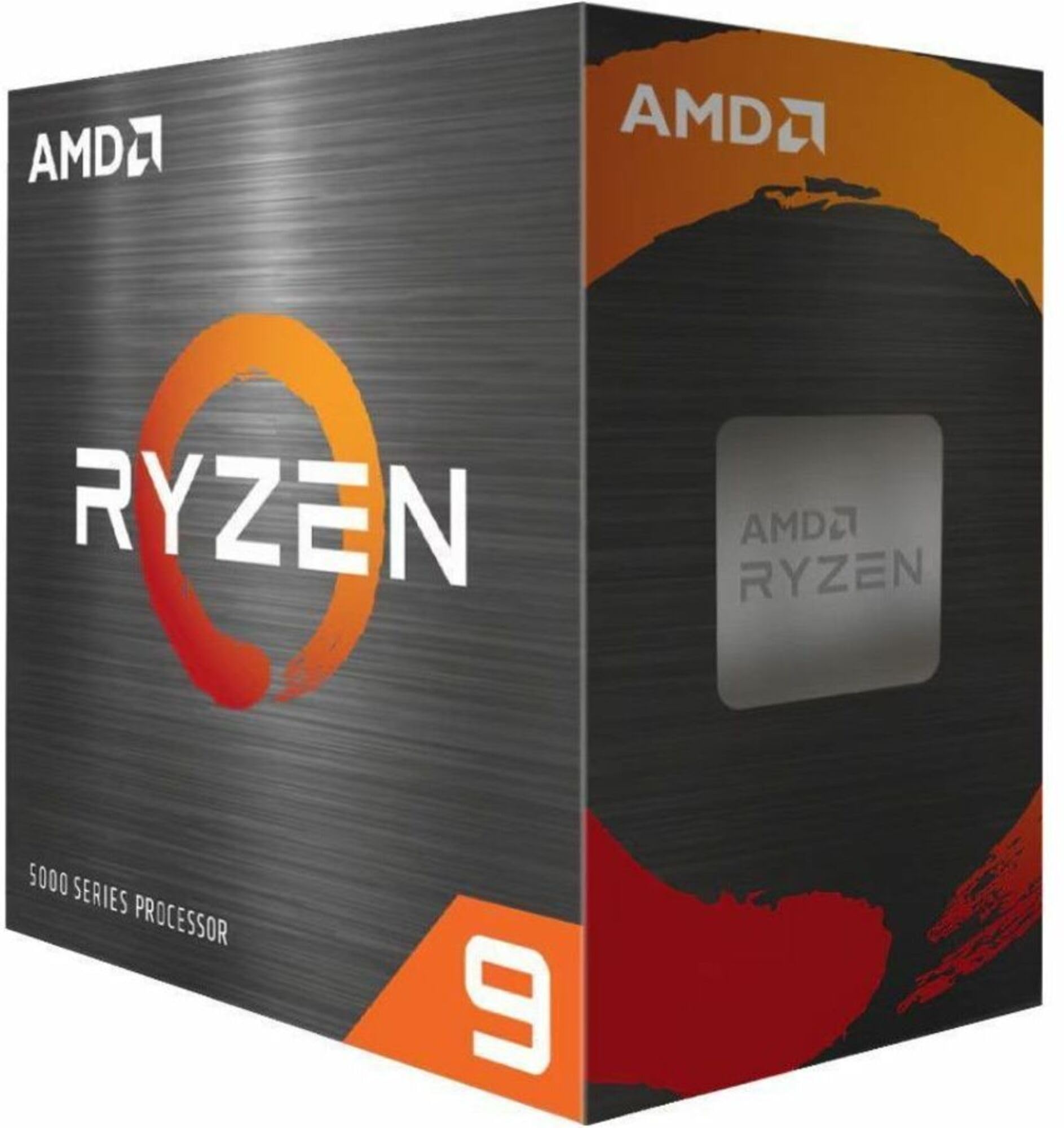
10 Best CPU for Radeon RX 6700 XT of 2026: Avoid Bottlenecks, Save Money

Find the perfect CPU for your RX 6700 XT — from budget to high-end, with advice on PCIe generation and platform costs.

Pairing a CPU with the RX 6700 XT looks simple on paper — drop in a mid-range processor and you're set. The catch is that marketing tends to highlight peak frame rates without mentioning the PCIe lane version or the cost of a new motherboard and RAM. Those details decide whether your build delivers consistent performance or leaves GPU headroom on the table.

This guide cuts through the noise by focusing on the trade-offs that actually matter: PCIe generation, core count, and platform longevity. Whether you're upgrading an existing AM4 system or building fresh on AM5, the right choice depends on where you can compromise without hurting your experience.

The best CPU for your RX 6700 XT isn't the most expensive or the most hyped — it's the one that matches your budget and how you'll actually use the machine.

1

Best Overall

AMD Ryzen 5 9600X

98 /100
Lab Score Outstanding

Key details

Socket
AM5
PCIe Gen
5.0
Cache (L3)
38 MB
Boost Clock
5.4 GHz
View on Amazon

The Ryzen 5 9600X leverages high IPC and a 5.4 GHz boost clock to deliver frame rates that keep the RX 6700 XT fully utilized at 1080p and 1440p. In CPU-bound titles like eSports shooters or strategy games, the single-thread advantage translates directly into smoother gameplay without the GPU stalling for data.

Under sustained loads, the 65 W TDP and Zen 5 architecture keep temperatures in check even with modest cooling. The chip runs cool enough that a basic air cooler handles it easily, and the low power draw means system heat buildup stays minimal during long sessions.

This CPU targets gamers building a new PC on the AM5 platform who want PCIe 5.0 bandwidth and a clear upgrade path to future Ryzen processors. It requires a new DDR5 motherboard and a separate cooler (add $25–40), so it suits buyers already planning to invest in current-gen memory and storage. The six-core design handles most games and light productivity without issue, but heavy multitasking or content work that scales beyond six threads will feel the limit.

As an entry point to AM5, the 9600X offers better future-proofing than older AM4 options because of PCIe 5.0 support for both graphics and storage. If you later upgrade the GPU, the platform won’t force a motherboard swap — a practical advantage that older chips cannot match.

💡 Since no cooler is included, budget for a $25–40 aftermarket cooler; a basic air cooler is sufficient for the 65 W TDP.

Pros

  • High single-core speed and boost clock prevent GPU bottlenecks in modern games
  • Stays cool and draws minimal power even during extended gaming sessions
  • Provides a cost-effective gateway to AM5 with DDR5 and PCIe 5.0 support
  • Simple socket installation with broad compatibility for DDR5 and PCIe 5.0 hardware

Cons

  • Does not include a cooler, requiring an aftermarket purchase (typically $25–40)
  • Six cores may limit performance in heavy multitasking or future games that use 8+ cores
Our verdict

For a new PC built around the RX 6700 XT, the 9600X delivers top-tier gaming efficiency and a modern platform — just factor in the cooler expense and be aware of the six-core ceiling.

Check Latest Price
2

Best AM4 Upgrade

AMD Ryzen 7 5800XT

95 /100
Lab Score Outstanding

Key details

Socket
AM4
PCIe Gen
4.0
Cache (L3)
36 MB
Boost Clock
4.8 GHz
View on Amazon

The 5800XT gives AM4 owners a straightforward path to 8-core gaming without replacing their motherboard or RAM. Its PCIe 4.0 support ensures the RX 6700 XT runs at full bandwidth, unlike older Ryzen chips that cap out at 3.0. For someone building fresh, the Ryzen 5 9600X on AM5 offers better single-core speed and an upgrade path, but if you already have a B550 or X570 board, this chip delivers comparable frame rates at a lower total cost.

This processor is a natural fit for gamers who want 1440p performance with occasional streaming or light productivity and already own an AM4 motherboard. The 8 cores and 16 threads handle multitasking well without bottlenecking the RX 6700 XT in CPU-bound titles. However, the bundled Wraith Prism cooler can struggle under extended gaming sessions or rendering loads, leading to higher temperatures and fan noise. Budget for an aftermarket cooler if you push sustained workloads.

Gaming benchmarks show the 5800XT matching or exceeding the 5700X in most titles, with slight gains at 1440p thanks to higher clock speeds. The 36 MB cache helps keep frame rates stable in CPU-dependent games like Counter-Strike 2 or Factorio. For the RX 6700 XT, pairing it with this CPU avoids any perceptible bottleneck at 1440p or above, while the AM4 platform keeps upgrade costs low for those not ready for DDR5.

💡 Swap the stock cooler for an aftermarket unit if your workloads push all cores for extended periods.

Pros

  • 8 cores offer smooth 1440p gaming and light productivity without breaking the bank
  • Drop-in upgrade for existing AM4 users who want a noticeable performance lift
  • 32 MB L3 cache plus 4 MB L2 keep latency low for CPU-bound games
  • Included Wraith Prism cooler with RGB is adequate for stock clocks and light use

Cons

  • Stock cooler may produce high temperatures and noise under sustained gaming or rendering loads
  • Early failure has been noted in a small number of units within the first months of use
Our verdict

For anyone with an AM4 board who wants 8-core gaming at 1440p without moving to a new platform, the 5800XT is a cost-effective upgrade that pairs well with the RX 6700 XT.

Check Latest Price
3

Best Budget Choice

AMD Ryzen 5 5500

95 /100
Lab Score Outstanding

Key details

Socket
AM4
PCIe Gen
3.0
Cache (L3)
19 MB
Boost Clock
4.2 GHz
View on Amazon

At under $85, the Ryzen 5 5500 is the lowest entry cost to a 6-core/12-thread CPU on AM4. It delivers playable frame rates in modern titles at 1080p when paired with an RX 6700 XT, making it a budget-focused alternative to pricier options like the 5600X.

This processor is aimed at builders who already own an AM4 motherboard and want to maximize gaming performance on a tight budget. The PCIe 3.0 interface can reduce frame rates in CPU-bound games compared to PCIe 4.0 alternatives, so this pairing works best when the GPU is the limiting factor — typically at 1080p medium to high settings. Those planning to upgrade to a faster GPU or targeting 1440p high-refresh will want to consider a PCIe 4.0 CPU instead.

Installation is plug-and-play, and the included Wraith Stealth cooler handles the 65W TDP quietly. However, quality control can vary — some units may show signs of instability shortly after setup, so stress-testing soon after purchase is a sensible precaution.

💡 The PCIe 3.0 interface limits GPU bandwidth in CPU-bound scenarios; for most games at 1080p the impact is minor.

Pros

  • Great value for the price
  • Delivers smooth frame rates at 1080p in most modern games with RX 6700 XT
  • Plug-and-play installation with included cooler; works with most AM4 boards after BIOS update

Cons

  • PCIe 3.0 interface can reduce frame rates in CPU-limited scenarios compared to PCIe 4.0 alternatives
  • Some units may exhibit instability shortly after installation; early stress testing is recommended
Our verdict

A cost-effective choice for budget AM4 builds at 1080p, but the PCIe 3.0 limitation means it’s not the ideal match for an RX 6700 XT in CPU-bound titles.

Check Latest Price
4

Best for Creators Who Game

AMD Ryzen 9 5900XT

93 /100
Lab Score Outstanding

Key details

Socket
AM4
PCIe Gen
4.0
Cache (L3)
72 MB
Boost Clock
4.8 GHz
View on Amazon

The 5900XT delivers exceptional multi-core throughput for video editing, 3D rendering, and compilation work on the AM4 platform — a level of parallel processing that overclocked 8-core chips simply cannot match. For someone who spends most of their day in Premiere Pro or Blender but also wants to unwind with a few rounds of Call of Duty, this CPU offers a rare combination of productivity horsepower and acceptable gaming responsiveness.

Where this processor falls short is in the gaming-focused pairing with an RX 6700 XT. Most current titles rely on single-core speed and don't scale across 16 cores, so the performance per dollar spent on gaming is noticeably lower than a 6- or 8-core alternative like the top pick. The high thermal output also means a quality 240mm AIO or large air cooler is mandatory — the processor can hit 85°C under sustained loads even with competent cooling.

This CPU is best suited to content creators who already own an AM4 motherboard and want to maximize compute cores without moving to a Threadripper platform. If your primary use is gaming — even alongside light productivity — you will get a better experience from a cooler-running, cheaper 8-core chip that fully feeds the RX 6700 XT without the thermal headache.

💡 Pair with at least a 240mm liquid cooler or a large dual-tower air cooler — the stock cooler is not included, and even third-party budget coolers may struggle under full load.

Pros

  • 16 cores and 32 threads handle heavy multi-threaded workloads with ease
  • Highest core count available on AM4 for drop-in upgrades
  • Multitasking feels instantaneous even with many applications open

Cons

  • Runs hot; a high-end cooler is required for sustained loads
  • Overkill for gaming with an RX 6700 XT
  • Premium-priced for a last-generation platform; AM5 alternatives offer better future upgrade paths
Our verdict

If your workflow genuinely needs 16 threads and you already own an AM4 board, the 5900XT is a capable productivity anchor that can play games on the side — but for a pure gaming rig or mixed use with a 6700 XT, a more balanced 8-core chip costs less and runs cooler.

Check Latest Price
5

Budget AM5 Entry

AMD Ryzen 5 8400F

89 /100
Lab Score Excellent

Key details

Socket
AM5
PCIe Gen
5.0
Cache (L3)
22 MB
Boost Clock
4.7 GHz
View on Amazon

The Ryzen 5 8400F is the lowest-cost processor to get onto AMD's AM5 platform while still offering six Zen 4 cores and PCIe 5.0. Compared to the top pick Ryzen 5 9600X, the 8400F trades higher boost clocks and an included cooler for a lower price — though it lacks integrated graphics entirely.

This CPU is best for builders who already have a discrete GPU (like a Radeon RX 6700 XT) and want the upgrade path of AM5 without paying extra. The absence of an iGPU means no fallback display output and no Quick Sync for video encoding; it's a trade-off that only works if you're committed to using a dedicated card.

With a 65W TDP, the 8400F runs cool and pairs efficiently with a mid-range GPU. In CPU-bound games, the six cores and 4.7 GHz boost provide enough headroom to avoid bottlenecking at 1440p, though heavily threaded workloads may feel constrained. DDR5 and PCIe 5.0 keep the platform modern for future upgrades.

💡 Plan to have a basic GPU on hand for system diagnostics, as this CPU offers no fallback display output.

Pros

  • Lowest-cost AM5 processor with six Zen 4 cores and PCIe 5.0 support.
  • 65W TDP keeps thermals low, ideal for compact builds and budget coolers.
  • DDR5 and PCIe 5.0 provide a modern platform foundation for future upgrades.

Cons

  • Six cores may lag behind eight-core CPUs in CPU-intensive rendering or streaming workloads.
  • No integrated graphics means a dedicated GPU is mandatory for any display output.
Our verdict

For builders committed to a discrete GPU, the 8400F is the most cost-effective way to start an AM5 build. Its six-core limit is a reasonable compromise for the price, but those needing more multithreaded performance should consider the eight-core alternative.

Check Latest Price
6

Best Legacy Multi-Core Value

AMD Ryzen 9 3900X

96 /100
Lab Score Outstanding

Key details

Socket
AM4
PCIe Gen
4.0
Cache (L3)
70 MB
Boost Clock
4.6 GHz
View on Amazon

The Ryzen 9 3900X delivers 12 cores at a price point that undercuts newer 8-core CPUs, making it a compelling option for anyone who already has an AM4 motherboard and needs heavy multitasking or content creation power.

For gaming with a Radeon RX 6700 XT, the 3900X’s Zen 2 architecture means single-core performance trails modern Zen 3 and Zen 4 chips, which can result in lower frame rates in CPU-intensive games. This processor is best suited for users who prioritize tasks like video editing, live streaming, or running multiple virtual machines over chasing max frame rates.

The included Wraith Prism cooler is sufficient for typical workloads, but under extended all-core loads the CPU can run warm and the cooler’s fan noise becomes noticeable. Upgrading to a higher-end air or liquid cooler is advisable for those who plan to run the CPU at full tilt frequently.

💡 For sustained all-core workloads, an aftermarket cooler reduces noise and keeps temperatures lower.

Pros

  • Strong multi-core performance for rendering, compiling, and multitasking
  • Fast and responsive in VR and heavy workloads
  • Good value for a 12-core processor, especially when on sale

Cons

  • Generates significant heat under sustained load; the stock cooler handles it but may be loud in quiet rooms
  • Single-core performance is slower than newer CPUs, which can bottleneck the RX 6700 XT in games that rely on per-core speed
Our verdict

If you already own an AM4 board and need many cores for work, this is a budget-friendly upgrade — but for pure gaming with the 6700 XT, a newer 6- or 8-core chip will deliver higher frame rates.

Check Latest Price
7

APU Budget Build

AMD Ryzen 5 5600G

96 /100
Lab Score Outstanding

Key details

Socket
AM4
PCIe Gen
3.0
Cache (L3)
19 MB
Boost Clock
4.4 GHz
View on Amazon

The 5600G is built for builds where integrated graphics matter — it can handle light gaming and office tasks without a discrete GPU, and its 65W TDP keeps cooling simple. But when paired with an RX 6700 XT, the PCIe 3.0 link and reduced L3 cache (19 MB vs. 32 MB on the 5600X) produce a measurable performance gap in CPU-bound titles, making it a middle-of-the-road choice for that specific use case. This APU makes more sense if you plan to remove the discrete GPU later or want a backup display output.

Pros

  • Integrated Radeon graphics work for light gaming without a separate GPU
  • Budget-friendly six-core processor with 12 threads for general productivity
  • Low 65W TDP keeps cooling requirements modest

Cons

  • PCIe 3.0 only
  • Smaller 19MB cache reduces gaming performance vs. non-APU Ryzen 5000 parts
Our verdict

A solid pick only if you might rely on integrated graphics at some point — for a permanent RX 6700 XT pairing, step up to a PCIe 4.0 CPU.

Check Latest Price
8

APU 8-Core

AMD Ryzen 7 5700G

96 /100
Lab Score Outstanding

Key details

Socket
AM4
PCIe Gen
3.0
Cache (L3)
20 MB
Boost Clock
4.6 GHz
View on Amazon

The Ryzen 7 5700G delivers solid 8-core performance for office work and light gaming without a discrete graphics card — handy for a system that will add a GPU later. However, the integrated graphics become redundant once a dedicated card like the RX 6700 XT is installed, and the PCIe 3.0 interface limits bandwidth to that GPU in CPU-bound scenarios, making this a poor fit for the intended GPU pairing.

Pros

  • Integrated Radeon graphics handle basic tasks and light gaming without a separate GPU.
  • Eight cores handle multitasking and productivity workloads smoothly.

Cons

  • PCIe 3.0 reduces bandwidth to the RX 6700 XT in CPU-limited games.
  • Integrated graphics add cost and heat when a discrete GPU is already in use.
Our verdict

If you need a placeholder APU that can game at entry level before adding a dedicated card, this fits — but for a dedicated RX 6700 XT build, a CPU without integrated graphics and with PCIe 4.0 would serve better.

Check Latest Price
9

AM5 8-Core

AMD Ryzen 7 8700F

85 /100
Lab Score Excellent

Key details

Socket
AM5
PCIe Gen
5.0
Cache (L3)
Boost Clock
5.0 GHz
View on Amazon

The AMD Ryzen 7 8700F brings eight Zen 4 cores and a 5.0 GHz boost clock to the AM5 platform, offering PCIe 5.0 support for the RX 6700 XT. However, Amazon lists no price and crucial specs like L3 cache size are omitted, making it hard to assess its value against alternatives. For buyers needing eight cores, the Ryzen 5 8400F (cheaper AM5 option) presents a clearer budget choice, while the 8700F's value remains uncertain until pricing is revealed.

💡 Check pricing from other retailers beyond Amazon to determine whether this CPU fits your budget.

Pros

  • Eight Zen 4 cores with 5.0 GHz boost deliver strong gaming and multitasking performance.
  • AM5 platform with PCIe 5.0 support ensures full bandwidth for modern GPUs like the RX 6700 XT.

Cons

  • No pricing information on Amazon makes value comparison with other CPUs impossible.
  • L3 cache size is not disclosed, leaving performance expectations uncertain in cache-sensitive workloads.
Our verdict

The Ryzen 7 8700F suits buyers who want eight Zen 4 cores on AM5 and are comfortable waiting for clear pricing before committing.

Check Latest Price
10

Ultra-Budget 8-Core

AMD Ryzen 7 1700X

93 /100
Lab Score Outstanding

Key details

Socket
AM4
PCIe Gen
3.0
Cache (L3)
16 MB
Boost Clock
3.8 GHz
View on Amazon

The Ryzen 7 1700X delivers eight cores for under budget pricing, making it a viable option for video editing or heavy multitasking on a tight budget. However, its Zen 1 IPC and 3.8 GHz boost clock means the RX 6700 XT will be significantly limited in gaming — expect frame rates well below what the GPU can deliver, even at 1080p. This pairing makes sense only if the primary workload is CPU-bound, or if you already own an AM4 board and need an interim processor until a platform upgrade.

Pros

  • Eight cores and 16 threads at a price that rivals used quad-cores
  • Overclocking headroom to 3.9-4.0 GHz improves single-thread performance noticeably on compatible boards.
  • Drop-in compatibility with existing AM4 boards makes it a cheap upgrade from older FX or early Ryzen CPUs.

Cons

  • Gaming performance is constrained by Zen 1 IPC
  • No integrated graphics, PCIe 3.0, and limited DDR4 support (2400-3200) mean it lacks modern features found in newer CPUs.
Our verdict

Best reserved for ultra-budget productivity builds or as a placeholder CPU for legacy AM4 systems where gaming is not the primary use.

Check Latest Price

How to Choose

Core and Thread Count

More cores help with streaming, editing, and multitasking, but most games rely on single-thread speed. A 6-core/12-thread CPU like the Ryzen 5 9600X handles the RX 6700 XT well in pure gaming without wasting money on cores you won't use.

If you routinely run a game plus a browser, Discord, and OBS, 8 cores add headroom. Beyond that, returns diminish quickly — a 16-core chip won't push higher frame rates in typical titles.

Boost Clock Speed

Higher boost clocks mean faster single-thread performance, which directly translates to higher frame rates in games. The Ryzen 5 9600X's 5.4 GHz boost is among the highest in this price range, giving it an edge in CPU-bound scenarios.

However, boost clocks are only sustained if cooling is adequate. A cheap cooler can cause thermal throttling, negating the clock advantage. Pairing a high-boost CPU with a decent $30 air cooler is a cheap insurance policy.

Cache Size (L3)

L3 cache acts as a quick-access memory buffer for the CPU. Larger caches reduce the need to fetch data from RAM, improving performance in games that repeatedly access the same data. The 5900XT's 72 MB is excellent for productivity, but for gaming, 32–38 MB is plenty.

APUs like the 5600G have smaller caches (19 MB) because die space is shared with the integrated graphics. This is one reason they underperform dedicated CPU + GPU combos in gaming.

PCIe Generation

PCIe 4.0 is the baseline for the RX 6700 XT to run at full bandwidth. PCIe 3.0 limits the GPU's data transfer rate, which can cost 5–10% performance in CPU-intensive games at 1080p. In GPU-bound scenarios at 1440p, the difference shrinks but doesn't disappear.

PCIe 5.0 is forward-looking; no current GPU saturates it, but it leaves room for future upgrades and faster SSDs. If building new, choosing a PCIe 5.0 CPU like the 9600X avoids replacing the motherboard later.

Socket Compatibility

AM4 is a mature platform with many affordable CPUs and motherboards, but it's end-of-life — no future CPU upgrades. AM5 requires a new board and DDR5 RAM, raising upfront cost by $100–150, but offers upgradeability to next-gen Ryzen chips.

If you already own an AM4 board, a drop-in upgrade like the 5800XT makes sense. If building from scratch, AM5's longer lifespan often justifies the extra expense.

Frequently Asked Questions