8 Best Curved 4K Gaming Monitor 2026: Smooth 4K Without Risk

Which curved 4K gaming monitors actually deliver high refresh rates and immersive curves without early failures? Find the right balance for your budget and setup.

Curved 4K gaming monitors offer an immersive view and sharp detail, but the gap between marketing specs and real-world reliability is wide. Many budget units ship with dead pixels, develop flickering within weeks, or simply stop working. The trade-off between price and peace of mind defines this category.

Pushing 240Hz at 4K demands a top-tier GPU, and the monitors that hit that refresh rate often cut corners on quality control. For most gamers, a well-built 165Hz panel with solid HDR delivers a better day-to-day experience than a flickering 240Hz unit that arrives damaged or fails early.

Size and curvature also matter: 1500R curves balance immersion and productivity, while 1000R curves wrap tighter but can distort straight lines. Matching the monitor to your primary use — competitive gaming, sim racing, or mixed work — helps avoid disappointment.

1

Best Overall

Samsung Odyssey G7 37" 4K 165Hz

84 /100
Lab Score Excellent

Key details

HDR
DisplayHDR 600
Curvature
1000R
Panel Type
VA
Connectivity
2x HDMI 2.1, DP, USB hub
View on Amazon

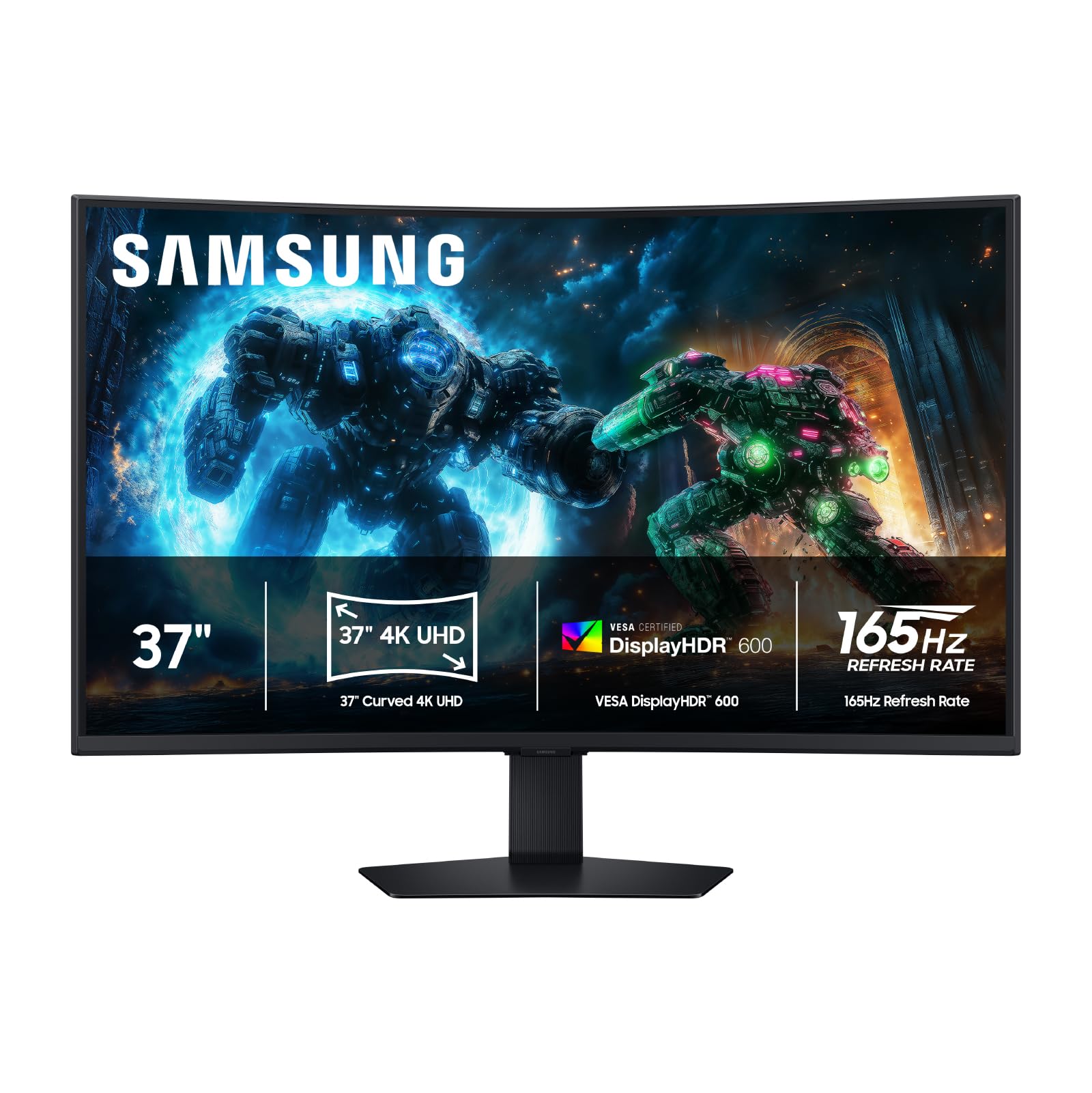
The 37-inch 1000R curve wraps aggressively around your vision, making it one of the most immersive gaming displays at this size. DisplayHDR 600 brings decent brightness and contrast to HDR content, and the 165Hz refresh rate with 1ms response keeps motion sharp during fast-paced gameplay.

Picture quality holds up well across varied lighting conditions—colors appear rich, and black levels are deeper than standard VA panels. The curve’s 1000R radius matches the natural field of view, reducing eye strain during long sessions and pulling you into racing, flight sims, or open-world titles.

This monitor is built for gamers who want a large 4K curved screen without gambling on QC. Two HDMI 2.1 ports mean PS5 and Xbox Series X owners can run at 4K 120Hz directly. No built-in speakers are included, so plan for a headset or desktop audio solution.

While budget curved 4K monitors often cut costs on panel consistency and power supply stability, the G7 maintains steady performance across units. It’s a balanced investment for buyers who prioritize dependable visual quality over chasing the highest spec sheet at the lowest price.

💡 Keep a headset or desktop speakers handy—the monitor focuses entirely on visual performance.

Pros

  • Vivid 4K picture with strong HDR performance for immersive gaming.
  • Immersive 1000R curve that wraps around your field of view.
  • Two HDMI 2.1 inputs support 4K 120Hz from latest consoles.
  • 165Hz refresh rate and 1ms response for fluid motion.

Cons

  • No built-in speakers require a separate audio setup for desktop use.
Our verdict

For gamers who want a large curved 4K monitor with consistent performance and console-friendly connectivity, the Odyssey G7 37-inch hits the mark without the compromises of cheaper alternatives.

Check Latest Price
2

Best for High Refresh Rate Enthusiasts

Samsung Odyssey Neo G8 32" 4K 240Hz

80 /100
Lab Score Excellent

Key details

HDR
Quantum HDR2000
Curvature
1000R
Panel Type
Quantum Mini-LED VA
Connectivity
DP 1.4, 2x HDMI 2.1, USB
View on Amazon

The Samsung Odyssey Neo G8 combines a 4K 240Hz refresh rate with Quantum Mini-LED backlighting that reaches 2000 nits peak brightness - a rare spec in a 32-inch curved panel. While the top pick offers a larger 37-inch screen with fewer QC concerns, the Neo G8 targets those who want the highest HDR impact and fluidity for fast-paced titles.

In demanding scenes, the HDR2000 output produces deep contrast and bright highlights that pull out details in shadow and sunlit areas alike. The 1000R curvature matches the natural field of view, reducing eye strain during long sessions. However, some units exhibit scan lines or flickering at 240Hz - these artifacts may show up depending on the source and cable quality.

This monitor suits enthusiasts who prioritize peak performance and are comfortable with potential troubleshooting. The panel has been noted to develop issues such as cracking or power loss within a few weeks in some cases, so a flexible return policy is advisable. Buyers wanting a set-and-forget experience should look at the larger G7 instead.

💡 If scan lines appear, try lowering the refresh rate to 120Hz or enabling V-Sync - a temporary workaround that may reduce visibility.

Pros

  • Peak brightness of 2000 nits delivers HDR impact that surpasses most gaming monitors.
  • 240Hz refresh rate and 1ms response time provide exceptionally smooth motion in competitive games.
  • Curved design with CoreLighting+ adds an immersive aesthetic to any setup.

Cons

  • Panel durability can be a concern - some units develop issues like cracking or power loss within a few weeks.
  • At 240Hz, scan lines or vertical stripes may appear depending on the content and connection.
Our verdict

For competitive gamers who want the brightest, fastest 4K curved monitor and can tolerate intermittent panel quirks, the Neo G8 delivers high-end HDR performance. For everyone else, the top pick offers a more consistent experience at a lower cost.

Check Latest Price
3

Best Budget 240Hz 4K

CRUA CR320E 32" 4K 240Hz

85 /100
Lab Score Excellent

Key details

HDR
Curvature
1500R
Panel Type
VA
Connectivity
HDMI 2.1 / DP 1.4
View on Amazon

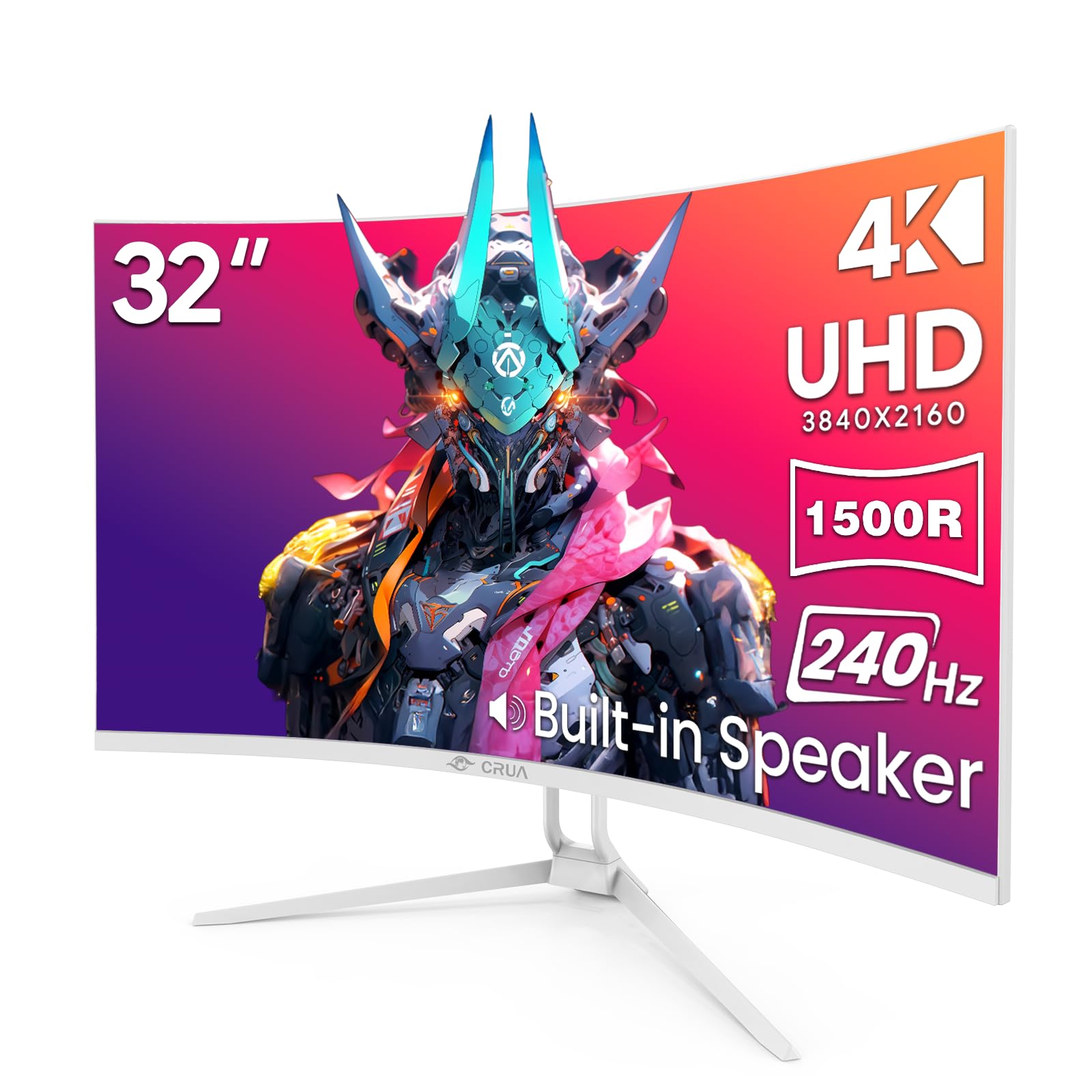
The CRUA 32-inch delivers 240Hz at 4K for under $400 — a combination usually reserved for monitors costing significantly more. The 1500R curve and 1ms response time support fast-paced competitive play, while the white chassis offers a clean alternative to the black-and-RGB standard.

This monitor suits competitive gamers who want 240Hz 4K without stretching their budget, and it fits neatly into a white-themed setup. The tradeoff: some units may experience intermittent blank screens or stop working after a few weeks. Shipping damage is also a risk — several arrive with cracked panels. The built-in speakers may not function at all, so plan on using external audio or headphones.

When it works, picture quality is good for the price, and setup is straightforward with HDMI 2.1 or DP 1.4. The FreeSync support smooths out frame-rate dips, and the 1500R curve provides decent immersion without being overly aggressive. For gamers who can tolerate the possibility of an early swap or a damaged unit, the value is hard to beat.

💡 Inspect the panel and test the speakers within the return window; consider buying from a retailer with easy replacements.

Pros

  • 240Hz 4K performance at a price that undercuts most competitors
  • Good picture quality and easy out-of-box setup
  • White design stands out in a market dominated by dark finishes

Cons

  • Intermittent screen blanking or complete unit failure can occur within weeks
  • Fragile packaging makes panel damage during shipping a real possibility
  • Built-in speakers may be non-functional, requiring external audio
Our verdict

For competitive gamers who need 240Hz 4K at the lowest possible cost and are comfortable rolling the dice on initial reliability, this white monitor delivers on paper — just budget for a return process and external speakers.

Check Latest Price
4

Best Ultra-Wide Immersive Experience

Samsung Odyssey Neo G9 57" Dual 4K

86 /100
Lab Score Excellent

Key details

HDR
DisplayHDR 1000
Curvature
1000R
Panel Type
Quantum Mini-LED VA
Connectivity
DP 2.1, 3x HDMI 2.1, USB hub
View on Amazon

The Samsung 57-inch Odyssey Neo G9 delivers the largest curved gaming display available, pairing dual 4K resolution (7680x2160) with a 240Hz refresh rate and DisplayHDR 1000. Its 1000R curvature wraps around your field of view, and the Quantum Mini-LED backlight produces deep blacks and bright highlights. DisplayPort 2.1 supports the full bandwidth needed to drive this resolution at 240Hz, a feature no other monitor in this roundup offers.

This monitor is purpose-built for sim racing and flight sim enthusiasts who want the widest possible peripheral view, and for productivity users who need to replace two 4K monitors with a single seamless panel. The tradeoff is considerable: it requires a high-end GPU (like an RTX 4090) to push dual 4K at 240Hz, and its 57-inch size demands a deep desk and strong mounting solution. Reliability concerns have been noted – some units may develop flickering or ghosting in the upper screen area, and there are occasional reports of monitors becoming unresponsive after extended use. These issues make it a pick for buyers who value immersion above absolute peace of mind.

💡 Pair with a high-end GPU and a desk at least 30 inches deep to accommodate the curve and stand footprint.

Pros

  • Immersive 1000R curve and solid build quality create a wraparound feel in sim racing games.
  • Dual 4K resolution gives productivity power users the equivalent of two 32-inch 4K monitors side by side.
  • 240Hz refresh rate with 1ms response time keeps fast-paced sims smooth and responsive.
  • DisplayPort 2.1 delivers full bandwidth for dual 4K at 240Hz without chroma subsampling.

Cons

  • In a quiet room, occasional flickering or ghosting may appear in the upper portion of the screen.
  • Some units can stop working after several months, requiring a warranty replacement.
  • Extreme size and weight (over 40 lbs) limit desk compatibility and make VESA mounting a necessity.
Our verdict

Best suited for sim racers and multitaskers who prioritize immersion and screen real estate over budget and reliability certainty.

Check Latest Price
5

Best Budget All-Rounder

CRUA CR320QC 32" 4K 160Hz

87 /100
Lab Score Excellent

Key details

HDR
Curvature
1500R
Panel Type
VA
Connectivity
HDMI 2.1 / DP 1.4
View on Amazon

The CRUA 32-inch delivers 4K resolution and a 160Hz refresh rate for under $260, making it one of the most affordable curved gaming monitors in this class. While the top pick offers a larger 37-inch 1000R curve and more consistent build, the CRUA focuses on raw specs per dollar. That aggressive pricing comes with a tradeoff: some units may experience screen blackouts or dead pixels after months of use. For gamers willing to accept that risk, the value is undeniable.

This monitor suits budget-conscious gamers who prioritize high resolution and fast refresh rates over long-term peace of mind. It is not for professionals needing color accuracy or buyers who want a set-and-forget setup. The VA panel delivers decent contrast for dark scenes, but color consistency may drift between units. Rely on the warranty and check your unit promptly after delivery.

Build quality is a highlight here, with a sturdy stand and a clean aesthetic. The 1500R curve and HDMI 2.1 support make it easy to connect to modern hardware. For gamers focused on price-to-performance, this monitor is a compelling gamble.

💡 Keep the original packaging handy in case you need to return the unit within the warranty period.

Pros

  • Strong value for money
  • Sturdy construction with a well-built stand and quality materials.
  • Attractive design with subtle LED lighting for a premium look.

Cons

  • Some units may develop screen blackouts, dead pixels, or stop functioning after several months of use.
Our verdict

For budget gamers who want 4K and high refresh rates without spending a fortune, this monitor delivers – just be ready to handle potential hiccups via warranty.

Check Latest Price
6

Laptop Gamers

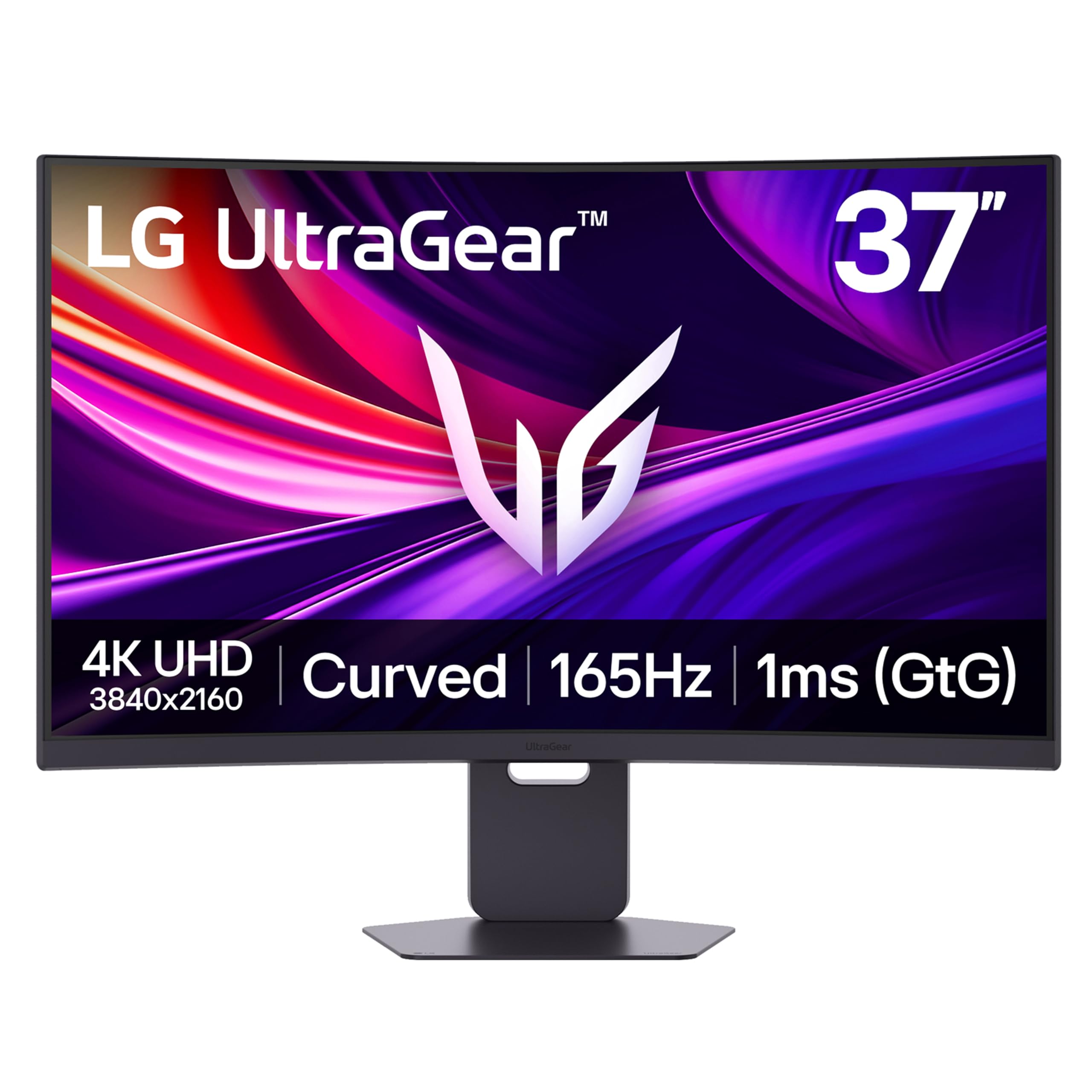
LG Ultragear 37" 4K 165Hz

78 /100
Lab Score Very Good

Key details

HDR
DisplayHDR 600
Curvature
Panel Type
VA
Connectivity
2x HDMI 2.1, DP 1.4, USB-C (65W PD)
View on Amazon

Rich colors and deep blacks define the visual experience on this 37-inch curved 4K panel, making games and media look vibrant. The USB-C port delivers 65W power delivery, so you can charge a laptop and drive the display through one cable — a clean setup for desk sharing. However, some units have exhibited random shutdowns during extended sessions, which makes long-term dependability uncertain. If your priority is USB-C charging and color quality, this LG delivers; for rock-solid reliability, the Samsung G7 is the safer bet.

Pros

  • Vibrant colors and deep blacks for an immersive gaming experience.
  • USB-C port with 65W power delivery simplifies laptop connectivity and charging.

Cons

  • Monitor may shut off randomly during use, interrupting gameplay or work.
Our verdict

Best suited for laptop gamers who need USB-C charging and can accept occasional shutdowns — for guaranteed reliability, the Samsung G7 is a safer choice.

Check Latest Price
7

Budget Competitive

Gawfolk GFTY981 32" 4K 240Hz

85 /100
Lab Score Excellent

Key details

HDR
Curvature
1500R
Panel Type
VA
Connectivity
HDMI, DisplayPort
View on Amazon

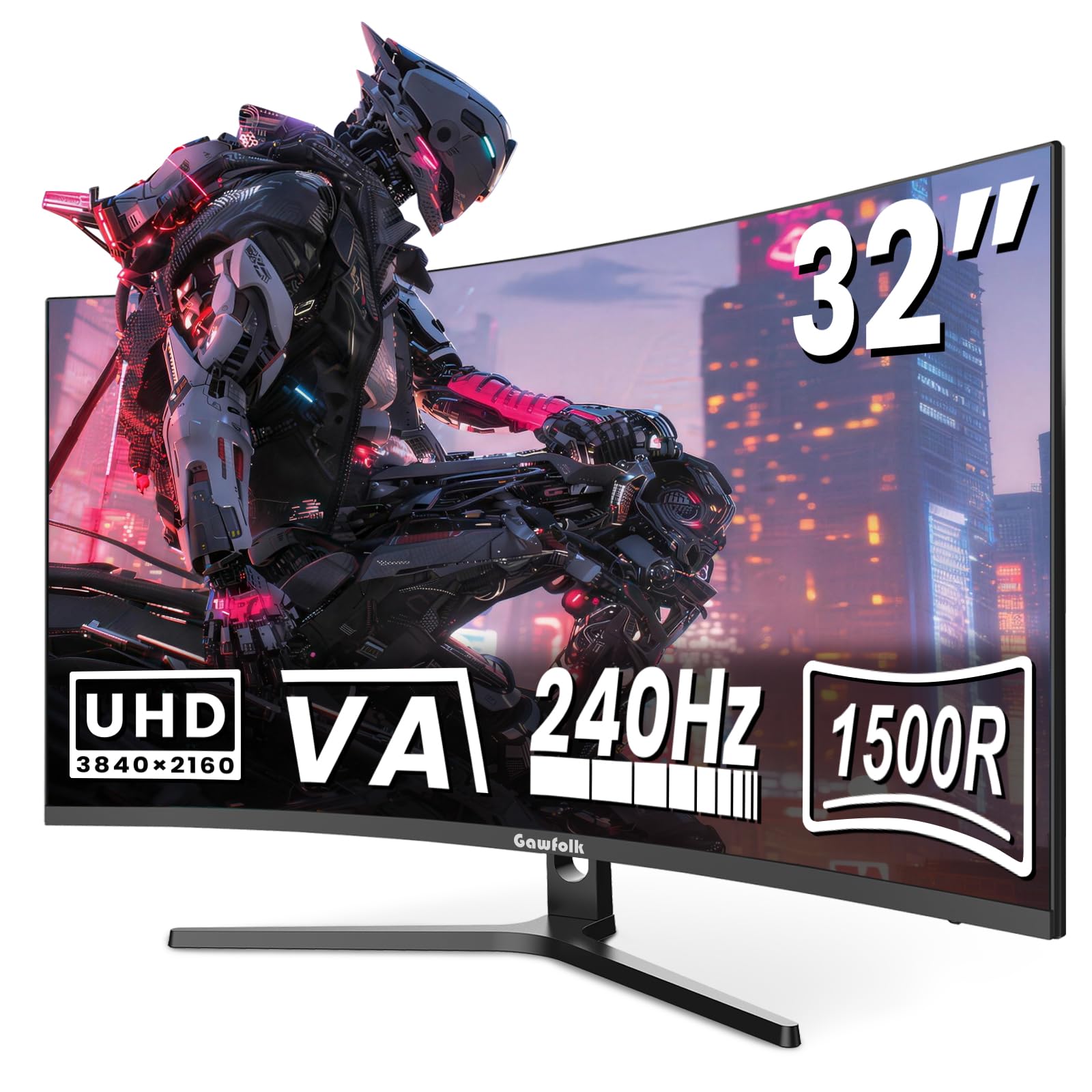
This Gawfolk 32-inch monitor delivers a sharp 3840x2160 resolution with a smooth 240Hz refresh and 1ms response, ideal for competitive gaming where every frame counts. The 1500R curve adds immersion without overwhelming the desktop. However, reliability can be a concern — some units may develop issues after a few months, and the screen can arrive with damage from shipping. This monitor suits budget-conscious gamers who are comfortable with the possibility of a return or replacement. It serves as a strong alternative if the white CRUA 240Hz model is not an option, though the two share similar risk profiles.

Pros

  • Sharp 4K resolution combined with 240Hz and 1ms response for fluid motion.
  • Solid build quality and strong value for the price.

Cons

  • Some units may develop issues after extended use, affecting reliability.
  • The screen can arrive damaged due to shipping, requiring careful inspection upon arrival.
Our verdict

Best suited for competitive gamers on a tight budget who are willing to accept potential reliability risks in exchange for 4K 240Hz performance.

Check Latest Price
8

Budget Gamers

ZZA Z32K 32" 4K 160Hz

82 /100
Lab Score Excellent

Key details

HDR
Curvature
1500R
Panel Type
VA
Connectivity
HDMI 2.1 / DP 1.4
View on Amazon

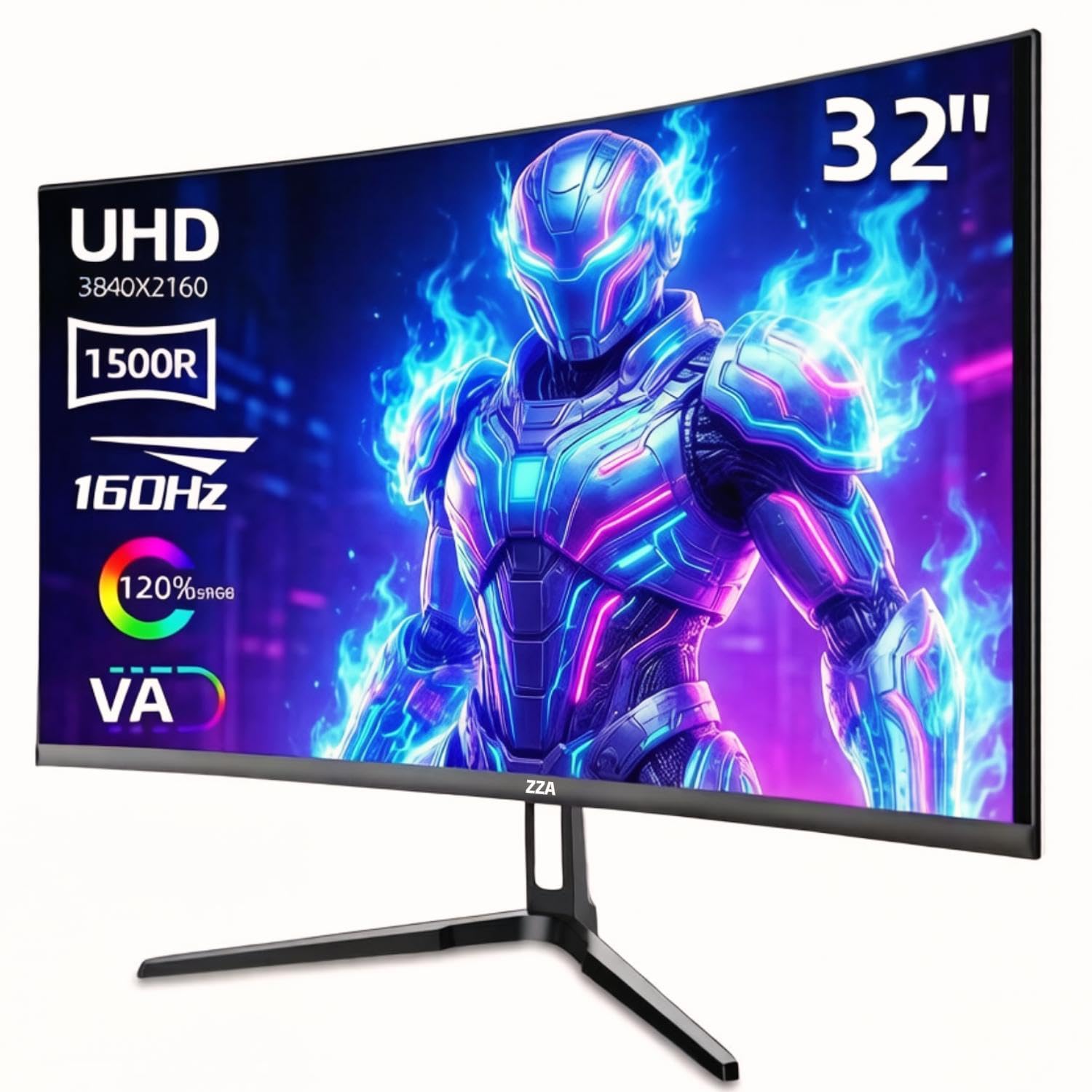
The ZZA Z32K delivers a 32-inch 1500R curved VA panel with 4K resolution and 160Hz refresh at a lower price than any competitor in this group. Build quality feels solid for the money, and colors come across as vivid and deep enough for immersive gaming. The tradeoff appears in occasional screen blanking during use — the monitor may flicker off and on without warning. That intermittent behavior makes it a gamble for anyone needing consistent uptime, but for a pure budget gaming setup where the cost savings outweigh the risk, it gets the job done. It does not surpass the CRUA 160Hz, which offers similar specs with slightly more user feedback and the same reliability questions.

Pros

  • Solid build quality for an entry-level curved 4K monitor
  • Vivid color reproduction with deep blacks for the price tier

Cons

  • Intermittent screen blackout can occur during normal use
Our verdict

Works for budget gamers who want maximum specs per dollar and can accept the chance of a blank screen during play. Not a daily driver for work or mixed use.

Check Latest Price

How to Choose

Refresh Rate: 120Hz vs 160Hz vs 240Hz

Higher refresh rates reduce motion blur, but 4K 240Hz requires an extremely powerful GPU – even an RTX 4090 struggles to hit 240 fps in modern AAA titles. For most gamers, 120-165Hz is the sweet spot where you can actually use the refresh rate without compromising image quality.

Budget 240Hz monitors often cut costs on panel quality and HDR, leading to flickering or ghosting. If you play competitive esports titles where 240 fps is achievable, a 240Hz monitor makes sense. Otherwise, a 165Hz panel with better HDR and build quality will feel smoother in everyday use.

Panel Type and Curvature

All curved 4K gaming monitors in this roundup use VA panels, which offer deep blacks and high contrast (3000:1 or more) but have slower pixel response times than IPS. This can cause slight ghosting in fast-paced scenes, though 1ms MPRT ratings help mitigate it.

Curvature ranges from 1500R (gentle arc) to 1000R (tight wrap). A 1000R curve closely matches the human field of view for immersive gaming, but it can make straight lines appear bent in spreadsheets or photo editing. A 1500R curve is safer for mixed use.

HDR Certification

DisplayHDR 600 is the minimum for a noticeable HDR improvement – it boosts peak brightness to around 600 nits with reasonable local dimming. DisplayHDR 1000 and 2000 deliver much higher brightness and contrast, but they come with premium price tags and often Mini-LED backlighting.

Many budget monitors claim 'HDR' without certification, meaning they lack the brightness (300 nits typical) to produce any real HDR effect. If HDR matters, look for VESA DisplayHDR certification and at least 600 nits peak brightness.

Connectivity

HDMI 2.1 is essential for PS5 and Xbox Series X to output 4K at 120Hz. On PC, DisplayPort 1.4 supports 4K 160Hz with DSC, while DP 2.1 is needed for the Neo G9's dual 4K 240Hz. USB-C with power delivery (65W+) is a bonus for laptop users who want to charge and display from one cable.

Always check that the monitor includes the exact ports you need. Some budget monitors list 'HDMI 2.1' but only support 4K 60Hz over HDMI – read the fine print or specs table.

Reliability and Brand Reputation

The most common regret among buyers is a monitor that fails within months – dead pixels, screen blackouts, or no power. This is especially prevalent in the sub-$300 segment, where manufacturers use lower-quality panels and power supplies.

A known brand like Samsung or LG offers better after-sales support and more consistent quality control. If you choose a budget option, buy from a retailer with hassle-free returns and consider an extended warranty.

Frequently Asked Questions