10 Best Gaming TV of 2026: Native 120Hz+ and HDMI 2.1

Find a gaming TV that delivers true native 120Hz and HDMI 2.1 for PS5 and Xbox – not motion interpolation or missing ports.

High-end gaming TVs promise stunning visuals, but many fall short on the specs that actually matter for modern consoles. Power failures, WiFi drops, and misleading refresh rate claims are common stumbling blocks – even from well-known brands.

The real challenge is finding a set that delivers native 120Hz+ refresh rates and HDMI 2.1 ports without hidden compromises. Some OLED models offer perfect blacks but risk early failure; bright MiniLEDs excel in HDR but vary in reliability.

This guide focuses on TVs that pass the spec test and hold up over time. The choice often comes down to whether you prioritize contrast or brightness, and how much risk you are willing to accept for cutting-edge features.

1

Best Overall Gaming TV

Samsung S90F 65" OLED

86 /100
Lab Score Excellent

Key details

VRR
FreeSync Premium Pro
HDMI 2.1
4 ports
Panel Type
QD-OLED
Refresh Rate
144Hz native
View on Amazon

The Samsung S90F delivers a native 144Hz refresh rate on a QD-OLED panel, providing motion clarity that matches competitive gaming demands. Combined with FreeSync Premium Pro VRR and ultra-low input lag, console and PC games feel responsive and fluid.

In darker rooms, the S90F's deep blacks and vibrant colors create an immersive HDR experience. Bright room performance is less impactful: peak brightness is lower than high-end MiniLED TVs, so HDR highlights may appear less punchy when ambient light is high. This tradeoff is typical of QD-OLED technology, which prioritizes contrast over raw brightness.

This TV suits gamers who play in controlled lighting and value motion handling and black levels above all. It is not ideal for bright living rooms or buyers who need maximum HDR pop in daylight. A soundbar is recommended, as built-in speakers lack the spatial clarity that many gamers expect.

💡 Pair with a soundbar or surround system to get the most out of game audio.

Pros

  • Deep blacks and vibrant colors for stunning HDR gaming
  • Premium build quality and design that complements a gaming setup
  • Ultra-low input lag and native 144Hz for responsive gameplay
  • FreeSync Premium Pro VRR ensures smooth frame pacing

Cons

  • Built-in speakers lack immersion for gaming, a soundbar is recommended
  • Peak brightness is lower than premium MiniLED TVs, reducing HDR impact in bright rooms
Our verdict

For gamers who prioritize motion and black levels over raw brightness and who can control room lighting, the S90F offers the most consistent high-performance OLED experience at a premium price.

Check Latest Price
2

Best Large-Screen MiniLED

TCL 75QM6K

88 /100
Lab Score Excellent

Key details

VRR
VRR up to 288Hz
HDMI 2.1
4 ports
Panel Type
QD-Mini LED
Refresh Rate
144Hz native
View on Amazon

The 75-inch QM6K delivers a massive canvas for gaming with its Mini LED backlight, 144Hz native refresh rate, and 1000 nits peak brightness. This combination brings HDR gaming to life with punchy highlights and smooth motion, especially when paired with a PlayStation 5 or Xbox Series X. Where it differs from the budget 75-inch alternatives is the inclusion of four HDMI 2.1 ports and Onkyo audio — a step up in both connectivity and sound.

This TV suits gamers who want a 75-inch screen with high brightness for HDR gaming and can tolerate some tradeoffs in anti-glare performance and stand design. It fits best in living rooms where a slight backward tilt isn't distracting and where unit condition is verified upon arrival.

In real use, the 144Hz refresh rate and VRR up to 288Hz handle fast-paced shooters without noticeable tearing. The Onkyo 2.1 system provides enough presence for casual sessions, though serious players may still want a dedicated soundbar. The Google TV interface keeps input lag low and supports most streaming services.

💡 Wall-mounting the TV eliminates the slight backward lean from the stand and gives a cleaner look.

Pros

  • Deep blacks and vibrant colors from Mini LED backlighting
  • Exceptional value for a 75-inch Mini LED gaming TV
  • Built-in Onkyo 2.1 audio delivers fuller sound than most TV speakers

Cons

  • In bright rooms, reflections may be noticeable due to the anti-glare coating's limitations
  • The stand can cause the TV to lean back slightly, noticeable at eye level
  • Some units arrive with power-on issues that may require customer service involvement
Our verdict

For gamers who prioritize a massive 75-inch screen with high brightness and responsive gaming features, the QM6K delivers strong value — just verify the unit's condition on arrival.

Check Latest Price
3

Best Budget 75-Inch 144Hz

Hisense 75U6SF Pro

85 /100
Lab Score Excellent

Key details

VRR
FreeSync
HDMI 2.1
4 ports
Panel Type
Mini-LED ULED
Refresh Rate
144Hz native
View on Amazon

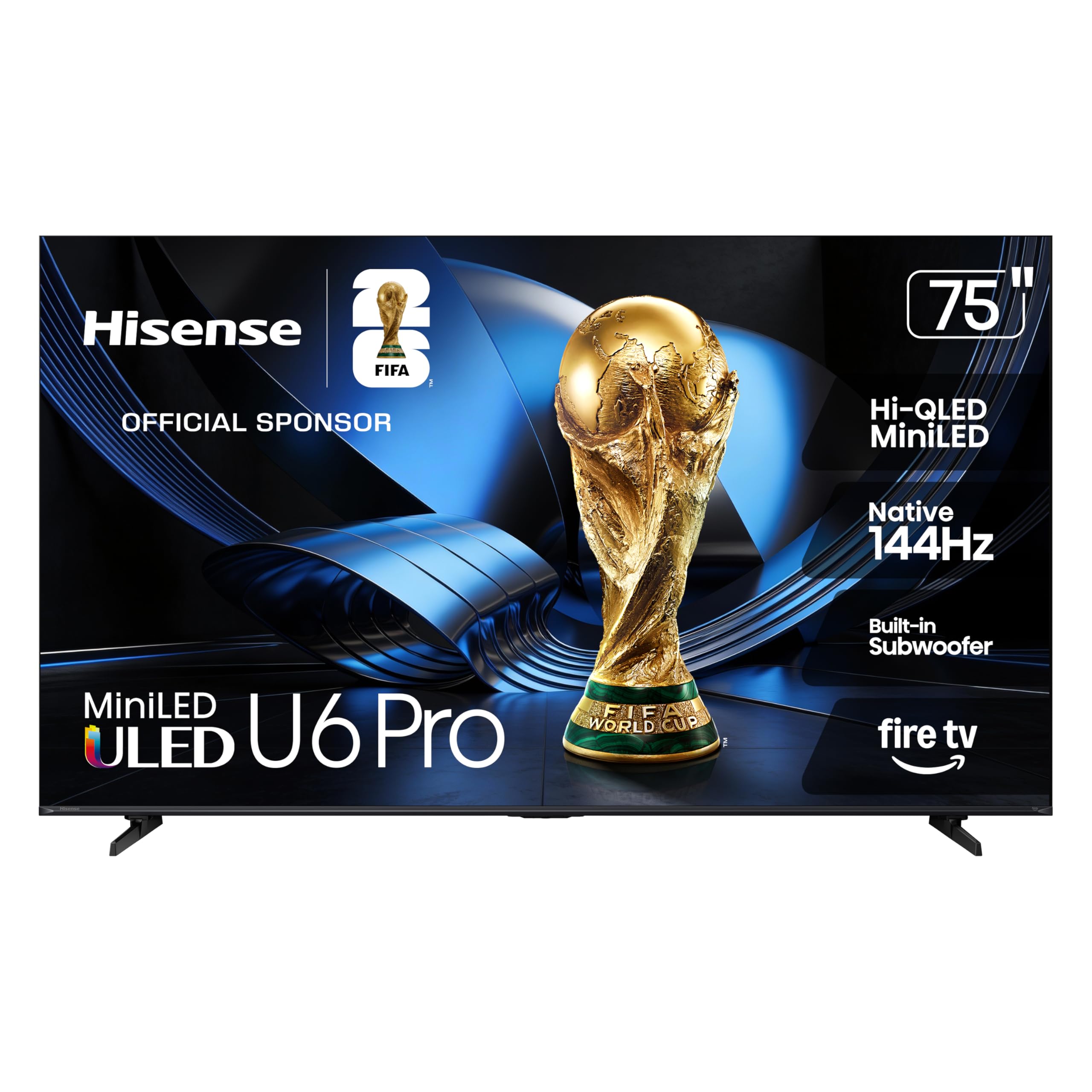
Native 144Hz at 75 inches for under $800 — that sum alone draws attention. The Mini-LED ULED panel delivers sharp HDR highlights and deep blacks that hold up well in dimmer rooms, while the built-in subwoofer adds enough bass to make game explosions feel substantial without an external soundbar.

The anti-glare coating is effective in moderate light but won't match the reflection handling of premium Samsung models. In a bright living room with windows, glare may still be visible during dark scenes — something to factor in if your gaming setup isn't in a controlled-lighting space. The Fire TV OS is snappy and integrates well with Alexa, but gamers who prefer Google TV's app ecosystem or want more advanced casting options will find the platform limiting.

Compared to the top pick in this roundup, the Hisense trades OLED-level contrast for a much larger screen at a similar price point. It handles 144Hz input from a PC or Xbox Series X without issue, and the four HDMI ports include two that support 144Hz — enough for a console and a gaming rig simultaneously.

💡 Position the TV away from direct window light to get the most out of the anti-glare coating during daytime gaming sessions.

Pros

  • Sharp, vibrant picture with deep blacks and strong HDR punch for the price
  • Native 144Hz refresh rate at 75 inches is rare at this price point
  • Built-in subwoofer adds noticeable bass without a separate audio system

Cons

  • Anti-glare coating handles moderate light but reflections may persist in very bright rooms
  • Fire TV OS lacks the app flexibility of Google TV
Our verdict

If you want a massive 75-inch gaming display with true 144Hz and solid HDR without spending OLED money, this Hisense delivers where it counts — just be comfortable with Fire TV and modest anti-glare.

Check Latest Price
4

Best 85-Inch Gaming TV

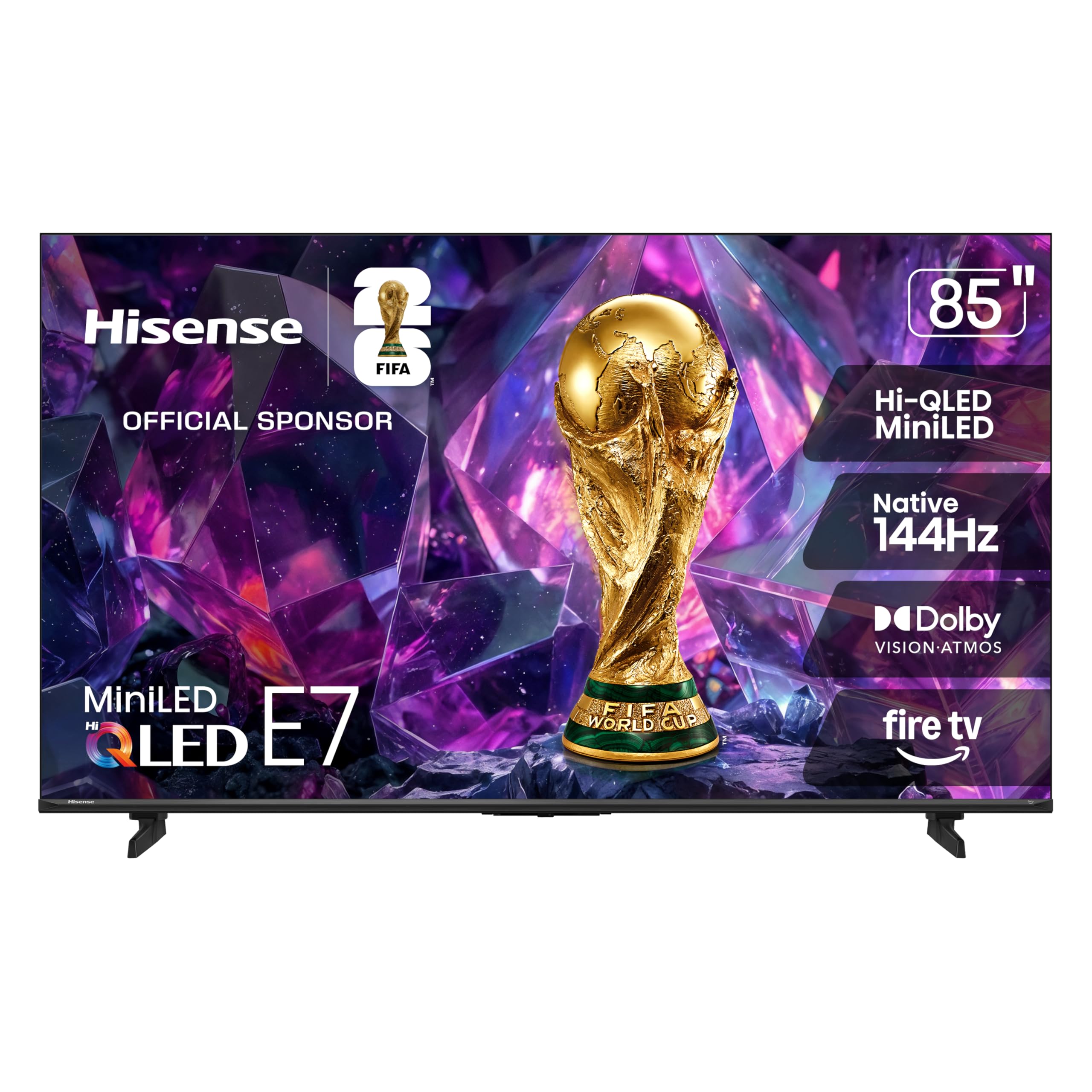
Hisense 85E7SF

85 /100
Lab Score Excellent

Key details

VRR
FreeSync
HDMI 2.1
4 ports
Panel Type
Mini-LED Hi-QLED
Refresh Rate
144Hz native
View on Amazon

An 85-inch native 144Hz Mini-LED panel at this price point is what sets the Hisense 85E7SF apart from smaller gaming displays like the 75-inch TCL QM6K. The sheer size immerses you in expansive landscapes and fast-paced action, and the combination of Mini-LED backlighting and QLED color delivers sharp 4K detail with deep black levels that make HDR game modes pop. Motion handling is smooth enough for competitive play, and the four HDMI 2.1 ports support modern consoles without adapter juggling.

This TV suits gamers who want a massive 85-inch screen for an immersive experience and are comfortable spending a few minutes in the settings menu. The AI picture processing can oversaturate colors out of the box — a quick switch to Filmmaker or Game Mode resolves it. The 20W speakers handle casual TV and game audio but lack the bass and clarity needed for a dedicated home theater; a soundbar is a practical addition. Nighttime viewers in bright rooms will appreciate the ample brightness, while those seeking a natural, unprocessed image should look at the OLED options in this roundup.

💡 Switch to Game or Filmmaker mode immediately to bypass the aggressive AI processing — the panel looks natural after that single adjustment.

Pros

  • Sharp 4K picture with vivid colors and deep blacks enhances gaming immersion.
  • Great value for a massive 85-inch screen with native 144Hz refresh rate.
  • Smooth motion and responsive gaming performance for fast-paced titles.
  • Four HDMI 2.1 ports support multiple consoles and PC without switching cables.

Cons

  • AI picture processing may oversaturate colors out of the box, requiring manual adjustment to Game or Filmmaker mode.
  • Built-in 20W speakers are adequate for casual use but underwhelm in a dedicated home theater setup.
Our verdict

If you need an 85-inch display for immersive gaming and can spare a few minutes to dial in picture settings, this Hisense delivers the size and performance that smaller premium panels can't match.

Check Latest Price
5

Best Budget 55-Inch 144Hz

Samsung M80H 55"

82 /100
Lab Score Excellent

Key details

VRR
FreeSync Premium Pro
HDMI 2.1
Panel Type
Mini LED
Refresh Rate
144Hz native
View on Amazon

Native 144Hz at a very accessible price from a major brand — the M80H brings high-refresh gaming to the budget tier without the premium cost of OLED alternatives. Its Mini LED panel produces good contrast and color saturation for the price, making it a compelling option for gamers focused on fluid motion over absolute black levels.

This TV is built for buyers who run one console or PC and don’t need to juggle multiple HDMI sources or an optical audio connection. At the same time, occasional software glitches have been noted in some units, so a stable setup may require occasional firmware updates. The limited port selection (three HDMI inputs, no optical output) is the main practical tradeoff — if you own a soundbar that relies on optical or plan to connect more than two devices, this model will feel constrained.

Setup is straightforward and the interface responds quickly, reinforcing the value proposition. For the price, you get a gaming-ready 144Hz panel with FreeSync Premium Pro and decent picture quality — just be aware of the connectivity boundaries before buying.

💡 Keep a firmware update schedule handy; the occasional software hiccup is usually resolved with an update.

Pros

  • Vibrant colors and good contrast from the Mini LED panel
  • Competitive price for a 55-inch 144Hz gaming TV
  • Easy setup and responsive smart TV interface

Cons

  • Only three HDMI ports and no optical audio output limit multi-device setups
  • Software glitches or crashes may occur in some units
Our verdict

A cost-effective entry into 144Hz gaming for those who can live with a single-console wiring plan — the M80H delivers on picture and motion without breaking the bank.

Check Latest Price
6

HDMI 2.1 Bargain

iFFALCON 55U85

85 /100
Lab Score Excellent

Key details

VRR
FreeSync Premium Pro
HDMI 2.1
4 ports
Panel Type
MiniLED QLED
Refresh Rate
144Hz native
View on Amazon

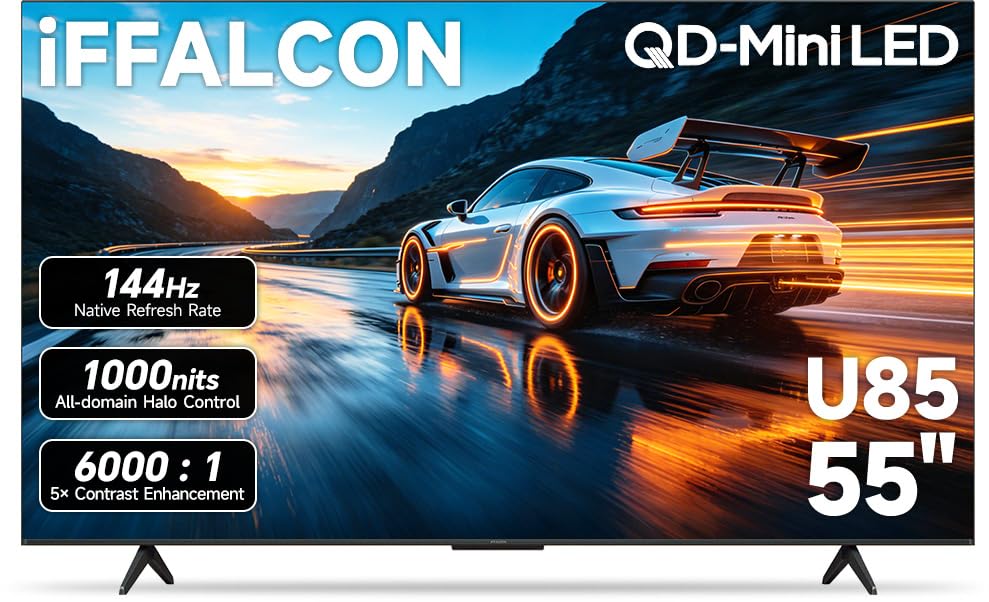
The iFFALCON 55U85 delivers four HDMI 2.1 ports and native 144Hz at a price that undercuts most competitors, making it an attractive option for budget-conscious gamers. However, its value remains speculative: long-term reliability under heavy gaming use is unconfirmed, and only two of the four HDMI ports support full 4K@144Hz bandwidth – the other two are limited to lower refresh rates. This TV is best suited for gamers who need multiple HDMI 2.1 inputs and are willing to accept the uncertainty of a new market entrant with little community feedback.

Pros

  • Four full HDMI 2.1 ports at a budget price point
  • Native 144Hz with VRR and FreeSync Premium Pro support
  • MiniLED QLED panel with 1000 nits peak brightness for solid HDR

Cons

  • Only two HDMI ports deliver full 4K@144Hz; the other two are limited in bandwidth
  • Reliability under extended heavy gaming use is unverified
Our verdict

This TV fits gamers on a tight budget who need multiple HDMI 2.1 ports and are comfortable with the uncertainty of an unproven product.

Check Latest Price
7

Competitive PC

Hisense 65U7SF

83 /100
Lab Score Excellent

Key details

VRR
VRR 330Hz
HDMI 2.1
4 ports
Panel Type
Mini-LED ULED
Refresh Rate
165Hz native
View on Amazon

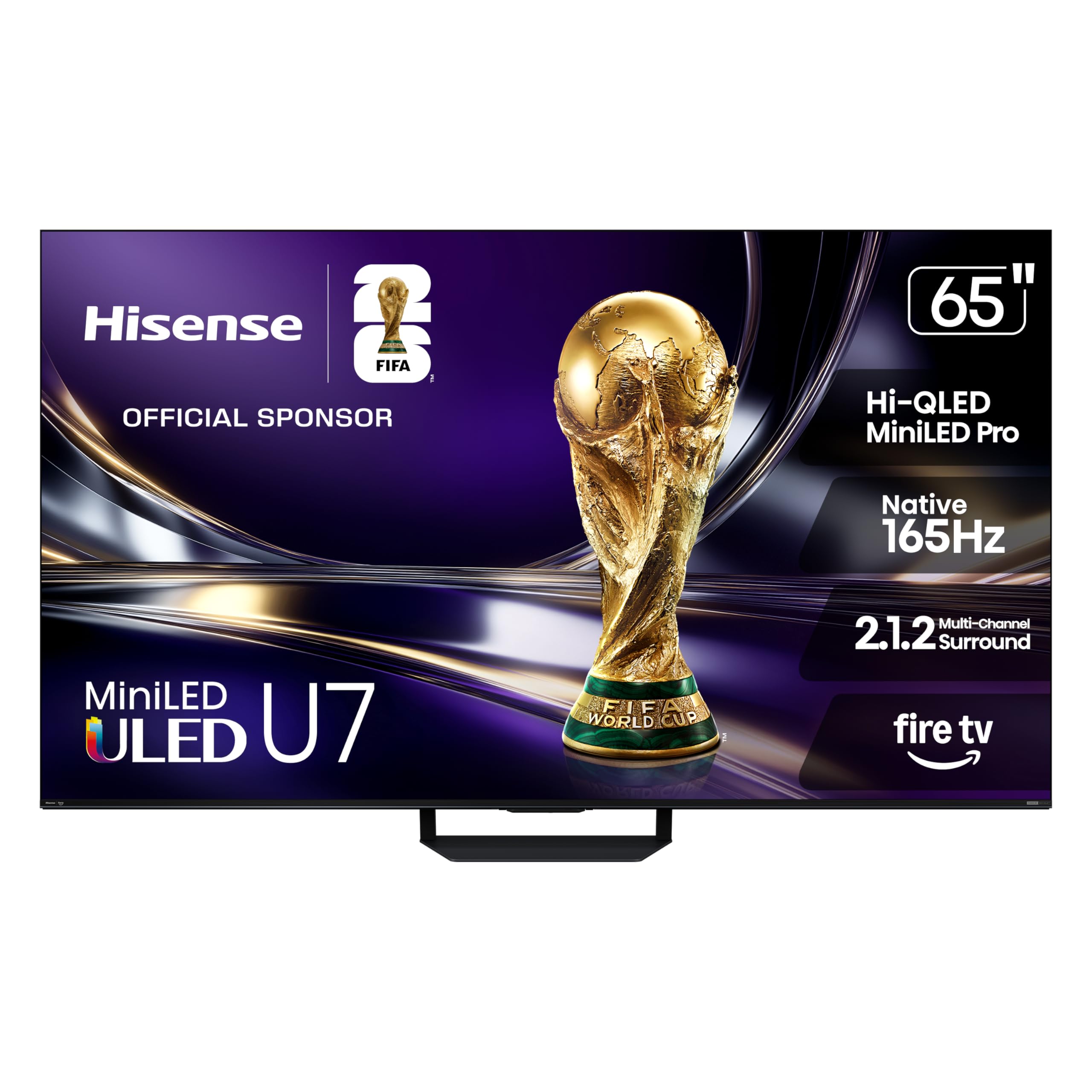
The Hisense 65U7SF brings an unprecedented 165Hz native refresh rate and a Mini-LED panel that pushes peak brightness to 3000 nits, making it the brightest and smoothest option here for competitive gaming. HDR impact is vivid, motion clarity is exceptional, and VRR support reaches up to 330Hz with DLG. Yet this cutting-edge performance comes with a significant caveat: long-term durability is unknown, with limited real-world usage data available. That makes the 65U7SF a fit only for enthusiasts who prioritize raw specs and are comfortable accepting early-adopter risk.

Pros

  • Extremely bright 3000-nit peak brightness with strong HDR impact
  • Smooth motion and low input lag at 165Hz native for competitive gaming

Cons

No notable drawbacks to flag.

Our verdict

Pick the Hisense 65U7SF if you want the fastest refresh rate and brightest image available today and are willing to accept that its reliability track record has yet to be established.

Check Latest Price
8

OLED Enthusiast

LG C5 65" OLED

89 /100
Lab Score Excellent

Key details

VRR
FreeSync/G-Sync
HDMI 2.1
4 ports
Panel Type
OLED evo
Refresh Rate
120Hz native
View on Amazon

The LG C5 delivers deep blacks and vibrant colors with four full-bandwidth HDMI 2.1 ports and 120Hz (144Hz overclockable) - ideal for console and PC gamers. Its built-in 2.2-channel Dolby Atmos speakers are adequate for many setups. However, some units may experience power-related shutdowns or blank screens. For gamers who value full HDMI 2.1 bandwidth and integrated sound, the C5 is a strong pick, but if minimizing potential issues matters more, the Samsung S90F is a safer alternative.

Pros

  • Deep blacks and vibrant colors deliver striking HDR performance for games and movies.
  • Four full-bandwidth HDMI 2.1 ports (48Gbps) and 120Hz (144Hz overclock) support high-refresh-rate gaming on multiple devices.
  • Built-in 2.2-channel Dolby Atmos speakers provide clear audio, often reducing the need for a separate soundbar.

Cons

  • The Magic Remote's pointer interface can be frustrating for those accustomed to standard navigation.
  • WiFi connectivity can be inconsistent, leading to buffering during streaming sessions.
Our verdict

This OLED suits gamers who need all four HDMI 2.1 ports and prefer built-in sound, and who are comfortable with some unit variance - but for those prioritizing hassle-free ownership, the Samsung S90F is the alternative to consider.

Check Latest Price
9

Bright-Room Budget

VIZIO M50QXM-K01

84 /100
Lab Score Excellent

Key details

VRR
FreeSync Premium Pro
HDMI 2.1
Panel Type
QLED
Refresh Rate
120Hz native
View on Amazon

The VIZIO M50QXM-K01 delivers a vibrant QLED picture with good contrast and supports AMD FreeSync Premium Pro for smooth gaming at 120Hz — features typically found on pricier models. However, reports of the TV not powering on after several months and intermittent WiFi drops mean it is not a safe long-term investment. The lack of Bluetooth audio output also limits wireless speaker options. For buyers who can use a wired network connection and are comfortable with the possibility of early hardware issues, this set offers strong price-to-performance in a secondary gaming room.

Pros

  • Bright QLED panel with vibrant colors and good contrast
  • Strong price-performance ratio for a 50-inch gaming TV
  • Easy setup with intuitive VIZIO OS

Cons

  • WiFi connectivity can drop during streaming, requiring a wired connection for consistent use
  • The TV may stop powering on after several months of use in some cases
Our verdict

This VIZIO works for cost-conscious gamers who need a bright 50-inch display with gaming features and can live with the requirement for a wired network and the risk of early power issues.

Check Latest Price
10

Casual Console

TCL 55T7

86 /100
Lab Score Excellent

Key details

VRR
VRR
HDMI 2.1
Panel Type
QLED
Refresh Rate
120Hz native
View on Amazon

The TCL 55T7 delivers vibrant colors and solid contrast at a budget-friendly price – a great fit for light console gaming or streaming. The Google TV interface responds quickly, and the 120Hz native refresh rate provides smooth motion for most console titles. However, the advertised 144Hz is achieved through interpolation, not native, and the lack of HDMI 2.1 limits bandwidth for modern consoles and PC features like VRR at higher resolutions.

This TV suits a secondary bedroom or kids’ room where picture quality matters more than cutting-edge gaming specs. Some units have been noted to experience random shutdowns or freezing, and the built-in speakers are thin – a soundbar is a practical addition for a fuller experience. For primary gaming setups with a PS5 or high-end PC, other options with native 144Hz and HDMI 2.1 are a better match.

Pros

  • Vibrant QLED picture with strong contrast for an entry-level set
  • Great value at this size and price point

Cons

  • Built-in speakers lack depth for gaming; a soundbar is a practical addition
  • Random shutdowns or freezing can interrupt viewing in some units
Our verdict

Best suited as a secondary TV for light console gaming or a kids’ room, where its picture quality shines and the missing HDMI 2.1 and 144Hz aren’t dealbreakers.

Check Latest Price

How to Choose

Native Refresh Rate

The refresh rate determines how many frames per second the panel can display. Native 120Hz or 144Hz is required to take advantage of 120fps modes on PS5 and Xbox Series X. Motion interpolation (often labeled Motion Rate or DLG) duplicates frames and adds input lag, making it useless for competitive gaming.

Always verify the stated refresh rate in the technical specs section of the product page. If it says 120Hz but the fine print says Motion Rate 240, it is likely 60Hz native. Stick with panels that list a native 120Hz or 144Hz without interpolation.

HDMI 2.1 Ports

HDMI 2.1 delivers the bandwidth needed for 4K 120Hz with HDR and variable refresh rate (VRR). Without it, consoles are limited to either 4K 60Hz or 1440p 120Hz. A gaming TV should have at least two HDMI 2.1 ports to connect both a console and a PC simultaneously.

Some TVs advertise HDMI 2.1 compatibility but only implement it on one port or with reduced bandwidth. Check that each port supports full 48Gbps throughput, especially for 4K 144Hz. The number of ports matters if you own multiple devices.

Panel Type

OLED panels offer perfect blacks and instant pixel response, ideal for dark room gaming. MiniLED backlighting can achieve higher peak brightness for HDR impact in bright rooms but may show blooming around bright objects. QLED is similar to MiniLED but without the dense local dimming zones.

The trade-off: OLED is prone to burn-in from static HUDs, while MiniLED and QLED are more durable but sacrifice contrast. For mixed-use living rooms, MiniLED strikes a balance. For a dedicated dark game room, OLED is hard to beat.

Variable Refresh Rate (VRR)

VRR synchronizes the TV's refresh rate with the console or PC frame output to eliminate screen tearing and stuttering. AMD FreeSync Premium Pro and NVIDIA G-Sync Compatible are the two common standards. Most modern gaming TVs support one or both, but implementation quality varies.

A TV with VRR that only works over HDMI 2.0 may still cause flickering in dark scenes. Check user reports for specific models to ensure the VRR range is wide enough (e.g., 48-120Hz) and compatible with your hardware.

Input Lag and Motion Clarity

Input lag below 10ms at 120Hz is considered excellent for competitive gaming. Motion clarity depends on pixel response time; OLEDs have near-instant response, while LCD-based panels (MiniLED, QLED) can blur during fast motion due to slower liquid crystal transitions.

Enable Game Mode to bypass processing and reduce lag. Some TVs also offer backlight strobing (BFI) to improve motion clarity, but it reduces brightness. For shooters and racing games, prioritize a TV with sub-5ms response in Game Mode.

Frequently Asked Questions