7 Best Glossy OLED Gaming Monitor of 2026: Glossy OLED, No Regret

Which glossy OLED gaming monitors deliver stunning contrast and deep blacks without the quality-control lottery, so you can upgrade your setup with confidence.

Glossy OLED monitors promise an unmatched visual feast—perfect blacks, brilliant colors, and instant response. Yet too many new owners encounter VRR flicker, dead pixels, or sudden blackouts within the first few weeks. The category's dirty secret is that even highly-rated models carry a quality-control lottery.

We'll help you sidestep the gamble. The picks below balance that cinematic contrast with real-world reliability, so you can enjoy your upgrade without dreading the return process. Whether you play fast-paced shooters or story-driven epics, there's a glossy OLED here that fits your room and risk tolerance.

The sweet spot is the 27-inch 1440p segment, where you get nearly all the visual glory at a fraction of the 4K premium. But even here, you'll face a choice: a monitor that pushes color accuracy to the limit or one that keeps brightness and reliability in check without costing more than a console.

1

Best Overall

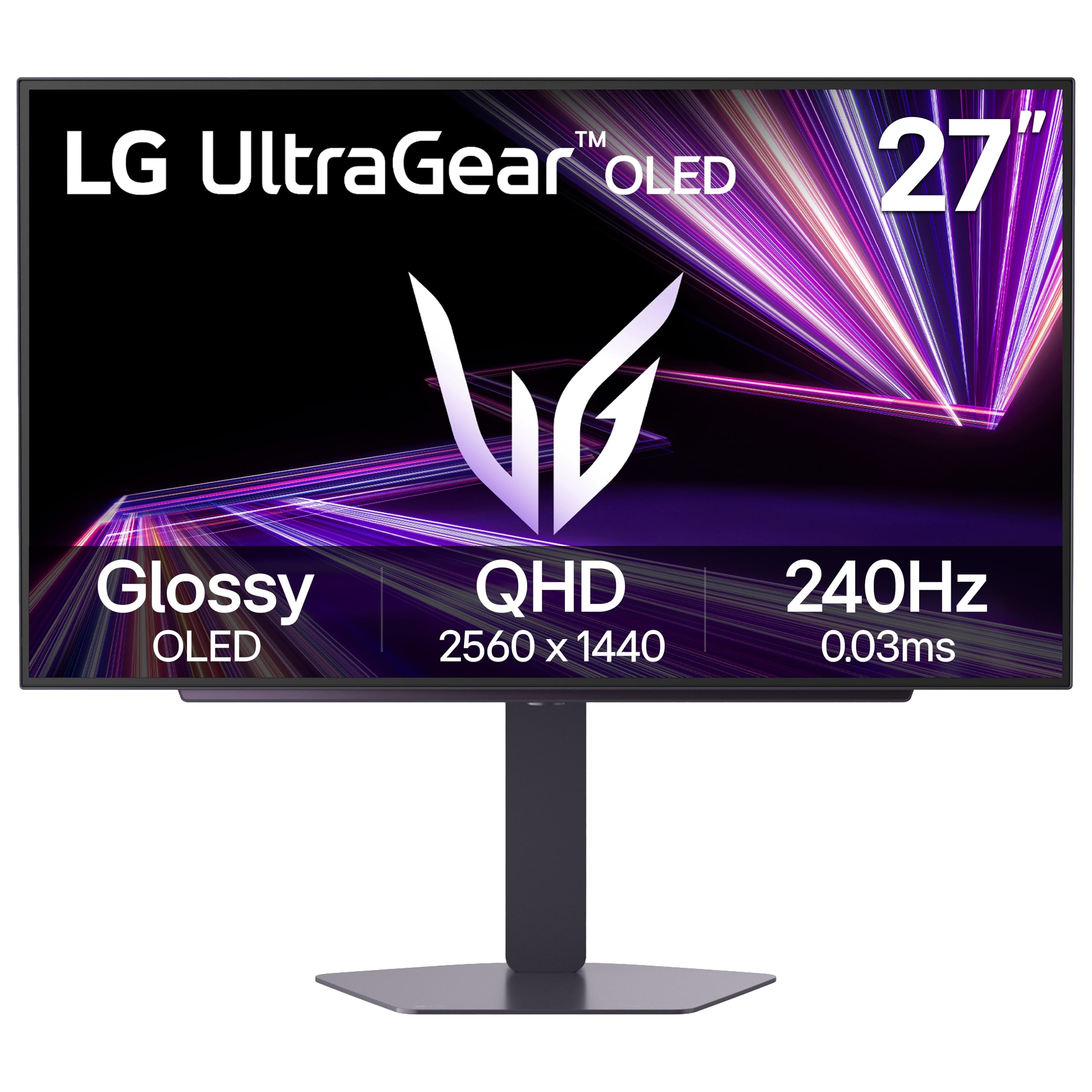
LG 27GX704A-B Glossy OLED

89 /100
Lab Score Excellent

Key details

HDR Performance
True Black 400
Glossy Coating Quality
Glossy
Screen Size & Resolution
27" QHD
Refresh Rate & Response Time
240Hz, 0.03ms
View on Amazon

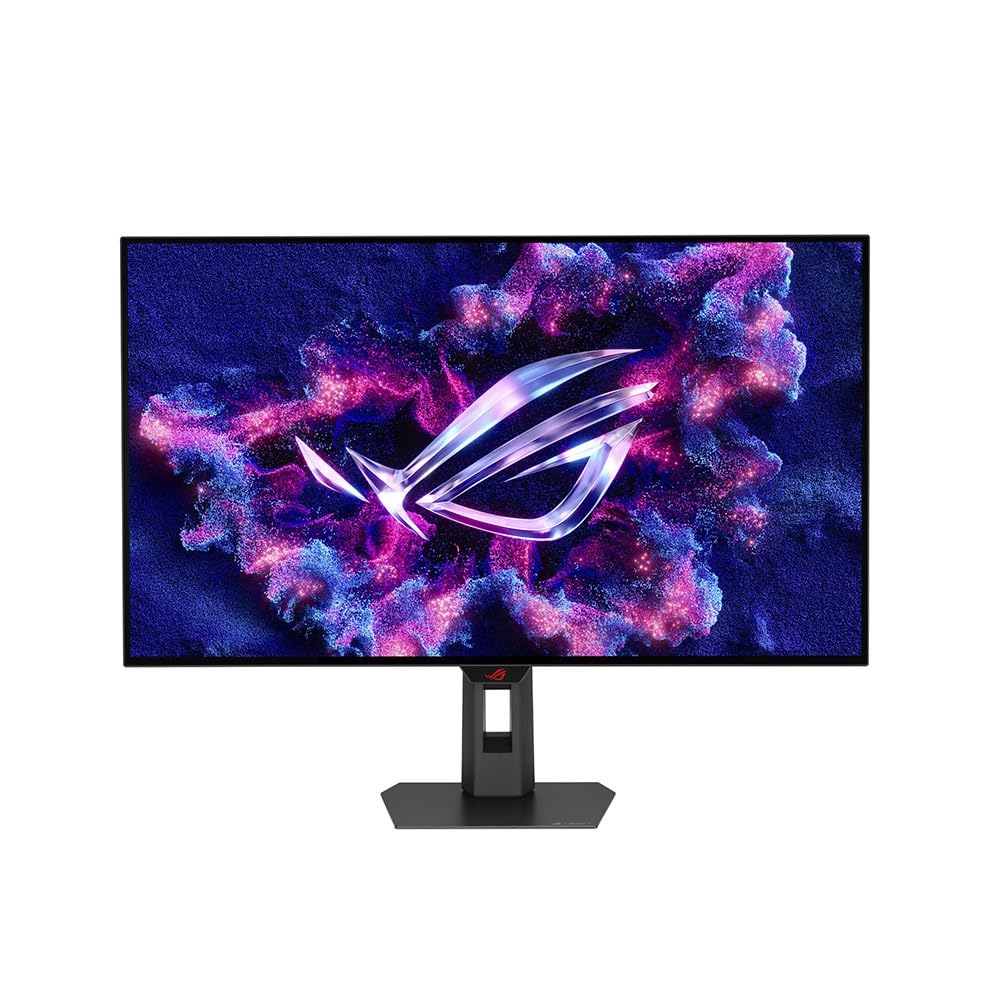
The LG 27GX704A-B fuses a glossy QHD OLED panel with 240Hz refresh and 0.03ms response, producing motion clarity that rivals esports-grade TN panels while delivering per-pixel lighting and HDR highlights. Inky blacks and a 98.5% DCI-P3 gamut make both cinematic scenes and competitive maps look vivid and immediate. G-Sync and FreeSync Premium Pro handshake smoothly with NVIDIA and AMD GPUs, eliminating tearing without perceptible lag.

The glossy finish saturates colors and deepens contrast, giving SDR and HDR content a premium sheen that matte coatings simply cannot replicate. Build quality impresses: slim bezels frame the display, while the stand provides tilt, swivel, and height adjustment—features often reserved for more expensive monitors. At its price, the combination of glossy OLED immersion and sturdy construction feels like an open secret.

Light discipline matters. In a bright room, the glossy surface can throw noticeable reflections, but in a darker or lamp-controlled setup, the image pops without distraction. True Black 400 certification ensures that shadow details hold up without grayish backlight bleed, and the uniform brightness across the screen keeps side-to-side viewing consistent during co-op or spectating moments.

Competitive FPS players stepping into OLED for the first time will find the 240Hz ceiling and instant pixel response a decisive upgrade. Console gamers benefit from deep blacks and vibrant HDR for single-player epics. Those who need flawless out-of-box reliability or cannot accept any dark-scene flicker risk should consider higher-priced alternatives; occasional dead-on-arrival units and VRR flicker in near-black content have been reported, placing a premium on a thorough initial test.

Stacked against the 4K glossy entry in this roundup, the LG trades pixel count for a smoother frame-rate experience and far friendlier cost. The uptick in resolution on a 27-inch screen offers diminishing returns in fast gameplay, where clarity of motion matters more than counting pores. For anyone who prioritizes fluidity and color depth over 4K bragging rights, this monitor delivers the essential OLED virtues without the financial sting.

Pros

  • Rich, vibrant colors and deep true blacks create an immersive HDR gaming experience.
  • Superb build quality and glossy finish give it the look and feel of a high-end display.
  • Remarkable value, delivering glossy OLED performance that outshines monitors costing far more.
  • 240Hz refresh and near-instant 0.03ms response time provide a decisive advantage in fast multiplayer shooters.
  • Wide VRR support with G-Sync Compatible and FreeSync Premium Pro eliminates screen tearing smoothly.

Cons

  • VRR flicker can appear in dark, near-black scenes, momentarily breaking immersion.
  • A small percentage of units may arrive with dead pixels or power-on failures out of the box.
Our verdict

For competitive gamers who want glossy OLED contrast and 240Hz speed without the premium tax, the LG 27GX704A-B is the smart buy — just plan to put it through its paces early to catch any sample variance.
Check Latest Price
2

Best Premium 4K Glossy OLED

ASUS XG32UCWMG Glossy 4K

87 /100
Lab Score Excellent

Key details

HDR Performance
True Black 400
Glossy Coating Quality
Glossy
Screen Size & Resolution
32" 4K / FHD
Refresh Rate & Response Time
240Hz (4K) / 480Hz (FHD), 0.03ms
View on Amazon

While other glossy OLED monitors prioritize color fidelity at 1440p, the ASUS XG32UCWMG pushes that envelope to 4K and adds a dual-mode engine that swaps between 240Hz 4K and a staggering 480Hz at 1080p. A built-in proximity sensor automatically dims the screen when you step away, introducing passive burn-in protection that most competitors omit.

Colors span 99% of the DCI-P3 gamut, and the glossy finish coupled with VESA DisplayHDR True Black 400 produces deep, inky blacks that make dark scenes feel cinematic without crushing shadow detail. The 0.03ms response time eliminates motion blur entirely, and the sturdy metal chassis with cable-management routing underscores the no-compromise construction.

This is an apex purchase for enthusiasts who demand the highest refresh rate glossy 4K panel and are comfortable with a luxury price and the possibility of occasional screen blackouts—typically resolved with a quick cable reseat. Casual gamers or those set on value will find the premium hard to justify, and anyone intolerant of transient glitches should look elsewhere.

Pros

  • Glossy panel with 99% DCI-P3 coverage delivers cinema-grade color accuracy and deep, true blacks.
  • Dual-mode capability switches instantly between 4K 240Hz and FHD 480Hz for single-player immersion or esports speed.
  • Proximity sensor dims display when unattended, providing passive burn-in protection without user intervention.
  • Robust build and a fully adjustable stand reflect the premium price with metal accents and cable management.

Cons

  • Intermittent screen blackouts may require a cable reseat or power cycle to resolve.
  • Luxury pricing places it out of reach for mainstream gamers, with limited added benefit over cheaper high-refresh OLEDs.
Our verdict

The ASUS XG32UCWMG stakes out the bleeding edge of glossy OLED gaming — if dual-mode 480Hz and hands-off burn-in protection matter more than saving a few hundred dollars, this is your monitor.

Check Latest Price
3

Best 4K Value Glossy OLED

LG 32GX850A-B Glossy 4K

89 /100
Lab Score Excellent

Key details

HDR Performance
True Black 400
Glossy Coating Quality
Glossy
Screen Size & Resolution
32" 4K
Refresh Rate & Response Time
165Hz/330Hz dual mode, 0.03ms
View on Amazon

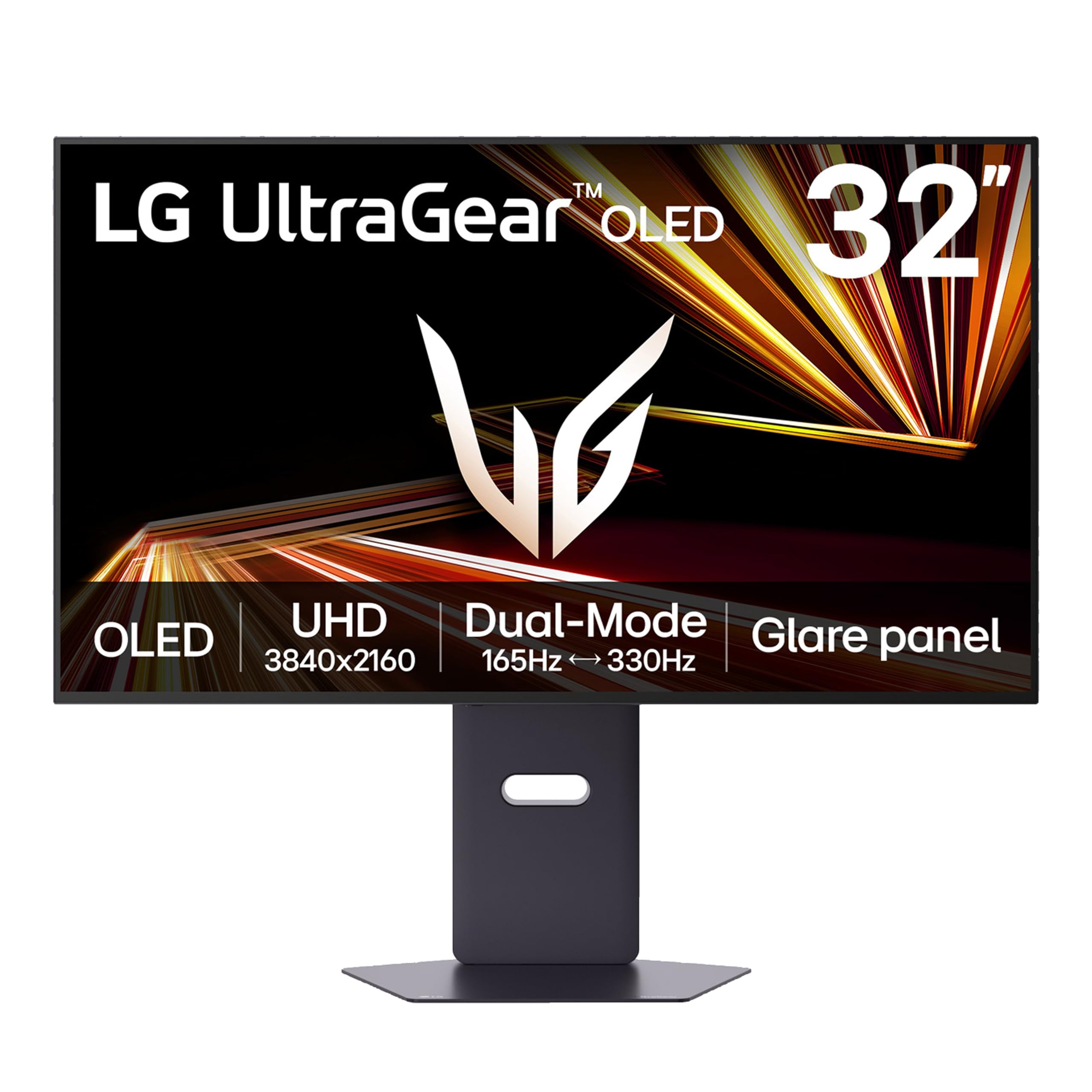
While the budget-friendly 27-inch glossy OLED in this set delivers fast 1440p action at a keen price, this LG steps up to a fully immersive 32-inch 4K panel with a dual-mode switch — 165Hz for story-driven single-player worlds, a rapid 330Hz at 1080p when every frame counts. That flexibility anchors the monitor's appeal, giving you a single display that stretches from atmospheric 4K landscapes to high-frame-rate multiplayer without compromise in black depth or color richness.

The 4K picture delivers the inky, pixel-perfect blacks OLED is known for, made even richer by the glossy coating that eliminates the haze common on matte screens. HDR playback hits VESA DisplayHDR True Black 400, with 98.5% DCI-P3 coverage giving vibrant, accurate colors that content creators will appreciate. Unboxing and assembly is straightforward, with a sturdy stand that feels premium right out of the box, so you spend less time fussing with cables and more time inside your favorite worlds.

This monitor suits gamers who split time between cinematic 4K titles and occasional competitive sessions, and creators who need a color-accurate canvas. Those sensitive to VRR flickering should know that dark scenes with high-contrast black/red transitions may exhibit noticeable flicker — a tradeoff that purely competitive shooters with a low tolerance for distractions will want to avoid. If you primarily game at a desk in a dim room and value contrast over flawless motion, the dual-mode panel slots in beautifully.

💡 If flickering appears in dark scenes, try toggling VRR off or adjusting the black stabilizer — some find it eases the issue without sacrificing too much fluidity.

Pros

  • Stunning 4K picture with perfect blacks for immersive gaming
  • Glossy screen finish maximizes perceived contrast and sharpness
  • Dual-mode 165Hz/330Hz adapts from cinematic 4K to fast-paced FHD action
  • Easy setup and sturdy build quality right out of the box

Cons

  • VRR flickering with black/red horizontal lines can be distracting during dark game scenes
Our verdict

The 32-inch 4K glossy OLED panel rewards cinematic single-player gaming with deep contrast and vivid color, as long as you can accept occasional VRR flicker in the darkest scenes — for competitive purists, the 1440p value pick offers a sharper motion experience at a friendlier price.

Check Latest Price
4

Best 1440P Glossy OLED for Color Accuracy

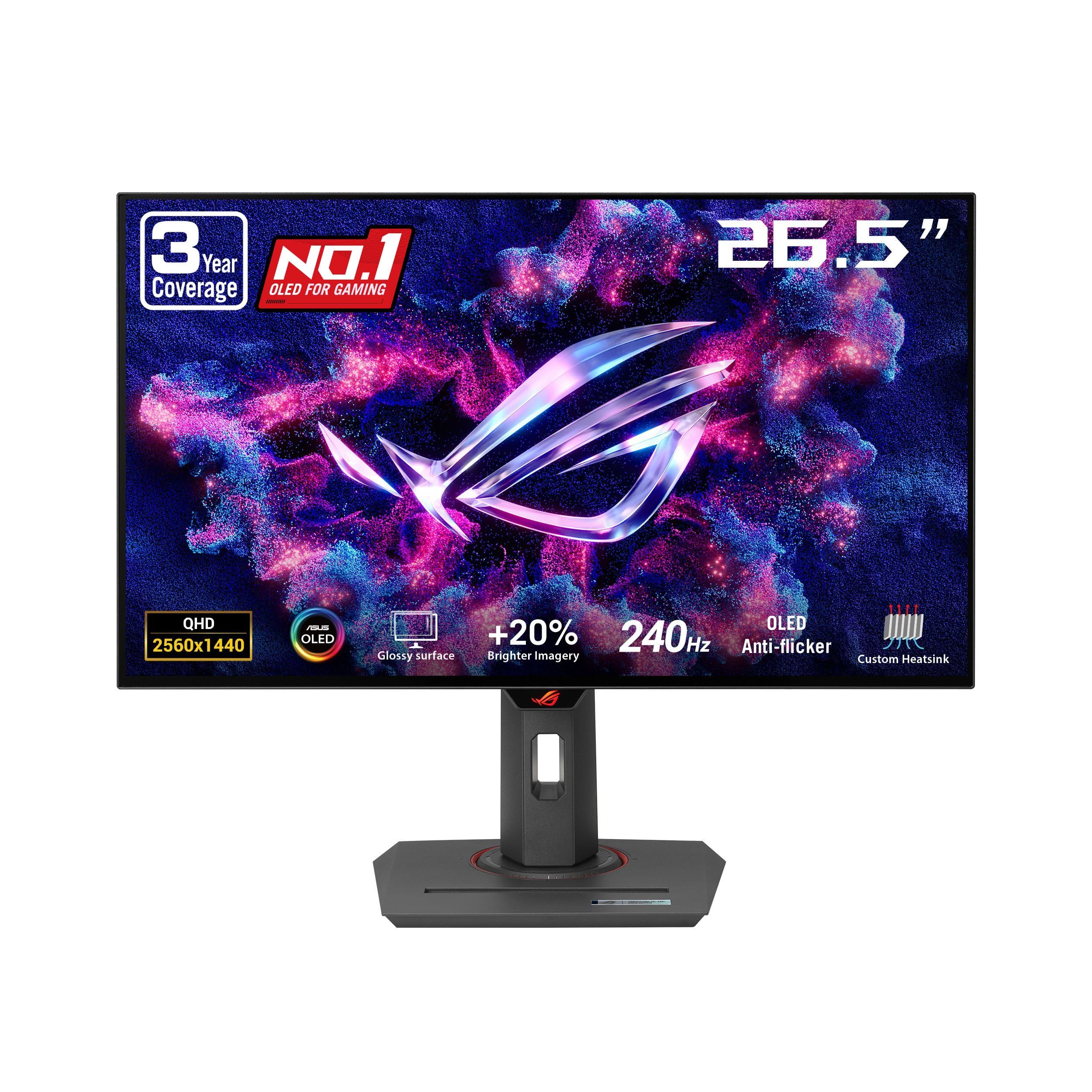
ASUS XG27AQDMG Glossy

88 /100
Lab Score Excellent

Key details

HDR Performance
True Black 400
Glossy Coating Quality
Glossy
Screen Size & Resolution
26.5" QHD
Refresh Rate & Response Time
240Hz, 0.03ms
View on Amazon

While 4K glossy flagships chase higher resolution and dual-mode versatility, the XG27AQDMG stakes its claim on raw color fidelity and thermal headroom. The factory-calibrated 99% DCI-P3 panel and custom heatsink work together to let creators and gamers push sustained brightness without immediate burn-in anxiety, all through a glossy finish that preserves every bit of contrast.

Out-of-box Delta-E stays under 2, making this a credible tool for photo and video editing without a calibrator. Glossy coating deepens blacks to inky levels that matte competitors cannot match, while 240Hz and 0.03ms response time keep motion sharp even at high competitive speeds. The heatsink enables the panel to hold brightness peaks longer than passively cooled designs — a tangible benefit during marathon color-grading sessions.

The automatic brightness limiter intervenes aggressively when large bright windows push the panel's thermal budget, dimming the whole screen noticeably in productivity apps. Sudden luminance swings may pull focus during spreadsheet work or UI-heavy editing. A small subset of units have experienced hardware failures — ranging from power-on refusal to abrupt shutdown after weeks of use. These events are outliers, not the norm, but they warrant a thorough check within your return window.

This monitor fits color-critical gamers and media editors who demand a glossy OLED with reference-level accuracy and can adapt to ABL quirks in mixed-use workflows. If auto-dimming during desktop tasks would frustrate you, or if you prefer a monitor with fewer reported failure incidents, the top pick offers comparable speed without these tradeoffs.

💡 If the auto-brightness dimming becomes distracting in desktop apps, switching to SDR mode and lowering the brightness target reduces how often the limiter kicks in.

Pros

  • Inky blacks and vibrant color saturation bring game worlds and photo edits to life with striking contrast.
  • High factory color accuracy lets creatives start editing right away without a calibration step.
  • 240Hz refresh and near-instant response eliminate perceptible motion blur in fast-paced gaming.

Cons

  • Aggressive automatic brightness limiter can abruptly dim the screen during bright productivity scenes.
  • A possibility of hardware failure exists, with occasional units losing power or exhibiting early shutdown.
Our verdict

For creators who split time between color grading and competitive play, the XG27AQDMG's glossy panel and out-of-box accuracy make a strong case, as long as the auto-dimming behavior and small failure risk are acceptable.

Check Latest Price
5

Best High-Refresh Glossy OLED (280Hz)

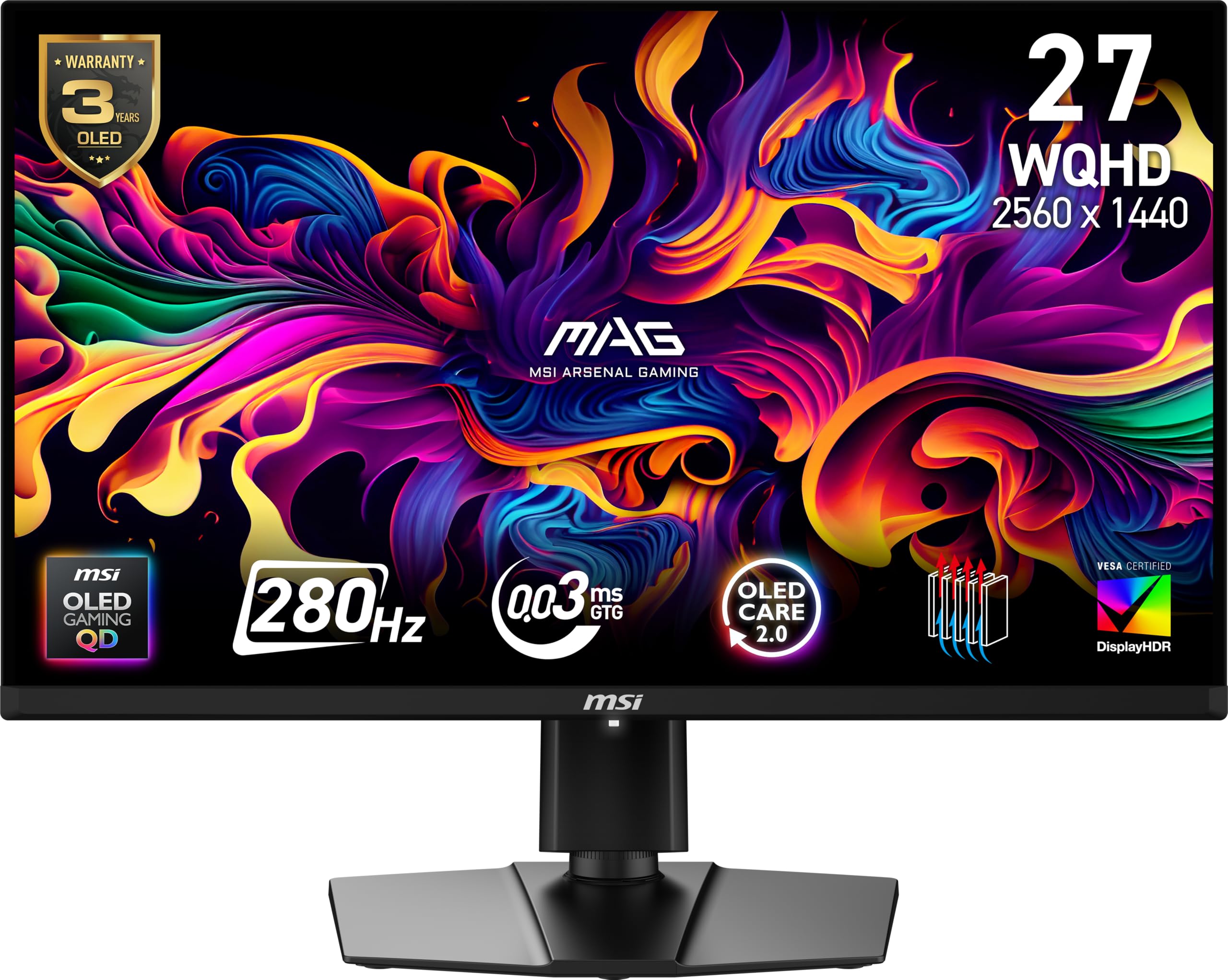
MSI MAG 271QP Glossy 280Hz

87 /100
Lab Score Excellent

Key details

HDR Performance
True Black 400
Glossy Coating Quality
Glossy
Screen Size & Resolution
27" QHD
Refresh Rate & Response Time
280Hz, 0.03ms
View on Amazon

The MAG 271QP pushes glossy QD-OLED to 280Hz, outpacing the typical 240Hz ceiling for a smoother competitive experience. A 0.03ms response time keeps fast sweeps and flick shots crisp, while the glossy finish deepens contrast and color saturation beyond what matte panels deliver. It is a monitor built for motion clarity first, and the extra frames are a tangible advantage in twitch shooters.

In a dimmer or indirect-lit room, the 99% DCI-P3 coverage and VESA True Black 400 HDR produce rich, shadowy scenes with punchy highlights. Brightness tapers off in strong daylight, and glare can overpower the glossy surface—a tradeoff inherent to this panel type. Occasional screen blackouts have been noted, resolved by a quick power cycle, and remain a manageable annoyance rather than a defect.

This monitor suits competitive gamers who value fluid motion and vivid picture over peak luminance, and who can control ambient light. It is a poor match for sun-drenched offices or anyone who needs absolute signal reliability without the rare reset. Within its comfort zone, it offers a responsive, cinematic window into fast-moving worlds.

💡 If the screen goes black unexpectedly, unplug the power cable for ten seconds and reconnect — this usually restores the signal.

Pros

  • Buttery smooth 280Hz refresh and 0.03ms response time slice through motion blur for competitive play.
  • Glossy QD-OLED panel renders richer blacks and colors that stay vibrant in controlled light.
  • 99% DCI-P3 coverage ensures accurate, lifelike hues in games and media.
  • Mid-range price undercuts many glossy OLED rivals while delivering core gaming speed.

Cons

  • Peak brightness in SDR may feel insufficient in brightly lit rooms, washing out contrast.
  • Screen can sporadically lose signal and require a full power cycle to recover.
Our verdict

For esports enthusiasts chasing the highest refresh rate in a glossy QD-OLED, the MAG 271QP delivers speed and contrast that outpace the price, provided you game in dim light and can overlook the rare need for a power reset.

Check Latest Price
6

Best Budget Glossy OLED

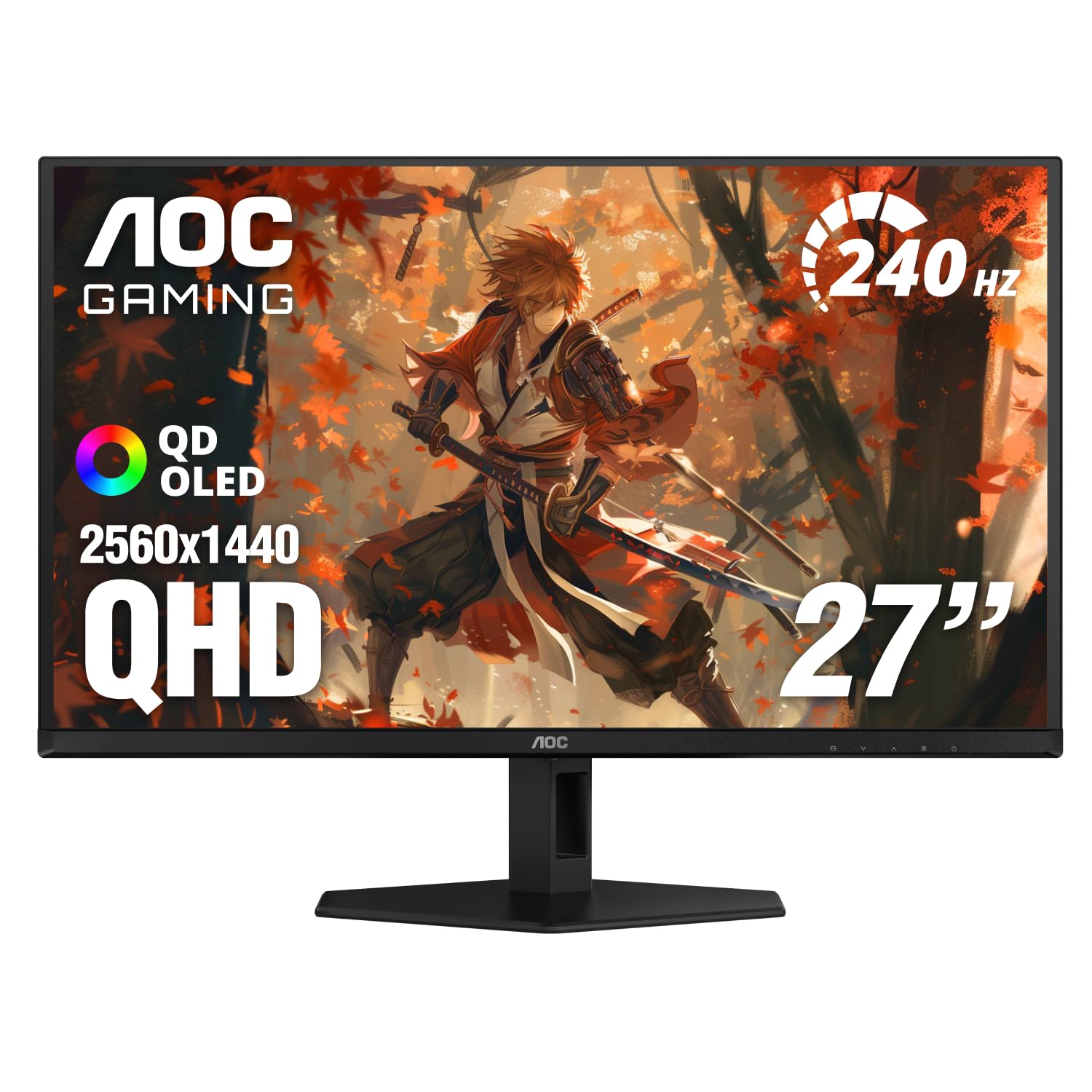
AOC Q27GAZD Glossy

85 /100
Lab Score Excellent

Key details

HDR Performance
True Black 400
Glossy Coating Quality
Glossy
Screen Size & Resolution
27" QHD
Refresh Rate & Response Time
240Hz, 0.03ms
View on Amazon

The AOC Q27GAZD is the lowest-priced glossy QD-OLED you can buy today, undercutting even the top-value picks in this category. It gets there by prioritizing the essentials — a glossy QD-OLED panel with deep blacks and vibrant SDR color — while forgoing the high peak brightness needed for impactful HDR. Build quality punches above its price point, with a sturdy stand and minimal chassis flex that defy the budget label.

The 110.2% DCI-P3 gamut delivers rich, saturated colors out of the box, and the 0.03ms response keeps motion crisp in fast shooters. SDR content looks punchy and contrast-rich in a light-controlled room, the environment where this monitor is meant to live. The glossy finish eliminates graininess, preserving sharp text and image clarity that matte coatings soften.

Gamers who primarily play in SDR and want the deepest OLED contrast without spending more will find the Q27GAZD a precise tool. It's a poor fit for anyone splitting time between competitive SDR and cinematic HDR titles, or for bright living spaces with windows. This monitor earns its keep as a dim-room, SDR-only specialist.

Pros

  • Solid build quality with a stiff stand and clean cable routing for its price bracket.
  • Rich SDR colors with inky OLED blacks and a wide DCI-P3 gamut.
  • 240Hz refresh and near-instant 0.03ms response for fluid competitive play.

Cons

  • HDR content looks flat, with limited peak brightness that can't overcome ambient light.
Our verdict

For SDR-only gaming in a dimly lit room, the AOC Q27GAZD delivers glossy OLED contrast at a price no other monitor matches. If that use case fits, it's the most cost-conscious way to own that OLED pop.

Check Latest Price
7

4K & Productivity

MSI MPG 321URX Glossy

86 /100
Lab Score Excellent

Key details

HDR Performance
True Black 400
Glossy Coating Quality
Glossy
Screen Size & Resolution
31.5" 4K
Refresh Rate & Response Time
240Hz, 0.03ms
View on Amazon

The 32-inch QD-OLED panel pairs a glossy finish with 99% DCI-P3 coverage, delivering deep blacks and vivid color without matte haze. At 240Hz with a 0.03ms gray-to-gray response, motion stays crisp in competitive shooters. The integrated KVM switch and 90W USB-C port let you share peripherals and video between a gaming rig and a work laptop while charging it, creating a single-display hub that suits coders, editors, or hybrid workers.

Detailed long-term user accounts are scarce, so panel endurance under mixed use, burn-in patterns, and OLED subpixel text rendering haven't been publicly examined. This monitor fits someone comfortable buying on specs and early reputation, accepting that community-vetted real-world insight is limited. If proven track records matter, more widely discussed glossy OLED models are a safer bet.

Pros

  • Glossy 4K OLED with 99% DCI-P3 coverage for vibrant, high-contrast visuals in games and media.
  • 240Hz refresh and 0.03ms response time eliminate motion blur in fast-paced competitive titles.
  • Built-in KVM and 90W USB-C simplify switching between two computers and peripherals on one display.

Cons

No notable drawbacks to flag.

Our verdict

A strong fit for hybrid workers and gamers who need a glossy 4K OLED with built-in KVM and USB-C and are comfortable assessing long-term behavior themselves, since community-vetted detail is sparse.

Check Latest Price

How to Choose

Screen Size & Resolution

27-inch 1440p panels are the performance sweet spot: you get crisp enough visuals for competitive play without the hardware tax of driving 4K. 32-inch 4K monitors offer cinematic immersion, but require a powerful GPU to maintain high frame rates. The trade-off is that a 4K screen at typical desk distances demands scaling, which can mess with UI in some older games.

Glossy Coating Quality

Glossy finishes enhance perceived contrast and color saturation, making blacks look inkier than matte. However, they reflect ambient light aggressively—a window or bright lamp can wash out dark scenes. If your gaming room has controllable lighting, glossy is a clear win for immersion.

Refresh Rate & Response Time

OLED's 0.03ms response time practically eliminates motion blur, but refresh rate still matters. 240Hz is sufficient for almost all gamers, while 280Hz and 480Hz (in FHD dual mode) offer subtle benefits only to the most competitive esports players.

The hidden trade-off is that higher refresh modes can introduce more VRR flicker, so if you're sensitive to flicker, stick with native rate and disable adaptive sync.

HDR Performance

Even among monitors that carry the same VESA True Black 400 certification, actual HDR brightness ranges from adequate to underwhelming. True Black 400 guarantees perfect blacks but not high peak luminance; in a bright room, HDR highlights may look dim. If HDR is a priority, look for models noted for higher sustained brightness, and be prepared to game in a dim environment.

Reliability & Warranty

Glossy OLEDs are more fragile than they look. Out-of-box dead pixels, intermittent blackouts, and flickering are reported across brands. A generous return policy and a warranty that covers burn-in can save you months of frustration. Prioritize retailers that offer hassle-free exchanges and manufacturers known for responsive support.

Frequently Asked Questions