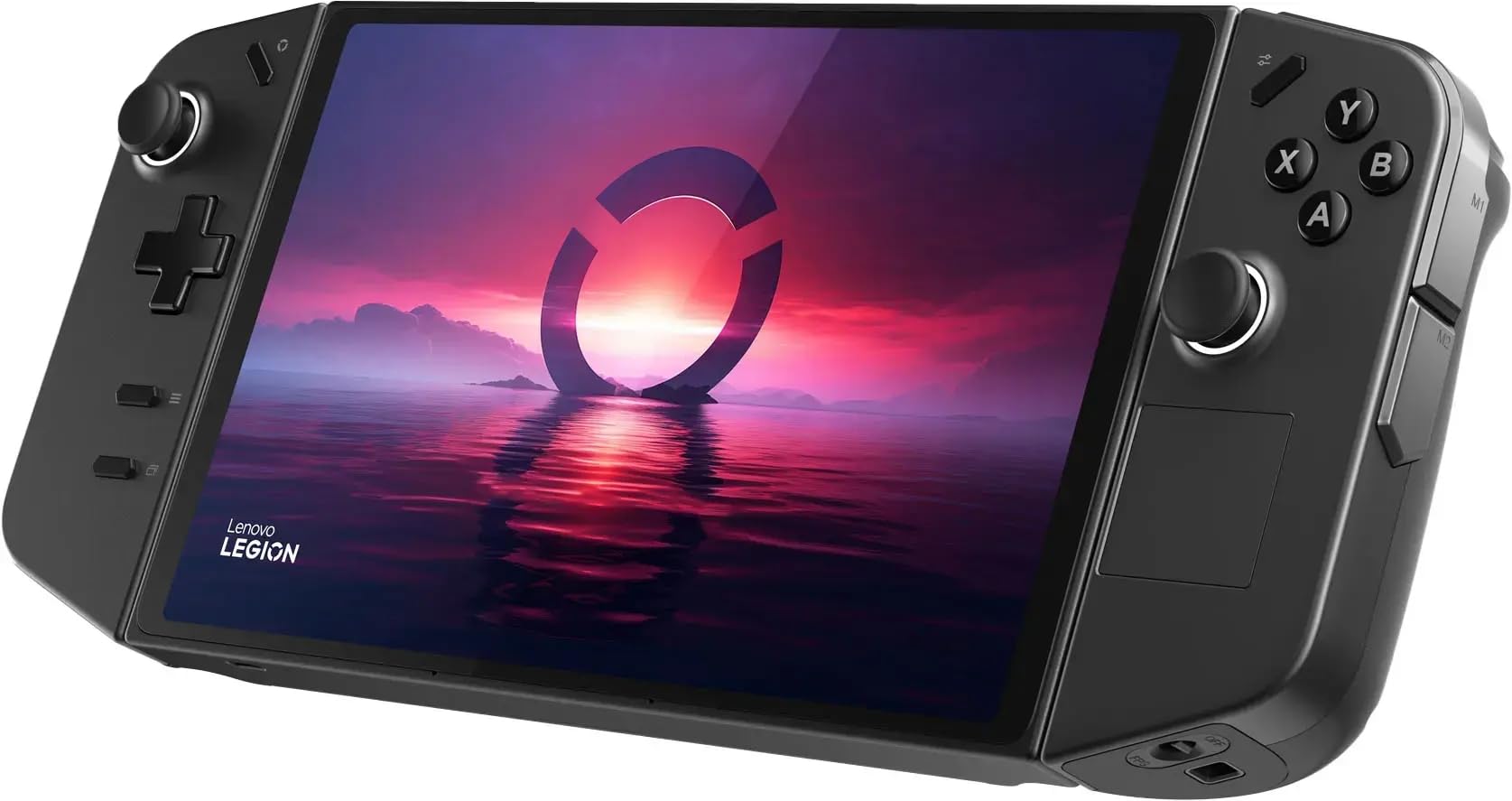
5 Best Handheld Gaming PC of 2026: Real-World Battery Life You Can Count On

Find the handheld gaming PC that delivers actual playtime, not just spec sheets. For gamers tired of 1-hour battery claims and wanting a device that fits their lifestyle.

Every handheld gaming PC manufacturer talks about battery life in hours, but the reality for AAA titles is often closer to 90 minutes. The gap between marketing and lived experience is the single biggest frustration for buyers in this category.

This guide cuts through the promises. The real choice isn't between Windows and SteamOS or between two processors — it’s about how much of your gaming time will be spent tethered to an outlet. Some devices are built for unplugged sessions, others assume you’ll always have a power bank nearby.

Understanding that trade-off upfront means you can pick the handheld that matches the way you actually play, not the one with the flashiest spec sheet.

1

Best Overall

Steam Deck OLED

90 /100
Lab Score Outstanding

Key details

OS
SteamOS
Screen
7.4" OLED 1280x800
Processor
Custom AMD APU
Battery (AAA)
3-6 hours
View on Amazon

The Steam Deck OLED earns its premium price by delivering battery life that other handhelds can't touch: 3 to 6 hours on most games, thanks to a 50Wh battery paired with a power-efficient 1280x800 OLED display and SteamOS. The 7.4-inch HDR OLED panel produces deep blacks and vibrant colors that make even older titles feel fresh, and the 90Hz refresh rate keeps motion smooth without draining the battery faster.

In practice, that battery advantage means you can play through a long flight or an afternoon park session without hunting for an outlet. The custom AMD APU (Zen 2 + RDNA 2) handles the vast majority of PC games at solid frame rates, from indie darlings to recent AAA releases. The 1TB NVMe SSD provides ample room for a large library, and the 16GB of LPDDR5 RAM keeps multitasking responsive.

This handheld is best for Steam library owners who prioritize unplugged play over raw performance or Windows-native compatibility. The OLED screen and ergonomic build make extended sessions comfortable, and the trackpads and gyro controls give you precise input for strategy games and shooters. However, some Windows games may require manual configuration to run under Linux-based SteamOS, and the 1280x800 resolution is lower than competing Windows handhelds — a trade-off that buys you those extra hours of play.

The build quality stands out even among premium devices: the textured grips, responsive buttons, and well-placed thumbsticks feel like they were designed for long sessions. SteamOS offers a console-like interface that updates regularly, and the ability to suspend and resume games instantly is a convenience that Windows handhelds haven't matched. For anyone who values immersion without compromises on battery or screen quality, this is the most polished handheld gaming PC available.

💡 Before buying Windows-specific titles, check ProtonDB compatibility to avoid surprises.

Pros

  • Battery life of 3-6 hours on most games, unmatched in this category
  • Stunning 7.4-inch OLED display with HDR, deep blacks, and 90Hz
  • Superior ergonomics and build quality for comfortable extended play
  • Smooth performance across the vast majority of PC games without tweaking

Cons

  • Native 1280x800 resolution may look less sharp than competitors' screens
  • Some Windows games need manual configuration under SteamOS to run properly
Our verdict

For anyone who values long unplugged sessions and a high-quality display over absolute Windows compatibility, this handheld delivers the best balance of battery, screen, and polish in the category.

Check Latest Price
2

Best for Windows Power Users

Legion Go Z1E

87 /100
Lab Score Excellent

Key details

OS
Windows 11
Screen
8.8" 144Hz 2560x1600
Processor
AMD Ryzen Z1 Extreme
Battery (AAA)
1-2 hours
View on Amazon

The Z1 Extreme processor and 8.8-inch WQXGA 144Hz display give the Legion Go a clear edge over the Steam Deck OLED in raw gaming horsepower. AAA titles run at higher settings and smoother frame rates, and the large screen makes cockpit views and open-world landscapes feel more immersive than on any other handheld in this class.

This handheld is built for gamers who spend most of their playtime near an outlet or have a desk setup. Away from power, expect about 1-2 hours on demanding games, which is well below what the Steam Deck OLED delivers. Software stability has also been hit-or-miss, with occasional crashes or blue screens reported, so some patience with updates and tinkering is part of the ownership experience.

💡 Keep the charger within arm's reach for extended play sessions, and budget time for driver and firmware updates during setup.

Pros

  • Runs modern AAA games at high settings without stutter or drops
  • Bright, color-rich 8.8-inch screen with a fast 144Hz refresh rate
  • Solid build with detachable controllers and a sturdy feel
  • Good performance-to-price ratio in the premium handheld tier

Cons

  • Unplugged, heavy games drain the battery in about an hour
  • Software bugs and system crashes may require manual fixes
Our verdict

If you primarily game plugged in or docked and want the best Windows handheld performance at a reasonable premium, the Legion Go delivers. For untethered sessions, the Steam Deck OLED is a better fit.

Check Latest Price
3

Best Lightweight Companion

ROG Ally Z1E

83 /100
Lab Score Excellent

Key details

OS
Windows 11
Screen
7" 1080p 120Hz
Processor
AMD Ryzen Z1 Extreme
Battery (AAA)
1-2 hours
View on Amazon

Weighing just 1.1 pounds, the ROG Ally is the most portable Windows handheld available — easier to pack than competitors with larger batteries. Its solid build and ergonomic shape feel premium in hand, and the 7-inch 1080p 120Hz display looks sharp. This lightness comes with a cost: the battery lasts under 1.5 hours during AAA gaming, making it a device for gamers who stay near an outlet.

This handheld targets Windows gamers who primarily play docked or plugged in and value weight savings over runtime. The Z1 Extreme processor runs Steam and PC games without the Linux compatibility hurdles of the Steam Deck. However, some units have microSD slot issues that can limit storage expansion, and power adapters may be European plugs requiring an adapter for US buyers.

When connected to a monitor or charger, the Ally delivers consistent performance at 1080p. The 512GB SSD provides adequate storage, and the 16GB RAM handles multitasking smoothly. For short untethered sessions, a high-capacity power bank helps extend playtime, but the top pick Steam Deck OLED remains the better choice for travel without worrying about outlets.

💡 For gaming on the go, carry a high-capacity power bank or stay near an outlet.

Pros

  • Lightest Windows gaming handheld at 1.1 lbs
  • Solid, ergonomic build with a premium feel.
  • Plays the entire Windows PC game library without compatibility issues.

Cons

  • International units may ship with a European plug, requiring an adapter for US outlets.
  • Some units have microSD slot failures that can affect storage expansion.
  • Battery life under 1.5 hours during AAA gaming sessions
Our verdict

The ROG Ally is the lightest Windows handheld and a good fit for gamers who mainly play tethered — but the Steam Deck OLED's far better battery makes it the better choice for unplugged portability.

Check Latest Price
4

Best for Game Pass Subscribers

ROG Xbox Ally

83 /100
Lab Score Excellent

Key details

OS
Windows + Xbox
Screen
7" 1080p 120Hz
Processor
AMD Ryzen Z2 A
Battery (AAA)
Improved (est. 2-3 hrs)
View on Amazon

The ROG Xbox Ally ties directly into the Xbox Game Pass library, including three months of Premium membership at no extra cost. Unlike lighter Windows handhelds, this model prioritizes extended play sessions with its 60Wh battery, delivering better endurance than the original Ally while maintaining comfortable ergonomics for longer use.

This is a dedicated Xbox Game Pass subscriber’s device — if your library lives in Microsoft’s ecosystem and you value battery life over peak frame rates in AAA titles, the tradeoffs are acceptable. Early units have shown software bugs and occasional crashes, and the Z2 A processor may not match the Z1 Extreme in the most demanding games. Those who need maximum performance in every title should consider Z1 Extreme-based handhelds.

Build quality and ergonomics receive consistent praise — the handheld’s weight and grip suit longer gaming sessions. Battery life, while improved, still falls short of the Steam Deck OLED; expect around two hours in demanding games rather than all-day unplugged use.

💡 For the most demanding games, lowering graphics settings helps maintain smoother frame rates, and keeping the system updated may reduce software bugs over time.

Pros

  • Deep integration with Xbox Game Pass and Xbox ecosystem
  • Comfortable ergonomics and solid build quality
  • Better battery life than the original ROG Ally

Cons

  • Game compatibility can be narrower than standard Windows handhelds; some titles refuse to launch
  • Performance in demanding AAA games may trail Z1 Extreme processors
  • Software bugs and crashes occur in some units, especially early batches
Our verdict

For Xbox Game Pass subscribers who want a dedicated handheld with better battery than the original Ally, the ROG Ally offers a compelling experience — but only if you’re comfortable with early-adopter software instability and accepting that performance in AAA titles won’t match Z1 Extreme alternatives.

Check Latest Price
5

Budget Z1 Extreme

Legion Go Renewed

82 /100
Lab Score Excellent

Key details

OS
Windows 11
Screen
8.8" 144Hz 2560x1600
Processor
AMD Ryzen Z1 Extreme
Battery (AAA)
Degraded possible
View on Amazon

The Lenovo Legion Go Renewed brings the same Z1 Extreme processor and 8.8-inch 144Hz display as the full-price version, making it the cheapest route to high-end Windows handheld gaming. But the renewed condition means battery capacity may be lower, the warranty covers only 90 days, and some units arrive with cosmetic marks. This handheld suits budget-focused gamers who play mostly plugged in and can accept some risk for a sizable discount.

Pros

  • Delivers Z1 Extreme processor performance identical to a new unit
  • Solid build quality with a premium feel for a renewed device

Cons

  • Battery life may be noticeably shorter than a new unit during unplugged sessions
  • Only a 90-day limited warranty, less coverage than a full manufacturer warranty
Our verdict

Best for gamers who want Z1 Extreme power on a tight budget and are comfortable with a shorter warranty and possible cosmetic wear in exchange for the lower price.

Check Latest Price

How to Choose

Processor

The processor determines what games you can play and at what settings. The AMD Ryzen Z1 Extreme is the current performance king, capable of running AAA titles at medium-to-high settings on a 1080p screen. The newer Z2 Go, despite its higher model number, delivers significantly less power — it’s best suited for older or indie games.

If you plan to play modern shooters or open-world games, prioritize the Z1 Extreme. For casual or retro gaming, a Z2 Go or custom Steam Deck APU is sufficient and often more battery-efficient.

Screen Size and Resolution

A larger screen (8.8 inches) is great for immersion but drains the battery faster and makes the handheld heavier. Smaller 7-inch screens are more portable and require less power to drive. Higher resolutions like 2560x1600 look sharper but demand more from the GPU, reducing frame rates and battery life.

For most handheld use, a 7-8 inch 1080p or 1280x800 display at 120Hz offers the best balance. The OLED panel on the Steam Deck provides richer colors and deeper blacks, which matters more for single-player games than for fast-paced multiplayer.

Real-World Battery Life

Windows handhelds with the Z1 Extreme typically deliver 1-2 hours of AAA gaming at high brightness. The Steam Deck OLED, thanks to its custom OS and lower resolution screen, can achieve 3-6 hours on the same titles. Battery chemistry (lithium-ion) degrades over time, so a renewed unit may offer even less run time.

If you frequently game on the go without access to an outlet, the Steam Deck OLED is the only realistic choice. For everyone else, plan to carry a 65W+ power bank or play near a wall socket.

Operating System

Windows 11 gives you access to every PC game store (Steam, Epic, Game Pass, GOG) and runs all titles natively. But Windows is not optimized for small touchscreens — expect clunky navigation and occasional driver issues. SteamOS on the Steam Deck is built for handheld use: a console-like UI, quick suspend/resume, and better power management.

The trade-off: SteamOS runs most games through Proton, but a small percentage (especially anti-cheat titles) may not work or require tinkering. If you rely on Game Pass or non-Steam launchers, Windows is the safer bet even with its rough edges.

Build Quality and Ergonomics

Weight and grip design directly affect how long you can comfortably play. The ASUS ROG Ally at 1.1 lbs is the lightest, but its smaller size can cramp larger hands. The Steam Deck and Legion Go are heavier (1.5-1.9 lbs) but offer better ergonomics with larger grips. Detachable controllers (Legion Go) add versatility for tabletop play but introduce potential wobble.

A handheld that feels good in your hands for hours is more important than raw specs. If possible, try holding each device to see which one suits your hand size and preferred play position.

Frequently Asked Questions