9 Best HDR Gaming Monitor of 2026: Real HDR Without the Washout

Which HDR gaming monitors actually deliver visible HDR impact, not just a checkbox – for gamers who want immersive visuals without overspending.

Most monitors labeled 'HDR' can accept the signal, but without sufficient peak brightness or local dimming, the image looks no different than standard SDR. The result: washed-out highlights, crushed shadows, and a feature that feels like a lie.

The real split in this category is between monitors that merely check the HDR box and those that actually have the hardware to make it work – a minimum of 400 nits sustained brightness and a panel that can handle high contrast. VA and OLED panels have a natural edge here, while many budget IPS models fall flat.

This guide focuses on monitors that deliver visible HDR improvement for gaming, from a $160 1440p display with DisplayHDR 400 to a premium QD-OLED ultrawide. The common thread: every pick here will make your games look richer, not just say they do.

1

Best Overall

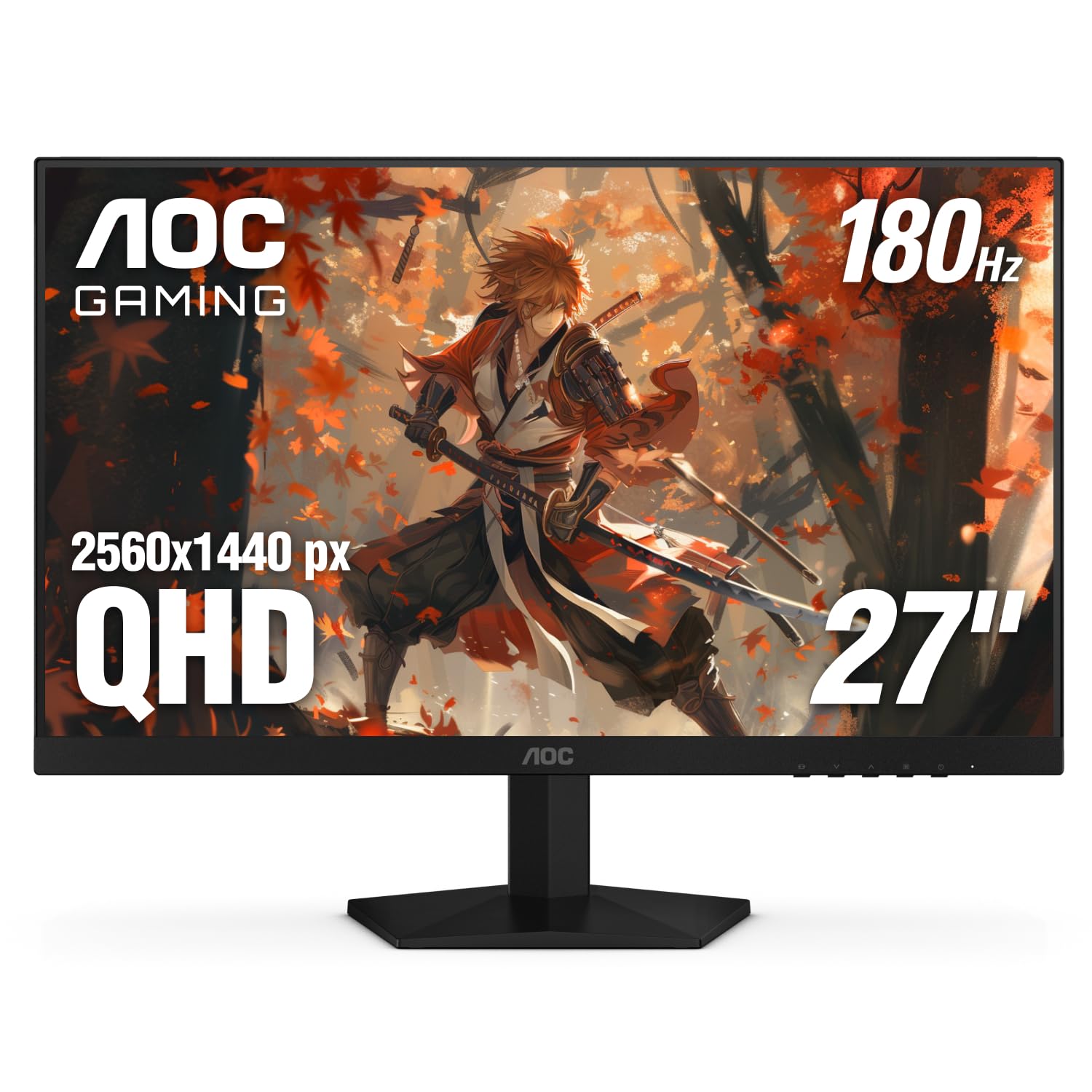
AOC Q27G4XN

89 /100
Lab Score Excellent

Key details

Panel
VA
Refresh
180Hz
HDR Cert
DisplayHDR 400
Brightness
400 nits
View on Amazon

The AOC Q27G4XN delivers DisplayHDR 400 brightness and a 180Hz refresh rate that actually feel meaningful at this price point. The VA panel produces deep blacks and a 3,000:1 contrast ratio that makes dark scenes in games like Alan Wake 2 look significantly more immersive than on typical budget HDR monitors that accept the signal without the hardware to back it up. The 2560x1440 resolution keeps text and textures sharp at 27 inches, and the 1ms GtG response handles fast motion without obvious ghosting for most titles.

In a dark room, the 400-nit peak brightness is enough to create convincing HDR highlights, and the VA contrast makes blacks appear inky rather than gray. Push the monitor into a brightly lit space, however, and the brightness ceiling becomes apparent — blacks wash out and specular highlights lack pop. This is not a flaw for its intended use case, but it sets clear boundaries on where the monitor excels. The 180Hz refresh over DisplayPort 1.4 feels buttery smooth in fast-paced shooters, though competitive purists may still prefer the lower motion blur of a TN panel.

This monitor is built for budget gamers who game in controlled-lighting environments and prioritize contrast and motion smoothness over maximum brightness. The VA panel's narrower viewing angles mean off-center color shifts are more noticeable than on IPS competitors — a non-issue for a single user at a desk. The height-adjustable stand and 3-year zero-bright-dot warranty address common pain points in this price tier: a lack of ergonomic flexibility and anxiety about dead pixels. If you need a monitor that doubles as a secondary display for bright office work, look to an IPS model instead.

AOC includes a DisplayPort 1.4 cable and an HDMI 2.0 port, though the full 180Hz requires DP. On-screen controls are basic but usable, and the bezels are thin enough for multi-monitor setups. The stand offers height, tilt, and VESA 100x100 support, making it easy to pair with an arm. For the price, the build quality and feature set are difficult to beat — the only real compromise is the brightness ceiling in bright rooms.

💡 For bright-room use, consider an IPS monitor with higher peak brightness; this VA panel is best in controlled lighting.

Pros

  • Outstanding value with DisplayHDR 400 and 180Hz
  • Sharp and vibrant 2K resolution
  • Good color and contrast from VA panel
  • Fully adjustable stand with height and tilt

Cons

  • Brightness caps at 400 nits, limiting HDR impact in bright rooms
  • VA panel has narrower viewing angles than IPS, with color shift off-center
Our verdict

If you game primarily in a dim room and want the best HDR performance per dollar, the AOC Q27G4XN is the monitor to buy. The brightness limitation is the only real tradeoff.
Check Latest Price
2

Best 4K HDR

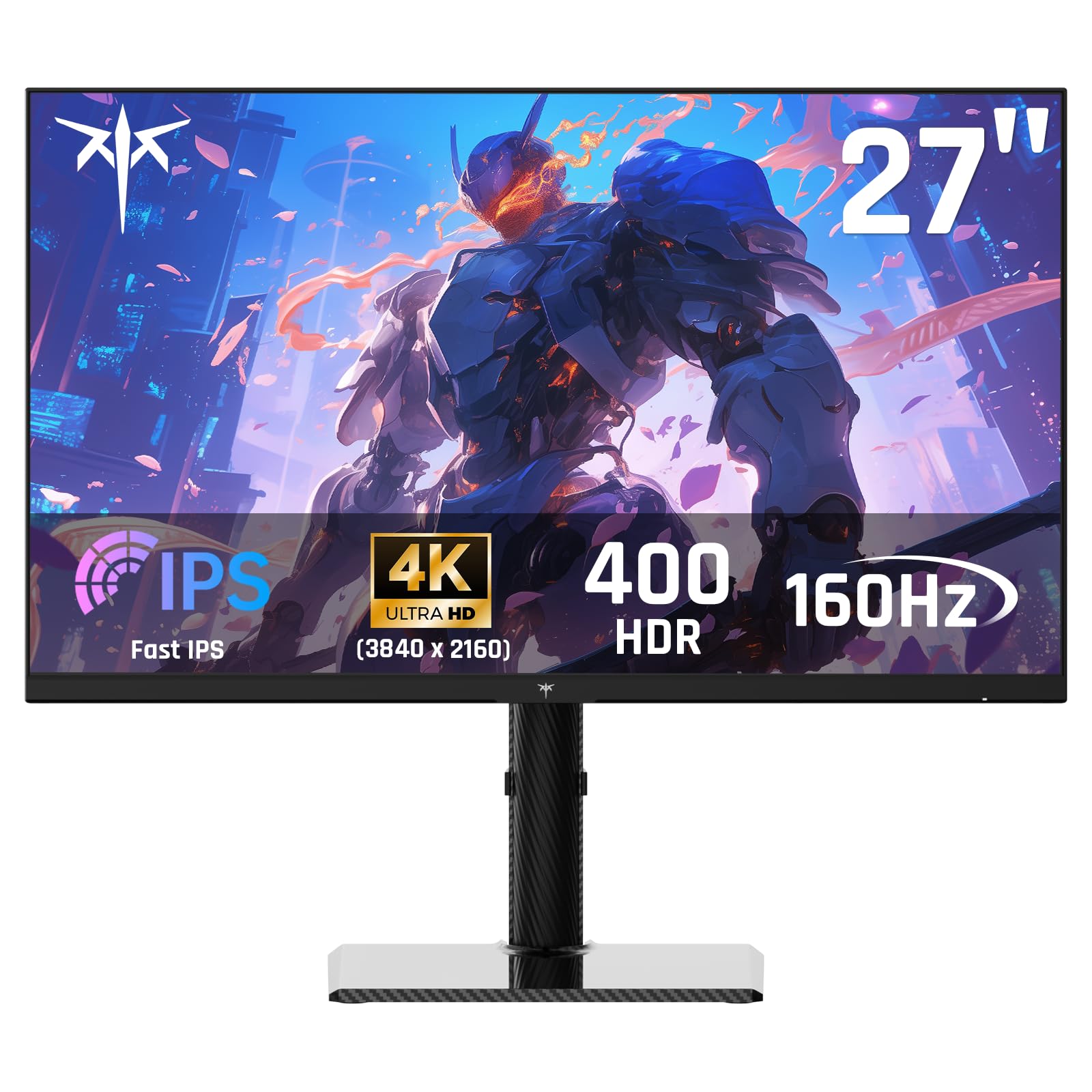
KTC U27T6

92 /100
Lab Score Outstanding

Key details

Panel
Fast IPS
Refresh
160Hz
HDR Cert
HDR 400
Brightness
400 cd/m²
View on Amazon

At $300, the KTC U27T6 pairs 4K resolution, a 160Hz refresh rate, and DisplayHDR 400 certification with a stand that adjusts in height, tilt, pivot, and swivel. That combination is rare at this price tier. Compared to the other budget 4K monitor in this roundup, the KTC adds a more flexible stand and a sturdier carbon-fiber back cover.

This monitor fits gamers who want 4K and high refresh on a mid-range budget and value ergonomic adjustments. However, the real-world performance and unit-to-unit consistency are less documented than with monitors that have a longer track record. For buyers who prefer a larger base of owner feedback before committing, a more widely reviewed model might feel safer.

The HDR400 certification means the 400-nit peak brightness handles HDR signals, but there is no local dimming. Highlights lack the punch of brighter HDR monitors, and the effect is best enjoyed in a darker room. The 140% sRGB coverage keeps colors vivid for gaming and media, though out-of-box color accuracy may need a quick calibration for content creation.

Pros

  • 4K 160Hz with HDR400 and a fully adjustable stand at a mid-range price.
  • Ergonomic stand offers height, tilt, pivot, and swivel adjustments.
  • Wide color coverage (140% sRGB) produces vivid, saturated colors.

Cons

  • HDR400 brightness is adequate only for dim rooms; highlights lack pop in bright environments.
  • Long-term consistency and durability are less verified due to limited owner feedback.
Our verdict

If you need 4K gaming at high refresh without a premium price and want an adjustable stand, the KTC delivers on paper — just go in knowing the long-term track record is thinner than more established alternatives.

Check Latest Price
3

Best Premium HDR

Alienware AW3425DW

87 /100
Lab Score Excellent

Key details

Panel
QD-OLED
Refresh
240Hz
HDR Cert
TrueBlack 400
Brightness
1000 nits peak
View on Amazon

The QD-OLED panel on the AW3425DW produces deep blacks and vivid colors that make HDR content look genuinely lifelike, with DisplayHDR TrueBlack 400 certification ensuring brightness and contrast that IPS or VA monitors can't match. The 240Hz refresh rate and near-instant 0.03ms response keep motion crisp even in fast-paced games.

This monitor is best suited for gamers who prioritize image quality above all else and can handle the care requirements of OLED technology. The premium price puts it out of reach for budget-focused buyers, and those who keep static UI elements on screen for long hours should factor in the potential for burn-in — a trade-off that comes with any OLED panel.

💡 To minimize burn-in risk, enable pixel refresh and hide the taskbar when not gaming.

Pros

  • Stunning QD-OLED picture with deep blacks and vibrant colors
  • Exceptional HDR performance with DisplayHDR TrueBlack 400
  • High 240Hz refresh rate with near-instant 0.03ms response

Cons

  • In setups with static HUDs or desktop icons, burn-in may develop over time
  • Premium price is significantly higher than comparable IPS or VA monitors
Our verdict

For enthusiasts who want the most immersive HDR experience and are comfortable with OLED care, this monitor delivers unmatched image quality — just be aware of the upkeep and cost.

Check Latest Price
4

Best Budget 1440P

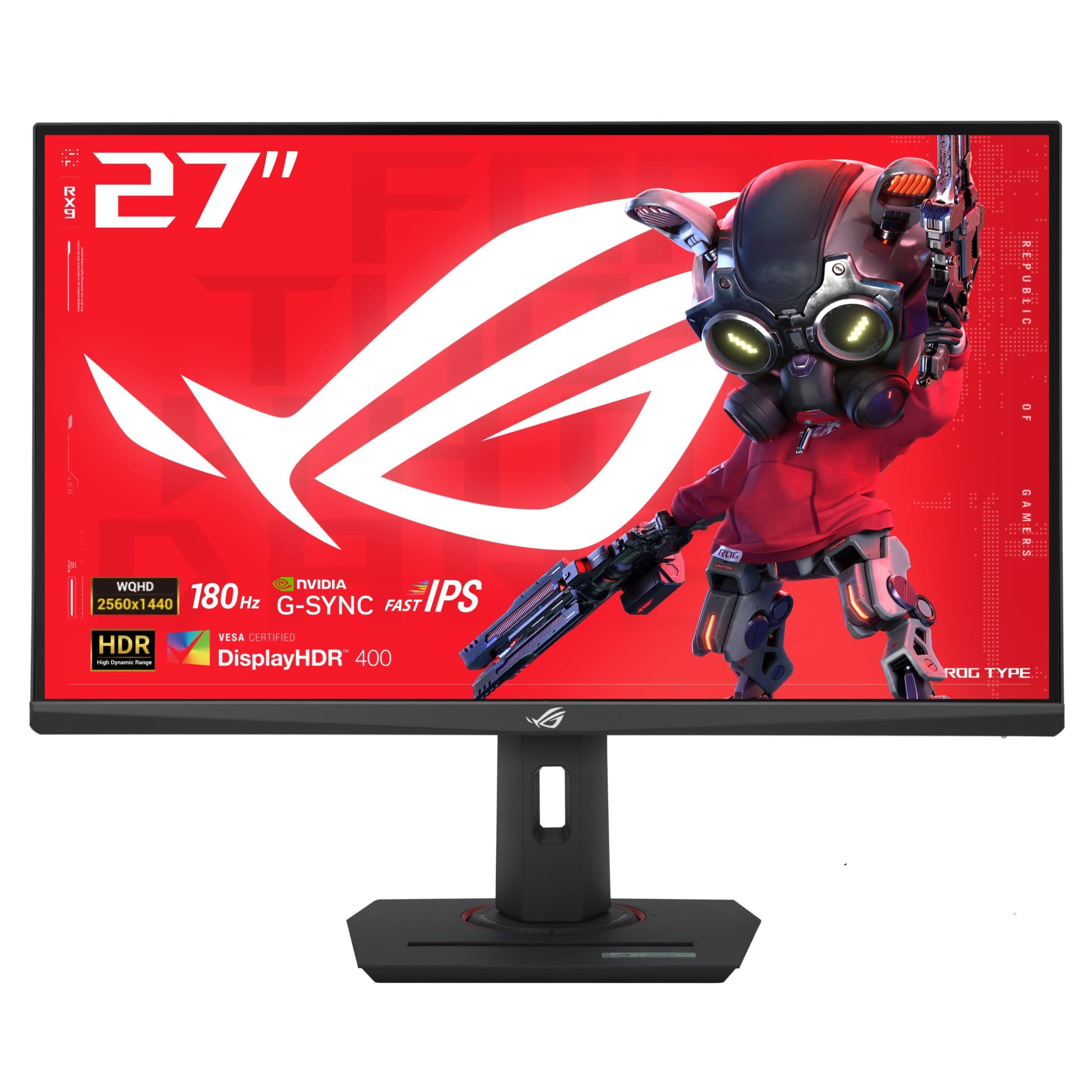
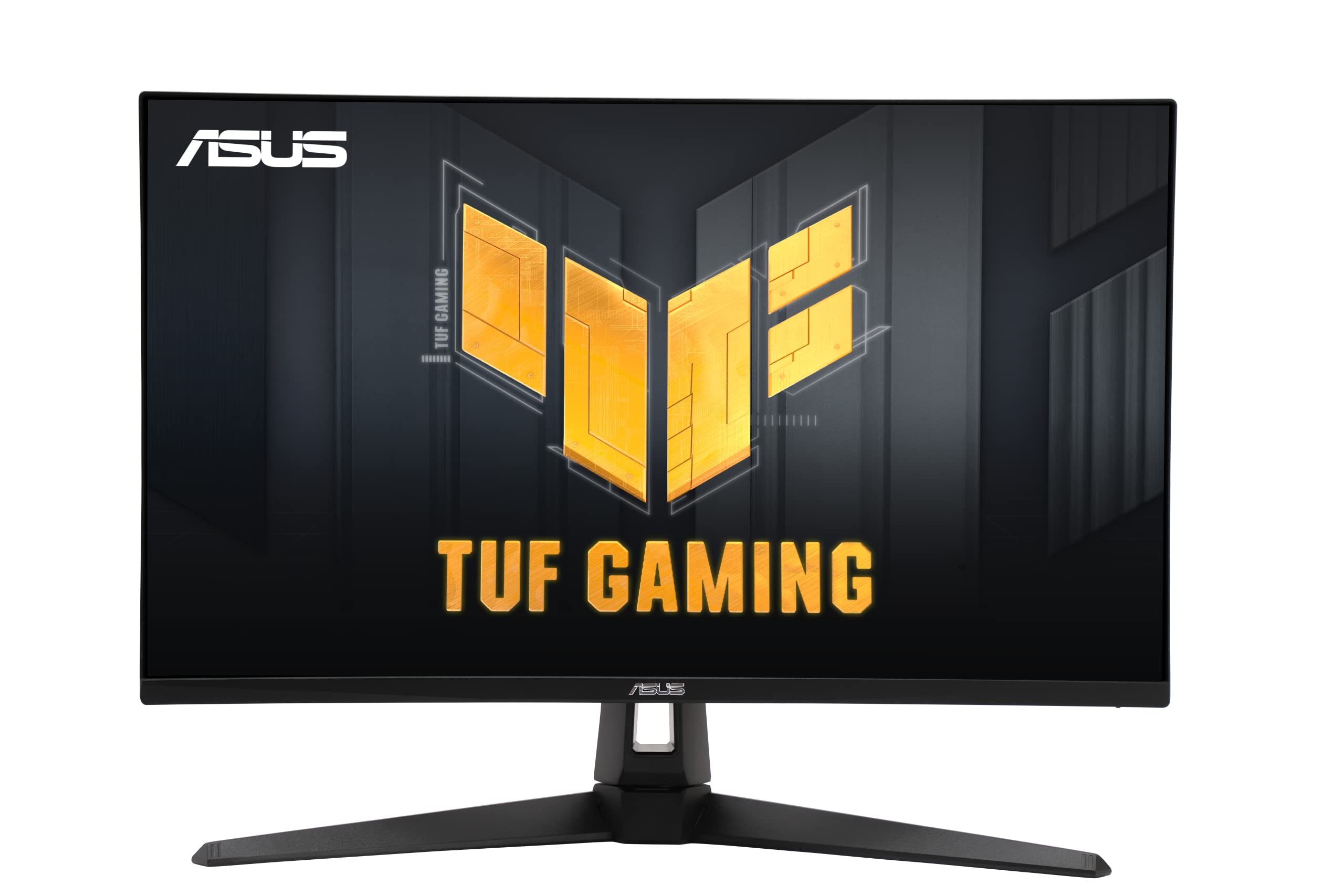
ASUS TUF VG27AQ3A

89 /100
Lab Score Excellent

Key details

Panel
Fast IPS
Refresh
180Hz
HDR Cert
HDR10
Brightness
~400 nits
View on Amazon

The ASUS TUF VG27AQ3A delivers an enjoyable 1440p 180Hz IPS experience at a budget-friendly price, with vibrant colors and smooth motion straight out of the box. Its HDR10 support works adequately for movies and games that output an HDR signal, though without DisplayHDR certification it lacks the brightness and local dimming to produce the punchy highlights seen on higher-tier monitors. The 1ms GTG response and FreeSync Premium / G-SYNC Compatible support keep fast-paced gameplay fluid and tear-free.

This monitor suits budget-conscious gamers who want a high refresh rate 1440p panel and are willing to work around two limitations: the supplied stand is tilt-only with no height adjustment, and pixel defects (dead or stuck) can appear on some units. Given the fixed stand, a desk of suitable height or a VESA arm (100x100mm) is a practical addition. As for pixel quality, unbox and test the panel promptly — if a defect shows, the retailer's return window is the safety net.

In use, the 180Hz refresh rate and fast IPS response make fast-paced shooters and racing games feel responsive, and the 1440p resolution keeps fine details sharp without demanding as much GPU power as 4K. Colors are punchy at default settings, and text clarity is good for desktop use. For the price, the overall package is well-suited to its target buyer.

💡 Inspect the panel for dead or stuck pixels as soon as you unbox it — return within the retailer's window if any appear.

Pros

  • Great value for a 1440p 180Hz IPS gaming monitor
  • Sharp, vibrant picture quality at 1440p with smooth 180Hz motion
  • Good color reproduction out of the box with rich colors and decent black levels

Cons

  • Dead or stuck pixels can appear out of the box or within weeks
Our verdict

The ASUS TUF VG27AQ3A is a capable entry-level 1440p 180Hz monitor with good color and HDR10, but the pixel lottery and fixed stand make it best for buyers who prioritize raw specs over product polish and are prepared to inspect or return.

Check Latest Price
5

Best Curved

Samsung Odyssey G55C

88 /100
Lab Score Excellent

Key details

Panel
VA
Refresh
165Hz
HDR Cert
HDR10
Brightness
300 cd/m²
View on Amazon

The 32-inch 1000R curve wraps around your field of view more aggressively than typical monitors, creating a noticeable sense of depth in single-player games. While the top pick delivers DisplayHDR 400 and a height-adjustable stand, the G55C prioritises contrast ratio and screen curvature for cinematic immersion.

This monitor suits gamers who value screen shape and deep blacks above all else. Color tint variance (yellow/red cast) and occasional DisplayPort connectivity drops have been noted in some units – these are worth checking at purchase. For color-sensitive work or competitive esports, the top pick is a safer bet.

💡 Using the included HDMI cable instead of DisplayPort can help avoid the occasional black screen drops reported by some owners.

Pros

  • Immersive 1000R curve enhances single-player game depth
  • Strong VA contrast delivers rich blacks and vibrant colors
  • Solid value for a 32-inch QHD high-refresh monitor

Cons

  • Out-of-box color accuracy can vary, with some units showing a yellow/red tint
  • DisplayPort connection may cause intermittent black screens; HDMI is more stable
Our verdict

The Odyssey G55C offers a genuinely immersive gaming experience with deep contrast and a pronounced curve, but its basic HDR and unit variance mean it's best for those who prioritize screen curvature over color precision and connectivity certainty.

Check Latest Price
6

USB-C Connectivity

ASUS ROG Strix XG27ACS

87 /100
Lab Score Excellent

Key details

Panel
Fast IPS
Refresh
180Hz
HDR Cert
HDR (no cert)
Brightness
400 nits
View on Amazon

The XG27ACS delivers USB-C connectivity with power delivery, a 180Hz refresh rate, and solid color accuracy out of the box. The adjustable stand covers height, tilt, swivel, and pivot. For buyers who need a single-cable solution for a laptop or secondary device, this ROG monitor offers a feature set rarely seen at this price. However, the HDR experience falls short of what the HDR400 label suggests — without calibration, highlights appear washed out. Additionally, pixel defects such as dead pixels or flickering lines can occur in some units. The AOC Q27G4XN and ASUS TUF VG27AQ3A undercut it on price while offering similar gaming performance, making this a niche pick for USB-C users who prioritize connectivity over pure value.

Pros

  • USB-C with power delivery simplifies desk setup for laptops.
  • Solid color accuracy and 1440p clarity out of the box.
  • Full ergonomic stand with height, tilt, swivel, and pivot.

Cons

  • In a unit with dead pixels or flickering lines, the display may require a replacement
  • For HDR content, the monitor appears washed out without manual calibration, limiting its usefulness for HDR gaming.
Our verdict

This monitor fits best when USB-C with power delivery is a priority and you are comfortable with potential pixel variance — otherwise, the AOC or TUF models offer stronger value.

Check Latest Price
7

Extreme Budget 1440P

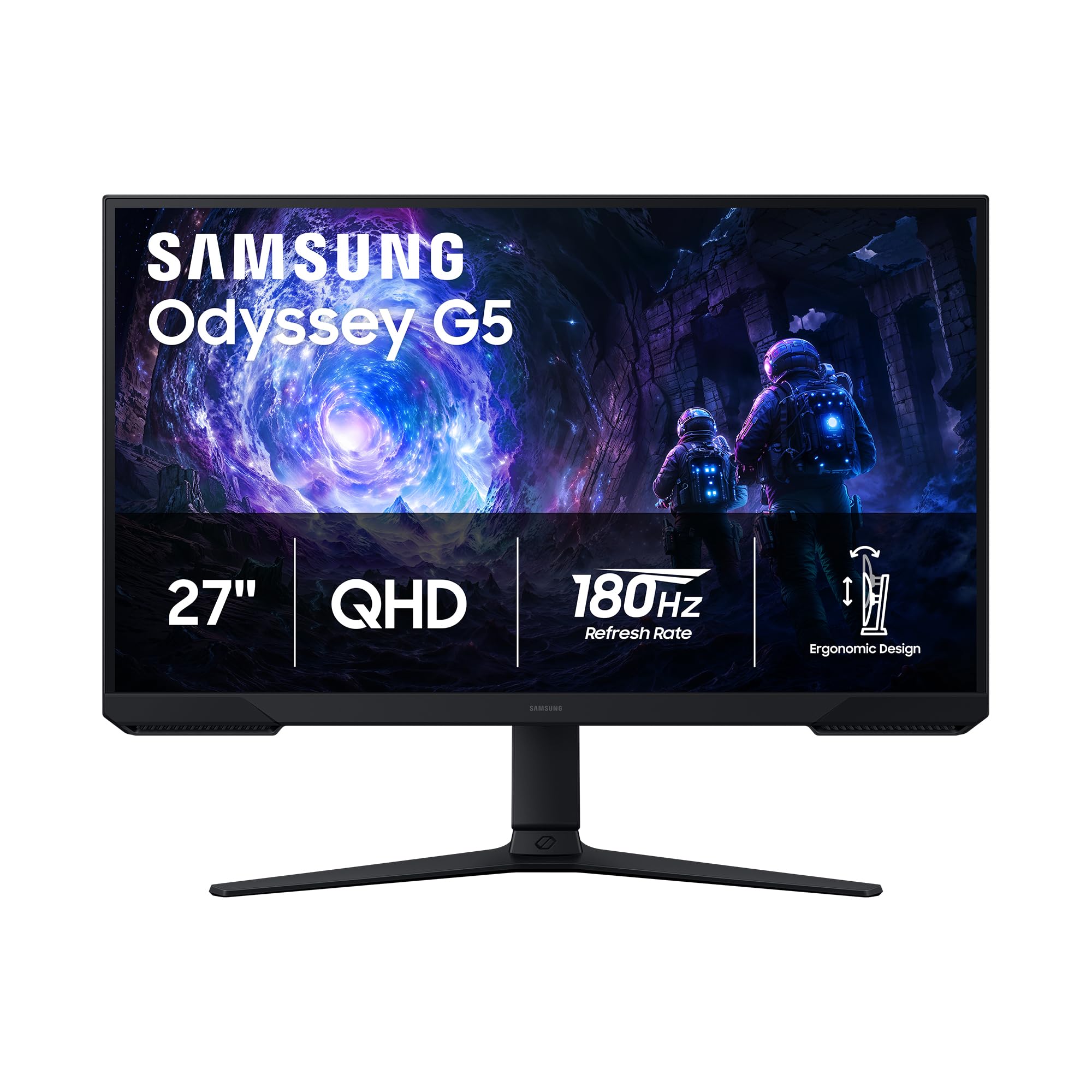
Samsung G5 G51F

86 /100
Lab Score Excellent

Key details

Panel
VA
Refresh
180Hz
HDR Cert
HDR10
Brightness
300 cd/m²
View on Amazon

The Samsung G5 G51F delivers the lowest entry point for a 1440p 180Hz monitor with a height-adjustable stand, and its VA panel offers decent picture clarity for the price. Some units may show a yellow tint or diminished contrast, and the refresh rate can fall short of the advertised 180Hz, occasionally capping at 144Hz. These potential quality variations make it a gamble compared to the AOC Q27G4XN, which adds DisplayHDR 400 certification and a zero-bright-dot warranty at a slightly higher cost. This monitor suits extreme budget buyers willing to calibrate and accept possible imperfections, but those wanting consistent performance should look to a competitor with more stringent quality assurance.

Pros

  • Lowest price for a 1440p 180Hz monitor with height-adjustable stand.
  • Good picture quality with crisp QHD resolution for gaming and media.
  • Easy setup with a sturdy stand that offers tilt, swivel, and height adjustment.

Cons

  • Refresh rate may cap at 144Hz instead of the advertised 180Hz on some units.
  • Color quality can include a yellow tint or reduced contrast on certain units.
Our verdict

If your budget is extremely tight and you are prepared to calibrate and accept potential refresh or color inconsistencies, this is your cheapest 1440p 180Hz option.

Check Latest Price
8

Budget Ultrawide

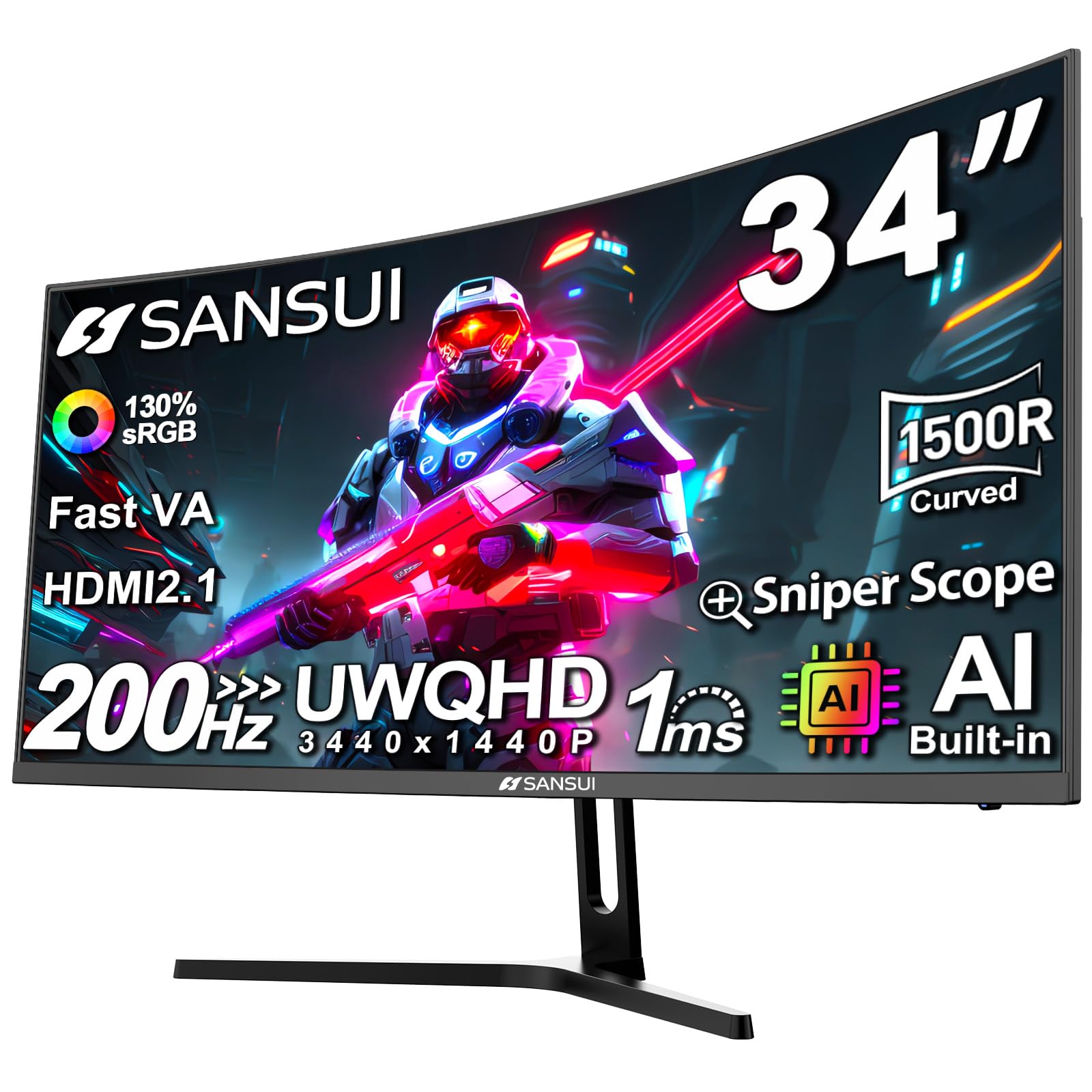
SANSUI 34" UWQHD 200Hz

89 /100
Lab Score Excellent

Key details

Panel
VA
Refresh
200Hz
HDR Cert
HDR (no cert)
Brightness
300 cd/m²
View on Amazon

The SANSUI 34-inch curved monitor delivers an ultrawide 3440x1440 resolution with a 200Hz refresh rate at a budget-friendly price, making it one of the most affordable ways to get into large-screen ultrawide gaming. That value comes with some tradeoffs: reports of color banding and possible power-on failure after a few months mean this is a monitor for those willing to accept unit variance rather than expecting flawless long-term performance. Buyers who need consistent durability should consider higher-priced ultrawide alternatives like QD-OLED models.

Pros

  • Budget-friendly entry to ultrawide gaming with 200Hz refresh and 3440x1440 resolution.
  • Immersive 34-inch curved screen with 21:9 aspect ratio for gaming and multitasking.

Cons

  • Power-on failure after a few months of use has been noted in some units.
  • Color banding and less crisp picture quality may be noticeable in certain content.
Our verdict

This monitor suits buyers who want an ultrawide experience on a tight budget and are comfortable with some unit variance in long-term durability.

Check Latest Price
9

Budget 4K 160Hz

ASUS TUF VG27UQ1A

81 /100
Lab Score Excellent

Key details

Panel
Fast IPS
Refresh
160Hz
HDR Cert
HDR (no cert)
Brightness
View on Amazon

The ASUS TUF VG27UQ1A delivers 4K resolution at 160Hz with solid color coverage, making it a compelling entry point for gamers seeking high-resolution high-refresh performance on a budget. It supports HDR10, though brightness falls short of delivering impactful HDR visuals—typical for monitors at this price tier without DisplayHDR certification. But reliability and quality control are real concerns: some units have been reported to fail suddenly, and dead pixels are a possible headache. A similarly specified 4K 160Hz monitor from another brand outperforms it in both rating and price, so the ASUS only makes sense if you have a strong brand preference or find it at a deeper discount.

Pros

  • 4K resolution with smooth 160Hz refresh
  • Good color accuracy and HDR support for the price

Cons

  • Sporadic unit failures can occur after weeks of use, leaving the monitor unresponsive.
  • Dead pixels may appear on some units, noticeable on a 4K display.
Our verdict

For gamers willing to accept some risk in exchange for 4K 160Hz on a tight budget, the ASUS delivers the core specs—but only if you prioritize resolution and refresh rate over long-term peace of mind.

Check Latest Price

How to Choose

Resolution: QHD vs 4K

QHD (2560x1440) hits the sweet spot for gaming – it's sharp enough for most tastes without demanding a top-tier GPU for high refresh rates.

4K UHD (3840x2160) offers more detail but requires a stronger graphics card to maintain 60+ fps in demanding titles. For competitive shooters, QHD usually strikes a better balance between clarity and performance.

Panel Type: IPS, VA, OLED

IPS panels offer wide viewing angles and good color accuracy, but their native contrast ratio is low – around 1000:1 – so HDR highlights can look flat without local dimming.

VA panels deliver three to four times the contrast of IPS, making dark scenes look deeper. The trade-off is narrower viewing angles and slower pixel response in some transitions.

OLED and QD-OLED achieve per-pixel black levels and near-infinite contrast, producing the most convincing HDR. However, they risk permanent burn-in from static UI elements over years of use.

HDR Certification: What Matters

DisplayHDR 400 is the minimum for a noticeable improvement: 400 nits sustained brightness and a full-spec color gamut. HDR10 without certification often means the monitor accepts the signal but lacks the hardware to display it correctly.

DisplayHDR TrueBlack 400 (OLED) or 600/1000 for LCD are where HDR gets impressive – high peak brightness and local dimming zones. Avoid monitors that only advertise 'HDR' without a number: they rarely deliver.

Refresh Rate and Response Time

144Hz to 180Hz is the practical ceiling for most gamers – the difference between 144 and 240 is marginal outside competitive esports. Response time below 5ms GTG is fine for casual play; 1ms is overkill for anything but pro-level flick shots.

High refresh matters most for fast-paced genres like FPS and racing. For single-player RPGs and strategy games, a stable 60-90Hz with good HDR is often more enjoyable than raw frame rate.

Brightness for HDR Impact

Peak brightness of 350 nits or less cannot produce the specular highlights HDR is known for – a 1,000-nit flash in a game will look like a dull gray patch. Look for at least 400 nits sustained, and 600+ for 'wow' moments.

Local dimming helps by darkening parts of the screen to make bright objects pop. Monitor without it (most budget models) rely on the panel's native contrast, which is why many HDR10 monitors look washed out.

Adaptive Sync: FreeSync and G-Sync

Adaptive sync eliminates screen tearing and stuttering by matching the monitor's refresh rate to the GPU's frame output. FreeSync is AMD's standard, G-Sync is Nvidia's – most modern monitors support both via HDMI 2.1 or DisplayPort.

FreeSync Premium Pro adds low framerate compensation and HDR support, which is useful for 30-60fps console games. G-Sync Compatible monitors work with Nvidia GPUs but lack the full hardware module of native G-Sync.

Frequently Asked Questions