4 Best Pro Controller for PS5 in 2026: Reliable Wireless and Proven Build

Which pro controller for PS5 balances wireless reliability, customization, and drift resistance? This guide helps competitive gamers avoid disconnects and find the right fit.

Many pro controllers for PS5 promise elite performance but fail where it matters most – staying connected mid-match. Stuttering disconnects and dongle failures are common complaints even at the $200 mark.

The real trade-off isn’t about hall-effect vs. replaceable sticks; it’s whether a controller’s wireless reliability justifies its feature set. This guide highlights which models actually deliver consistent performance during competitive play, and which compromises are worth accepting.

1

Best Overall

DualSense Edge

93 /100
Lab Score Outstanding

Key details

Stick Tech
Replaceable stick modules
Back Inputs
2 swappable paddle pairs
Battery Life
5-6 hours
Connectivity
Wireless proprietary + USB
View on Amazon

The DualSense Edge’s replaceable stick modules let you swap in fresh units when drift appears, sidestepping the permanence of a standard DualSense. Its wireless connection to the PS5 stays stable in high-pressure matches — no dongles, no dropouts. Adjustable trigger stops and swappable back paddles give competitive players direct control over response times without losing Sony’s haptic feedback.

Battery life runs around five hours between charges, which means planning around extended sessions. Some owners note the rubber grip on the handles may peel after many months of use — a cosmetic issue rather than a functional one. For matches under that time, the Edge stays responsive and consistent.

This controller suits PS5 competitive gamers who want official Sony integration, stick-drift insurance, and adjustable triggers without switching to a third-party unit. It’s less suitable if you need more than five hours of continuous play or require hall-effect or TMR thumbsticks for longevity concerns.

Four onboard profiles can be toggled mid-game, storing different button mappings, trigger stops, and stick sensitivities for different shooters or roles. That flexibility means one controller adapts across titles without reconfiguring every time.

💡 Keep the Edge docked or plugged in between matches to avoid mid-session power loss.

Pros

  • Premium build with precise thumbsticks and responsive face buttons
  • Replaceable stick modules let you fix drift without buying a whole new controller
  • Adjustable trigger stops and mappable back paddles for faster reaction times
  • Quick-swap profiles store different button layouts and sensitivities per game

Cons

  • Battery lasts roughly five hours, requiring more frequent charging than standard DualSense
  • Rubber grip on the handles may peel after extended use
Our verdict

For PS5 players who prioritize wireless stability and a quick fix for stick wear over longer battery life, the Edge delivers a consistent competitive edge.
Check Latest Price
2

Best for PC Competitive

SCUF OMEGA

85 /100
Lab Score Excellent

Key details

Stick Tech
TMR (drift-resistant)
Back Inputs
11 total (paddles, sides, G-keys)
Battery Life
Connectivity
2.4GHz dongle + Bluetooth 5.0
View on Amazon

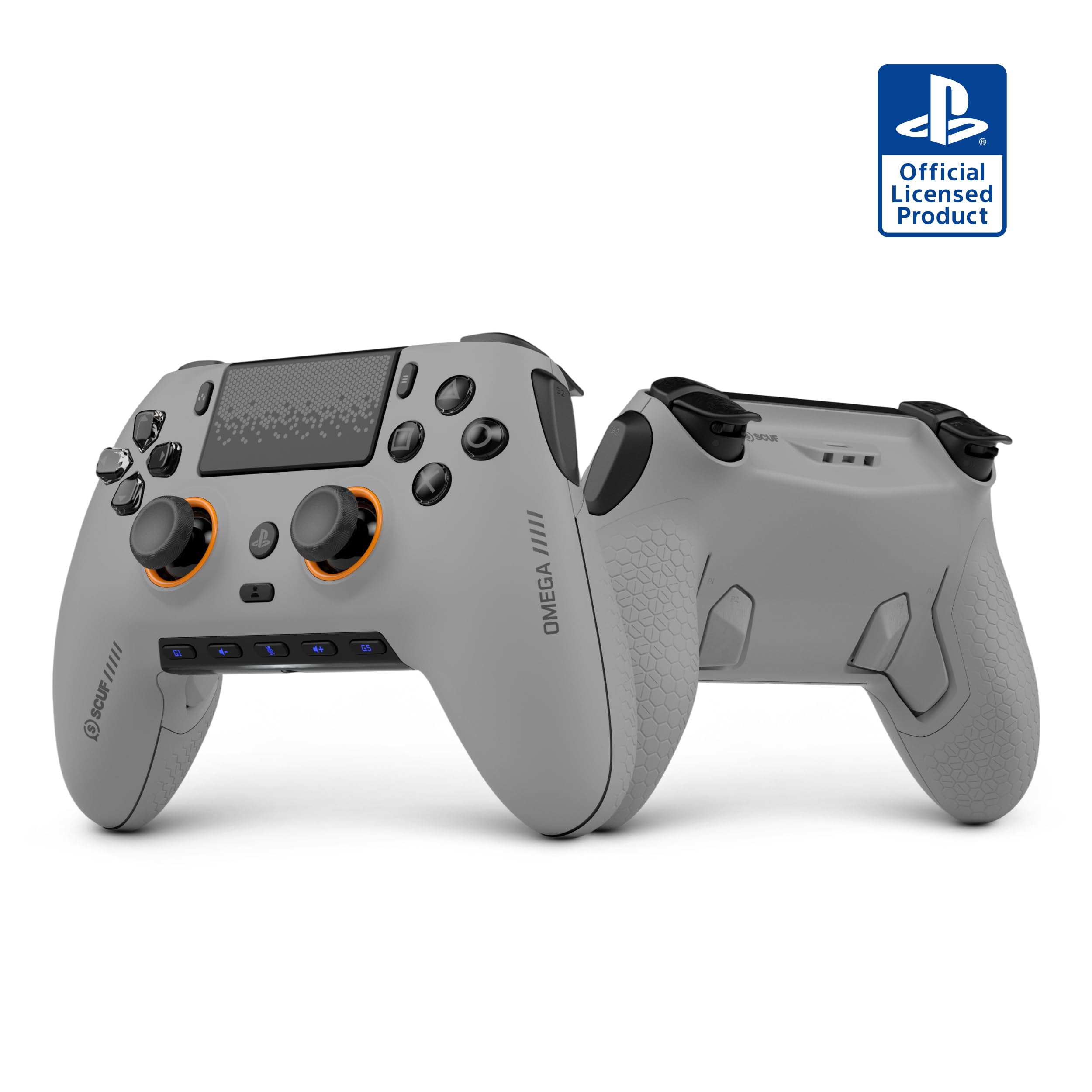
The SCUF OMEGA sets itself apart from Sony's DualSense Edge with TMR (Tunnel Magneto-Resistance) thumbsticks and a native 1000Hz polling rate on PC, delivering the fastest wireless response in this comparison. The Omron mechanical switches in the triggers and face buttons provide a crisp, tactile feel, and the 11 extra inputs—four rear paddles, two side action buttons, and G-keys—offer extensive customization via the mobile app.

Who this works best for: PC-based competitive FPS and Warzone players who prioritize raw input speed over console integration. Quality control variance means occasional early button failures may occur on some units, so checking the unit promptly is wise.

💡 Consider using the included USB cable if wireless drops occur during critical matches.

Pros

  • Responsive Omron mechanical switches and TMR sticks for precise inputs
  • Extensive customization with 11 extra inputs and mobile app remapping
  • Premium feel and ergonomics comfortable for long gaming sessions

Cons

  • Wireless connectivity over the included dongle can be unstable, with random disconnects or the dongle not being recognized
Our verdict

For PC competitive gamers who want the fastest polling and extra inputs, the SCUF OMEGA delivers, but expect to use wired mode for stability and be prepared for possible QC hiccups.

Check Latest Price
3

Best Anti-Drift Value

Nacon Revolution 5 Pro

80 /100
Lab Score Excellent

Key details

Stick Tech
Hall-effect sticks, triggers
Back Inputs
4 Omron micro-switch paddles
Battery Life
Up to 10 hours
Connectivity
USB-A adapter only
View on Amazon

The Nacon Revolution 5 Pro brings hall-effect joysticks and triggers to a sub-$200 price point, alongside adjustable weight and trigger blockers that appeal to competitive gamers seeking custom feel. Its Xbox-style grip is comfortable for long sessions, and the smooth stick motion reflects the magnetic anti-drift technology on paper.

This controller is best suited for players who primarily use wired mode — the wireless connection via USB dongle can drop mid-game, making it unreliable for untethered play. Those who prioritize drift resistance and want hall-effect durability without exceeding the premium tier will find value here, provided they accept a cable as standard. Stick consistency has also shown variance in some cases, meaning the anti-drift promise isn't universally realized across all units.

The four rear paddles use Omron micro-switches and offer ample customization, but their placement can lead to accidental presses during a normal grip — something to adjust to rather than a flaw for every hand size. Battery life reaches up to 10 hours, adequate for wired use where charging is continuous.

💡 Keep the USB cable connected for stable play — the wireless dongle is best avoided in serious matches.

Pros

  • Hall-effect sticks and triggers resist drift over months of use
  • Comfortable Xbox-like ergonomics with adjustable weight
  • Trigger blockers and four programmable paddles for competitive input

Cons

  • Wireless disconnections can interrupt gameplay when using the dongle
  • Stick performance may show drift or sticking despite hall-effect design
  • Rear paddles can be triggered accidentally during normal grip
Our verdict

For competitive gamers who don't need wireless freedom and want hall-effect durability at a lower price than the top pick, the Nacon Revolution 5 Pro delivers on its core promise — but only if you stay wired and accept possible stick variance.

Check Latest Price
4

Best for Fighting Games

Victrix Pro BFG

85 /100
Lab Score Excellent

Key details

Stick Tech
Standard potentiometer
Back Inputs
4 mappable back buttons
Battery Life
Connectivity
USB dongle required
View on Amazon

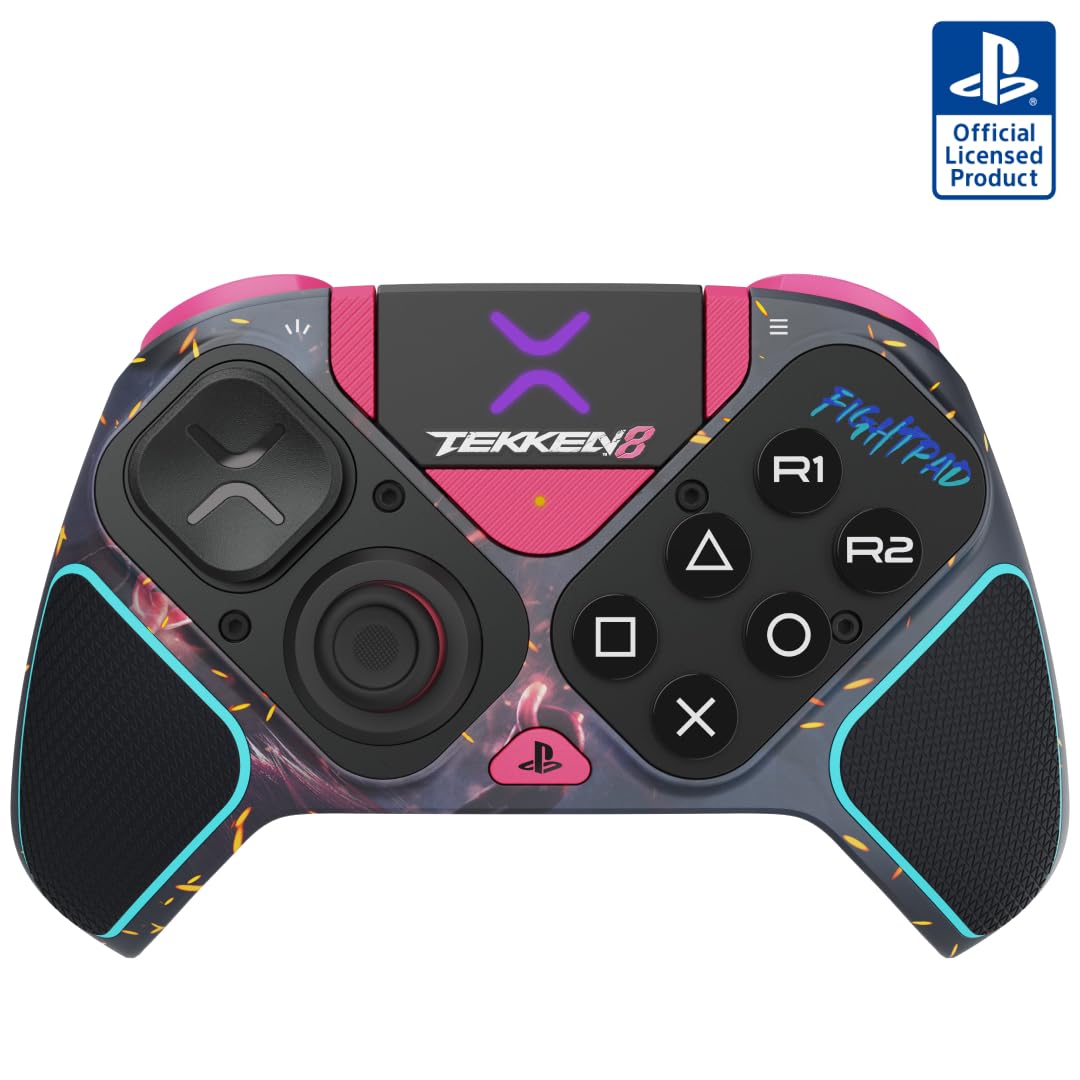
The Victrix Pro BFG is built around modularity — swappable thumbstick gates, D-pads, and a full fight-pad module convert this controller from a standard layout to a six-button arcade stick in seconds. The chassis feels robust, with textured grips and a weight that stays planted during intense matches. Where the top pick prioritizes seamless wireless and full PS5 feature parity, the Victrix focuses on customization at the expense of Sony's adaptive triggers and haptics.

Fighting game enthusiasts get the most from this controller — the interchangeable D-pads and six-button module deliver precise inputs for Tekken 8 or Street Fighter without switching peripherals. The tradeoff is a USB dongle for wireless (no Bluetooth pairing) and the absence of haptic feedback, so casual PS5 players who enjoy immersive rumble will find this stripped-down experience lacking. Play sessions longer than six hours require a wired charge, as the battery runs down faster than the top pick's.

💡 Plug the dongle directly into the console port rather than a hub to reduce occasional disconnection issues.

Pros

  • Swappable modules let you switch between standard and fight-pad layouts in seconds.
  • Solid build with textured grips and a weight that stays planted during intense play.
  • Four mappable back buttons and hair triggers give competitive players extra input options.

Cons

  • Wireless requires a USB dongle; the dongle can occasionally stop responding, forcing a reconnect.
  • No adaptive trigger resistance or haptic vibration
  • Button and trigger feel may vary between units; some may find them less crisp than expected.
Our verdict

Fighting game players who value a modular layout over Sony's signature features get a focused, durable controller — just keep a spare dongle nearby.

Check Latest Price

How to Choose

Wireless Connectivity

A pro controller’s connection method determines whether you’ll experience mid-game drops. Bluetooth offers convenience but can suffer interference. 2.4GHz dongles provide lower latency but add an extra point of failure – many users report dongles dying within weeks. Sony’s proprietary wireless on the DualSense Edge is the most reliable in this group because it uses the same proven connection as the standard DualSense.

If you plan to play mostly wired, connectivity issues matter less. But for wireless competitive play, a controller that disconnects even once per session is unacceptable. Prioritize models with consistent wireless performance over those with flashy latency specs.

Stick Technology

Stick drift is the top complaint across all controllers. Hall-effect sticks use magnetic sensors to avoid physical wear, but they don’t guarantee perfection – some units still drift due to loose housing or calibration errors. The DualSense Edge solves drift differently: replaceable stick modules let you swap in a new unit without soldering.

TMR sticks (like the SCUF Omega) are a newer hybrid that offer better durability than standard potentiometers and faster response than many hall-effect sensors. For PS5, hall-effect controllers often lack full native support for adaptive triggers, so you may lose that feature.

Back Inputs and Paddles

Extra buttons let you keep thumbs on the sticks for faster actions like jumping or sliding. The number of paddles varies from two to eleven. More isn’t always better – poorly placed paddles can cause accidental presses. Look for paddles that lock into your grip without requiring a stretch.

Mechanical switches (like Omron) provide crisp feedback, but membrane buttons are quieter. Test the layout if possible: some controllers have side-mounted G-keys that are hard to reach mid-game.

Battery Life

Pro controllers often have shorter battery life than standard models due to extra electronics. The DualSense Edge lasts about 5 hours – less than a standard DualSense. The Nacon Revolution 5 Pro reaches 10 hours but only in wired mode. If you play marathon sessions, you’ll need to plug in or rotate controllers.

Fast charging matters: USB-C allows quick top-ups, but a dead battery mid-match is still frustrating. Consider whether you can tolerate a cable during long sessions.

PS5 Feature Retention

Third-party pro controllers often strip out adaptive triggers and haptic feedback to reduce latency and cost. The DualSense Edge keeps these features intact, while the SCUF Omega and Victrix Pro BFG omit them entirely. If you rely on trigger resistance for immersion or competitive advantage (e.g., in Gran Turismo), losing that feedback can be a big downgrade.

Other features like the touchpad, motion controls, and speaker may also be missing. Check the feature list before buying if you use any of these regularly.

Frequently Asked Questions